Field guide · 12 birds

Birds of Prey

Birds of prey hunt with hooked bills and powerful talons: the soaring hawks and eagles, the fast falcons, the fish-catching osprey and the night-hunting owls. Turkey vultures are often grouped with them, though they feed on carrion rather than live prey.

Shape in flight is the birder's best clue — broad wings and a short tail for a soaring hawk, long pointed wings for a falcon, a big round head for an owl.

At a glance

BirdGroupColorsHabitatRegionLengthWingspanDiet
Red-tailed HawkHawks & eaglesBrown, White, RedGrasslandNationwide22 in49 inMeat
Cooper's HawkHawks & eaglesGray, Orange, WhiteBackyardsNationwide16 in30 inMeat
Bald EagleHawks & eaglesBrown, WhiteWetlandsNationwide33 in80 inFish
Golden EagleHawks & eaglesBrownGrasslandWestern30 in80 inMeat
OspreyOspreysBrown, WhiteWetlandsNationwide22 in65 inFish
American KestrelFalconsOrange, Gray, BlackGrasslandNationwide10 in22 inMeat
Peregrine FalconFalconsGray, Black, WhiteCoastNationwide17 in41 inMeat
Great Horned OwlOwlsBrown, GrayForestNationwide21 in48 inMeat
Barred OwlOwlsBrown, WhiteForestEastern18 in41 inMeat
Snowy OwlOwlsWhiteGrasslandNorthern24 in53 inMeat
Barn OwlBarn owlsWhite, BrownGrasslandNationwide14 in44 inMeat
Turkey VultureNew World vulturesBrown, Red, GrayGrasslandNationwide29 in69 inMeat

Red-tailed Hawk

Buteo jamaicensis

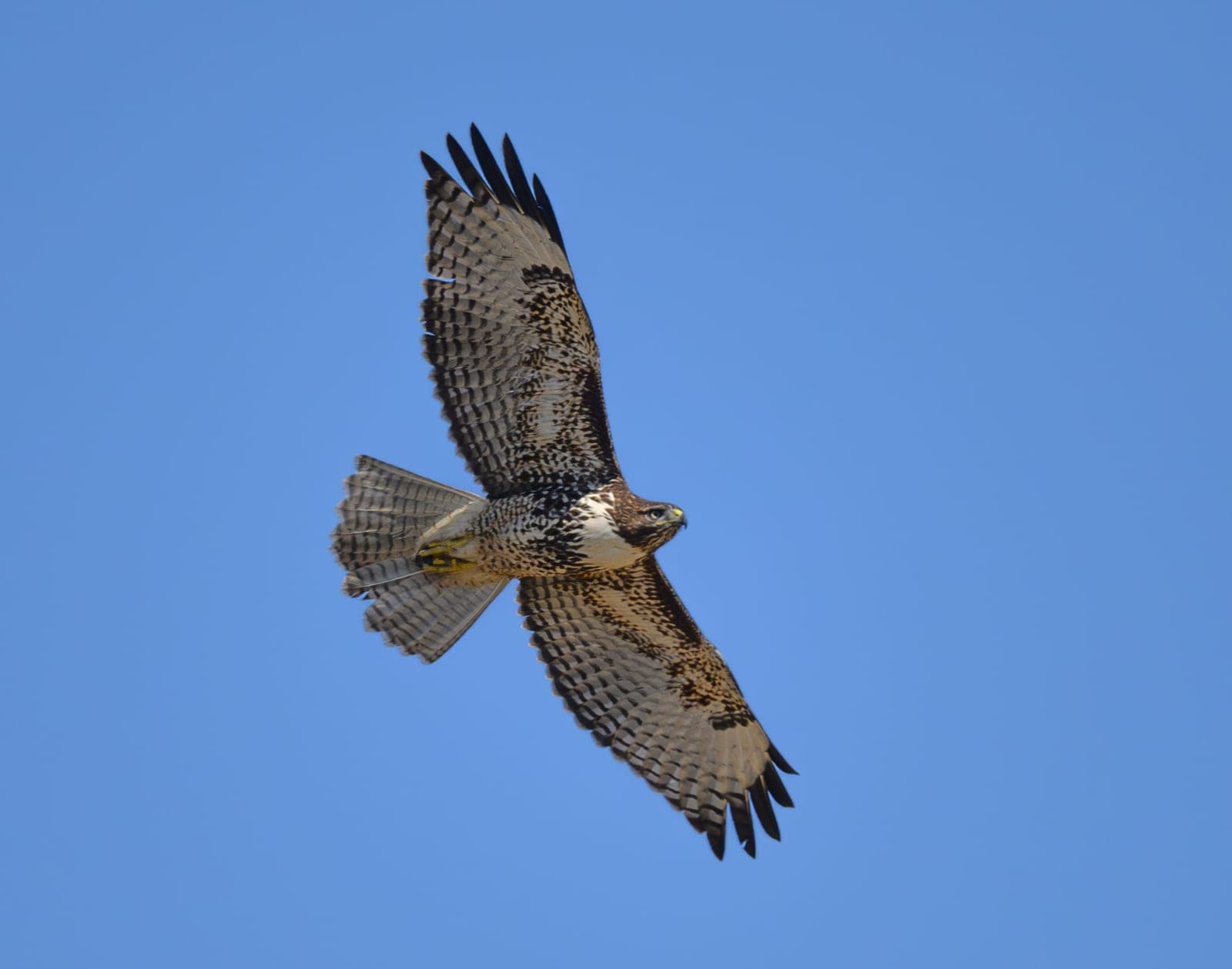
The Red-tailed Hawk is the big, broad-winged hawk on the highway light pole, and for most people it is simply the hawk of North America: common from Alaska to Panama and at home over farm fields, deserts, mountain valleys and city parks. Its rusty tail gives it away, and its hoarse, falling scream is the sound Hollywood dubs over eagles and nearly every other raptor on screen.

Read the full guide →
Cooper's Hawk

Astur cooperii

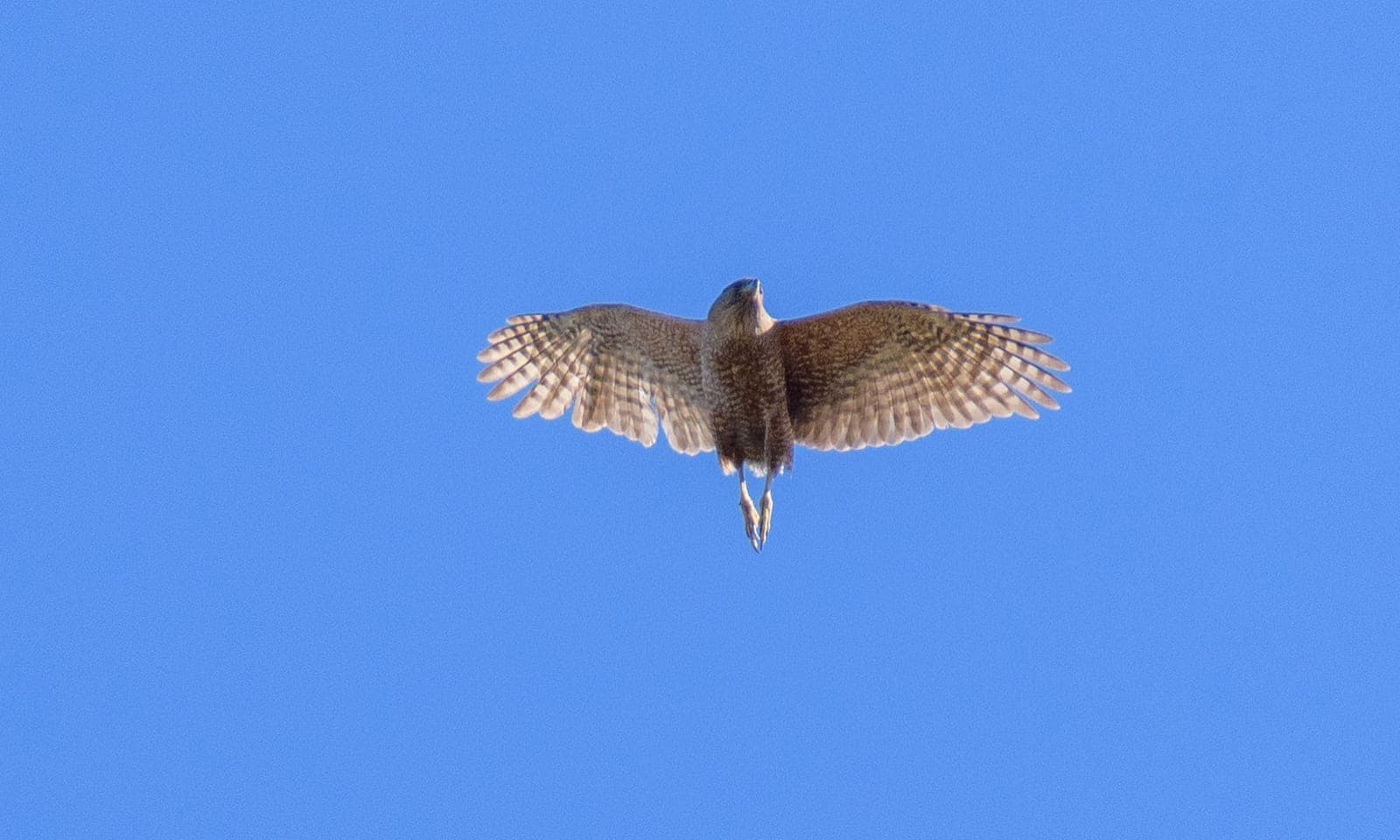
The Cooper's Hawk is the crow-sized hawk that bursts through a backyard and leaves a puff of feathers under the feeder. A bird-hunting specialist of woodlands and, more and more, of suburbs and cities, it is one of the hawks people see up close most often — and one of the hardest to tell from its smaller cousin, the Sharp-shinned Hawk.

Read the full guide →

Bald Eagle

Haliaeetus leucocephalus

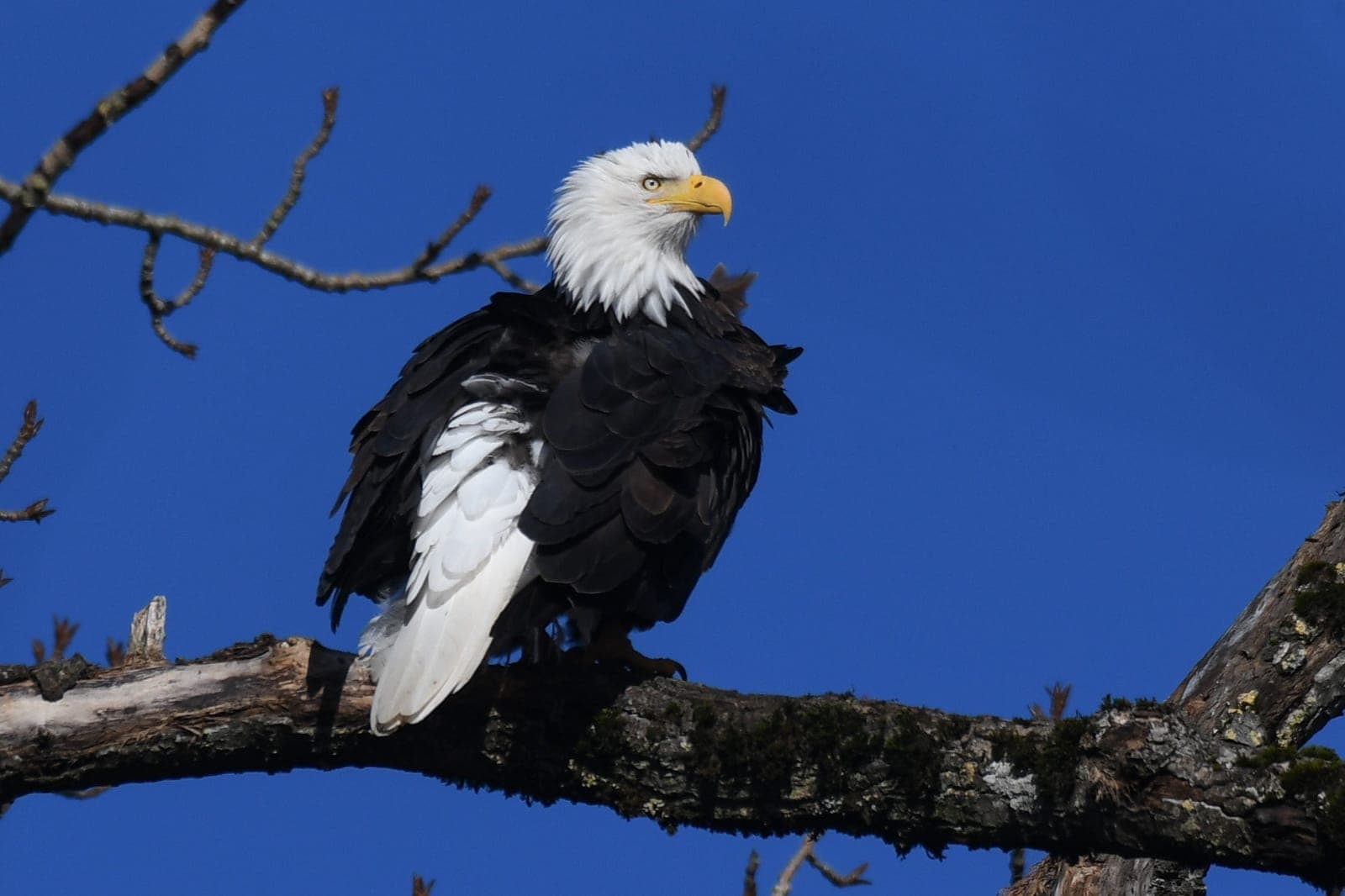
The Bald Eagle is the national bird of the United States and North America's great fish-eating eagle, a sea eagle with a wingspan close to seven feet that patrols lakes, rivers and coasts. Its recovery — from 417 known nesting pairs in the Lower 48 in 1963 to more than 71,000 today — is one of the great wildlife comebacks, and anglers now see eagles on almost every big water in the country.

Read the full guide →

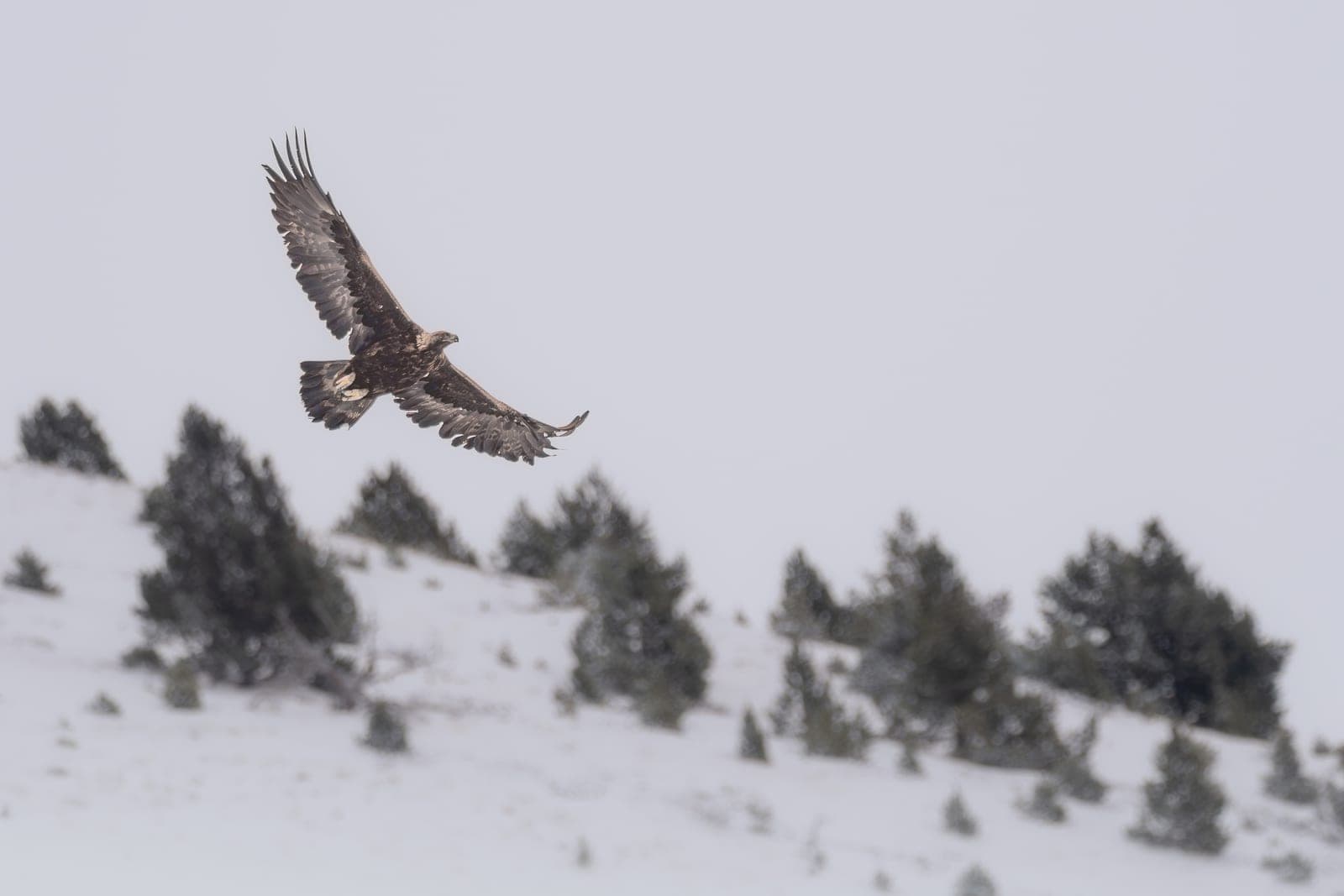
Golden Eagle

Aquila chrysaetos

The Golden Eagle is the great eagle of the open West: a dark, powerful hunter of jackrabbits, ground squirrels and prairie dogs that nests on cliffs and patrols canyons, rangeland and mountain ridges. It ranges across the Northern Hemisphere, it is the eagle on Mexico's coat of arms, and in the United States it shares full federal protection with the Bald Eagle.

Read the full guide →

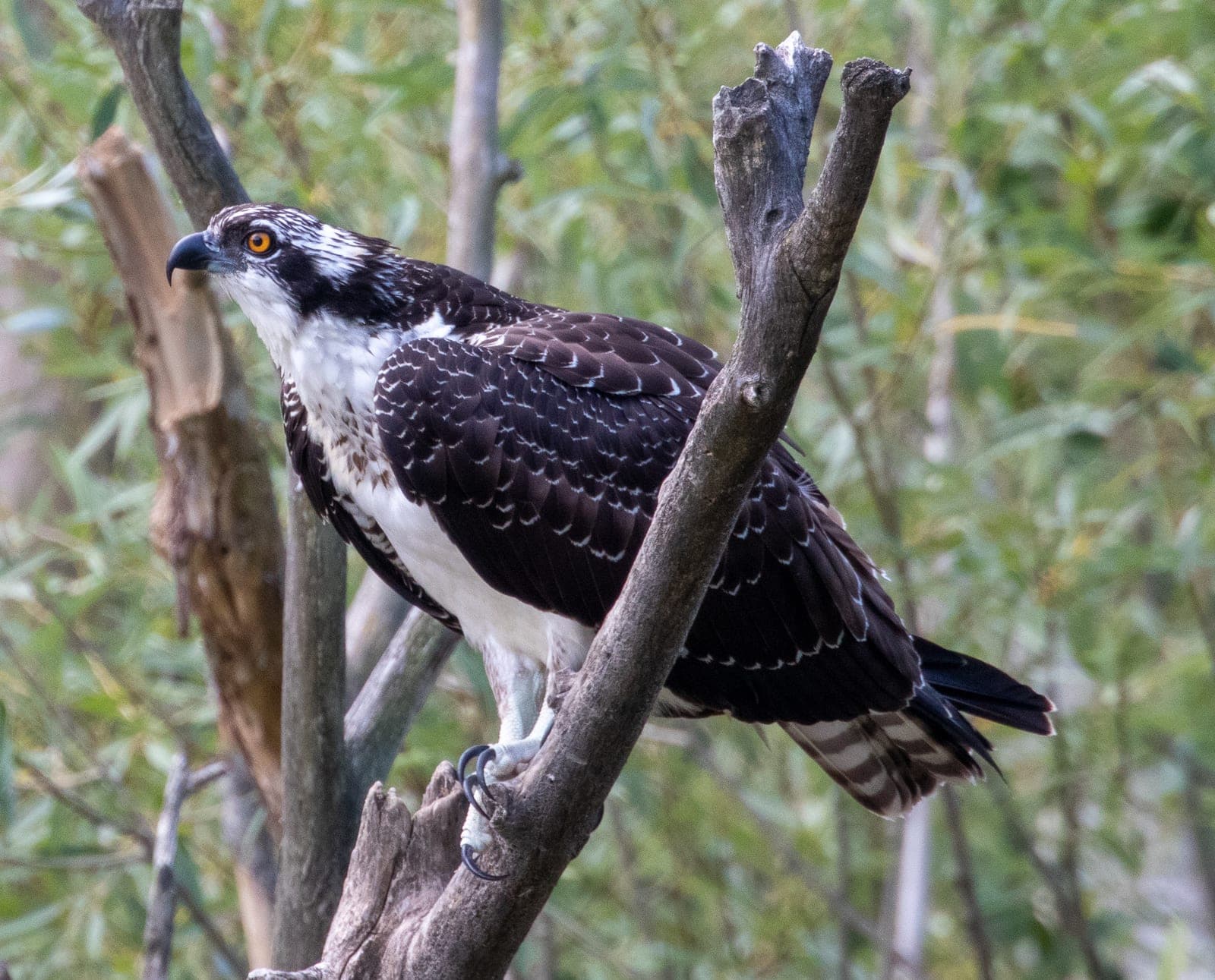
Osprey

Pandion haliaetus

The Osprey is the fish hawk: a long-winged raptor that hovers over open water, then folds up and crashes in feet-first to come up with a fish. Nearly wiped out in parts of North America by DDT, it has rebounded so well that its bulky stick nests now crown channel markers, light poles and platforms on lakes, rivers and bays across the continent — usually within sight of anglers chasing the same fish.

Read the full guide →

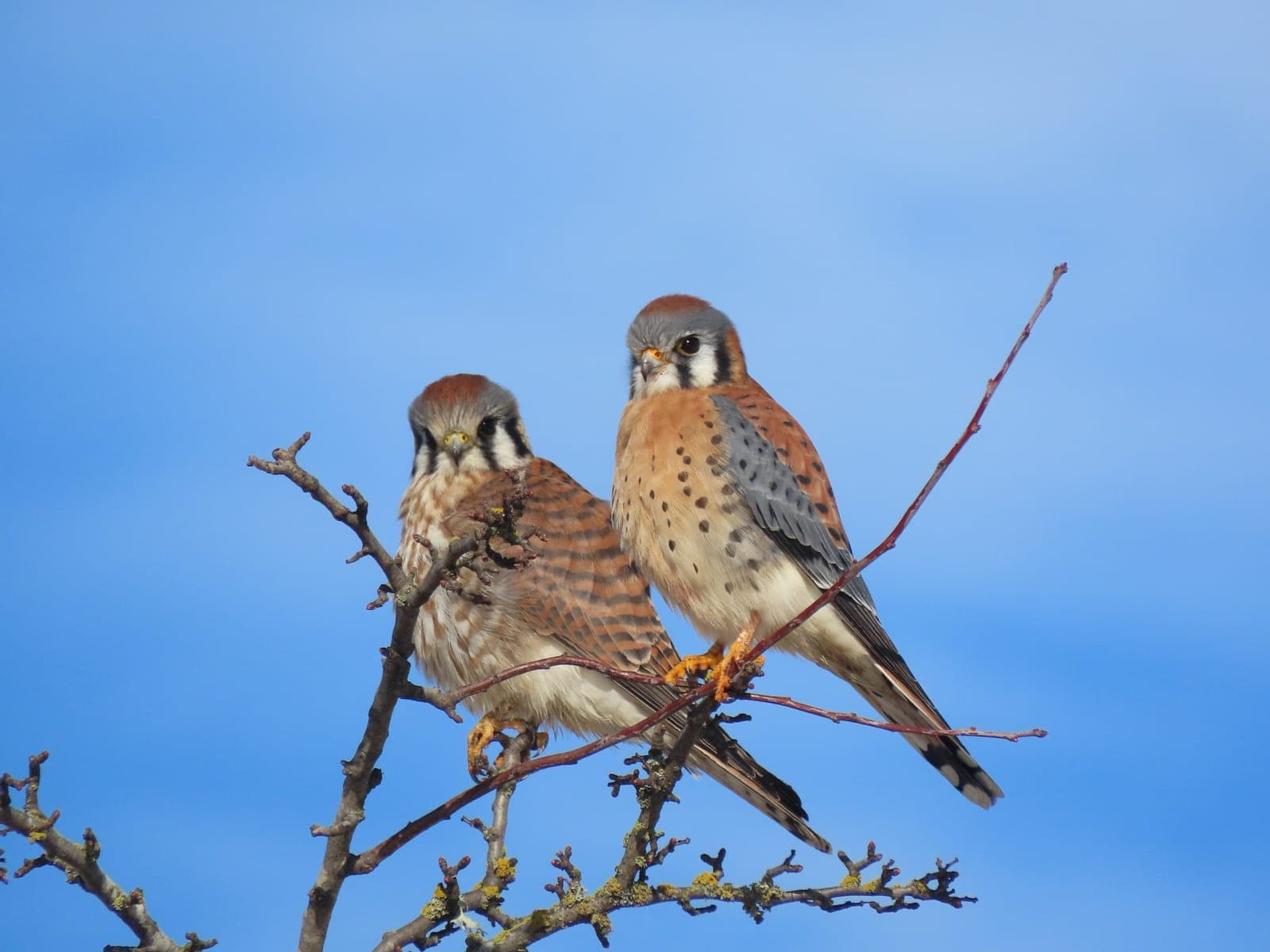
American Kestrel

Falco sparverius

The American kestrel is the smallest falcon in the Americas, a dove-sized hunter that perches on roadside wires and hovers over fields looking for grasshoppers and mice. Males are among the most colorful raptors on the continent. Kestrels are still widespread, but their numbers have been sliding for decades, and nest boxes put up by landowners and volunteers have become one of the best ways to help them.

Read the full guide →

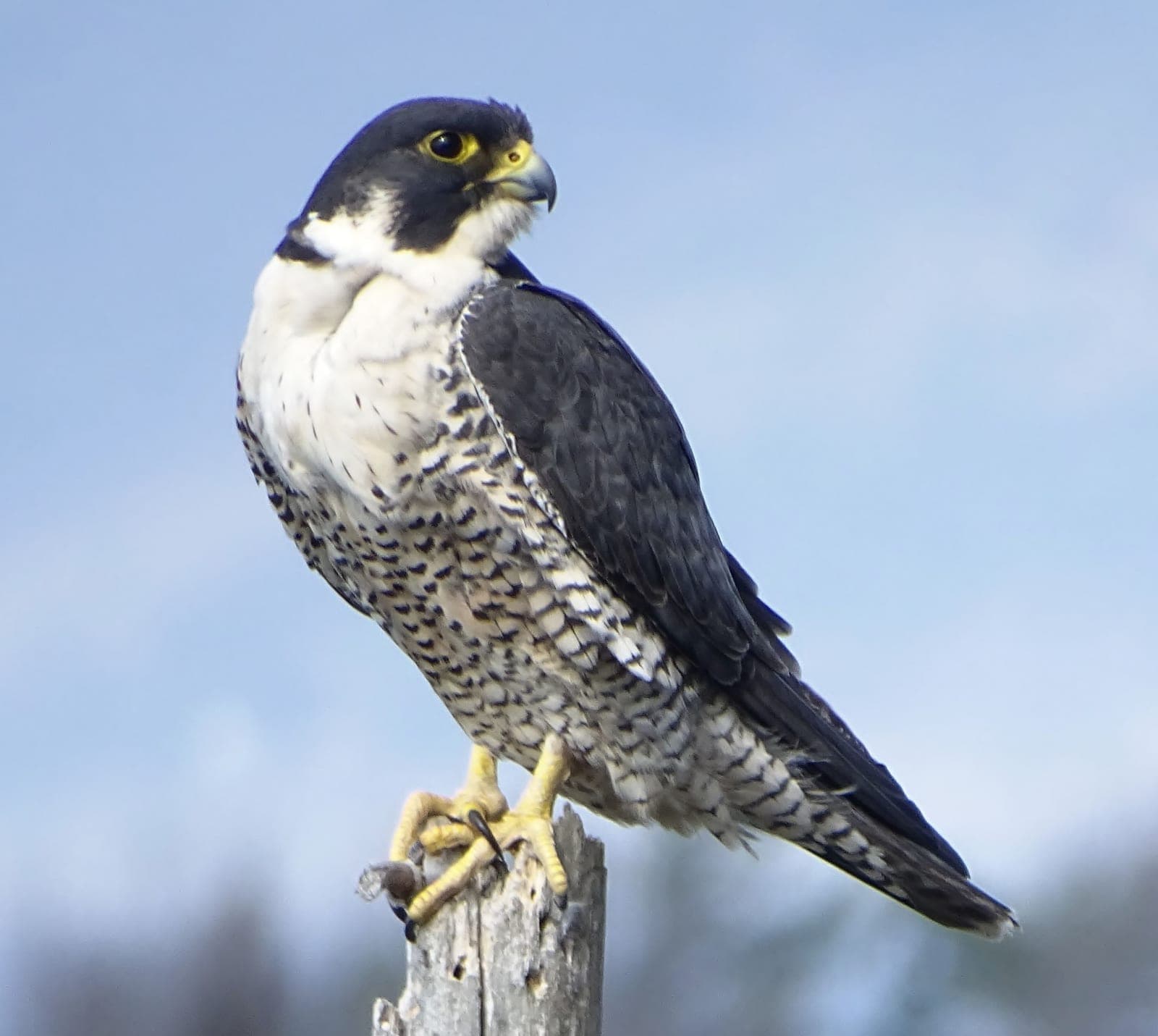
Peregrine Falcon

Falco peregrinus

The peregrine falcon is the fastest bird in the world, a crow-sized raptor that strikes other birds in midair over cliffs, coastlines and city skyscrapers. It is also one of the great conservation comebacks: DDT wiped it out as a nesting bird in the eastern United States, yet it recovered well enough to come off the U.S. endangered species list in 1999 and now raises young on bridges and office towers across the continent.

Read the full guide →

Great Horned Owl

Bubo virginianus

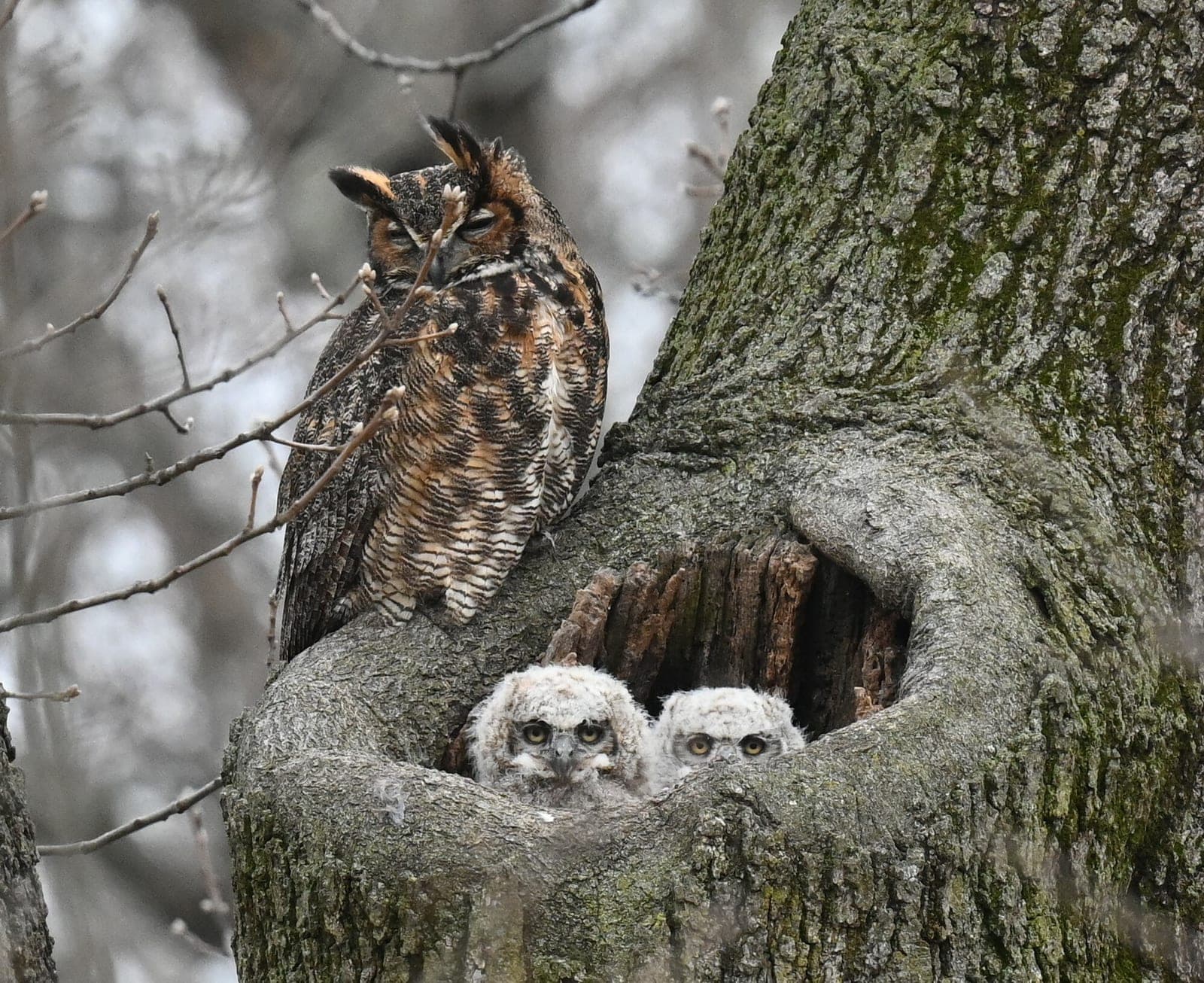
The Great Horned Owl is the deep, soft hooting in the woods on a winter night and the big owl of nearly every habitat in North America, from Arctic treeline to desert canyons and city parks. A fearless generalist, it kills everything from mice to skunks and other raptors, and it nests in the dead of winter, earlier than almost any other bird on the continent.

Read the full guide →

Barred Owl

Strix varia

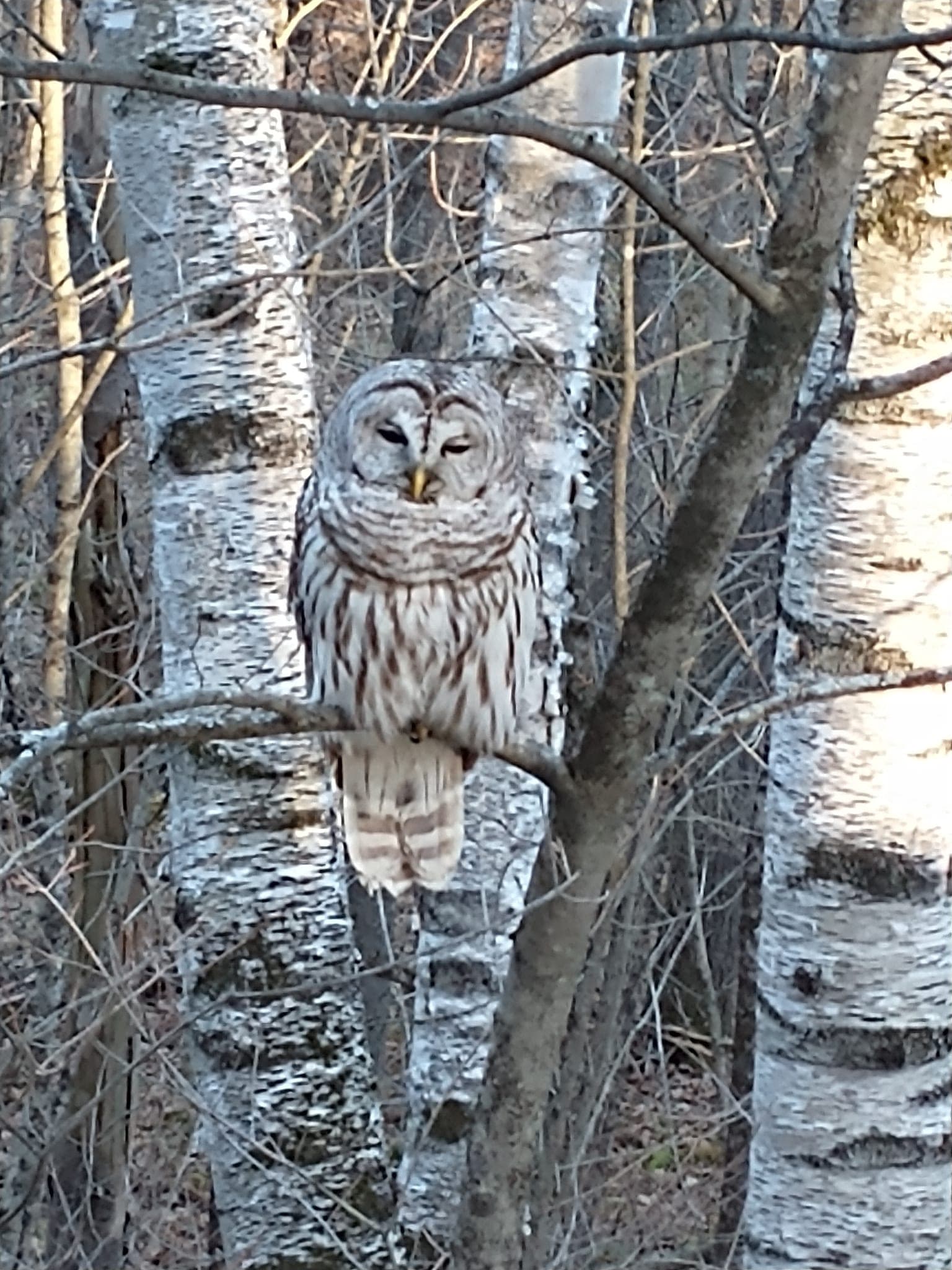
The Barred Owl is the big, dark-eyed owl of eastern swamps and river-bottom forests, famous for a loud call that sounds like 'Who cooks for you? Who cooks for you-all?' It is one of the easiest owls to hear, and even to see by day. In the Pacific Northwest and California, where it has spread over the last century, it has become a serious threat to the Northern Spotted Owl.

Read the full guide →

Snowy Owl

Bubo scandiacus

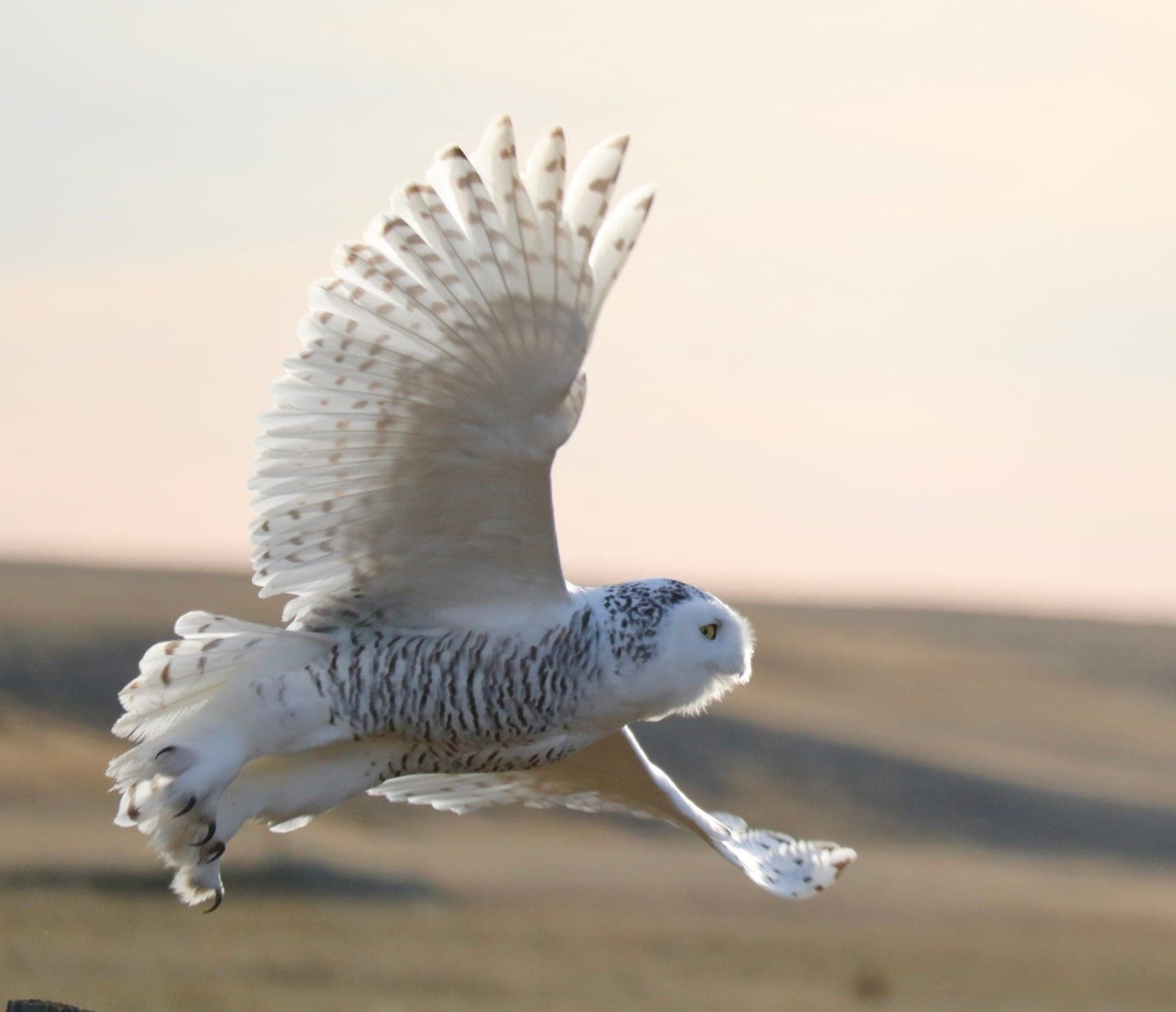
The Snowy Owl is the big white owl of the Arctic tundra that turns up, some winters in remarkable numbers, on frozen fields, beaches and airport runways far to the south. The heaviest owl in North America and the avian emblem of Quebec, it is also a species in trouble: the IUCN has listed it as Vulnerable since 2017.

Read the full guide →

Barn Owl

Tyto furcata

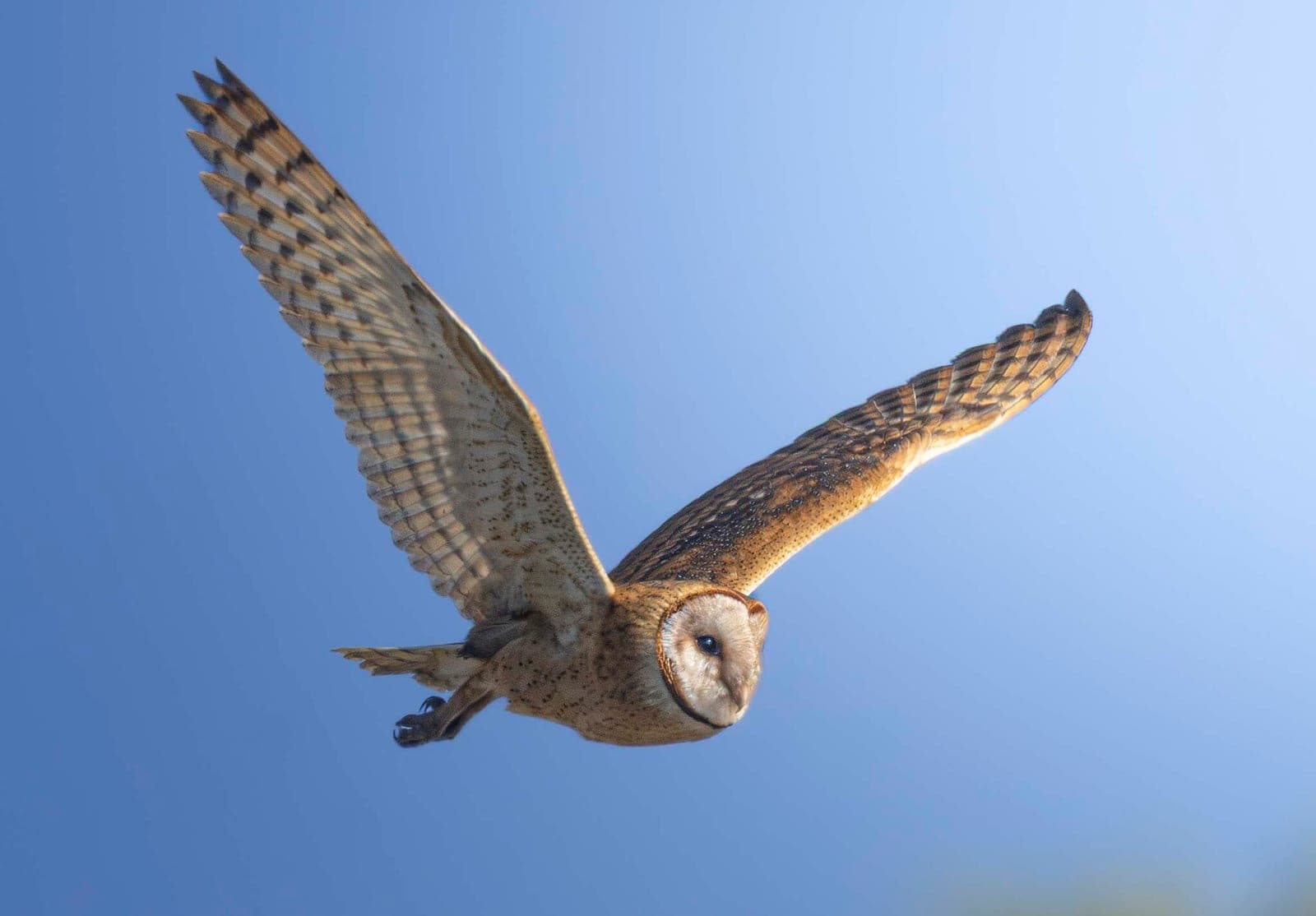
The Barn Owl is the pale, heart-faced owl of farm country, a silent night hunter that can catch a mouse in total darkness by sound alone. Since 2024 the American Ornithological Society has treated birds of the Americas as their own species, the American Barn Owl (Tyto furcata), and while it is still widespread, it has declined sharply in the Midwest and Northeast as pastures, hayfields and old wooden barns disappeared.

Read the full guide →

Turkey Vulture

Cathartes aura

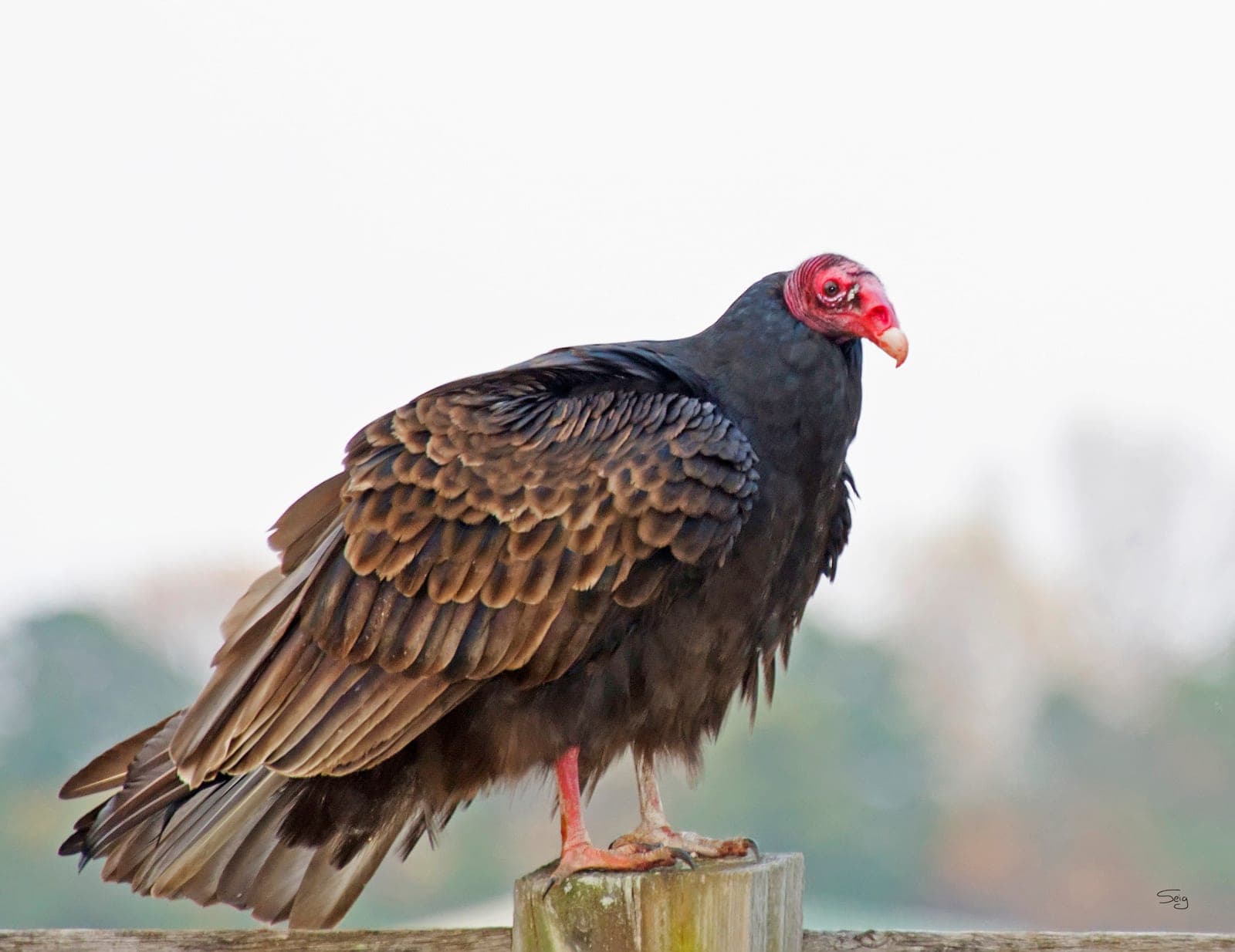
The Turkey Vulture is the big, dark bird teetering over highways and hillsides on wings held in a shallow V, the most widespread vulture in the Americas and one of the few birds that finds food largely by smell. A scavenger that cleans up roadkill, washed-up fish and winter-killed deer, it is a familiar sight to hunters, anglers and drivers from southern Canada to the tip of South America.

Read the full guide →

Think you could name them from a few clues? A new mystery bird drops every day.

Play the daily bird game