Birds · Side by side
Great Horned Owl vs Barred Owl
How to tell them apart
Quick answer
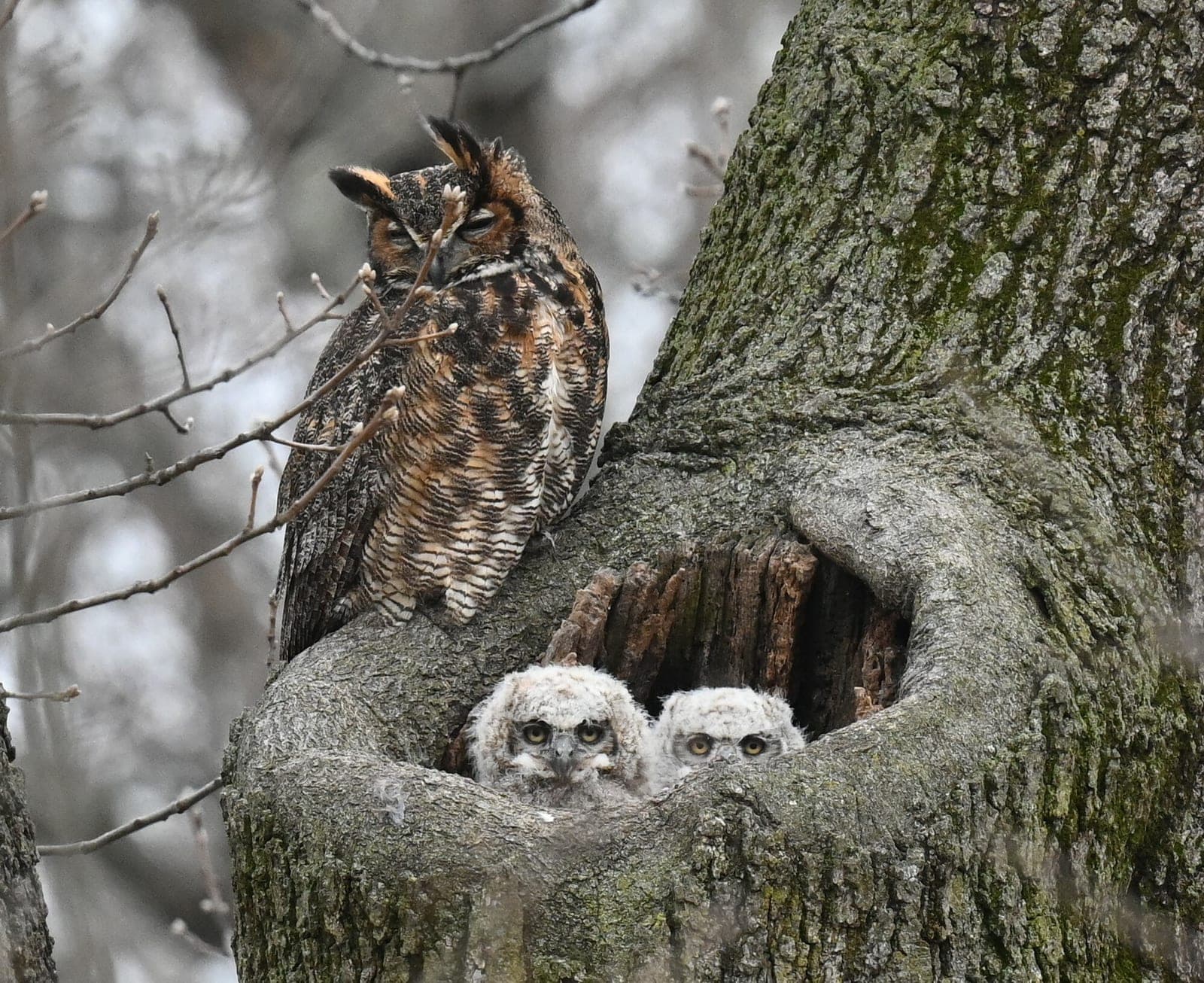
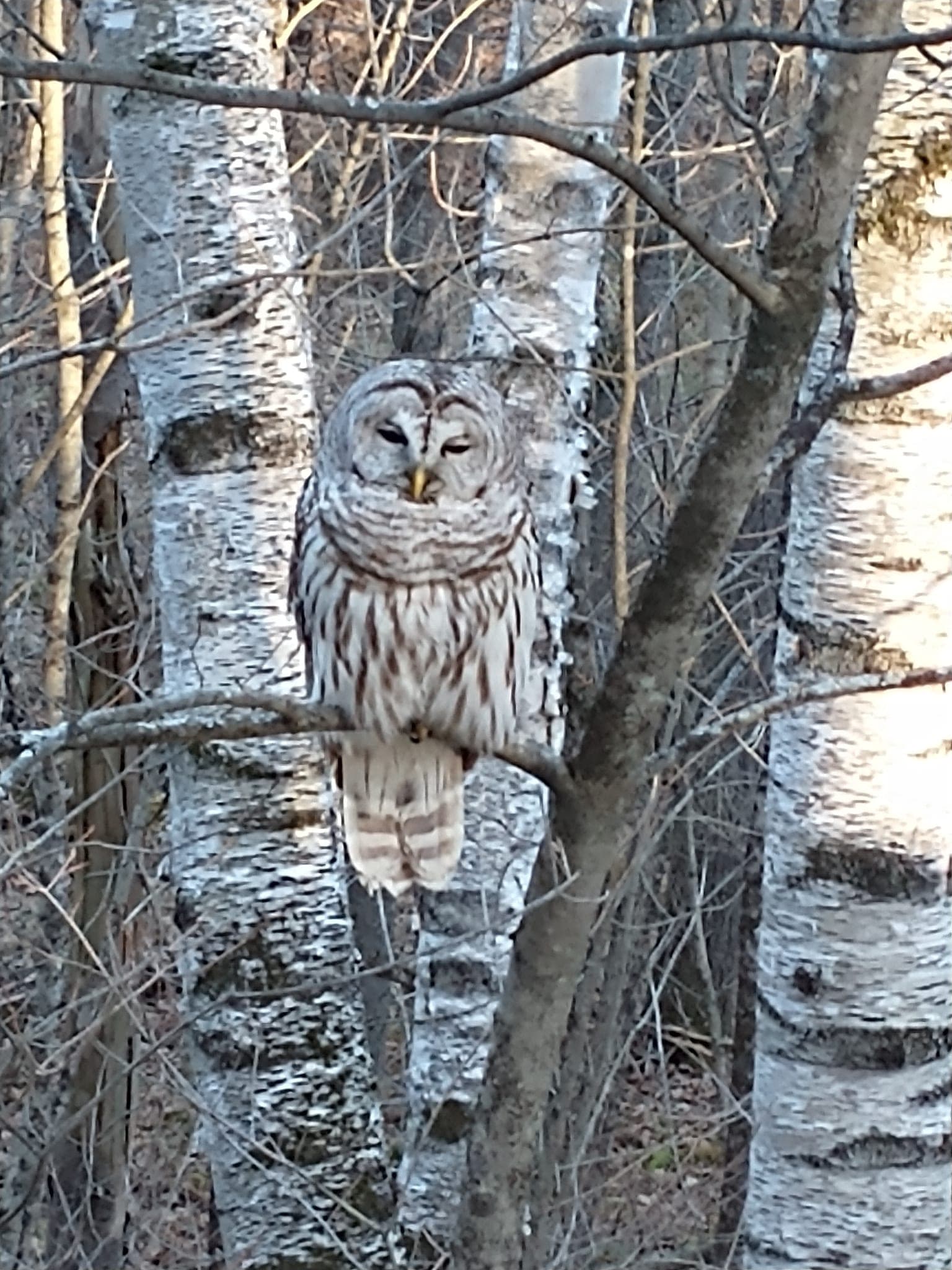
Check the head and the eyes. A Great Horned Owl has long ear tufts and yellow eyes; a Barred Owl has a smooth, round head with no tufts and dark brown eyes that look black. By ear, soft, deep hoots mean Great Horned, while a loud 'who cooks for you, who cooks for you-all' means Barred.
Great Horned and Barred Owls are the two big owls most people hear at night across the eastern half of the continent, and they often share the same woods. They look and sound very different once you know what to check, and their relationship is anything but friendly: the Great Horned Owl is the Barred Owl's most dangerous natural enemy.
Key differences
| Trait | Great Horned Owl | Barred Owl |
|---|---|---|
| Ear tufts | Long, wide-set feather tufts | None; smooth, round head |
| Eyes | Bright yellow | Dark brown, look black |
| Underparts | Fine crosswise barring all the way down | Crosswise bars on the chest, lengthwise streaks on the belly |
| Call | Deep, soft 4–5 note stutter: hoo, h'HOO, hoo, hoo | Loud 8-note 'who cooks for you, who cooks for you-all' |
| Weight | 2–5.5 lb | 1–2.3 lb |
| Habitat | Woods mixed with open ground, deserts, farmland, cities | Mature, wet forests, swamps and river bottoms |
| Nest | Old hawk, crow or heron nests; eggs from late November to March | Tree hollows and broken snags; eggs mostly March–April |
| Range | Nearly all of North America | East, southern Canada and the Pacific Northwest |
Who wins when they meet
The Great Horned Owl is bulkier, can weigh nearly twice as much, and has far heavier feet and talons. It preys on Barred Owl nestlings, fledglings and even adults, and radio-tracking studies show Barred Owls steering clear of areas where Great Horned Owls settle. The two coexist by splitting habitat: Great Horned Owls favor broken country with fields and woodlots, Barred Owls deep, continuous, often wet forest. Clearing and fragmenting woods tends to favor the Great Horned Owl.
Telling them apart by ear
Most encounters with these owls happen in the dark, so voice matters most. The Great Horned Owl's hoots are low, soft and evenly spaced, four or five notes that carry a long way, and pairs duet with the female's voice noticeably higher. The Barred Owl is louder and more rhythmic, with its 'who cooks for you' phrases, and pairs break into wild cackles and screams. Barred Owls also call freely in daylight; a big owl hooting at noon in a swamp is almost certainly a Barred Owl.
Owls and turkey hunters
Spring turkey hunters know both owls well. Before first light, a sharp owl call from a locator call can make a roosted gobbler shock-gobble and give away his tree, and many hunters imitate the Barred Owl's 'who cooks for you' for the job, since it is loud and Barred Owls themselves often answer. Both owls are protected under the Migratory Bird Treaty Act, so the owls themselves may not be harmed, captured or kept.
By the numbers
The traits the daily bird game compares for each.
| Clue | Great Horned Owl | Barred Owl |
|---|---|---|
| Group | Owls | Owls |
| Colors | Brown, Gray | Brown, White |
| Habitat | Forest | Forest |
| Region | Nationwide | Eastern |
| Length | 21 in | 18 in |
| Wingspan | 48 in | 41 in |
| Diet | Meat | Meat |
FAQ
Do Great Horned Owls eat Barred Owls?
Yes. Great Horned Owls are the Barred Owl's main natural predator and take nestlings, fledglings and occasionally adults, which is why Barred Owls avoid areas where Great Horned Owls live.
Which owl is bigger?
The Great Horned Owl. The two are close in length, but a Great Horned Owl is much heavier and more powerful, weighing 2 to 5.5 pounds to the Barred Owl's 1 to 2.3.
Which owl hoots during the day?
The Barred Owl. It often calls and hunts by day, especially at dawn and dusk, while Great Horned Owls do nearly all their hooting after dark.
Could you tell them apart from a few clues? Test yourself in today's puzzle.
Play the daily bird game