Birds · Side by side
Turkey Vulture vs Bald Eagle
How to tell them apart
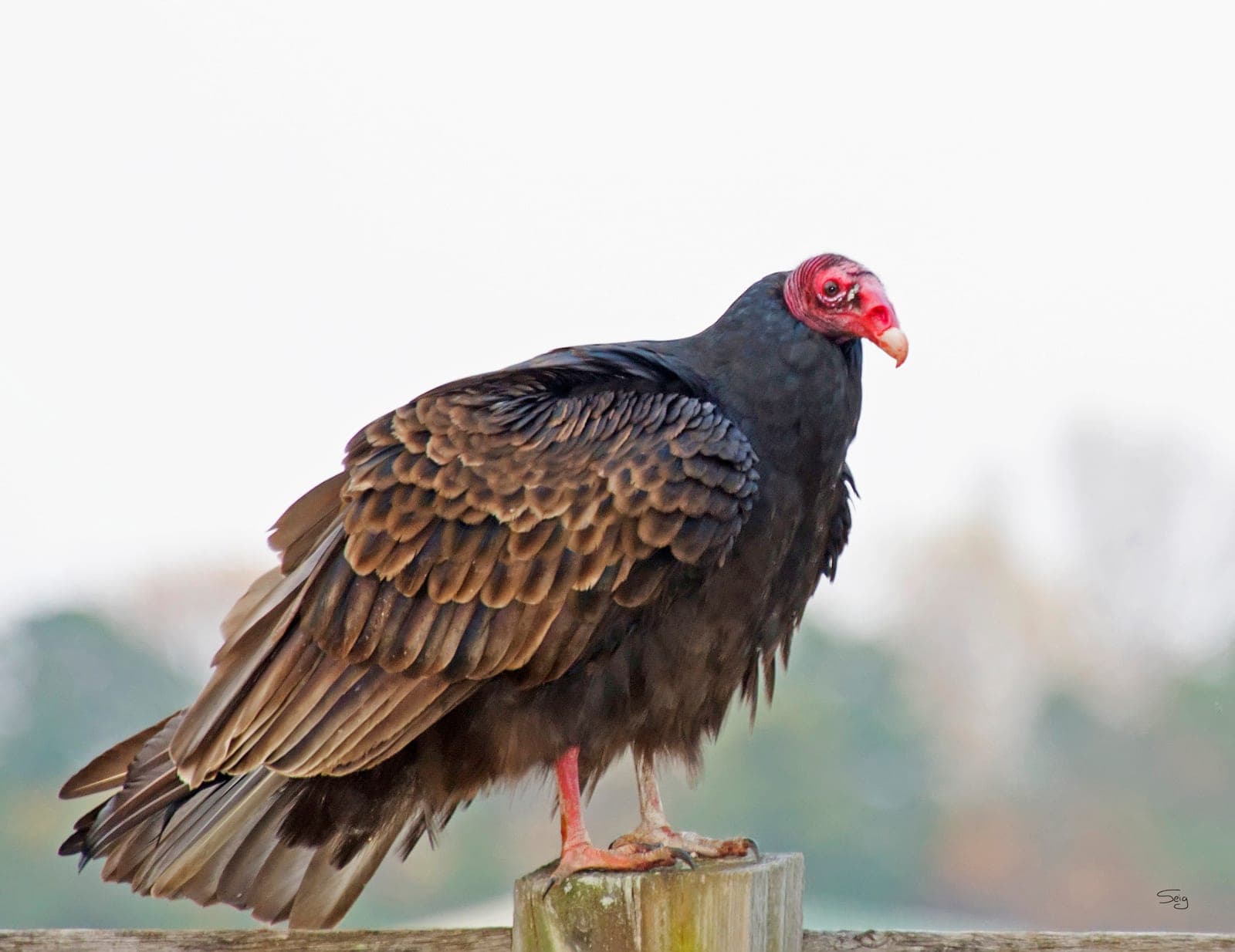
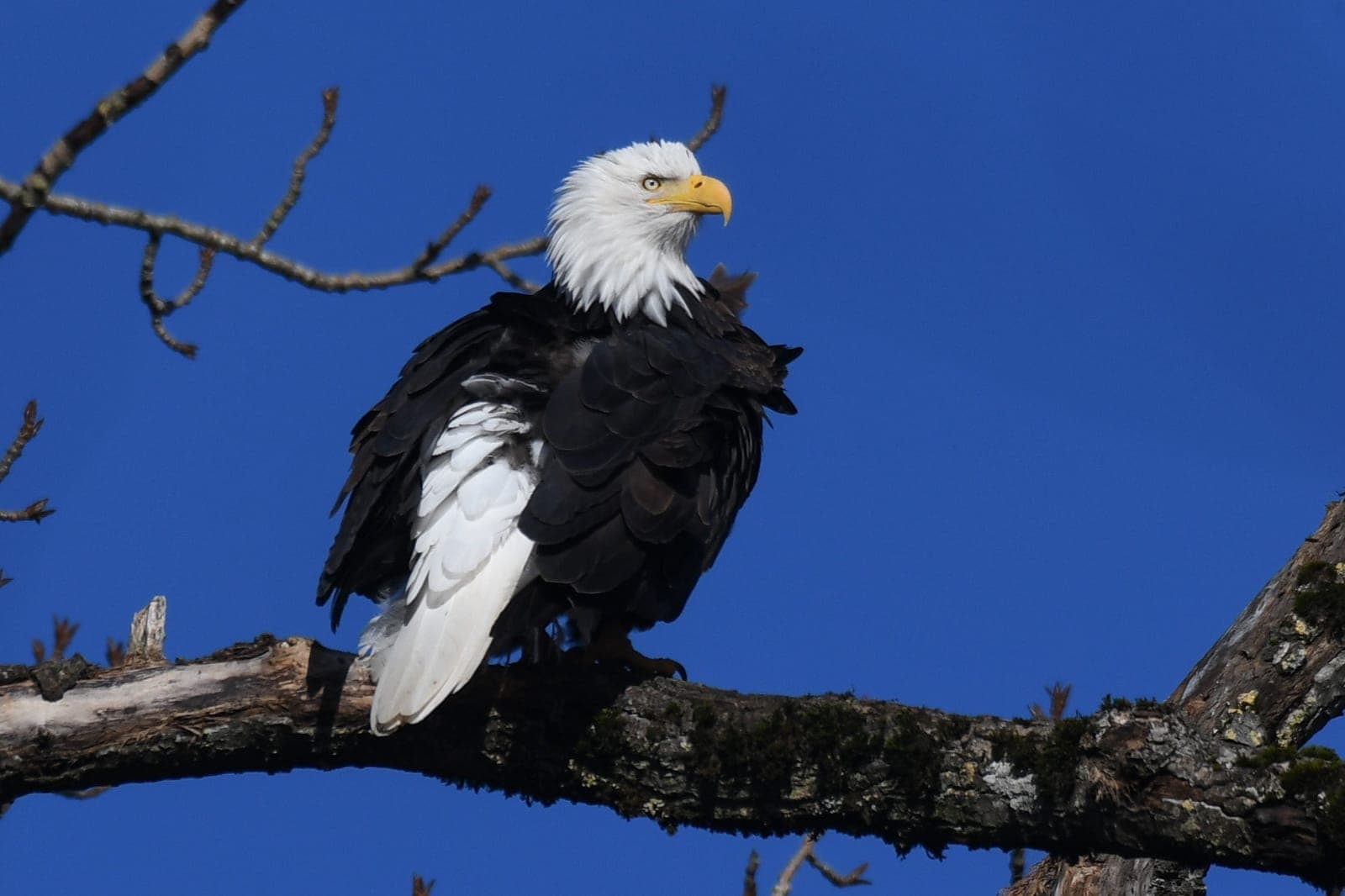
Quick answer
Watch the wings. A Turkey Vulture soars with its wings raised in a shallow V and rocks unsteadily from side to side, showing two-toned underwings and a tiny head; a Bald Eagle soars on flat, steady wings, with a big head and heavy bill jutting far forward.
A big, dark bird soaring over the river or circling above a roadkill deer is, more often than not, a Turkey Vulture, though hopeful eyes see an eagle. Young Bald Eagles are dark too, and both birds work the same carcasses in winter. Their flight, heads and underwings make them easy to separate, even a long way off.
Key differences
| Trait | Turkey Vulture | Bald Eagle |
|---|---|---|
| Soaring posture | Shallow V, tipping side to side | Flat and steady, like a plank |
| Head | Small, bare and red; grayish on juveniles | Large and feathered; white on adults, brown on young birds |
| Underwing | Black linings, silvery-gray flight feathers | Dark on adults; messy white blotches on young birds |
| Size | About 4 lb; 5.5–6 ft wingspan | 6.5–14 lb; about 6.5–7 ft wingspan |
| Feeding | Carrion only, found by sight and smell | Live fish and other prey, plus scavenging and piracy |
| Social habits | Roosts and migrates in flocks | Mostly solitary; migrates alone |
| Voice | Hisses and grunts only | High, squeaky cackles |
At a distance
The V-shaped wings and the wobble are the giveaway. A Turkey Vulture flaps as little as possible and teeters on the wind as if balancing, its silvery flight feathers flashing as it tips. A Bald Eagle holds its wings flat and rides the air steadily, and even a young, all-brown eagle shows a big head and bill projecting well ahead of the wings, where a vulture's head barely shows. Groups of big dark birds circling together are almost always vultures; eagles usually travel alone.
At the carcass
In winter both birds scavenge deer carcasses, roadkill and hunters' gut piles, so they often end up on the same meal. That habit carries real risks. Feeding along roads puts scavengers in the path of traffic — the oldest wild Bald Eagle on record with the USGS, at least 38 years old, was killed by a vehicle in New York in 2015 — and lead fragments in animals shot with lead ammunition poison both species. A 2022 study found chronic lead poisoning in nearly half of the eagles tested, and Turkey Vultures are vulnerable in the same way.
Protection
Both birds are federally protected. Turkey Vultures fall under the Migratory Bird Treaty Act, and Bald Eagles under both that law and the Bald and Golden Eagle Protection Act, which also bars disturbing eagles. Neither may be killed or harassed, and keeping their feathers, nests or eggs without a permit is illegal.
By the numbers
The traits the daily bird game compares for each.
| Clue | Turkey Vulture | Bald Eagle |
|---|---|---|
| Group | New World vultures | Hawks & eagles |
| Colors | Brown, Red, Gray | Brown, White |
| Habitat | Grassland | Wetlands |
| Region | Nationwide | Nationwide |
| Length | 29 in | 33 in |
| Wingspan | 69 in | 80 in |
| Diet | Meat | Fish |
FAQ
Is that a vulture or an eagle circling over the highway?
If the wings form a V and the bird wobbles, it is a Turkey Vulture. Eagles soar flat and steady, and a group circling together is far more likely to be vultures.
Do Bald Eagles eat roadkill?
Yes, especially in winter, when they scavenge deer carcasses and gut piles alongside vultures. That habit exposes them to passing traffic and to lead fragments from hunting ammunition.
Can a Turkey Vulture's head be gray?
Yes. Juveniles have a grayish head that turns red as they mature, which can make them look like Black Vultures; the two-toned underwing and rocking flight still identify them.
Could you tell them apart from a few clues? Test yourself in today's puzzle.
Play the daily bird game