Birds · Side by side
American Kestrel vs Peregrine Falcon
How to tell them apart
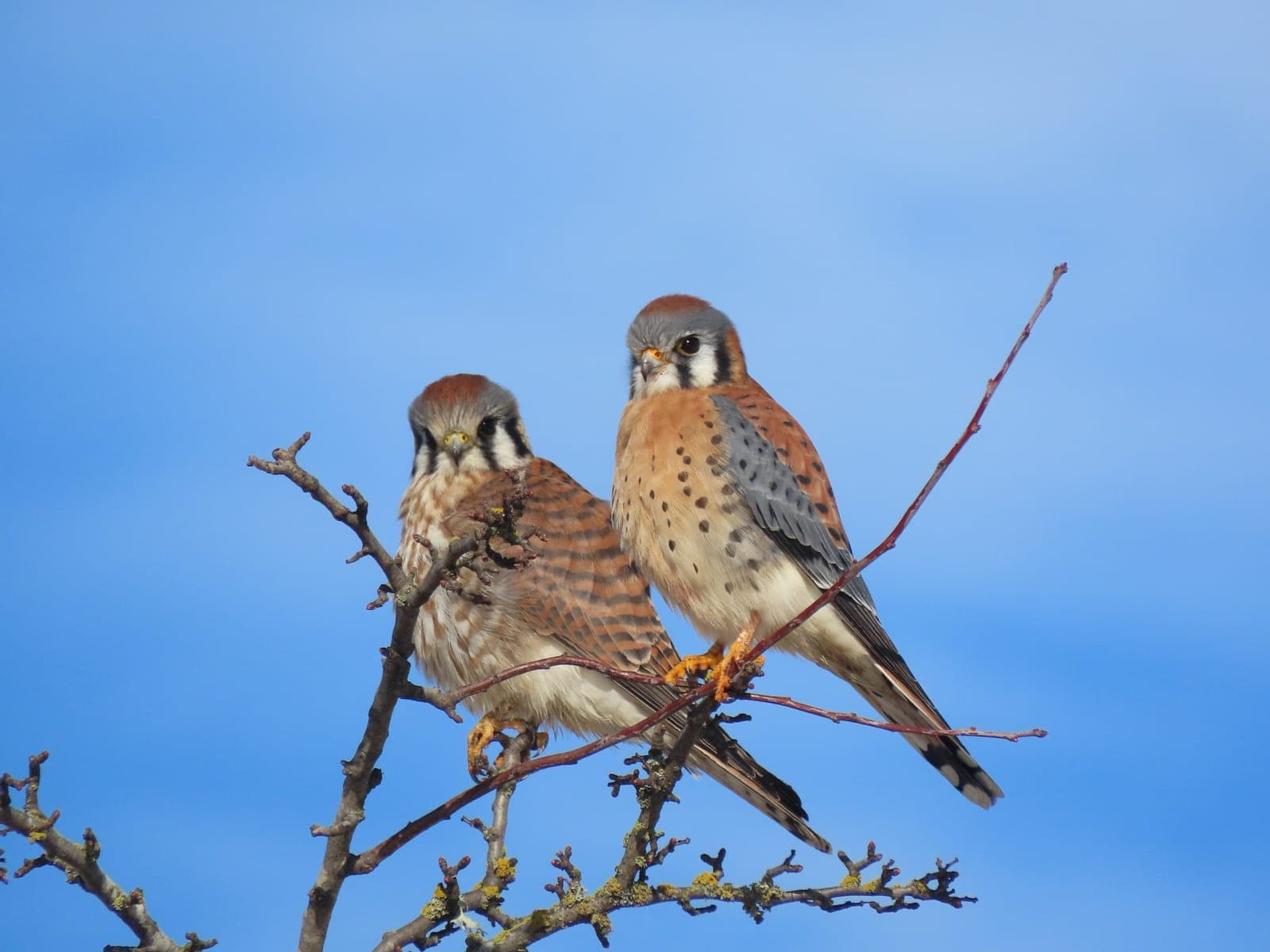
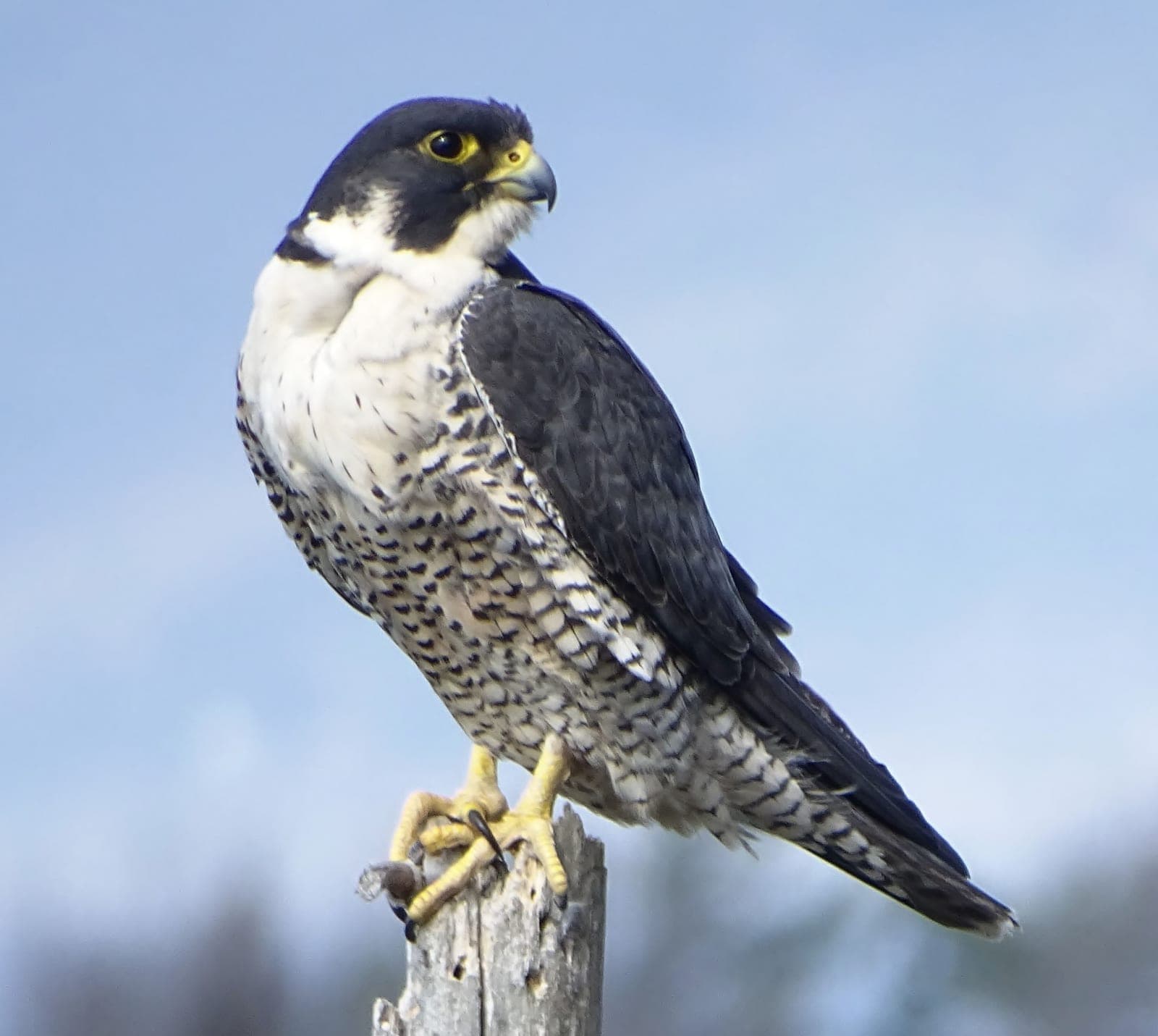
Quick answer
Check the color and the face: a kestrel is small and rusty orange on the back and tail, with two thin black stripes on each side of a pale face, while a peregrine is crow-sized and blue-gray above, with a dark hood and one thick black mustache.
The American kestrel and the peregrine falcon are North America's best-known falcons, and they share the family's long, pointed wings, dark facial marks and fast, powerful flight. Up close they are hard to confuse, since a peregrine weighs several times as much, but size is difficult to judge against an empty sky or on a distant wire. These are the marks that separate them, plus how each one hunts and where to look.
Key differences
| Trait | American Kestrel | Peregrine Falcon |
|---|---|---|
| Length | 8.7–12.2 in, about mourning dove-sized | 14.2–19.3 in, about crow-sized |
| Weight | 2.8–5.8 oz | About 1.2–3.5 lb |
| Wingspan | 20–24 in | 39–43 in |
| Back and tail | Rusty orange; males have blue-gray wings | Slate blue-gray on adults; brown on first-year birds |
| Face | Two thin black stripes per side; dark spots on the nape | Dark hood and one thick black mustache |
| Hunting style | Perches or hovers, then drops on insects and rodents | Stoops at high speed on birds in flight |
| Nest | Cavity: tree hole, crevice or nest box | Bare scrape on a cliff, building or bridge ledge |
| Population trend | Declining about 1–2% a year since the 1960s | Recovered; off the U.S. endangered list since 1999 |
Where you will see each
Kestrels belong to open country: roadside wires, fence posts, pastures and hayfields across nearly all of North America, plus open edges of towns and suburbs. Peregrines need a cliff or a tall structure for nesting and wide-open air for hunting, so look for them on river bluffs, seacoasts, bridges and downtown skylines, and over beaches and marshes in migration. In fall both species move south along ridges and coastlines, and a hawk watch is a good place to compare them in the same afternoon.
Two very different hunters
A kestrel watches from a perch or hovers in place on fast wingbeats, then drops onto a grasshopper, vole or small bird on the ground, and it can snatch insects in midair. A peregrine is an aerial bird-hunter: it climbs high, folds its wings and stoops, a dive the U.S. Fish and Wildlife Service puts at about 200 mph, to strike ducks, shorebirds and pigeons in flight. A small falcon hanging over a field is a kestrel; a big one plunging out of the sky into a flock is a peregrine.
Opposite conservation stories
The peregrine nearly vanished from North America in the mid-20th century as DDT thinned its eggshells; by 1975 only 324 known pairs remained on the continent. The 1972 DDT ban and the release of more than 6,000 captive-raised falcons brought it back, and it came off the U.S. endangered list in 1999. The kestrel, still far more numerous, has gone the other way, slipping by roughly 1 to 2 percent a year since the 1960s. Researchers suspect lost habitat and nest cavities, fewer insects, pesticides, rodent poisons and predation, and well-placed nest boxes are one of the most practical ways to help.
By the numbers
The traits the daily bird game compares for each.
| Clue | American Kestrel | Peregrine Falcon |
|---|---|---|
| Group | Falcons | Falcons |
| Colors | Orange, Gray, Black | Gray, Black, White |
| Habitat | Grassland | Coast |
| Region | Nationwide | Nationwide |
| Length | 10 in | 17 in |
| Wingspan | 22 in | 41 in |
| Diet | Meat | Meat |
FAQ
Is a kestrel a young peregrine falcon?
No. They are separate species. Young peregrines are close to full size when they leave the nest and are brown and streaked below, never rusty orange like a kestrel.
Which falcon is faster?
The peregrine, by far. Its hunting dive is cited at about 200 mph by the U.S. Fish and Wildlife Service, while kestrels hunt mostly by hovering and short drops onto prey on the ground.
Can you attract either falcon to your property?
Kestrels will use a nest box with a 3-inch entrance hole mounted 10 to 20 feet up in open country. Peregrines never visit yards; they nest on cliffs, buildings and bridges.
Are both falcons protected?
Yes. Both are native raptors protected under the Migratory Bird Treaty Act, so harming them or taking their eggs or active nests is illegal, and keeping either for falconry requires permits.
Could you tell them apart from a few clues? Test yourself in today's puzzle.
Play the daily bird game