How to identify a bald eagle
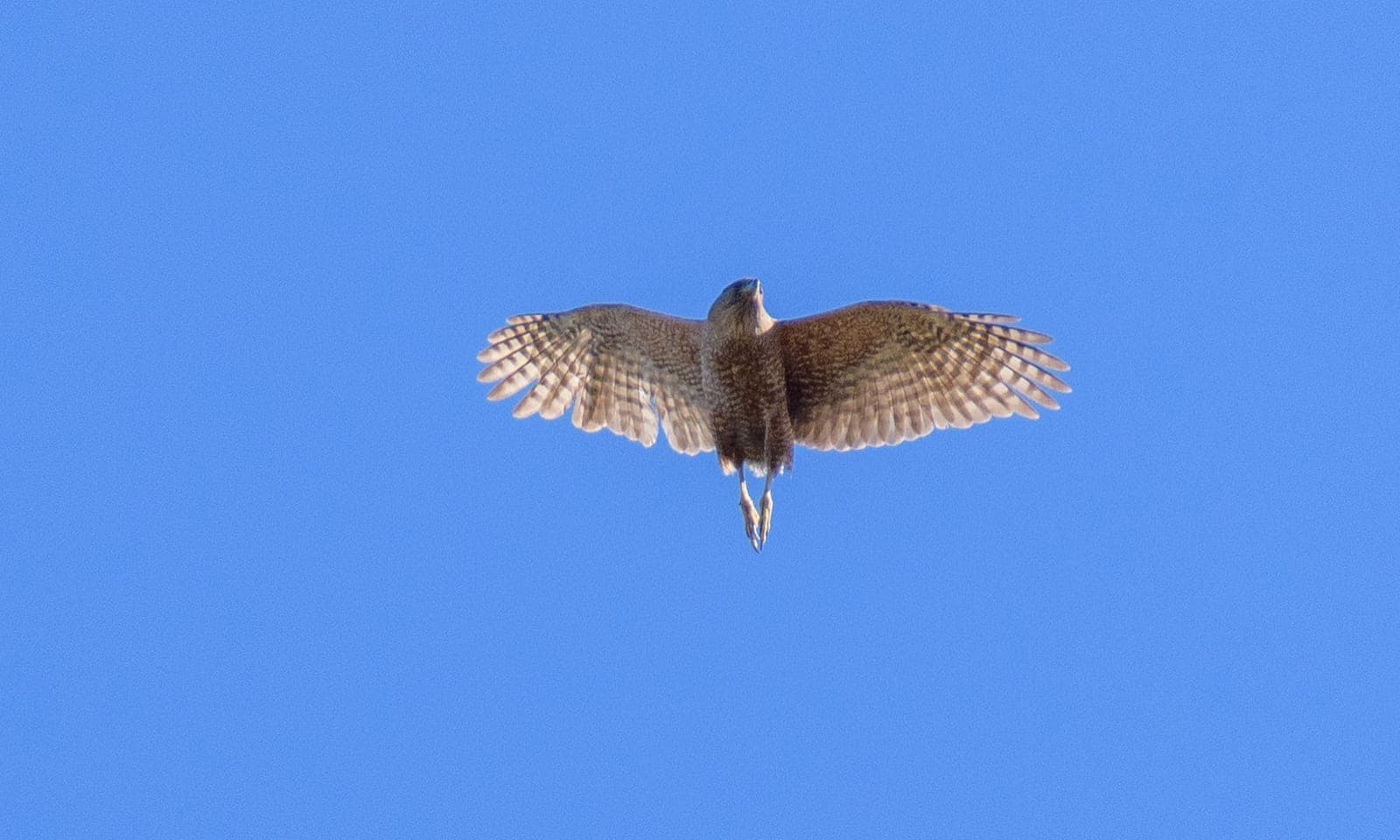
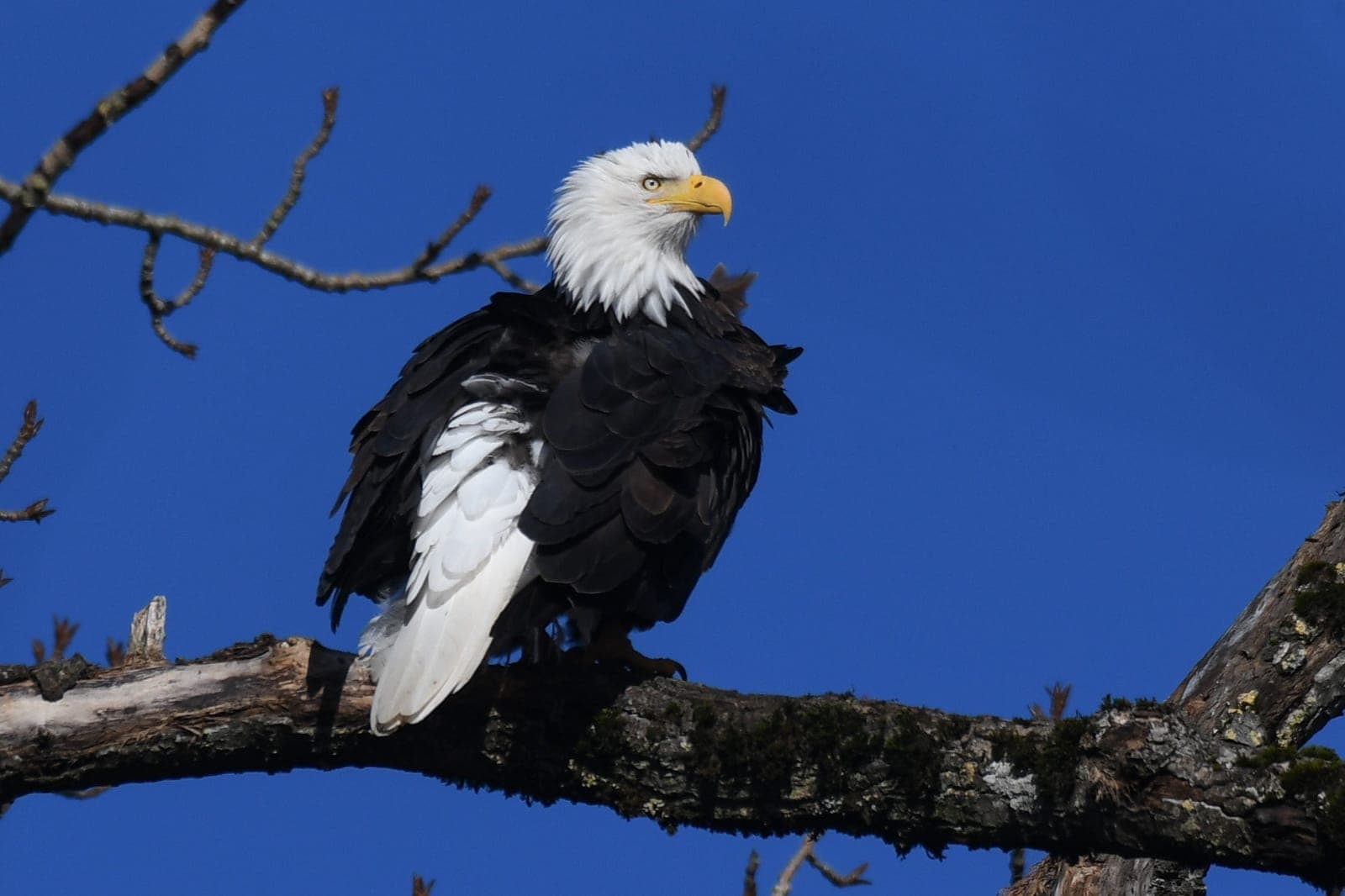
Adults are unmistakable: a dark chocolate-brown body and wings, a gleaming white head and tail, and a massive yellow bill, pale yellow eyes and yellow feet. 'Bald' comes from an older meaning of the word — marked with white on the head — not featherless. Young eagles are the confusing ones. For their first four or five years they are dark brown splashed irregularly with white on the belly, wingpits, wing linings and tail, and they gain the white head and tail gradually. In flight a Bald Eagle soars on long, broad, plank-like wings held flat and steady, with a big head and bill that jut far forward, at least half as far as the tail extends behind. The lower legs are bare and yellow. Females average about 25 percent bigger than males, and the largest birds come from Alaska.
- White head and tail on adults, set against a dark brown body
- Huge yellow bill, deep enough to look oversized
- Long, flat, plank-like wings in a steady soar
- Big head jutting well forward in flight
- Juveniles: dark brown with messy white blotches in the wingpits, wing linings and belly
- Bare yellow lower legs, not feathered to the toes
Look-alikes
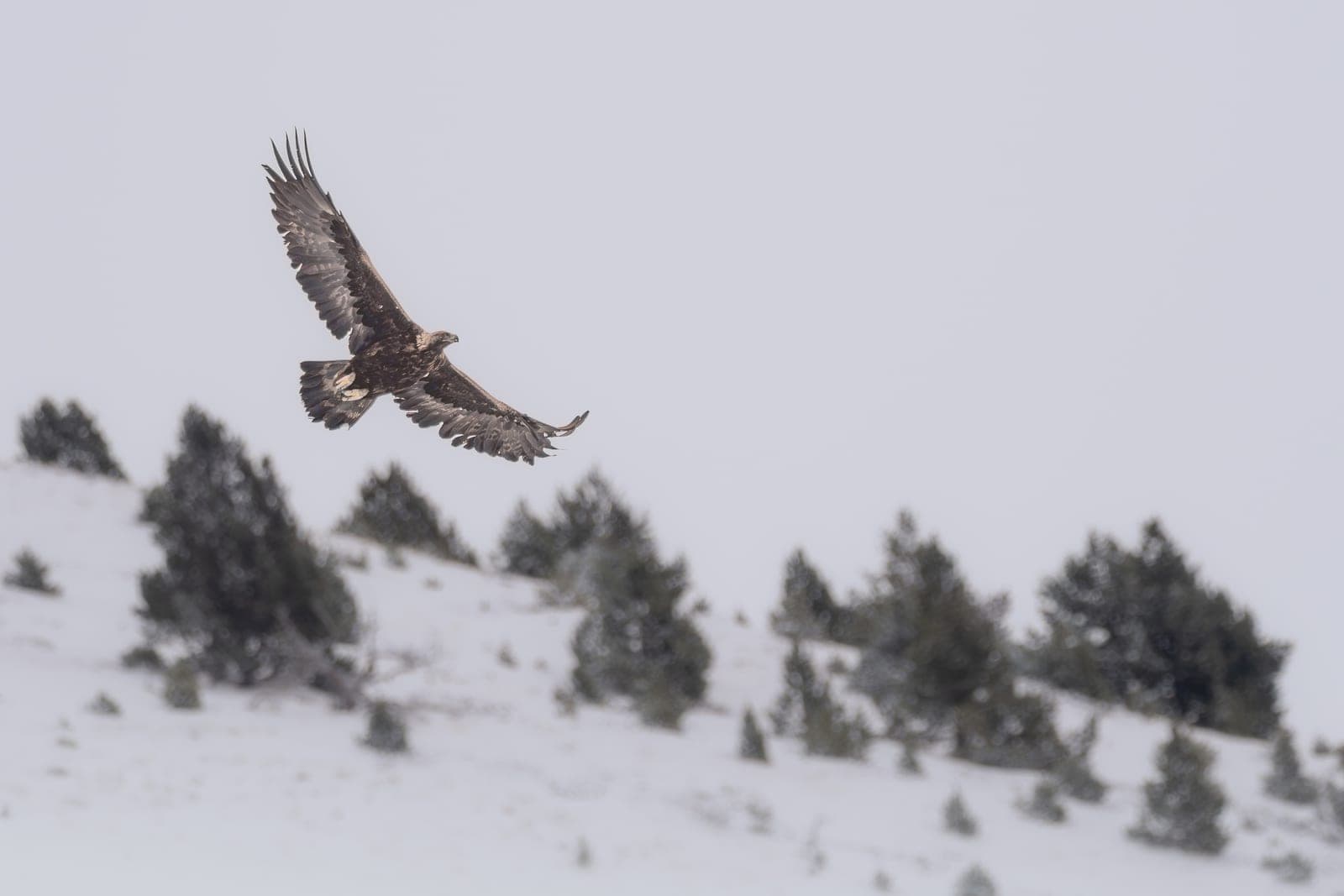
Golden Eagle
Adult Golden Eagles are dark all over with a golden nape, legs feathered to the toes and a smaller head and bill. Juvenile Goldens show tidy white patches at the base of the flight feathers and a white tail with a dark band, unlike the random white blotching of a young Bald Eagle.
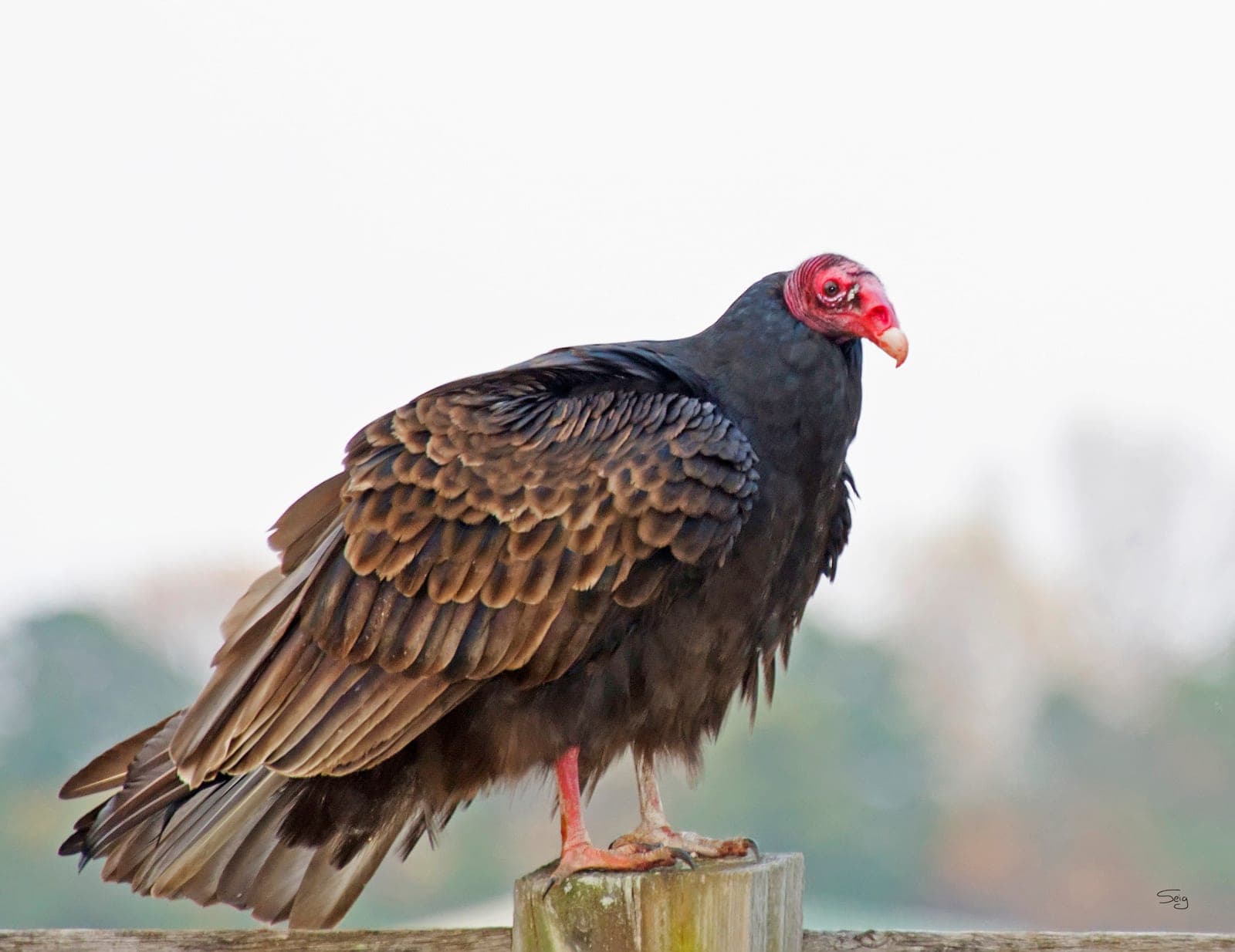
Full comparison →Turkey Vulture
Turkey Vultures hold their wings in a shallow V and rock unsteadily. Their underwings are two-toned with silvery flight feathers, and the tiny bare head looks almost missing at a distance.
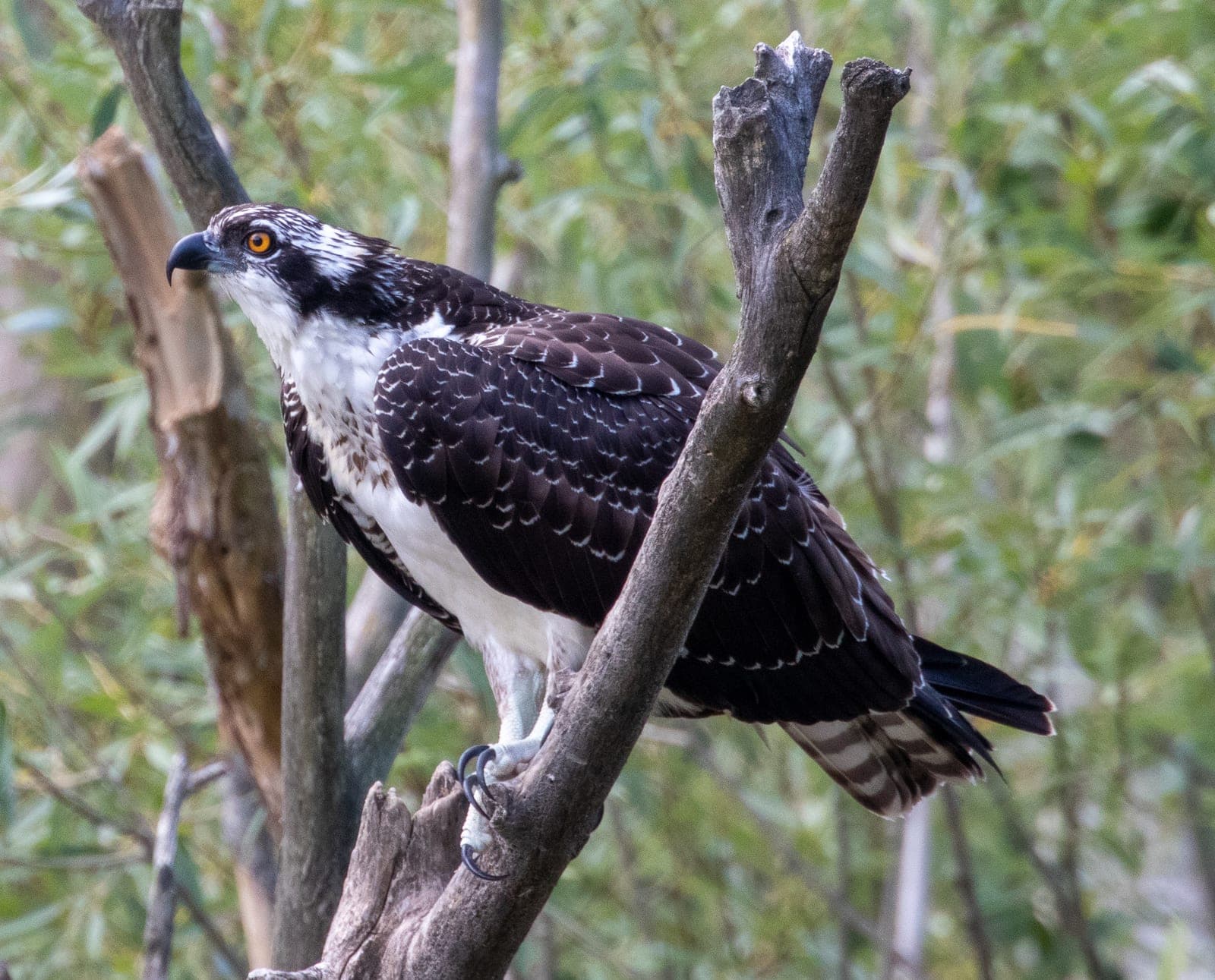
Full comparison →Osprey
Ospreys are much smaller and white underneath, with a dark stripe through the eye and crooked, gull-like wings showing dark wrist patches. They hover and plunge feet-first for fish instead of snatching them off the surface.
Full comparison →Range & habitat
Bald Eagles live across nearly all of Canada and Alaska, the entire Lower 48 and northern Mexico. In the 1950s the species had been pushed back largely to Alaska, the Aleutians, northern and eastern Canada and Florida, but by 2018 it was nesting again in every state of the continental United States and every Canadian province. Most of Canada's eagles live along the British Columbia coast. Adults breeding south of about 40 degrees north often stay home year-round, while northern interior birds move south and toward open water from August into January.
Bald Eagles almost always live near water: sea coasts, big rivers, large lakes and reservoirs, marshes and swamps, with tall trees for perching and nesting. They nest in places as different as Florida swamps, Alaskan conifer edges, Aleutian islands and Arizona desert rivers. Because they need open water to feed, winter concentrates them wherever water stays ice-free — below dams and locks, where turbines leave stunned fish, along big rivers and on salmon streams — and in the arid West they also winter in dry, open valleys near water.
Through the seasons
Spring
Northern eagles return to breeding territories between January and March, refurbish their huge stick nests and lay one to three eggs. Both parents incubate for 34 to 36 days, so by late spring most nests across the North hold fast-growing eaglets.
Summer
Eaglets can gain about six ounces a day, the fastest growth of any North American bird, and leave the nest at 8 to 14 weeks. From late summer into fall, spawning trout and salmon feed eagles in the Pacific Northwest, often as dead fish scavenged along the banks.
Fall
Juveniles wander and migrate earlier and farther than adults. In October and November, several thousand eagles gather along the Chilkat River near Haines, Alaska, to feed on a late salmon run, one of the largest eagle gatherings in the world.
Winter
Winter is eagle-watching season in the Lower 48, as birds bunch up below dams and along open stretches of big rivers, and 1,000 to 2,000 winter at Squamish, British Columbia. It is also when eagles scavenge most, including deer carcasses and hunters' gut piles — and when most lead poisoning happens.
How to find and attract Bald Eagles
Eagles cannot be drawn to a yard, but they are predictable. Find open water with fish or carrion and tall perches nearby, and the eagles will be there, especially in winter.
- In winter, check open water below dams and locks, where fish stunned by turbines float up.
- Scan the tallest trees along shorelines; eagles sit on big, exposed limbs for hours at a time.
- Look for huge stick nests near water before the leaves come out, then watch from a distance.
- Watch any Osprey carrying a fish: a nearby eagle will often chase it until it drops the catch.
- Check refuges and big rivers that host winter eagle-watching events, often with scopes set up.
- Stay well back from nests and roosts; disturbing eagles is itself a violation of federal law.
- Hunters can use non-lead ammunition so gut piles and lost game do not poison scavenging eagles.
Diet & life cycle
What it eats
Bald Eagles are opportunists with a strong taste for fish. Across 20 diet studies of nesting eagles, fish made up 56 percent of prey, birds 28 percent and mammals 14 percent, and more than 400 prey species have been recorded. Salmon, herring, catfish and carp are typical, and eagles prefer bigger fish than any other North American fish-eating bird, often around 14 inches long. They snatch fish from the surface with their talons rather than diving under, wade into shallows during spawning runs, pick off ducks and other waterbirds, and readily eat carrion, from dead salmon to roadkilled deer. They are also accomplished thieves that rob Ospreys, herons and river otters of their catches.
Life cycle
Bald Eagles generally mate for life and first breed at four or five years old; if one partner dies, the survivor takes a new mate. Pairs return to the same nest year after year and add to it each season, so nests can become enormous — one Florida nest measured in 1963 was about 9.5 feet across and 20 feet deep, and the biggest can weigh a ton or more. The female usually lays two eggs, sometimes one or three, and both parents incubate for 34 to 36 days. Eaglets leave the nest at 8 to 14 weeks, and many do not survive their first months on their own. Survivors take four to five years to grow the white head and tail.
Oldest on record
The oldest Bald Eagle in the USGS Bird Banding Laboratory longevity records was at least 38 years old. It was banded in its first year in New York in August 1977 and was killed by a vehicle in New York in June 2015.
SourceAttracting & watching
Bald Eagles never come to feeders, and feeding them is a bad idea. The best viewing is from December through February at open water below dams, on big rivers and at wildlife refuges, and in fall along salmon rivers in the Pacific Northwest and Alaska. A spotting scope from a parking area or overlook beats walking up on perched birds. Eagles, their nests, eggs and feathers are protected under the Bald and Golden Eagle Protection Act and the Migratory Bird Treaty Act, and even a feather found on the ground may not be kept without a permit.
Conservation
Least Concern (IUCN); removed from the U.S. Endangered Species Act list in 2007. Shooting, habitat loss and DDT, which thinned eggshells, cut the Lower 48 population to 417 known nesting pairs by 1963. Decades of protection, the 1972 DDT ban and recovery work turned that around: the U.S. Fish and Wildlife Service estimated about 316,700 Bald Eagles and more than 71,400 nesting pairs in the Lower 48 from 2018–2019 surveys, and the species came off the endangered list in 2007. It is still protected by the Bald and Golden Eagle Protection Act and the Migratory Bird Treaty Act. Lead is the main worry now: a 2022 study in Science that tested 1,210 eagles from 38 states found chronic lead poisoning in nearly half of them, mostly from scavenging fragments of lead bullets and shot.