How to identify a turkey vulture
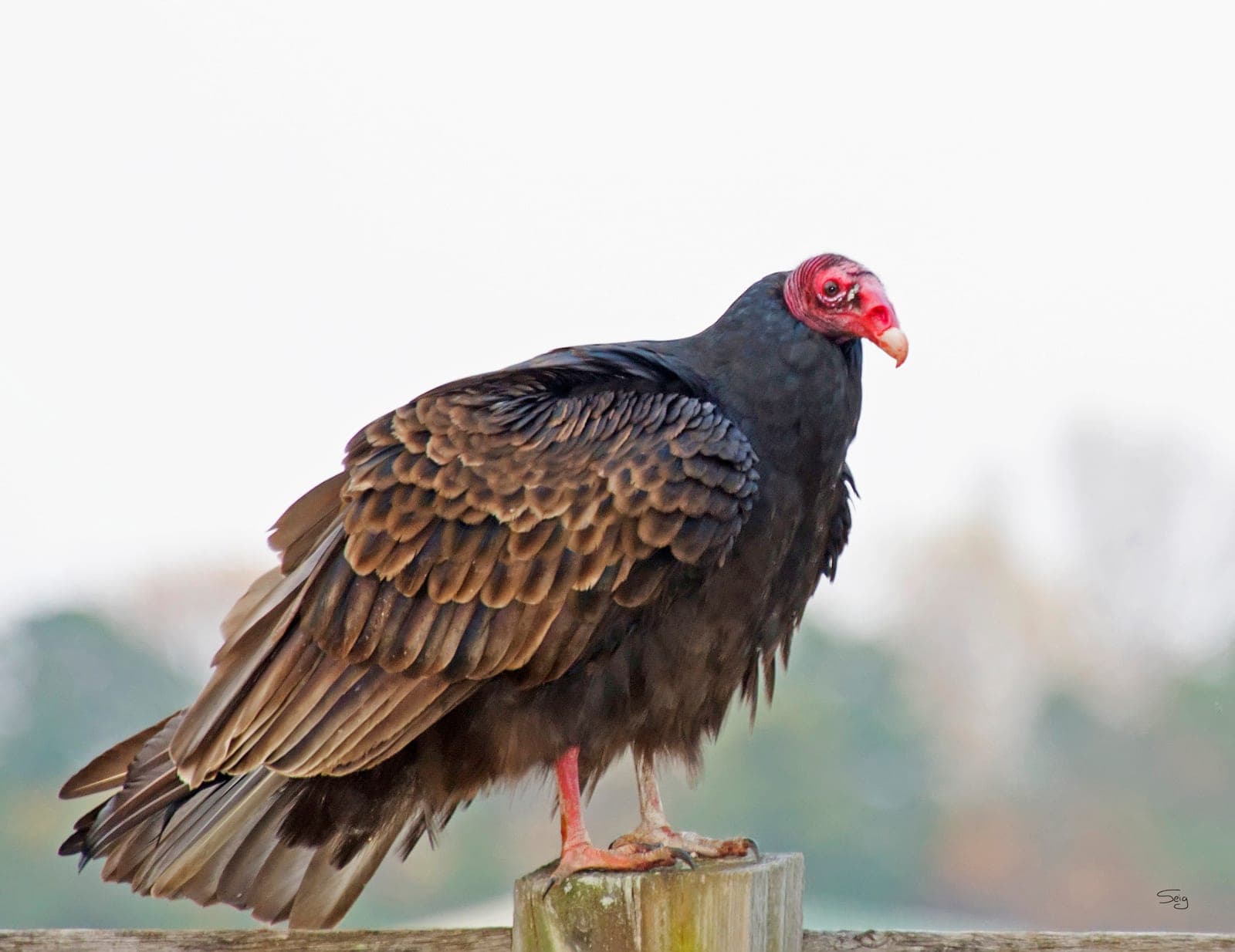
From a distance a Turkey Vulture looks like a big blackish-brown bird with long wings, a longish tail and a head so small it seems to be missing. Up close, adults have a bare, wrinkled red head and a short, hooked ivory bill — the resemblance to a male wild turkey's head gave the bird its name — while juveniles have a grayish head that reddens with age. The best mark is the flight: wings held in a shallow V and tipping side to side as the bird teeters on the wind, flapping as little as possible. From below, the flight feathers are silvery gray against black wing linings, giving a two-toned look. On the ground Turkey Vultures are awkward, hopping heavily and needing a hard push, a hop and several deep flaps to take off. Males and females look alike and are close in size.
- Small bare red head; grayish on juveniles
- Wings held in a shallow V, rocking in flight
- Two-toned underwing: black linings, silvery flight feathers
- Long tail extending well past the feet
- Pale, ivory-colored bill
Look-alikes
Black Vulture
Black Vultures have a short, square tail, a gray-black bare head and white patches only near the wingtips. They flap in quick bursts and soar on flatter wings without the Turkey Vulture's rocking.
Bald Eagle
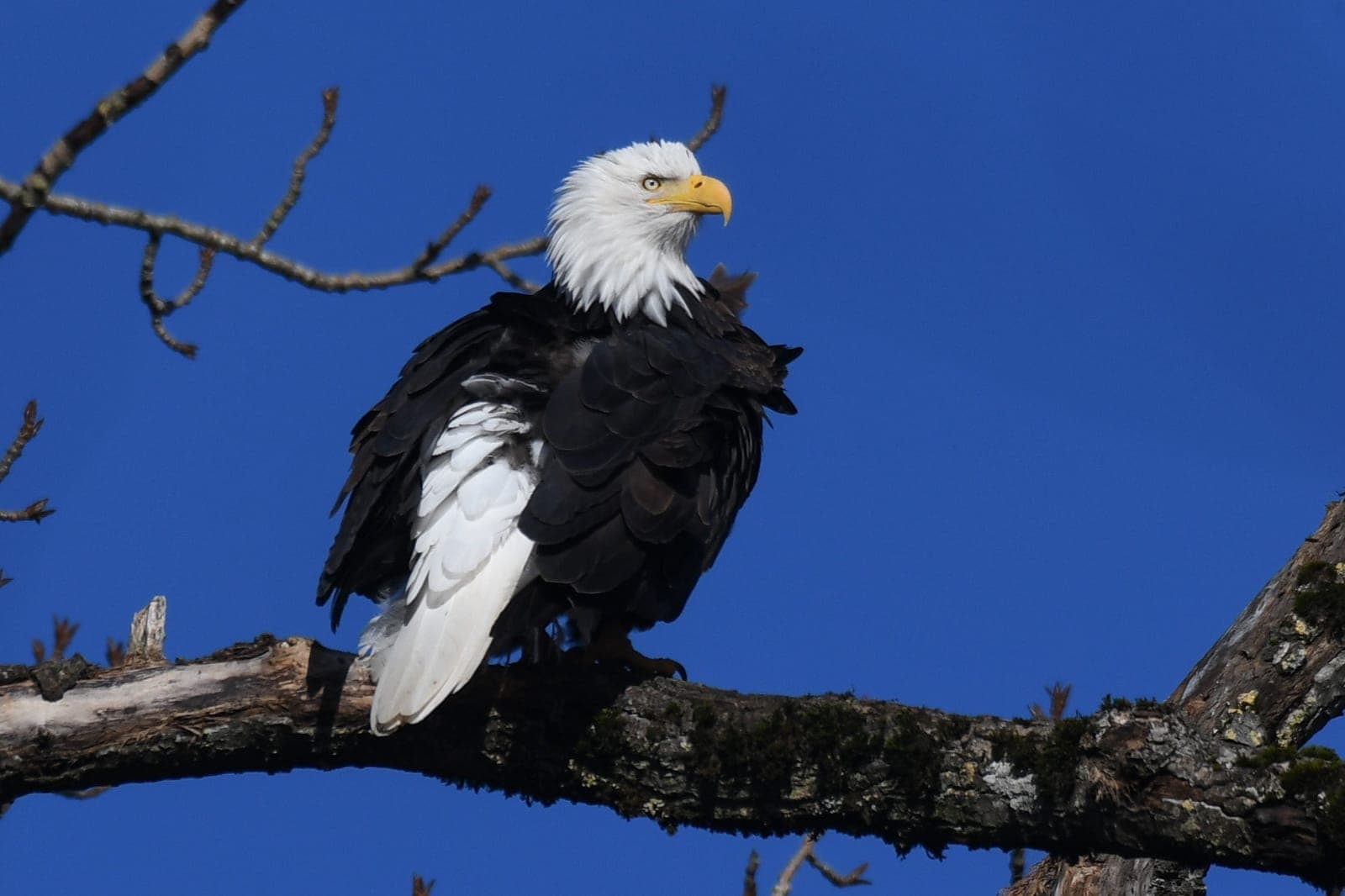
Young Bald Eagles are dark too, but they soar on flat, steady wings, with a big feathered head and heavy bill jutting forward and no silvery band along the back half of the underwing.
Full comparison →Golden Eagle
Golden Eagles are heavier, with a feathered golden-brown head, and soar steadily without the vulture's tipsy rocking. Their underwings lack the sharp two-toned contrast.
Range & habitat
Turkey Vultures range from southern Canada through the entire Lower 48, Mexico, Central America and South America all the way to Cape Horn. They live year-round across much of the southern United States, while birds from the North migrate long distances, some all the way to South America. Northern birds average larger than those in the tropics: Florida birds average about 4.4 pounds, Venezuelan birds under 3.5.
Turkey Vultures favor open and semi-open country with woods, cliffs or rock outcrops nearby for roosting and nesting: farmland, pasture, rangeland, foothills, desert, roadsides and the edges of towns. They generally avoid unbroken forest but can sniff out carcasses beneath a canopy, and they regularly forage along shorelines and over small offshore islands. Communal roosts in dead trees or conifers can hold several hundred birds, sometimes mixed with Black Vultures.
Through the seasons
Spring
Northern birds return in late winter and early spring; in Hinckley, Ohio, their arrival has been celebrated on Buzzard Day, March 15, since 1957. Breeding begins in March in the southern United States and later farther north, with eggs laid on the bare floor of a cave, crevice, hollow log or abandoned building.
Summer
Both parents incubate for about five weeks and feed the chicks by regurgitation; the young fly at about nine to ten weeks. On hot days, vultures soar high on thermals and cool off by squirting liquid waste down their legs, a habit called urohidrosis.
Fall
Families stay together into fall. Northern Turkey Vultures then migrate in flocks, sometimes huge ones, spiraling up on thermals and gliding on, and they can travel long distances without feeding. Many winter in Mexico and Central America, and some reach South America.
Winter
In the southern United States, resident and migrant vultures pack into large communal roosts, often with Black Vultures, and fan out to forage once the day warms. Hunting seasons leave deer carcasses and gut piles, and vultures find them fast.
How to find Turkey Vultures
Turkey Vultures are among the easiest big birds to see. The skill lies in telling them from eagles and hawks at a distance and in finding the roosts where dozens or hundreds gather.
- Watch for the shallow V and side-to-side rocking; no eagle or big hawk soars that way.
- Scan roadsides, pastures and riverbanks, where roadkill and washed-up fish draw them in.
- Look for roosts at dusk in tall dead trees and conifers along rivers and ridges.
- Wait until mid-morning on sunny days, when rising thermals lift vultures into the air.
- Visit Hinckley, Ohio, for Buzzard Day in mid-March to see the spring return celebrated.
- Hunters can use non-lead ammunition so gut piles and lost game do not poison scavengers.
Diet & life cycle
What it eats
Turkey Vultures eat almost nothing but carrion and prefer animals that died recently over rotting ones. Roadkill, dead livestock, washed-up fish and winter-killed deer are typical, along with fish and tadpoles stranded in drying ponds, the odd insect and, rarely, decaying plants; they almost never kill anything themselves. They find food by sight and by smell, picking up ethyl mercaptan and other gases released early in decay with an unusually large olfactory lobe in the brain. That nose lets them find carcasses hidden under a forest canopy, and Black Vultures, King Vultures and condors, which lack the long-range sense of smell, often follow them in. As the story goes, a Union Oil worker noticed vultures gathering where gas laced with that odorant leaked from pipelines, and in the late 1950s ornithologist Kenneth Stager confirmed in field tests that the birds home in on the smell.
Life cycle
Turkey Vultures build no nest. The female lays one to three eggs, usually two, cream-colored and blotched with brown or lavender, on the bare floor of a cave, cliff crevice, hollow tree or log, dense thicket or abandoned building. Both parents incubate for about 30 to 40 days and feed the chicks regurgitated food. Threatened chicks hiss and vomit, and adults at the nest may flee, vomit on the intruder or play dead. The young fly at about nine to ten weeks, and family groups stay together until fall. Turkey Vultures roost communally year-round, scattering to forage alone or in small groups during the day.
Oldest on record
The oldest Turkey Vulture in the USGS Bird Banding Laboratory longevity records was at least 23 years and 4 months old. It was banded as an adult in California in March 1997, and its marker was seen on the living bird in California in October 2019.
SourceAttracting & watching
Turkey Vultures should never be fed, but they make useful neighbors: a free cleanup crew for roadkill and dead animals. The best viewing is at communal roosts at dusk and dawn, along ridges and roadsides on warm mid-mornings, and at fall migration lookouts where flocks stream past. Turkey Vultures are protected under the Migratory Bird Treaty Act, so killing, capturing or harassing them, or keeping their feathers, eggs or nests, is illegal without a federal permit.
Conservation
Least Concern (IUCN). Turkey Vultures are abundant, with population estimates ranging from about 18 to 28 million birds, and numbers appear stable after declines in parts of North America during the 20th century. Lead fragments in carcasses and gut piles from animals shot with lead ammunition are a documented threat, along with other contaminants. Ranchers sometimes blame them for newborn calves killed by Black Vultures, but Turkey Vultures do not kill livestock.