How to identify a blue jay
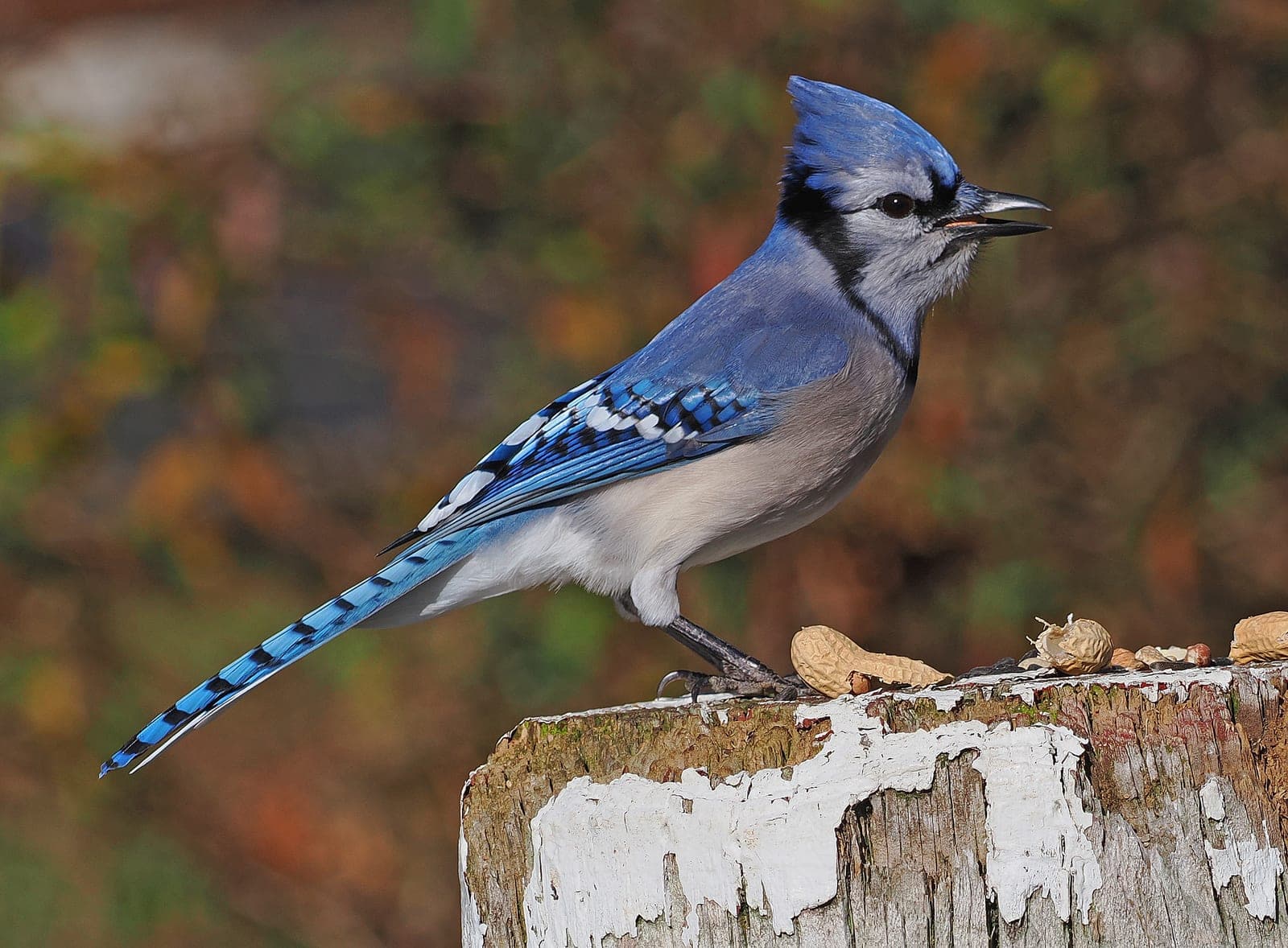
A Blue Jay is a bit larger than a robin and much smaller than a crow, with a pointed crest it raises when excited and flattens when calm. The back is a soft lavender-blue, the wings and tail are brighter blue barred with black, and the face and underparts are grayish white. A black band runs across the throat and up the sides of the head like a necklace. In flight, white patches on the wings and the white corners of the long tail stand out. The blue is not a pigment: it comes from the way light scatters inside the feather, which is why a crushed or backlit feather looks dull gray.
- Blue crest above a whitish face
- Black necklace across the throat and around the head
- White wing bars and white tips on the wing feathers
- White corners on a long, blue, black-barred tail
- Loud 'jay! jay!' scream, often mixed with a near-perfect hawk call
Look-alikes
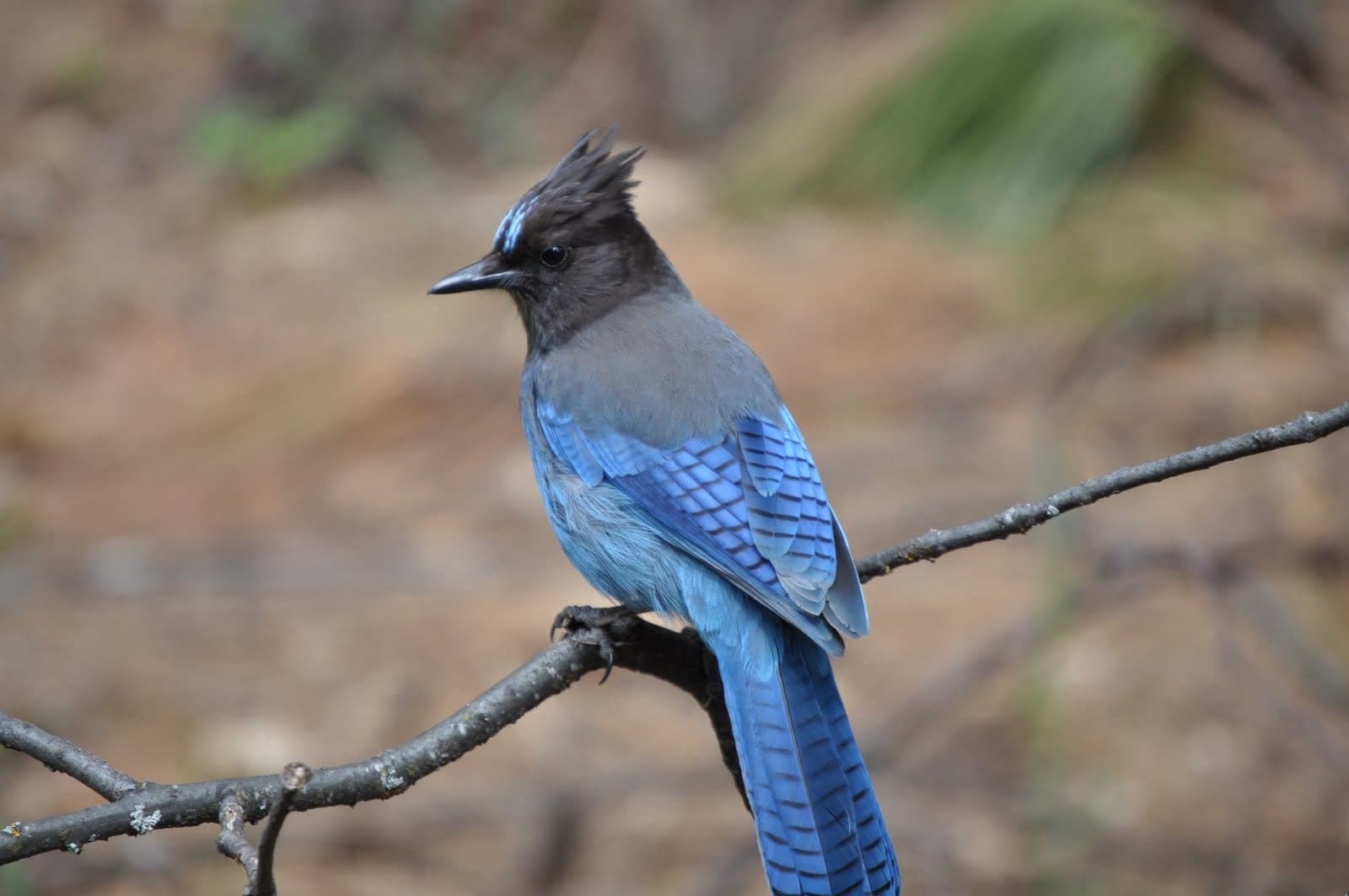
Steller's Jay
Steller's Jays have a black head, crest and chest with dark blue underparts, and no white wing bars, tail corners or white belly. They live in the West; the two meet mainly along the eastern foothills of the Rockies, where hybrids turn up.
Full comparison →Eastern Bluebird
Bluebirds are much smaller, about 7 inches, with no crest, a rusty-orange throat and breast, and a soft musical warble instead of harsh screams.
Indigo Bunting
A male Indigo Bunting is sparrow-sized and blue all over, with no crest, no white markings and a short, conical seed-eater's bill.
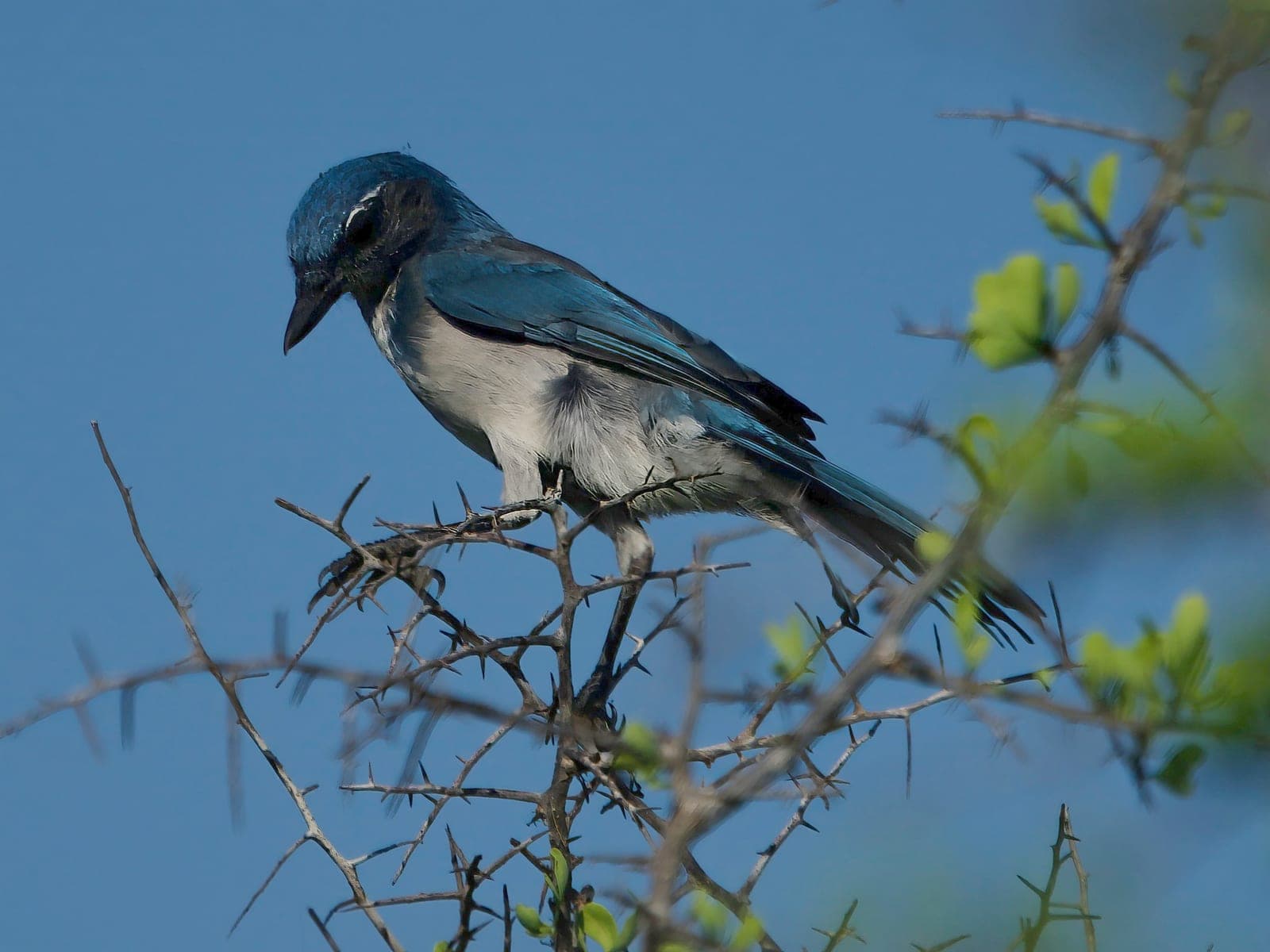
Florida Scrub-Jay
Florida Scrub-Jays have no crest, a blue head and wings over a gray-brown back, and no black necklace or white wing marks. They live only in patches of oak scrub in peninsular Florida.
Range & habitat
Blue Jays live year-round across most of eastern and central North America, from southern Canada and Newfoundland south to Florida and the Gulf Coast, and west across the Great Plains to the foot of the Rockies. Northern birds partly withdraw in fall. The range has been creeping northwest, and strays and wintering birds now turn up occasionally in the Pacific Northwest.
Blue Jays favor mixed and deciduous woods, especially where oaks and beeches drop a nut crop, and they avoid pure conifer forest. They are just as at home in leafy suburbs, city parks, farm woodlots and towns with big shade trees. In the South they also use scrubby pine and oak woods. Feeders, oaks and tall trees for nesting are usually enough to keep a family of jays in a neighborhood.
Through the seasons
Spring
Some birds that went south return in April and May, often in long, quiet daytime flocks. Pairs court and build nests, and jays turn secretive around the nest, so a once-noisy yard can go quiet.
Summer
Adults feed caterpillars and other insects to their young, and by midsummer family groups follow their noisy, begging fledglings through the woods. Look for molting, ragged-looking adults in late summer.
Fall
Migration peaks in September and early October, when loose flocks stream along the Great Lakes shores and the Atlantic coast. Hawk Ridge in Duluth has counted more than 75,000 jays in a single fall. Resident jays spend the season burying acorns.
Winter
Most Blue Jays stay put, and winter is when they dominate feeders. Small groups move through the neighborhood, scream at hawks and owls, and dig up the acorns they buried in fall.
How to find and attract Blue Jays
Blue Jays announce themselves: listen for the harsh 'jay! jay!' and for a Red-shouldered Hawk scream in a yard with no hawk in it. The surest way to bring them in is a big platform feeder, peanuts and a couple of oaks.
- Offer whole peanuts in the shell on a tray or platform feeder; jays will carry them off one or two at a time.
- Black-oil sunflower seed, cracked corn and suet all draw jays, especially in winter.
- Use sturdy feeders with room to land, since tube feeders with small perches suit chickadees better than jays.
- Plant native oaks, beeches and hazelnuts; jays bury the nuts and end up planting new trees.
- Follow the commotion: a mob of screaming jays often marks a roosting owl or a perched hawk.
- Keep a shallow birdbath full; jays drink and bathe often, even in winter if the water stays open.
Diet & life cycle
What it eats
Blue Jays are omnivores that eat mostly plant food: acorns, beechnuts and other nuts, seeds, grain and berries, which make up about three-quarters of the year's diet and even more in winter. They add caterpillars, beetles, grasshoppers, spiders and snails, especially in summer. They do raid other birds' nests for eggs and chicks, but studies of their stomach contents show that is a small part of what they eat. In fall they cache food: radio-tracking studies suggest a single jay can bury several thousand acorns in one season, and the ones never recovered help oak forests spread.
Life cycle
Pairs often stay together year-round. Both sexes build a bulky cup of twigs, bark strips and grass, sometimes held together with mud, usually 8 to 30 feet up in a fork or crotch of a tree. The female lays about four or five spotted eggs and does most or all of the incubating for 16 to 18 days while the male brings her food. The young leave the nest 17 to 21 days after hatching and stay with their parents for a month or two afterward. Jays usually breed at one year old, and adults that survive their first years commonly live around seven years.
Oldest on record
The oldest Blue Jay in the USGS Bird Banding Laboratory's longevity table was at least 26 years 11 months old. It was banded as a young bird in Newfoundland in October 1989 and found in May 2016 after getting caught in fishing gear.
SourceAttracting & watching
Blue Jays come readily to yards. Whole peanuts are the top draw, followed by sunflower seed, suet and cracked corn served on a platform or a large hopper. Water helps year-round. Oaks are the long-term investment: a yard with acorn-bearing trees will have jays every fall. They do not use nest boxes, but dense trees and shrubs give them nest sites.
Conservation
Least Concern (IUCN). Blue Jays are still common, with roughly 17 million birds, and they have adapted well to suburbs and cities. Breeding Bird Survey data show modest long-term declines in parts of the East, including New England and the Mid-Atlantic. West Nile virus has killed many jays since it arrived in North America but has not caused lasting population-wide losses. Like nearly all native songbirds, they are protected under the Migratory Bird Treaty Act.