Birds · Side by side
Blue Jay vs Steller's Jay
How to tell them apart
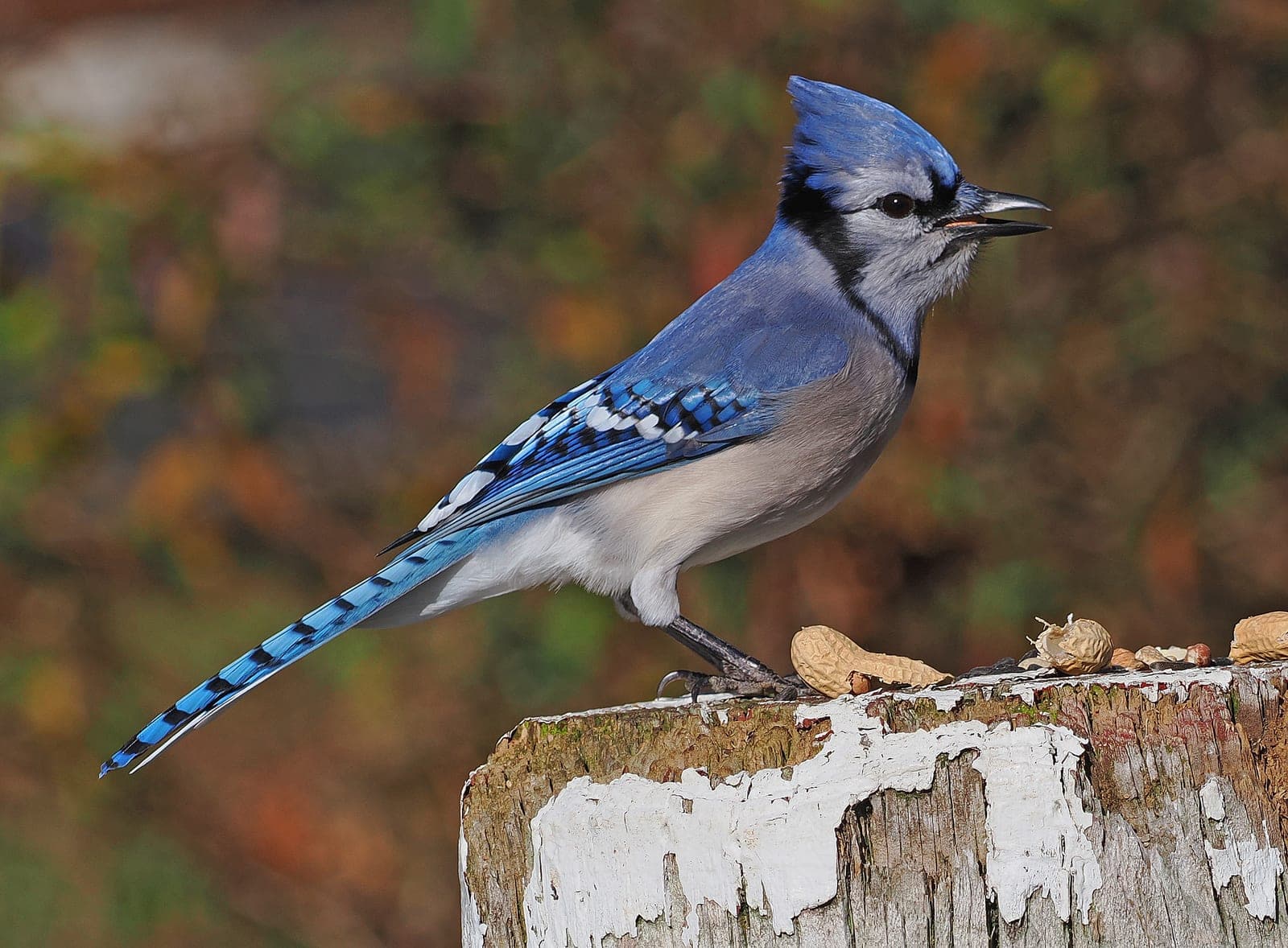
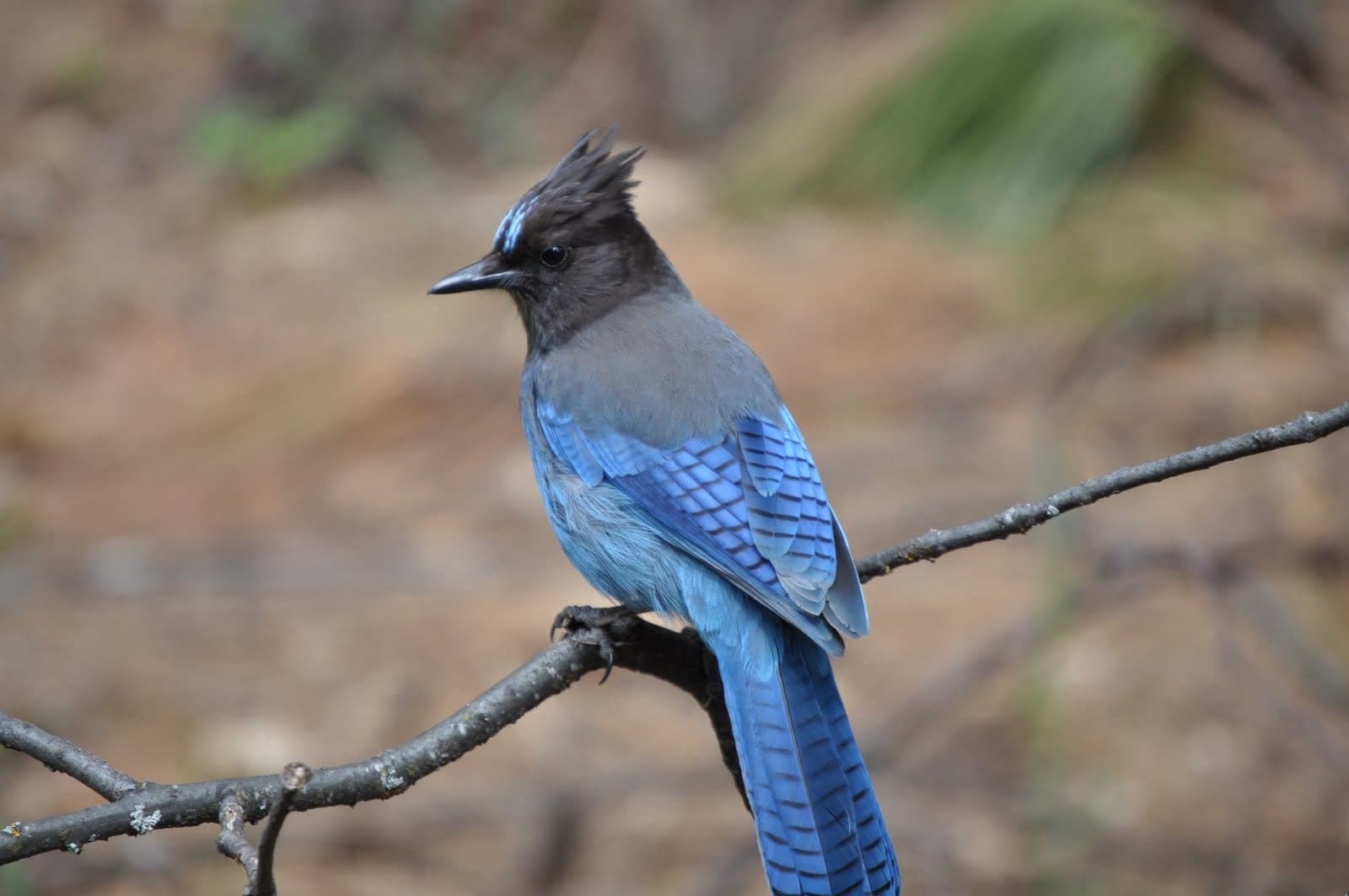
Quick answer
Look at the head and for white: a Blue Jay has a blue crest, a whitish face and belly, a black necklace and bold white spots on the wings and tail, while a Steller's Jay has a black head, crest and chest and no white at all.
Blue Jays and Steller's Jays are the only crested jays in the United States and Canada, and close cousins in the same genus. One owns the East and the other the West, but their ranges touch along the Rockies, Blue Jays keep pushing west, and travelers see both. The color pattern settles it in a glance.
Key differences
| Trait | Blue Jay | Steller's Jay |
|---|---|---|
| Head and crest | Blue crest over a whitish face | Black head and tall black crest |
| Underparts | Grayish white | Black chest fading to deep blue belly |
| Wings and tail | White wing bars and white tail corners | No white; fine black barring on blue |
| Face pattern | Black necklace around throat and head | Small white or blue streaks on forehead and over the eye |
| Size | About 10–12 in, 2.5–3.5 oz | About 12–13.5 in, 3.5–4.9 oz |
| Range | East of the Rockies, southern Canada to Florida | West, from Alaska to Central America |
| Favorite habitat | Oak and mixed woods, leafy suburbs | Conifer and pine-oak forest, mountains |
| Best-known hawk imitation | Red-shouldered Hawk scream | Red-tailed Hawk scream |
Where you will find each
Blue Jays live across eastern and central North America, west across the Great Plains to the foot of the Rockies, and they are most at home among oaks and beeches. Steller's Jays are mountain and conifer birds of the West, found from the coast of southern Alaska through the Pacific states and the Rockies and on south into Central America. The main meeting ground is the eastern edge of the Rockies, especially the Front Range of Colorado, where both visit the same foothill neighborhoods. Blue Jays have also been spreading northwest, so strays turn up in the Pacific Northwest.
Hybrids along the Rockies
Because the two are close relatives, they occasionally pair up where their ranges meet, and hybrids have been reported, especially in Colorado. Hybrids look intermediate, with features of both parents, and they are rare. Away from the Front Range, any crested jay in the East is a Blue Jay and any crested jay in the West is almost certainly a Steller's.
Same habits, different neighborhoods
Both jays behave alike. Both cache acorns and seeds for winter, mob owls and hawks, raid other birds' nests now and then, and imitate hawk calls convincingly. Both go quiet and secretive around the nest and turn loud the rest of the year. At feeders both prefer peanuts, sunflower seed and suet on a platform. Steller's Jays add a campground specialty: they quickly learn to work picnic tables in western parks.
By the numbers
The traits the daily bird game compares for each.
| Clue | Blue Jay | Steller's Jay |
|---|---|---|
| Group | Jays & crows | Jays & crows |
| Colors | Blue, White, Black | Blue, Black |
| Habitat | Backyards | Forest |
| Region | Eastern | Western |
| Length | 11 in | 13 in |
| Wingspan | 15 in | 17 in |
| Diet | Omnivore | Omnivore |
FAQ
Is a Steller's Jay just a western Blue Jay?
No. They are separate species in the same genus, Cyanocitta. Steller's Jays are larger, darker and lack all of the Blue Jay's white markings.
Can Blue Jays and Steller's Jays interbreed?
Yes, occasionally. Hybrids have been reported where the two ranges meet along the eastern foothills of the Rockies, especially in Colorado, but they are uncommon.
What is the blue jay in California?
In most of California the bird people call a blue jay is either a Steller's Jay in conifer forest or, more often in towns, the crestless California Scrub-Jay. True Blue Jays are rare there.
Which jay is bigger?
The Steller's Jay is a little longer and heavier, up to about 13.5 inches and 4.9 ounces, compared with a Blue Jay's 10 to 12 inches and 2.5 to 3.5 ounces.
Could you tell them apart from a few clues? Test yourself in today's puzzle.
Play the daily bird game