How to identify a eastern bluebird
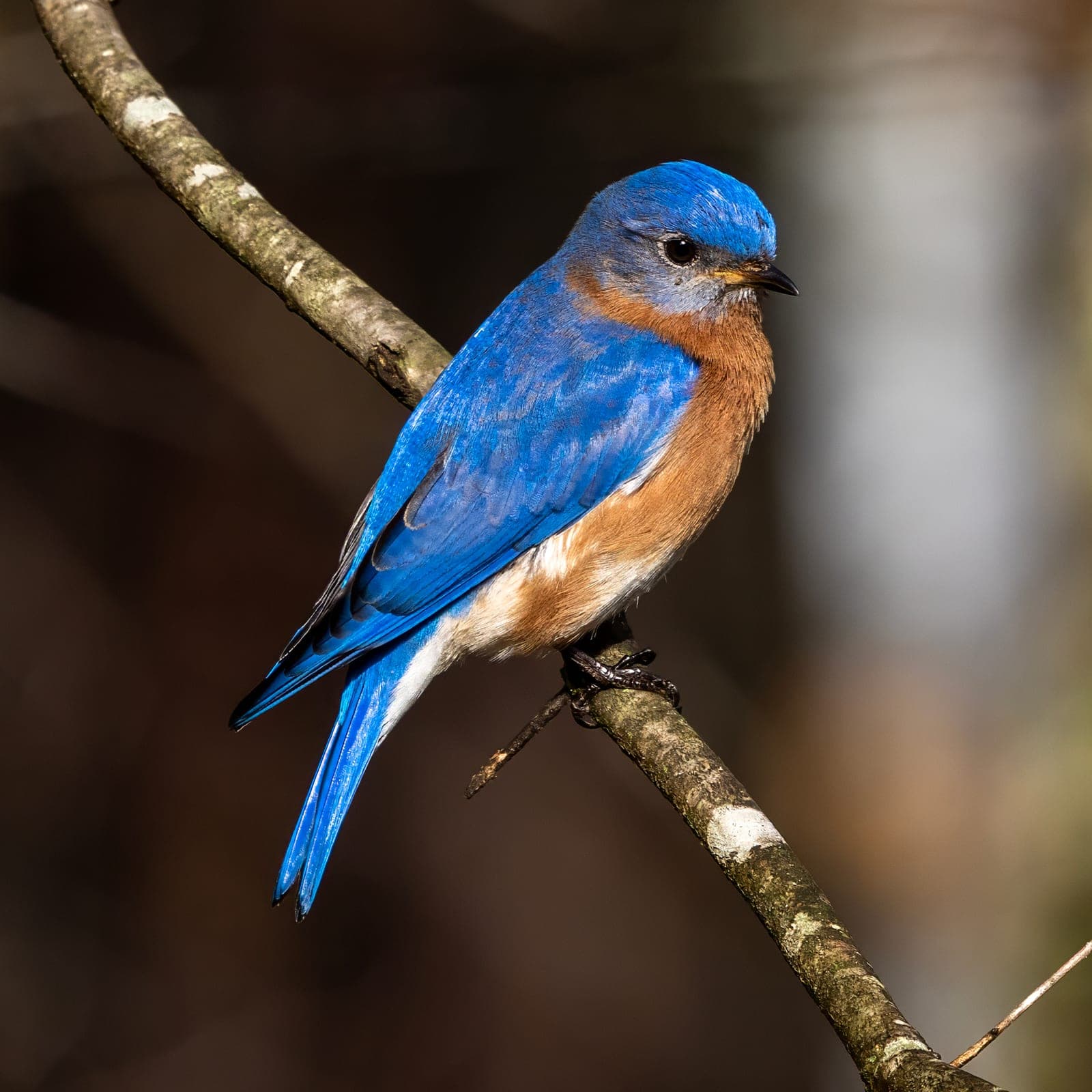
Eastern bluebirds are smaller than a robin, with a round head, a short, thin bill and a habit of sitting hunched on wires and fence posts. Adult males are vivid blue on the head, back, wings and tail, with a rusty-orange throat and breast that wraps up onto the sides of the neck and a clean white belly. Females are softer: gray-brown on the head and back, blue mainly in the wings and tail, with a paler orange breast and a white eye ring. Juveniles are gray-brown with white spots on the back and breast and a telltale edge of blue in the wings and tail.
- Male: deep blue upperparts with a rusty throat and breast
- Rusty color wraps onto the sides of the neck
- White belly and undertail
- Female: gray-brown back, blue wings and tail, white eye ring
- Perches low and drops to the ground to grab insects
Look-alikes
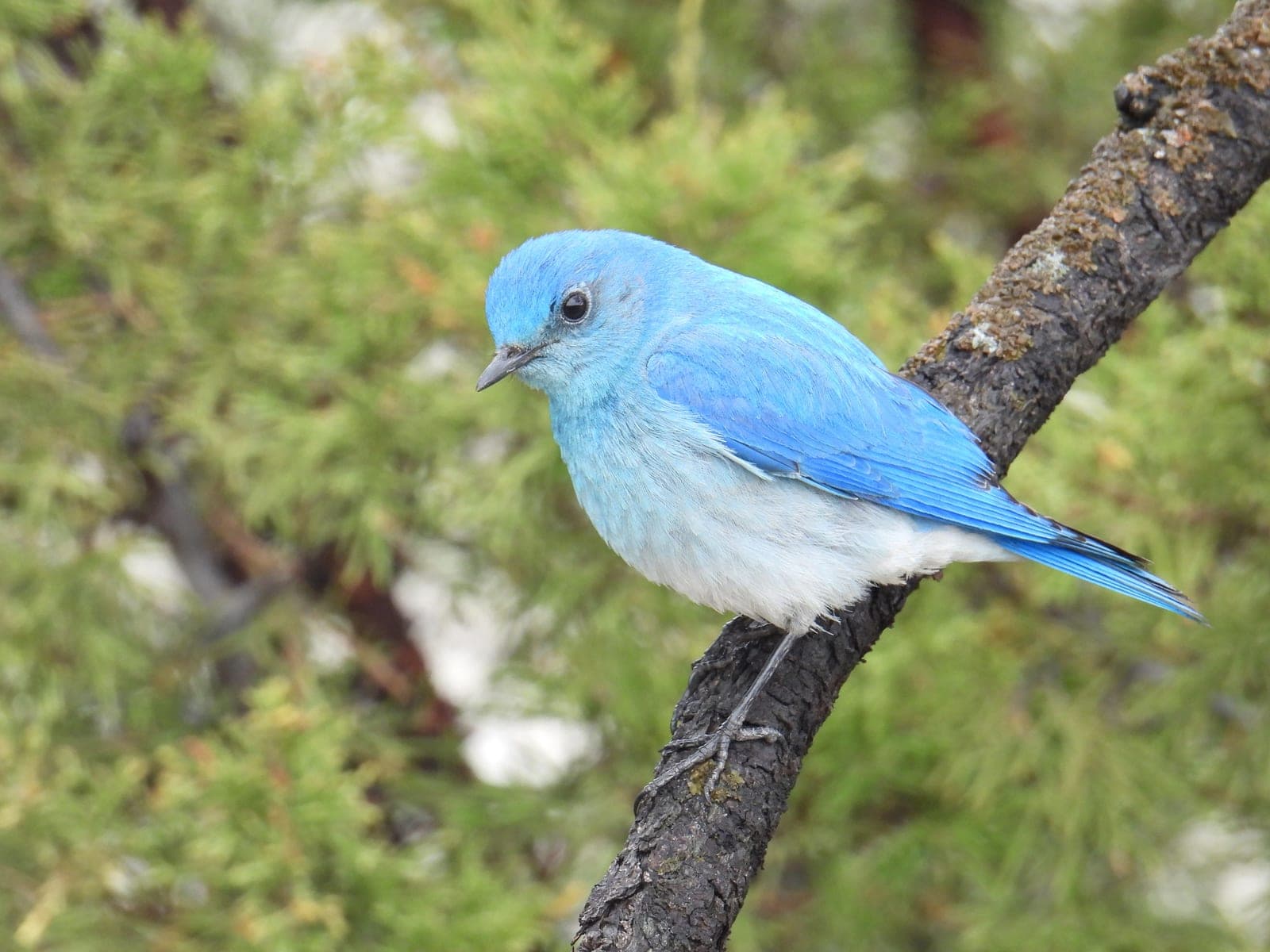
Mountain Bluebird
Male mountain bluebirds are pale sky-blue all over with no rusty breast, and females are mostly gray with a grayish breast. They are western birds of open country that often hover over grass before dropping on prey.
Full comparison →Western Bluebird
Male western bluebirds have a blue throat and often a rusty patch across the upper back. An eastern male has a rusty throat and an all-blue back. Westerns live mainly from the Pacific states to the Rockies and the Southwest.
Indigo Bunting
A breeding male indigo bunting is blue from head to belly with no orange or white, and it has a short, thick, seed-cracking bill. It sings from brushy edges rather than sitting on open wires above pasture.
Tree Swallow
Tree swallows are glossy blue-green above and pure white below with no orange, and they spend most of their time in the air. They also nest in bluebird boxes, which is why the two are often seen together.
Range & habitat
Eastern bluebirds live east of the Rocky Mountains, from southern Canada south to the Gulf Coast and Florida and west into the Great Plains. A separate set of populations runs from southeastern Arizona through the highlands of Mexico and Central America to Nicaragua, and an isolated group lives on Bermuda. Birds in the southern half of the range stay all year, while northern breeders move south for the winter. Fire suppression and tree planting on the Plains over the past century let the species spread farther west.
Bluebirds want open ground with short grass for hunting, scattered trees or posts for perching, and old cavities for nesting. Before European settlement that meant burned pine savannas, beaver meadows and forest openings. Today it means pastures, hayfields, orchards, rural roadsides, cemeteries, parks and golf courses, especially where nest boxes have been put up. They avoid dense forest and heavily built-up areas. In winter they gather where wild fruit and some cover are close at hand.
Through the seasons
Spring
Northern bluebirds are among the earliest migrants, often back by March. Males claim nest sites and display at the entrance, waving their wings and carrying bits of nest material in and out, while the female picks the cavity and builds the nest. Competition with house sparrows and tree swallows for boxes is fierce.
Summer
Pairs usually raise two broods and sometimes three, and young from an early brood occasionally help feed their younger siblings. Families hunt grasshoppers, crickets and caterpillars in mowed fields, and by late summer spotted juveniles line the fence wires.
Fall
Families join into loose flocks that wander the countryside and switch more and more to berries. Northern birds linger well into fall before moving south, and their soft calls are often heard overhead before the birds are seen.
Winter
Southern bluebirds stay put and are joined by migrants from the North. Flocks work fruiting dogwood, holly, sumac and redcedar, visit open water, and on bitter nights several birds may crowd into a single cavity or nest box to stay warm.
How to find and attract eastern bluebirds
Bluebirds rarely take seed, so the single most effective thing you can do is offer a well-placed nest box in open, grassy ground. Look for them on roadside wires and fence posts along pastures, orchards and golf courses.
- Use a box with a 1 1/2-inch round entrance and no perch; the North American Bluebird Society also accepts 1 9/16 inches for all three bluebirds.
- Mount it about five feet up on a smooth metal pole with a predator baffle, facing an open field, and keep it away from thick brush, where house wrens nest.
- Keep boxes away from barns, feeders and buildings that draw house sparrows, and pair two boxes close together so tree swallows can take one and bluebirds the other.
- Check boxes weekly in the nesting season and clean out the old nest after each brood fledges.
- Offer live or dried mealworms in a shallow dish feeder, plus suet crumbles or chopped fruit during cold spells.
- Plant native fruit such as flowering dogwood, American holly, sumac, serviceberry and eastern redcedar, and provide a heated birdbath in winter.
- Listen for the soft, falling 'tur-ee' call and a quiet, low warble of a song, often given in flight.
Diet & life cycle
What it eats
Insects and other invertebrates make up about two-thirds of the diet. Bluebirds favor grasshoppers, crickets, katydids and beetles, and also take caterpillars, spiders, earthworms, snails and the occasional small lizard or tree frog. They hunt by watching from a low perch and fluttering down onto prey, sometimes hovering briefly or snapping insects out of the air. Wild fruit carries them through fall and winter: dogwood, holly, sumac, hackberry, juniper and wild grape among them. Nestlings are fed almost entirely on insects.
Life cycle
Eastern bluebirds nest in old woodpecker holes, natural tree hollows, rotting fence posts and nest boxes, usually 2 to 20 feet off the ground. The female builds a loose cup of grass and pine needles over about ten days and lays three to seven pale blue eggs, occasionally white, with four or five typical. She incubates for 13 to 16 days, and both parents feed the young, which leave the box 15 to 20 days after hatching. Pairs raise two and sometimes three broods a season. Young birds can breed the summer after they hatch, but most bluebirds die in their first year.
Oldest on record
The oldest eastern bluebird in the USGS Bird Banding Laboratory longevity table was at least 10 years and 6 months old. It was banded as a nestling in New York in May 1989 and found dead in South Carolina in November 1999.
SourceAttracting & watching
A nest box in an open, grassy spot is the best way to bring bluebirds close, followed by mealworms, native berry shrubs and water, especially a heated birdbath in winter. To watch them, drive slowly along farm roads and scan wires and fence posts, or walk a local bluebird trail with its volunteer monitor. Bluebirds are protected under the Migratory Bird Treaty Act; monitor boxes gently and never handle the birds.
Conservation
Least Concern (IUCN). Bluebirds were probably most numerous around 1900, when forest clearing, orchards and wooden fence posts gave them plenty of habitat and holes. Numbers then fell steeply through the mid-20th century as dead trees were cleared, orchards disappeared and DDT tainted their insect food. Nest boxes turned it around: Thomas Musselman set up an early bluebird trail in 1934, Lawrence Zeleny founded the North American Bluebird Society in 1978, and Breeding Bird Survey data show increases across most of the range since the 1960s. Partners in Flight now estimates about 23 million birds.