How to identify a steller's jay
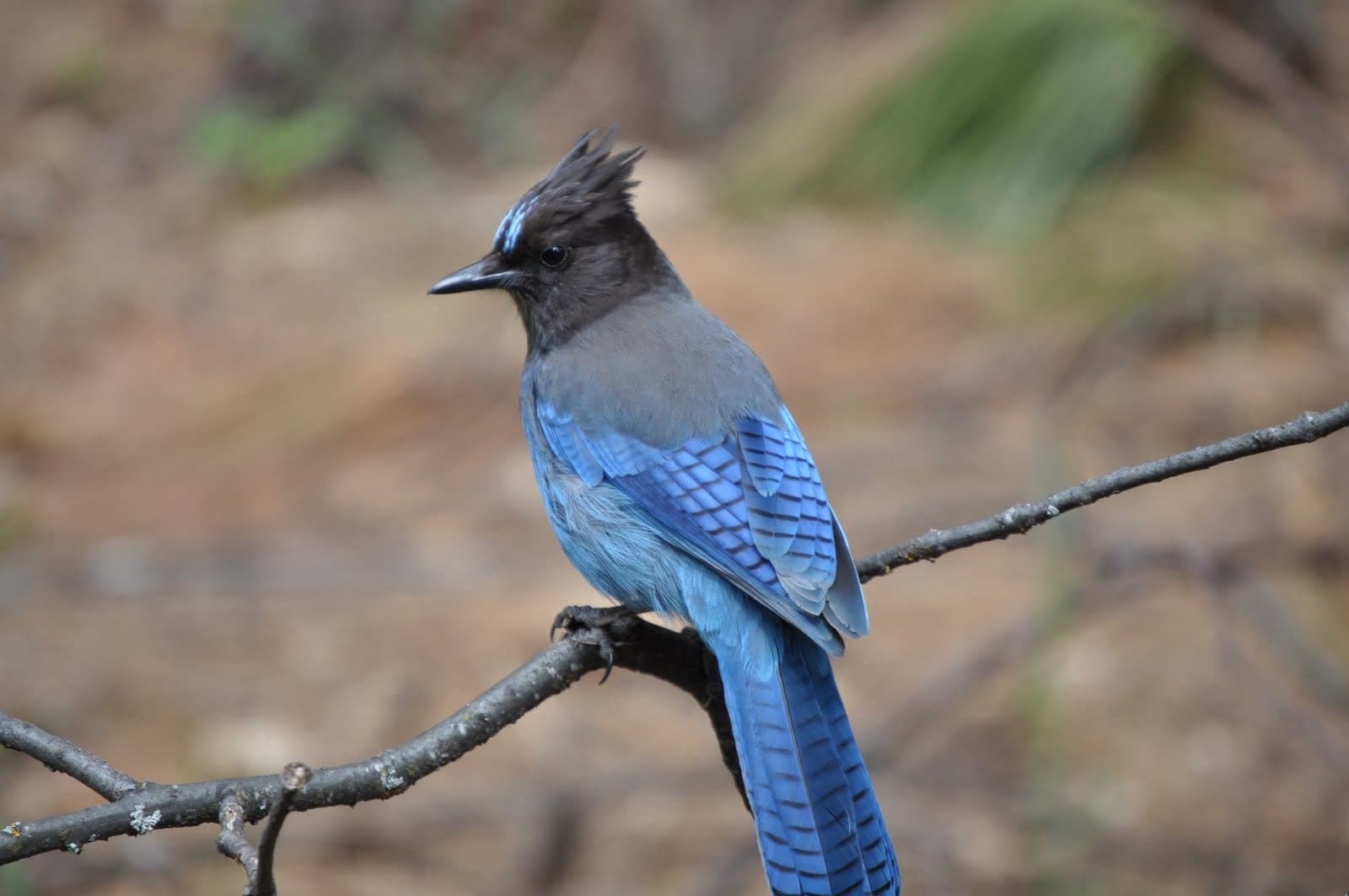
Steller's Jays are a little larger and lankier than Blue Jays, with longer legs, a slimmer bill and a tall, shaggy crest. The front half of the bird is sooty black or very dark gray-brown: head, crest, throat, chest and back. The rear half is deep blue, with fine black bars across the wings and tail. Most birds show short pale streaks on the forehead and a mark over the eye; these tend to be white in Rocky Mountain birds and blue in coastal birds. There are no white wing bars, white tail corners or white belly. In flight the bird looks dark overall, with broad rounded wings and a long tail.
- Tall black crest on a black head
- Black chest and back blending into deep blue belly, wings and tail
- Fine black barring on the blue wings and tail
- Short white or blue streaks on the forehead and above the eye
- No white anywhere on the wings, tail or underparts
Look-alikes
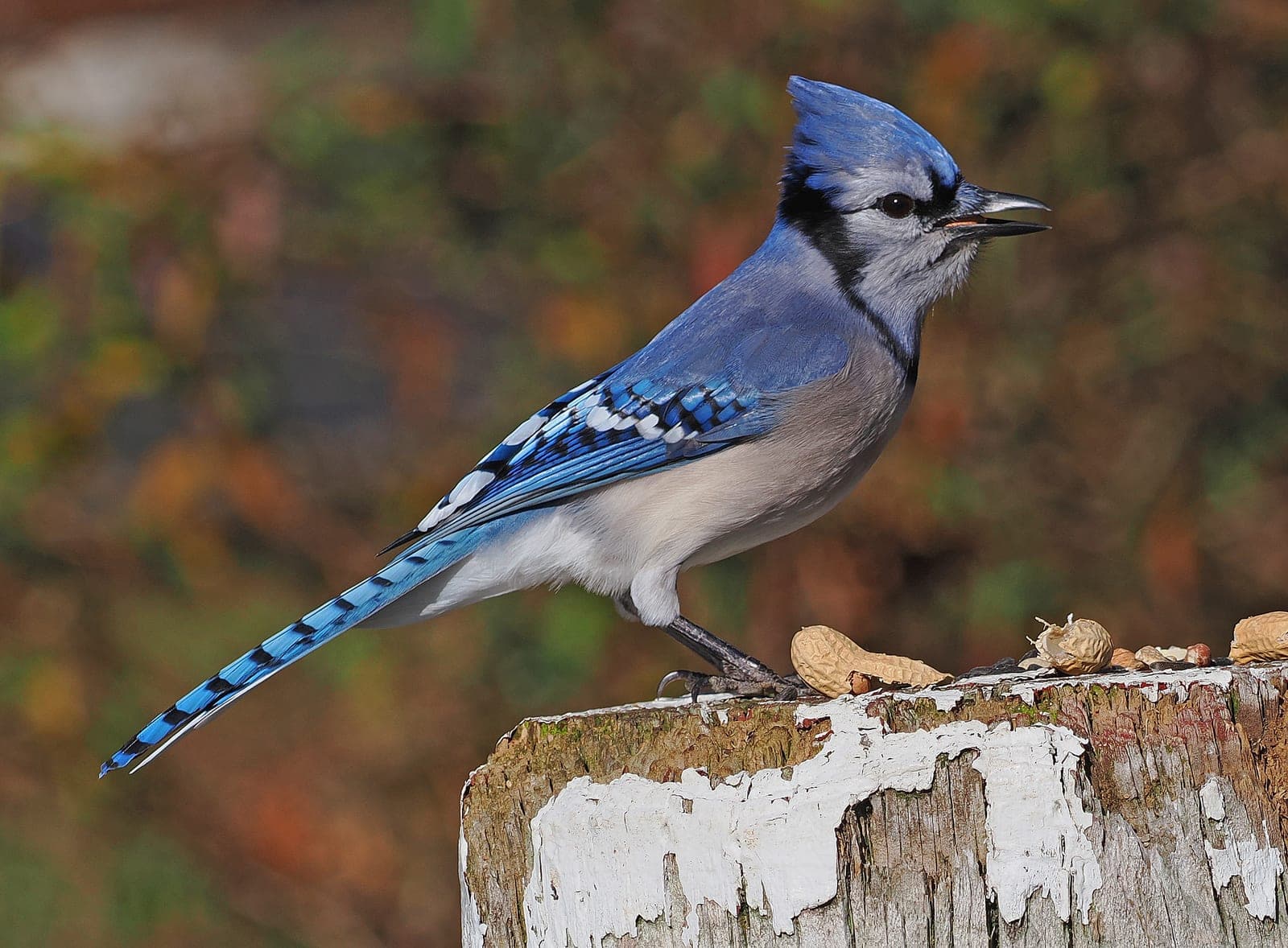
Blue Jay
Blue Jays have a white face and belly, a black necklace, white wing bars and white tail corners. Steller's Jays have none of that white and a black head and chest. The two overlap mainly along the eastern edge of the Rockies, where hybrids occur.
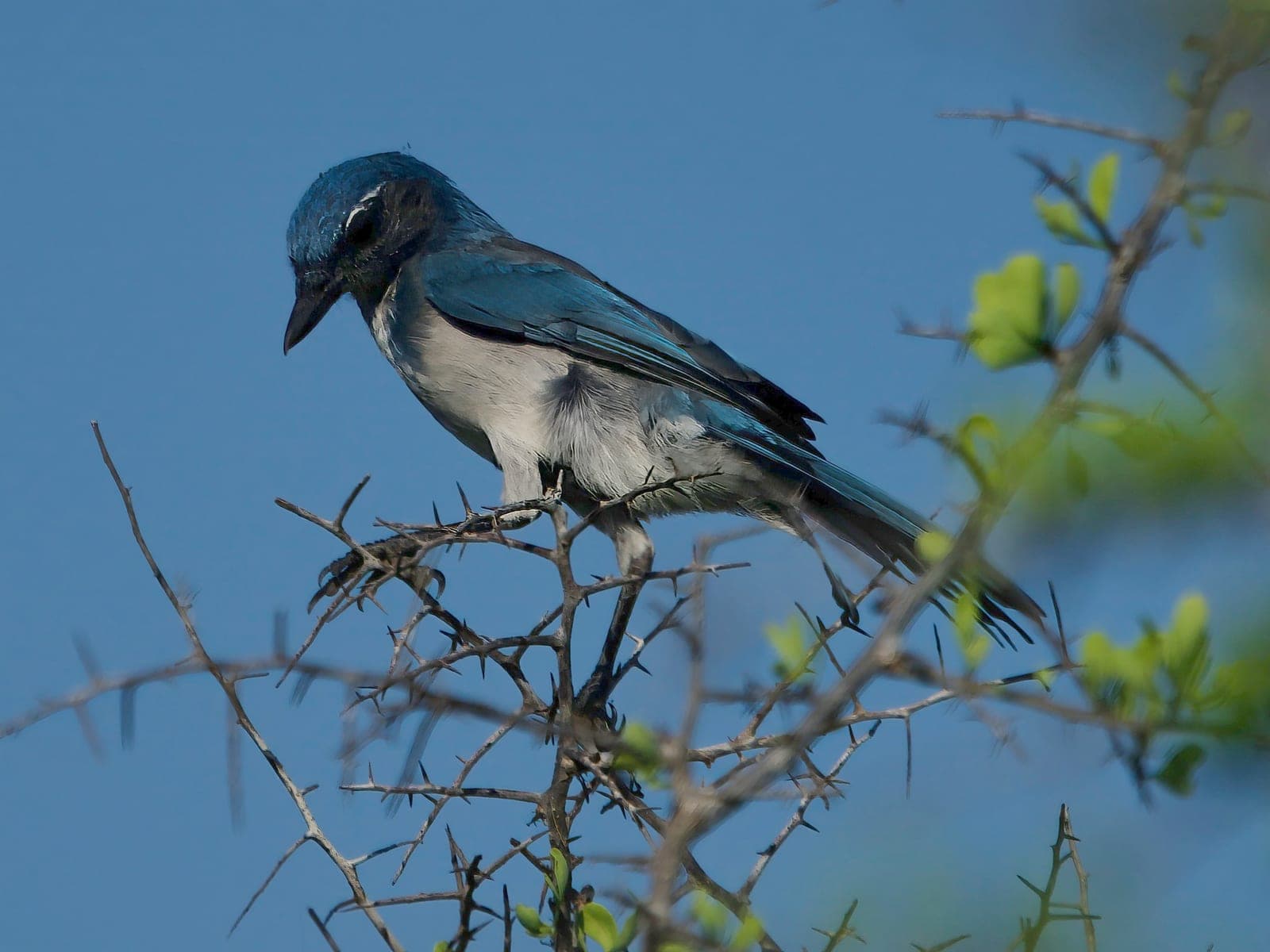
Full comparison →California Scrub-Jay
Scrub-jays have no crest, a white throat and eyebrow, a gray-brown back and pale gray underparts. They live in oak woods and suburbs at lower elevations than most Steller's Jays.
Pinyon Jay
Pinyon Jays are dull, even blue all over, with no crest and a short tail. They travel in big, noisy flocks through pinyon-juniper country of the interior West.
Range & habitat
Steller's Jays live from the coast of southern Alaska and British Columbia south through Washington, Oregon and California, and through the Rockies and the mountains of the Great Basin and Southwest. Beyond the U.S. border they follow the highlands of Mexico and Central America as far as north-central Nicaragua. The eastern edge runs along the Front Range foothills of Colorado, where they meet Blue Jays.
Steller's Jays are birds of conifer and mixed forest: pine, Douglas-fir, spruce and fir, from sea-level rain forest to near tree line in the mountains. They also use pine-oak woodland in the Southwest and oak or streamside groves locally. Outside the nesting season they move into orchards, foothill towns and wooded suburbs, and they quickly learn where campgrounds and picnic areas leave food behind.
Through the seasons
Spring
Pairs settle on nesting territories and turn quiet and secretive, building in dense conifers. A jay that screamed at your feeder all winter may barely make a sound near its nest.
Summer
Families with begging young roam the forest, and insects such as beetles and wasps fill the diet. This is campground season: jays work picnic tables and camp kitchens from the coast to the high Sierra.
Fall
Jays harvest pine seeds and acorns and bury them for winter. Some move downslope, and in years when mountain seed crops fail, numbers of them push into lowland valleys where they are normally scarce.
Winter
Loose flocks wander lower forests, foothill neighborhoods and feeders. Birds often cross openings one at a time in single file, then swoop up into tall trees, calling as they go.
How to find and attract Steller's Jays
Walk any western conifer forest and listen for a harsh, repeated 'shook-shook-shook' or a raspy 'shack.' A Red-tailed Hawk scream coming from the treetops may also be a jay. Near forested neighborhoods they come readily to feeders.
- Offer whole or shelled peanuts and black-oil sunflower seed on a platform or large hopper feeder.
- Suet draws them in winter, especially in colder mountain towns.
- Keep native conifers and oaks in the yard; they provide nest sites, cover and the seeds jays cache.
- Scan picnic areas, ski lodges and trailheads in mountain parks, where jays gather around people.
- At campgrounds, keep food and trash packed away; handouts concentrate jays that also raid other birds' nests.
- Look up when small birds start scolding: Steller's Jays often join or start the mob against owls and hawks.
Diet & life cycle
What it eats
Steller's Jays are omnivores. About two-thirds of what they eat is plant food: pine seeds, acorns and other nuts in fall and winter, plus berries and wild fruit. The rest is animal food, mostly insects such as beetles, wasps and bees in summer, along with spiders, small rodents, lizards, and the eggs and chicks of other birds, including the threatened Marbled Murrelet in coastal old-growth forest. They hammer hard seeds open with the bill and cache large amounts of food for later.
Life cycle
Pairs are monogamous and rarely split up. During courtship the male feeds the female. Both birds build a bulky cup of twigs, moss and leaves cemented with mud and lined with rootlets and pine needles, usually 10 to 30 feet up in a conifer. The female lays about four eggs, pale blue-green with fine brown spots, and does most or all of the incubating for about 16 to 18 days while the male brings food. The young leave the nest after roughly two to three weeks and stay with their parents into the summer.
Oldest on record
The oldest Steller's Jay in the USGS Bird Banding Laboratory's longevity table was at least 16 years 1 month old. It was banded as an adult in Alaska in September 1972 and found dead there in July 1987.
SourceAttracting & watching
In forested parts of the West, Steller's Jays are easy to bring in with peanuts, sunflower seed and suet on a sturdy platform. A birdbath helps in dry summers. They do not use nest boxes, so tall conifers and dense shrubs matter more. Away from home, the best viewing is in mountain parks and national forests, where jays are tame around trailheads and picnic grounds.
Conservation
Least Concern (IUCN). Steller's Jays remain widespread and common, with about 3 million birds. North American Breeding Bird Survey data, as summarized by Cornell's All About Birds, show a decline of roughly a third between 1966 and 2019. They are protected under the U.S. Migratory Bird Treaty Act.