Fish · Side by side
Striped Bass vs White Bass
How to tell them apart
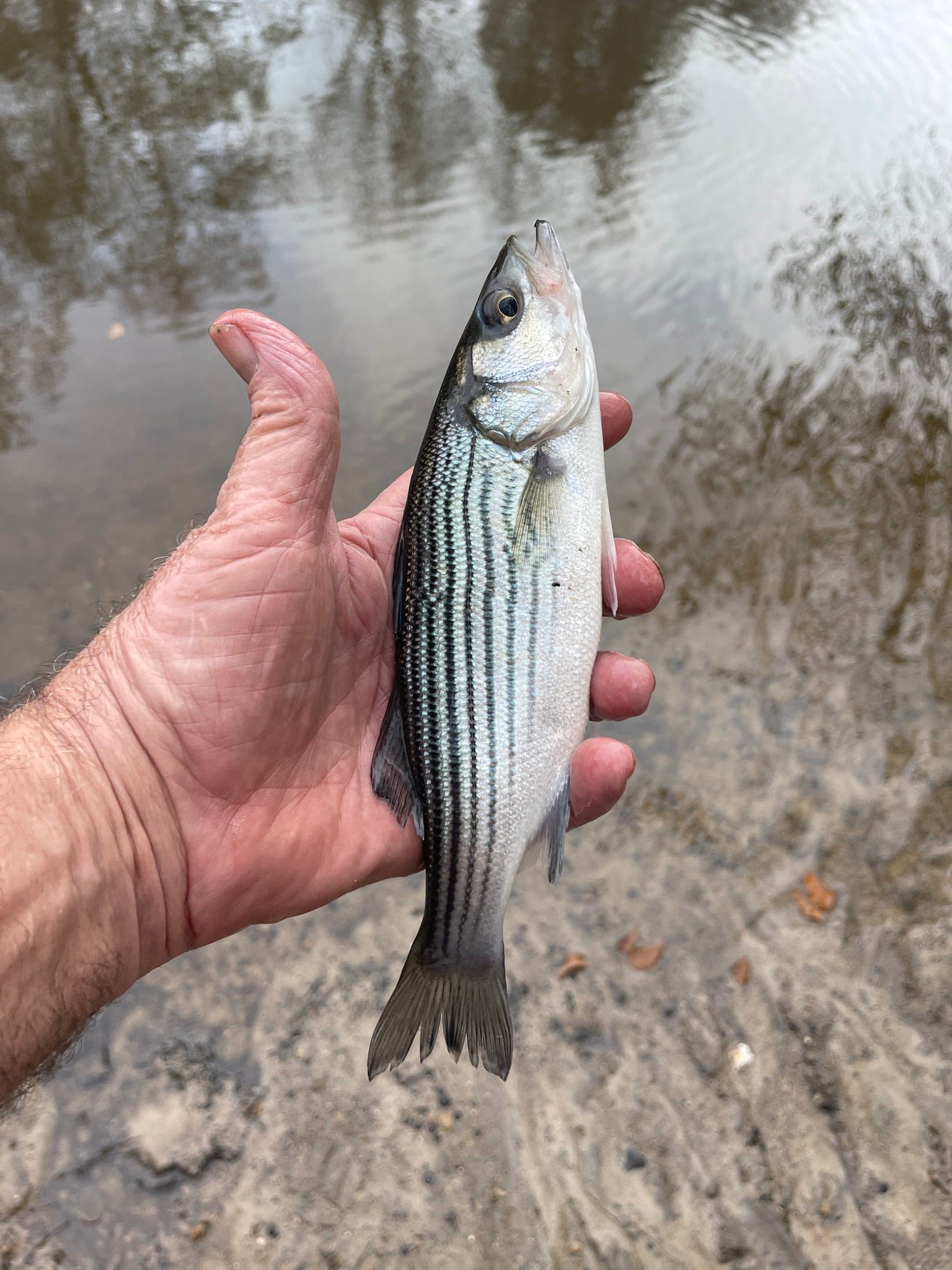
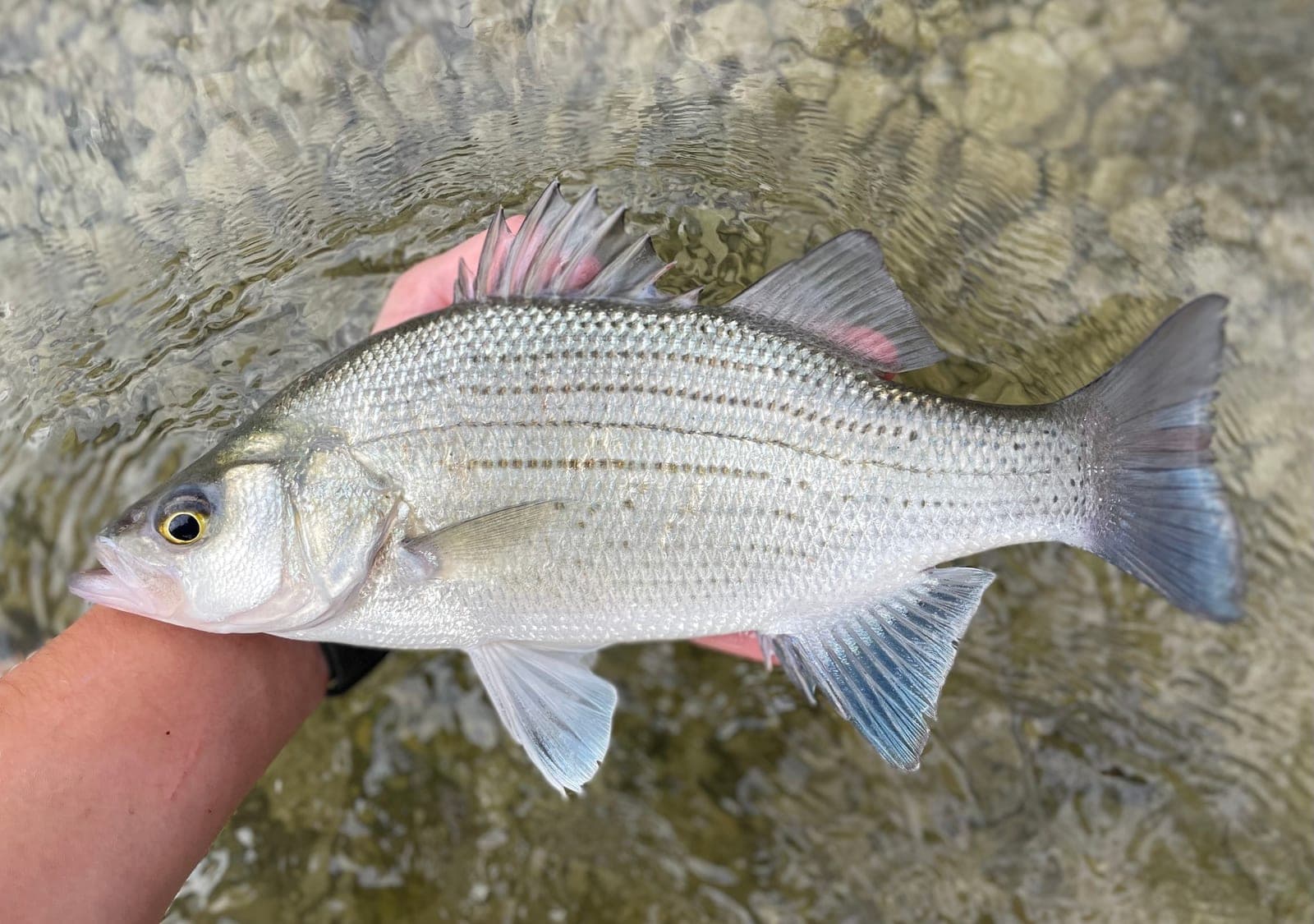
Quick answer
Feel the back of the tongue: a white bass has one tooth patch, a striped bass has two. Without that, look at the shape: white bass are short, deep and humpbacked, while stripers are long and sleek with bold, unbroken stripes.
Striped bass and white bass are close cousins in the temperate bass family, both silver with dark lengthwise stripes, and in many southern and Midwestern reservoirs they swim side by side. A small striper and a big white bass can look almost the same, and hatchery hybrids between the two muddy the picture further. Limits often differ for each, so it pays to know the marks.
Key differences
| Trait | Striped Bass | White Bass |
|---|---|---|
| Tongue tooth patches | Two, clearly separate | One, at the back of the tongue |
| Body shape | Long and sleek, with a large head | Deep and compressed, with a strongly arched back |
| Stripes | Seven or eight bold, continuous stripes | Narrower, fainter stripes |
| Typical size | Adults often 10–30 lb | Usually under 1½ lb; seldom over 3 lb |
| World record | 81 lb 14 oz (IGFA, 2011) | 6 lb 13 oz (IGFA, tie) |
| Lifespan | Up to about 30 years | Usually about 4 years; up to 9 |
| Life history | Anadromous: lives in salt water or reservoirs, spawns in rivers | Freshwater only; runs up tributaries to spawn |
| Native range | Atlantic and Gulf coasts | Great Lakes, Mississippi basin and Rio Grande |
Where you will find each
Striped bass are native to the Atlantic coast from the St. Lawrence to northern Florida and to Gulf Coast rivers, live mostly in salt and brackish water, and return to rivers to spawn; stocking has added landlocked populations in reservoirs across most of the country. White bass are freshwater fish native to the Great Lakes, the Mississippi basin and the Rio Grande. So on the coast, a striped fish is almost always a striper, while in an inland reservoir it could be either, or a hybrid.
The hybrid: wipers, whiterock and sunshine bass
Hatcheries cross the two species to produce hybrid striped bass, stocked in many reservoirs to create fisheries and to help control gizzard shad. A female striper crossed with a male white bass is called a whiterock or wiper; the reverse cross, used in Florida, is the sunshine bass. Hybrids are stockier than stripers, with stripes that are usually broken, and their tongue teeth form two close-set patches or one. The IGFA all-tackle record for the hybrid is 27 pounds, 5 ounces.
Which is better to catch and eat?
They offer different kinds of fun. White bass are a numbers fish: spring runs and summer jumps can produce dozens on light tackle in an afternoon. Stripers are a size fish, pulling hard enough to strip line from heavy reels. On the table both have white, mild fillets once the dark red lateral meat is trimmed away. Striper fillets are thicker and firmer, while white bass are best eaten fresh and kept cold from the moment they are caught.
By the numbers
The traits the daily fish game compares for each.
| Clue | Striped Bass | White Bass |
|---|---|---|
| Family | Temperate bass | Temperate bass |
| Water | Both | Freshwater |
| Region | Atlantic Coast | Nationwide |
| Body shape | Streamlined | Streamlined |
| Max length | 79 in | 18 in |
| Max weight | 126 lb | 7 lb |
| Diet | Carnivore | Carnivore |
FAQ
Is a white bass a baby striped bass?
No. They are separate species. A small striper is already long and slim with two tongue tooth patches, while even a large white bass stays deep-bodied with a single patch.
What is a wiper?
A wiper is a hatchery hybrid of a striped bass and a white bass. It grows bigger than a white bass, has broken stripes and is stocked in many reservoirs.
Can white bass live in salt water like stripers?
White bass are freshwater fish that live in lakes, reservoirs and rivers. Striped bass are anadromous: most live in the ocean and estuaries and move into fresh water to spawn.
Which grows bigger, a striped bass or a white bass?
The striped bass, by a wide margin. Its world record is 81 pounds, 14 ounces, while the white bass record is 6 pounds, 13 ounces.
Could you tell them apart from a few clues? Test yourself in today's puzzle.
Play the daily fish game