Fish · Side by side
Atlantic Salmon vs Sockeye Salmon
How to tell them apart
Quick answer
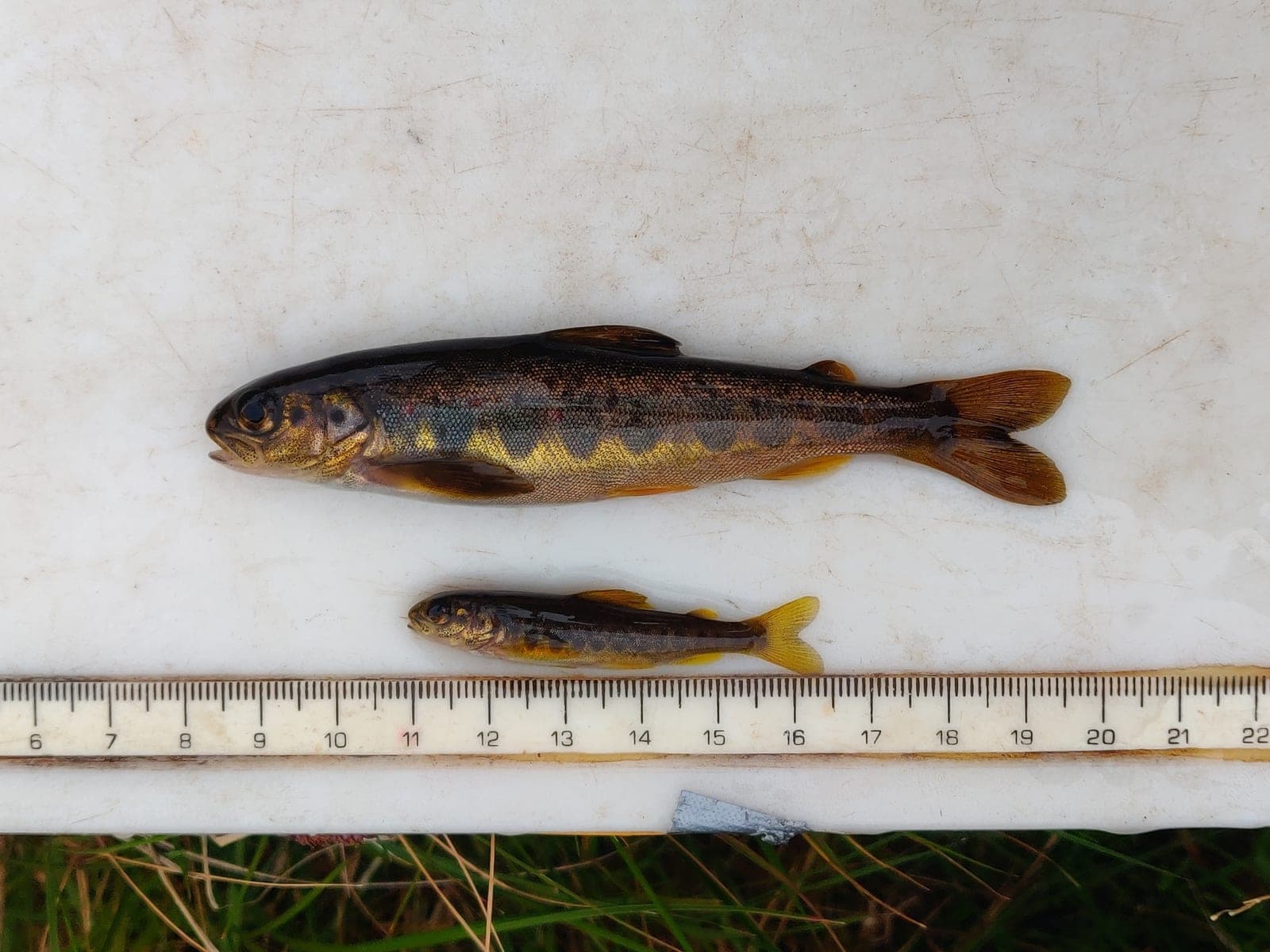
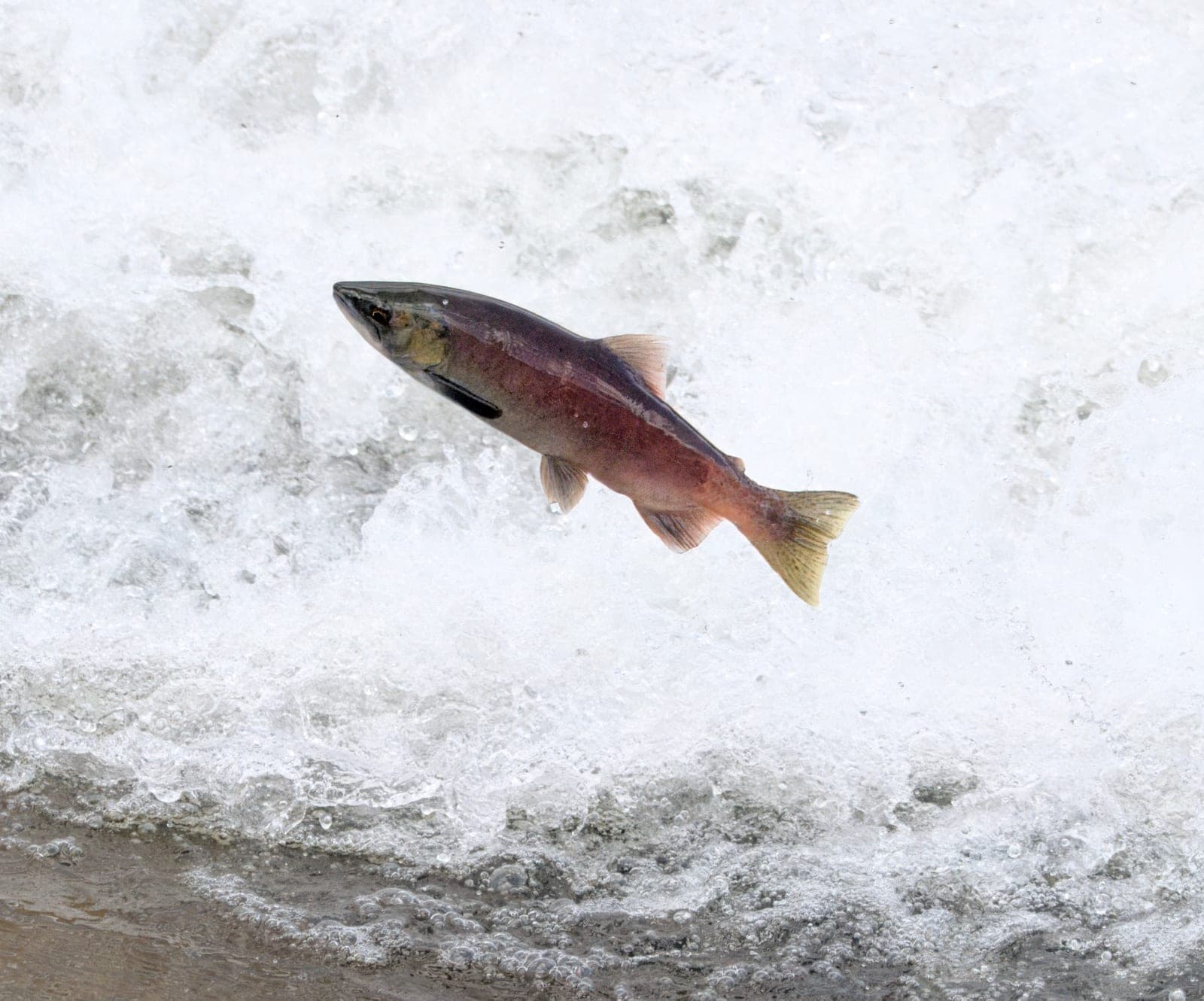
An Atlantic salmon has distinct black spots on its upper body and can survive spawning, while a sockeye has no large spots at all and dies after spawning, turning bright red with a green head. On the plate, Atlantic is usually farmed, pale orange and fatty; sockeye is wild, deep red and leaner.
Atlantic and sockeye salmon live in different oceans and belong to different branches of the salmon family, yet people compare them constantly, mostly at the fish counter, where farmed Atlantic sits next to wild sockeye. For anglers the differences run deeper: one can spawn more than once and return to the sea, the other dies after its single spawning run. Here is how they compare.
Key differences
| Trait | Atlantic Salmon | Sockeye Salmon |
|---|---|---|
| Ocean | North Atlantic | North Pacific |
| Genus | Salmo, with the brown trout | Oncorhynchus, with the Pacific salmon and rainbow trout |
| Spots | Distinct black spots, mostly above the lateral line | No large spots; fine speckles at most |
| After spawning | Can survive and spawn again | Always dies |
| Spawning colors | Darker overall; males take a reddish or greenish tinge | Bright red body, green head |
| Typical size | 8–12 lb after two winters at sea | 4–15 lb |
| Adult diet | Fish such as capelin, herring and sand lance | Mostly zooplankton, plus small fish and squid |
| In stores | Almost always farmed | Wild-caught, mostly in Alaska |
Where you will find each
Atlantic salmon breed in rivers on both sides of the North Atlantic: in North America from Labrador and northern Quebec south to New England, and in Europe from Spain to Russia. Sockeye spawn in Pacific drainages from the Columbia River north through British Columbia and Alaska and across to Russia and Japan, usually in river systems with a lake where the young can grow. Both have landlocked forms that never go to sea: landlocked Atlantic salmon, called ouananiche in Quebec, and the kokanee, a small freshwater sockeye.
Life cycles: one run or several
Young Atlantic salmon spend two to eight years in their home river, depending on latitude, before going to sea as smolts. Adults return after one to three years, and a small share, about 5 to 10 percent, survive spawning to return again. Sockeye usually rear for one to three years in a lake, spend two or three years at sea, and every adult dies within weeks of spawning. That difference matters on the river: a spent Atlantic salmon, called a kelt, can drop back to sea and return to spawn again, while a sockeye's carcass feeds the stream, the bears and the next generation.
Farmed Atlantic vs. wild sockeye
Most Atlantic salmon in markets and restaurants is farmed, raised in sea pens in Norway, Chile, Scotland, Canada and elsewhere, with Norway alone producing more than half the world's supply. It is mild, soft and rich. Sockeye is a wild fish, harvested mostly in Alaska, especially Bristol Bay, and has firmer, leaner, deep red flesh and a stronger salmon flavor. Wild Atlantic salmon is rare on the market, because many wild runs are depleted and some are protected.
Conservation
The IUCN now rates Atlantic salmon as Near Threatened worldwide. The Gulf of Maine population is listed as endangered under the U.S. Endangered Species Act, and Canada lists the Inner Bay of Fundy population as endangered, so most North American anglers fish for sea-run Atlantics in eastern Canada under strict rules. Sockeye are rated Least Concern overall, but Snake River sockeye are endangered and Lake Ozette sockeye are threatened. Check local regulations before fishing for either.
By the numbers
The traits the daily fish game compares for each.
| Clue | Atlantic Salmon | Sockeye Salmon |
|---|---|---|
| Family | Salmon & trout | Salmon & trout |
| Water | Both | Both |
| Region | Atlantic Coast | Pacific Coast |
| Body shape | Streamlined | Streamlined |
| Max length | 59 in | 33 in |
| Max weight | 103 lb | 17 lb |
| Diet | Carnivore | Carnivore |
FAQ
Is Atlantic salmon or sockeye healthier?
Both are rich in protein and omega-3 fats. Farmed Atlantic salmon is usually higher in fat and calories, while wild sockeye is leaner and deeper in color.
Can Atlantic salmon spawn more than once?
Yes. Unlike sockeye and other Pacific salmon, Atlantic salmon can survive spawning, return to sea and spawn again, though only a small share of fish manage it.
Why is sockeye so red?
Sockeye feed heavily on zooplankton and small crustaceans rich in red carotenoid pigments, which color their flesh. Farmed Atlantic salmon get similar pigments through their feed.
Are Atlantic salmon and sockeye closely related?
Not very. Atlantic salmon are in the genus Salmo with brown trout, while sockeye belong to Oncorhynchus with the other Pacific salmon and with rainbow and cutthroat trout.
Could you tell them apart from a few clues? Test yourself in today's puzzle.
Play the daily fish game