Fish · Side by side
Blue Catfish vs Flathead Catfish
How to tell them apart
Quick answer
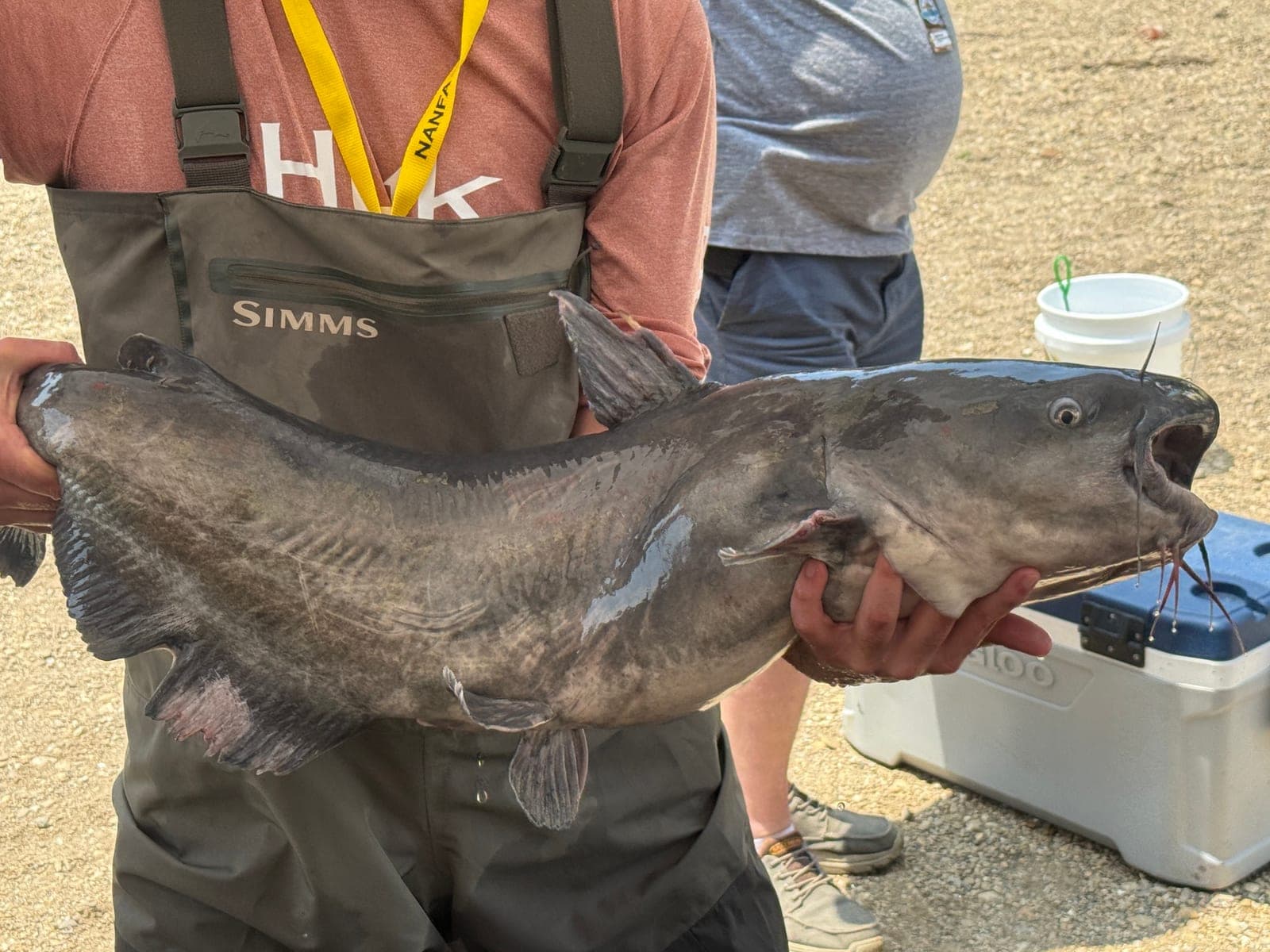
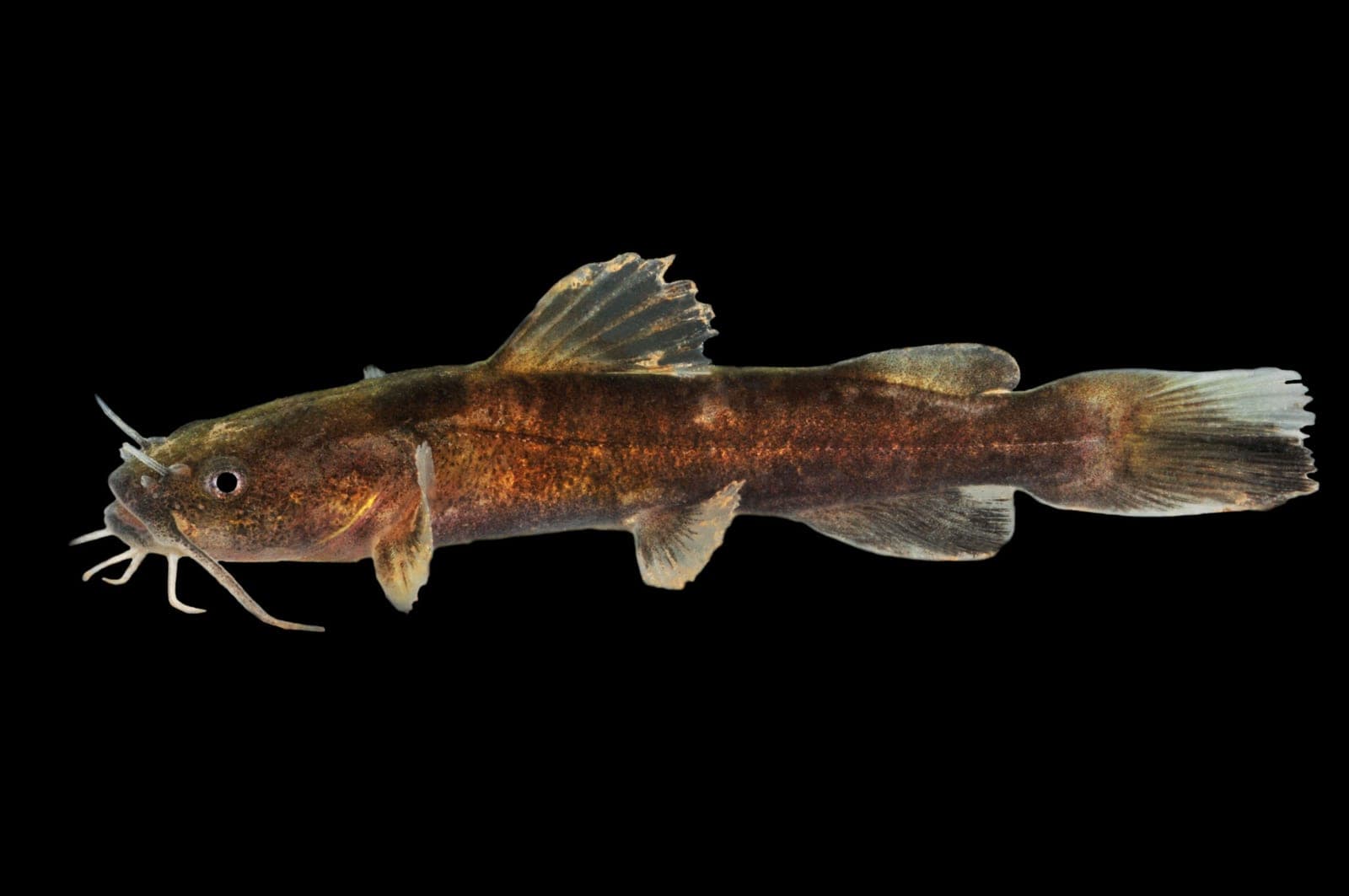
Look at the tail and the jaw: a blue catfish has a deeply forked tail and an upper jaw that overhangs the lower, while a flathead has a square, slightly notched tail, a broad flat head and an underbite. Color confirms it, with blues smooth blue-gray and flatheads mottled yellow-brown.
Blue and flathead catfish are the two giants of North American catfishing, the only species that regularly top 50 pounds and the ones trophy anglers build their nights around. They share many big rivers and reservoirs, but they look, live and feed very differently, and those differences decide which bait, which spot and which tactic will work.
Key differences
| Trait | Blue Catfish | Flathead Catfish |
|---|---|---|
| Tail | Deeply forked | Square or slightly notched |
| Head | Small and wedge-shaped | Broad and flattened |
| Jaw | Upper jaw longer | Lower jaw juts out |
| Color | Pale blue-gray, unspotted | Mottled yellow, olive and brown |
| Anal fin | Long and straight, 30–35 rays | Short and rounded, about 14–17 rays |
| Food | Opportunist: fish, clams, crabs, cut bait | Live fish and crayfish; rarely scavenges |
| IGFA record | 143 lb (Kerr Lake, 2011) | 123 lb (Elk City Reservoir, 1998) |
| Hangout | Open channels, current and ledges | Logjams and holes, one fish per cover |
Different hunters, different baits
Blues roam open water, following schools of shad and herring and finding food by scent, so fresh cut shad or skipjack herring drifted or anchored along channel edges is the standard. Flatheads sit tight in heavy cover and ambush live prey, so anglers set lively sunfish, bullheads or creek chubs right next to logjams and rock piles, usually after dark. A flathead will occasionally take cut bait and a blue will eat a live fish, but matching each species' feeding style catches far more.
Where each lives
Both are native to the Mississippi basin and Gulf Coast rivers. Blues favor main channels, swift chutes and tailwaters and move long distances with the seasons, while flatheads are homebodies that return to the same snag day after day. Blues stay active in cold water and are often caught in winter; flatheads turn sluggish and are hardest to catch then. In summer, flatheads spawn in cavities a little later than blues.
Invaders outside their range
Both species have been stocked well beyond their native rivers, and both are now treated as invasive in parts of the Atlantic Slope. Blues have exploded in the tidal rivers of the Chesapeake Bay, where managers worry about blue crabs and other native species. Flatheads introduced to rivers such as North Carolina's Cape Fear and Georgia's Ocmulgee have sharply reduced native bullheads and redbreast sunfish.
By the numbers
The traits the daily fish game compares for each.
| Clue | Blue Catfish | Flathead Catfish |
|---|---|---|
| Family | Catfish family | Catfish family |
| Water | Freshwater | Freshwater |
| Region | Southern waters | Southern waters |
| Body shape | Streamlined | Long & slender |
| Max length | 65 in | 61 in |
| Max weight | 150 lb | 123 lb |
| Diet | Omnivore | Carnivore |
FAQ
Which is bigger, a blue or a flathead catfish?
Blues grow slightly larger. The IGFA record blue weighs 143 pounds and the record flathead 123, though both species commonly produce fish over 50 pounds in good waters.
Which tastes better, blue or flathead catfish?
Many anglers rate flathead as the best-eating catfish because it eats live fish, but blues are excellent too. For either, smaller fish usually eat best, and big fish may carry consumption advisories.
Can you catch flatheads on cut bait?
Occasionally, especially fresh cut bait, but flatheads strongly prefer live fish. Live bait near heavy cover is the reliable way to target them.
Do blue and flathead catfish live in the same lakes?
Often. They share many rivers and reservoirs in the South and Midwest, with blues out along channels and flats and flatheads tucked into snags and rocky holes.
Could you tell them apart from a few clues? Test yourself in today's puzzle.
Play the daily fish game