Fish · Side by side
Brook Trout vs Brown Trout
How to tell them apart
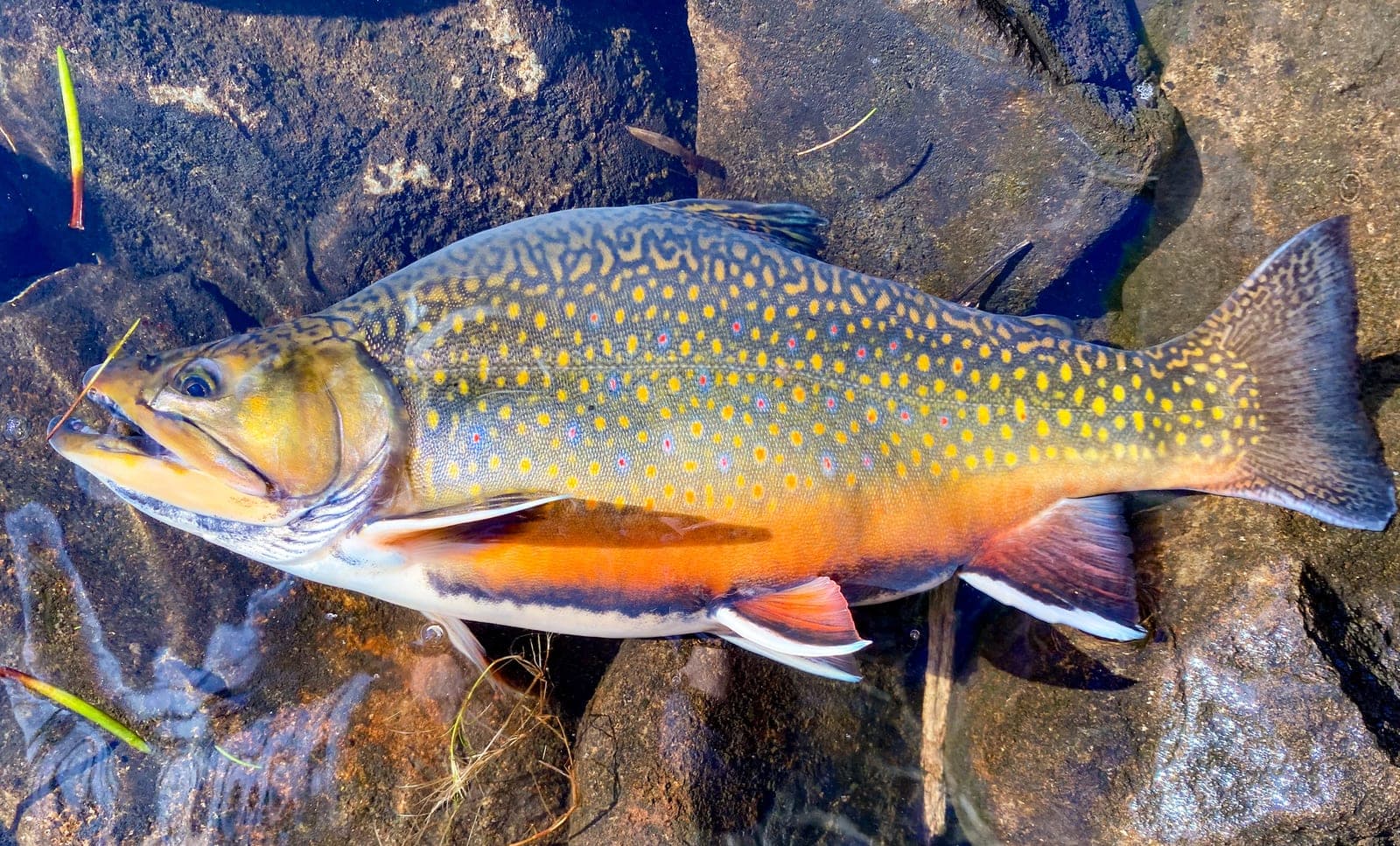
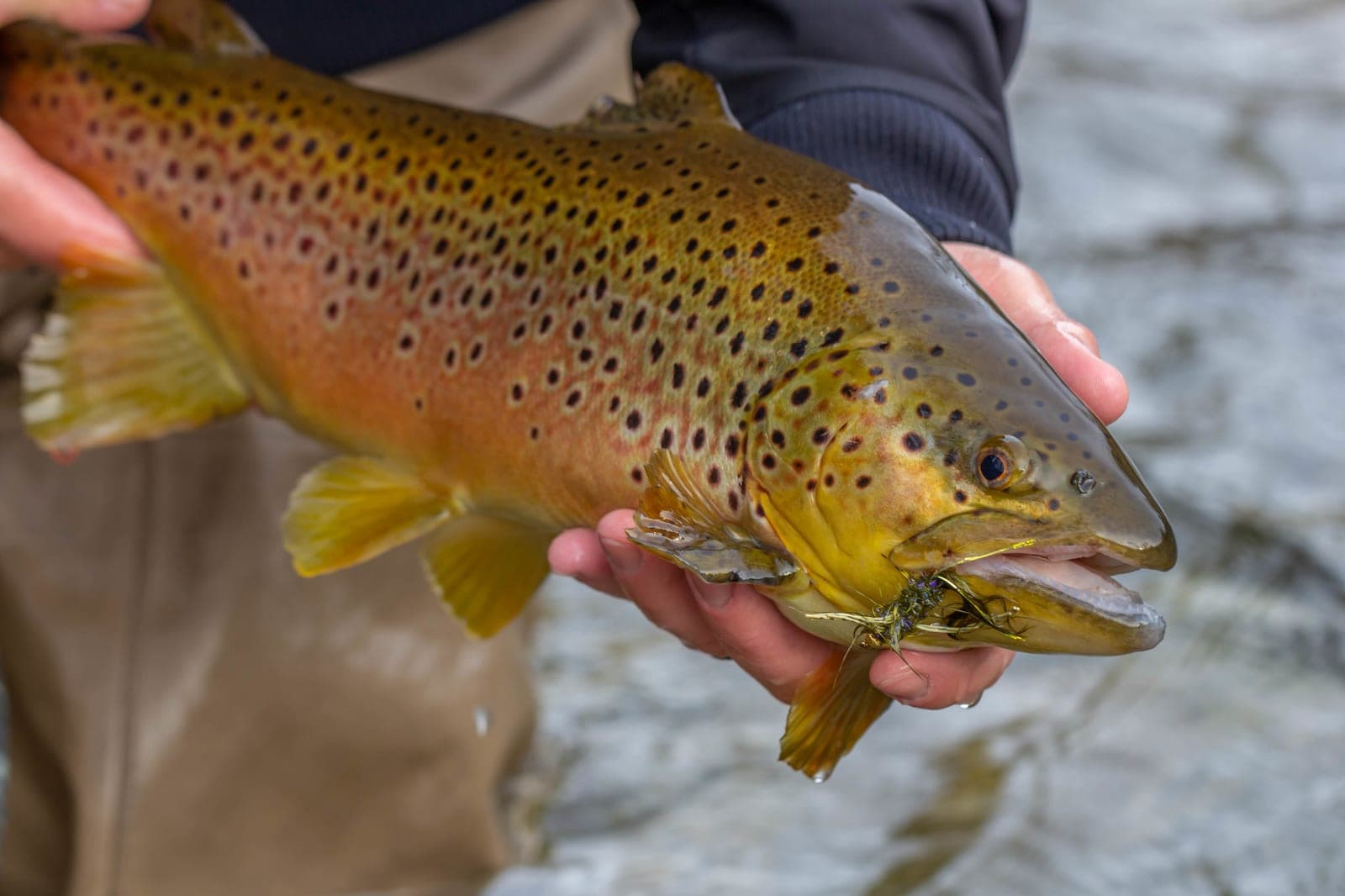
Quick answer
Look at the background and the fins: a brook trout has light spots and worm-like markings on a dark body, plus lower fins edged in white and black, while a brown trout has dark spots on a lighter, golden-brown body and plain fins.
Brook trout and brown trout share thousands of eastern and midwestern streams, both spawn in fall, and both wear red spots, so beginners mix them up all the time. One is the native char of eastern North America, the other a European trout stocked here since the 1880s, and in many streams the newcomer has pushed the native aside. Here is how to tell them apart.
Key differences
| Trait | Brook Trout | Brown Trout |
|---|---|---|
| Spot pattern | Light spots on a dark body | Dark spots on a light body |
| Back and dorsal fin | Wormy, light vermiculations | Black spots, no wormy lines |
| Lower fins | White leading edge, then a black stripe | No white edge |
| Red spots | Small red dots with blue halos | Red or orange spots with pale halos |
| Group | A char (Salvelinus) | A true trout (Salmo) |
| Native range | Eastern Canada and the eastern United States | Europe, western Asia and North Africa |
| World record | 14 lb 8 oz (IGFA, 1915) | 44 lb 5 oz (IGFA, 2020) |
Native char vs. European import
Brook trout are the native trout of the Appalachians, the Great Lakes region, eastern Canada and the Maritimes, though technically they are chars, cousins of lake trout and Arctic char. Brown trout arrived from Europe in the 1880s and have been stocked across the continent since. Browns tolerate slightly warmer water and grow larger, and they compete with and prey on brook trout, so in many streams brookies now survive mainly in the coldest headwaters above the browns. Where both live, the upstream limit of the browns often marks where the best native brook trout water begins.
Tiger trout: when they cross
Because both species spawn over gravel in fall, they occasionally hybridize in the wild, and hatcheries also produce the cross on purpose. The result, the tiger trout, has bold, maze-like markings over its whole body instead of spots and is almost always sterile. Some states stock tiger trout as an aggressive sport fish. If you catch a fish whose entire body looks like a brook trout's back, it is probably a tiger.
Size, fishing and the table
Brook trout in small streams are usually 6 to 15 inches and willingly hit small dry flies, spinners and worms. Browns are warier, feed more at dusk and night, and grow far larger; big browns eat other fish, including brook trout. Both are fine eating, with mild, pink to orange flesh, but because native brook trout populations are often small and fragile, many anglers release them and keep stocked fish instead.
By the numbers
The traits the daily fish game compares for each.
| Clue | Brook Trout | Brown Trout |
|---|---|---|
| Family | Salmon & trout | Salmon & trout |
| Water | Both | Both |
| Region | Northern lakes & rivers | Nationwide |
| Body shape | Streamlined | Streamlined |
| Max length | 34 in | 42 in |
| Max weight | 18 lb | 44 lb |
| Diet | Carnivore | Carnivore |
FAQ
Is a brook trout a brown trout?
No. They are different species in different genera. The brook trout is a char native to eastern North America, and the brown trout is a European trout introduced in the 1880s.
Do brook trout and brown trout spawn at the same time?
Yes, both spawn in fall, generally from September into early winter. That overlap is why the two occasionally cross in the wild to produce tiger trout.
Which is bigger?
The brown trout, by far. The IGFA record brown weighs 44 pounds, 5 ounces, more than three times the 14-pound, 8-ounce record brook trout.
Do brown trout hurt brook trout populations?
They can. Browns compete for food and cover and eat young brook trout, and where browns are stocked, native brook trout often retreat to colder headwaters.
Could you tell them apart from a few clues? Test yourself in today's puzzle.
Play the daily fish game