Fish · Side by side
Black Crappie vs White Crappie
How to tell them apart
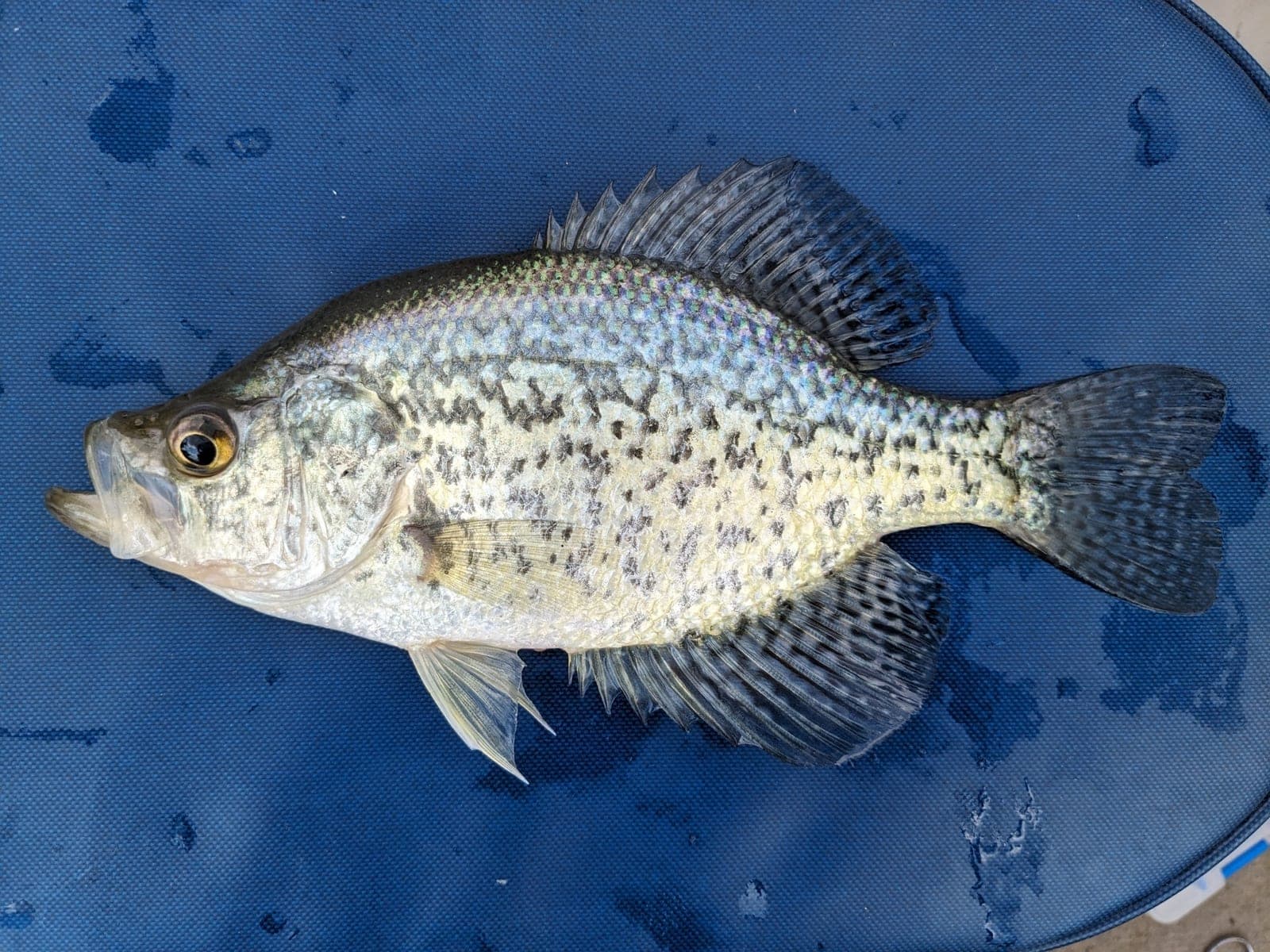
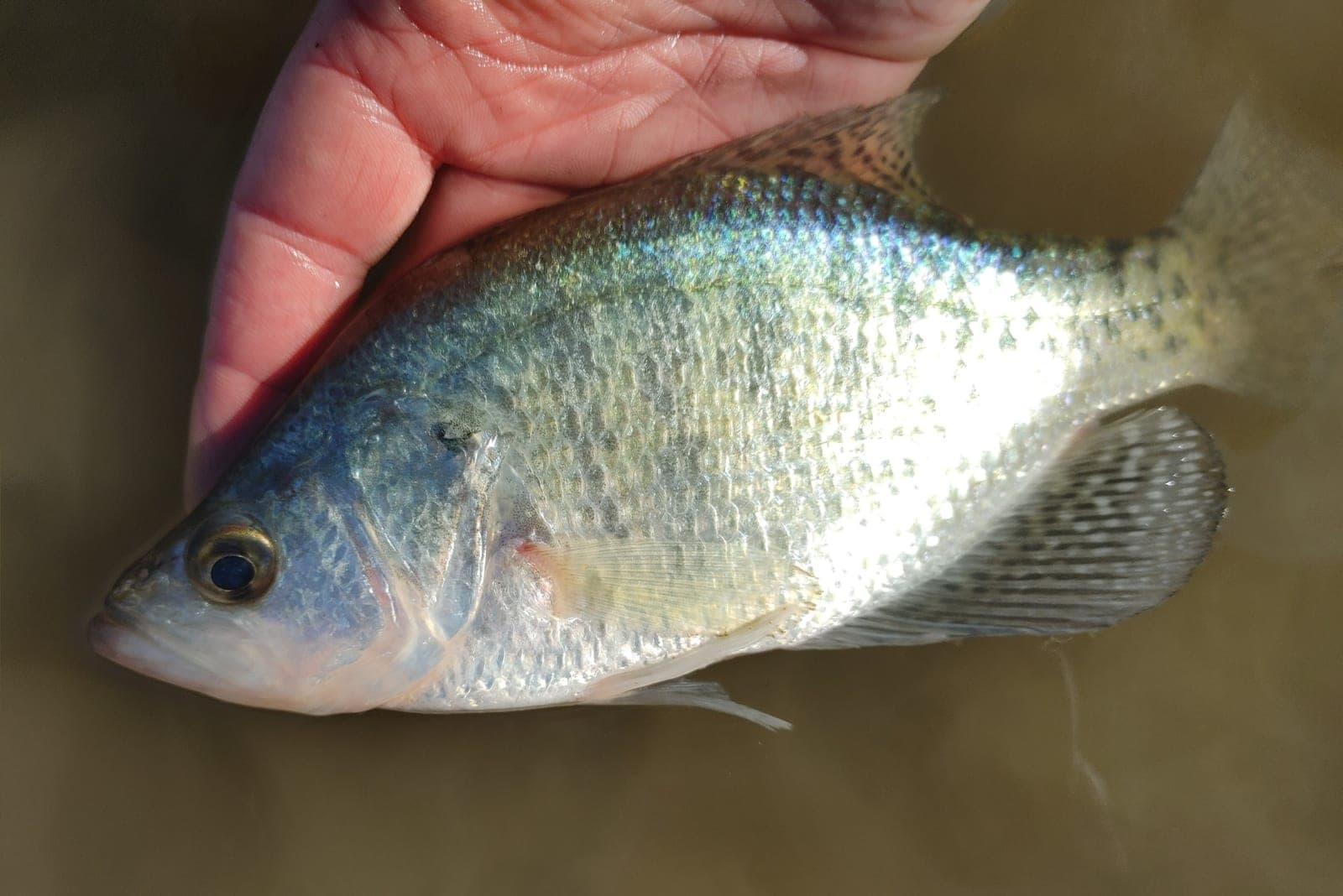
Quick answer
Count the spines on the dorsal fin: black crappie usually have seven or eight, white crappie six (sometimes five). Then check the pattern: black crappie are covered in irregular speckles, while white crappie carry five to ten vertical bars.
Black and white crappie are the only two members of their genus, share the same slab-sided shape and papermouth, and often live in the same lakes. Color alone is a poor guide, since both change with water clarity, season and spawning condition. A couple of quick checks on the dorsal fin settle the question almost every time.
Key differences
| Trait | Black Crappie | White Crappie |
|---|---|---|
| Dorsal spines | Usually 7 or 8 | Usually 6, sometimes 5 |
| Body markings | Irregular dark speckles and blotches all over | Five to ten faint vertical bars |
| Dorsal fin position | Starts close to the head; base about equal to eye-to-fin distance | Starts farther back; base shorter than eye-to-fin distance |
| Body shape | Slightly deeper and more humped | Slightly longer and slimmer |
| Favorite water | Clear, quiet lakes with weeds or timber | Turbid reservoirs, rivers and backwaters |
| Native range | Reaches farther north, into southern Canada | Most common in central and southern states |
| World record | 5 lb 7 oz (IGFA, 2018) | 5 lb 3 oz (IGFA, 1957) |
Where you will find each
Black crappie are the northern, clear-water fish: they dominate glacial lakes across the upper Midwest and southern Canada and are the crappie most ice anglers catch. White crappie handle warm, muddy, silty water far better and outnumber black crappie in many southern reservoirs, river backwaters and lakes with few rooted plants. Across the central United States, many waters hold both, with white crappie along murky creek channels and black crappie around clearer, weedier cover.
Hybrids and in-between fish
Where the two spawn in the same coves, they sometimes cross, and hybrids are occasionally stocked in ponds. A hybrid may show speckles mixed with faint bars and an in-between spine count, which is why a single trait is not always enough. The most reliable approach is to combine the spine count with the dorsal-fin measurement: compare the length of the fin's base with the distance from the eye to the front of the fin.
Which is better to catch and eat?
On the table there is no difference: both have mild, sweet, flaky white fillets that rank among the best in fresh water. For fishing, the tactics are nearly identical, with small minnows and jigs around brush, timber and docks. Regulations often treat the two simply as 'crappie', but rules vary, so check local regulations.
By the numbers
The traits the daily fish game compares for each.
| Clue | Black Crappie | White Crappie |
|---|---|---|
| Family | Sunfish family | Sunfish family |
| Water | Freshwater | Freshwater |
| Region | Nationwide | Southern waters |
| Body shape | Round & deep | Round & deep |
| Max length | 19 in | 21 in |
| Max weight | 6 lb | 5 lb |
| Diet | Carnivore | Carnivore |
FAQ
Can black and white crappie breed together?
Yes. Hybrids occur naturally where both species share spawning areas, and they can show a mix of speckles, bars and spine counts that makes them hard to identify.
Do black crappie get bigger than white crappie?
Not by much. Both commonly reach 8 to 12 inches, and the world records are close: 5 pounds, 7 ounces for black crappie and 5 pounds, 3 ounces for white crappie.
Why does my white crappie look black?
Male white crappie darken during spawning and can look as dark as a black crappie. Count the dorsal spines and check the fin position rather than relying on color.
Which crappie is better to eat?
Neither. Black and white crappie taste the same, with mild, sweet white fillets, and most anglers cannot tell them apart once they are cooked.
Could you tell them apart from a few clues? Test yourself in today's puzzle.
Play the daily fish game