Birds · Side by side
Ruby-throated Hummingbird vs Anna's Hummingbird
How to tell them apart
Quick answer
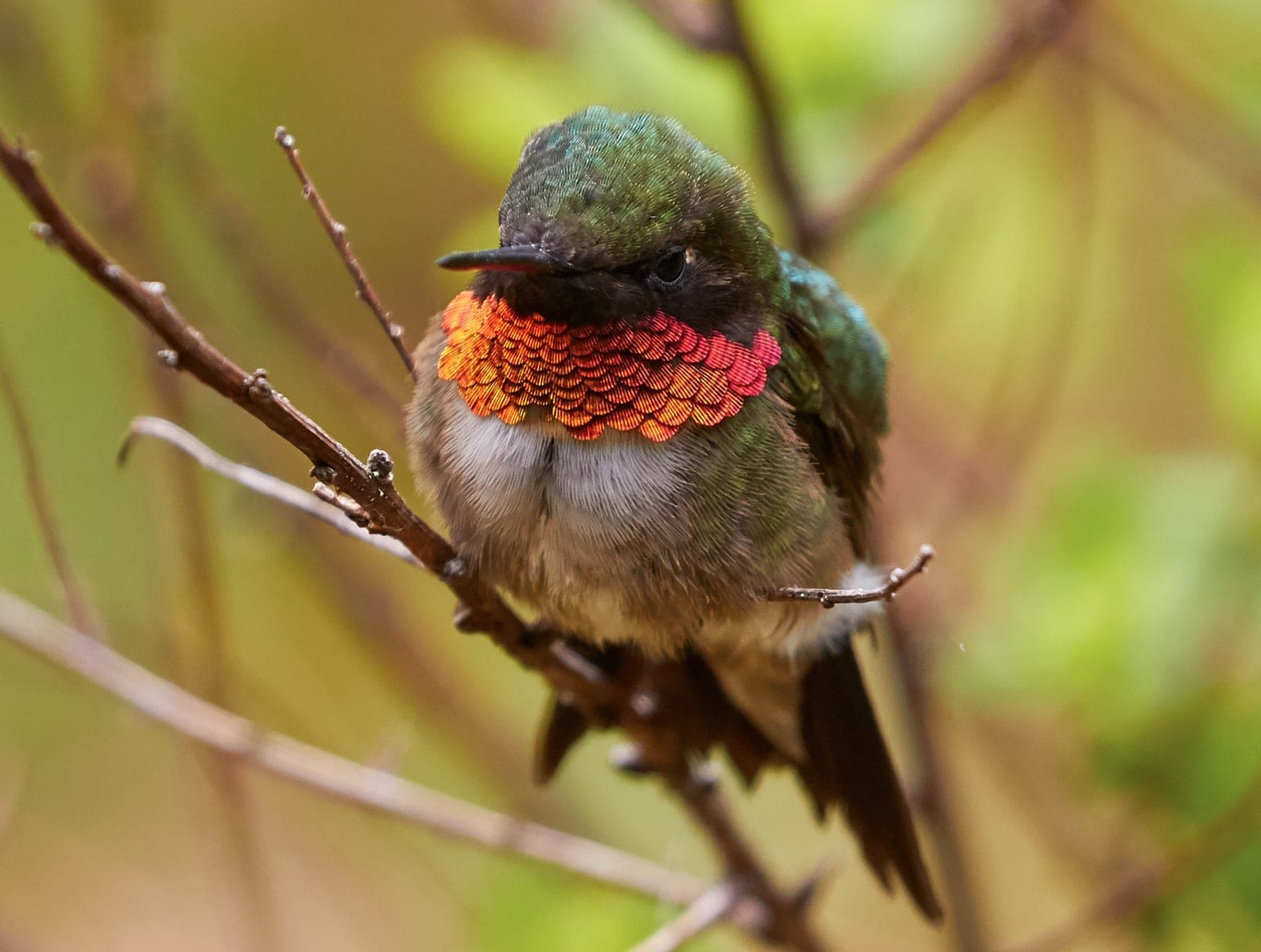
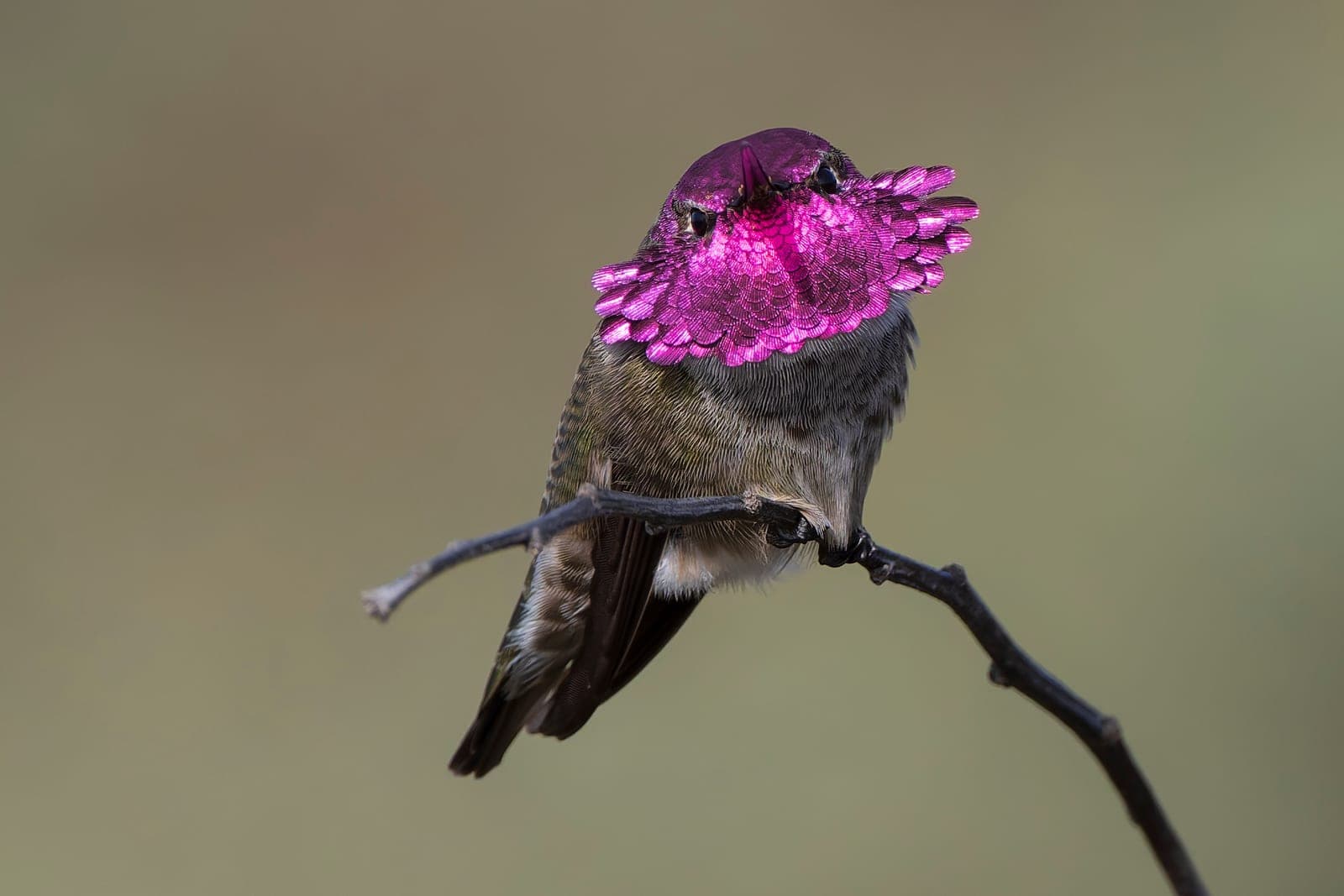
Start with location and season: east of the Great Plains in spring and summer, it is almost certainly a Ruby-throated; on the Pacific Coast, especially in winter, it is almost certainly an Anna's. On males, red that covers the whole crown as well as the throat means Anna's.
The Ruby-throated Hummingbird and Anna's Hummingbird are the two hummingbirds most North Americans see at feeders, one in the East and one along the Pacific Coast. Both males flash red throats, which is where the confusion starts, but they differ in size, head color, voice and, above all, in where and when they live.
Key differences
| Trait | Ruby-throated Hummingbird | Anna's Hummingbird |
|---|---|---|
| Range | Eastern North America, roughly east of the 100th meridian | Pacific Coast from British Columbia to Baja, inland to Arizona and west Texas |
| Migration | Long-distance migrant; winters from Mexico to Panama | Mostly a year-round resident |
| Size | 2.8–3.5 in, slim | 3.9–4.3 in, stockier |
| Male head | Ruby gorget only; crown green | Rose-red gorget and rose-red crown |
| Female throat | Whitish, sometimes faintly streaked | Gray, often with a central patch of red spots |
| Underparts | Grayish white | Gray with green-washed sides |
| Male voice | Squeaky chips; no real song | Scratchy, buzzy song from a perch |
| Nesting season | Spring and summer | Can start in December and run to June |
Where you will find each
Their ranges barely touch. Ruby-throats breed across the eastern United States and southern Canada and leave in fall for Mexico and Central America. Anna's live along the Pacific side from British Columbia to Baja California and inland to Arizona and western Texas, and most stay put all year, even through snow in Seattle and Vancouver. A wandering Anna's occasionally reaches the Gulf Coast or the Northeast, so a winter hummingbird in the East is worth photographing.
Courtship dives
Watching a male display is another giveaway. A male Ruby-throat swings back and forth in front of a female in a wide U-shaped arc, like a pendulum, with a whirring sound at each low point. A male Anna's climbs about 130 feet and then dives almost straight down past the female, reaching roughly 60 mph and ending in a sharp, explosive chirp made by his tail feathers.
Feeding both species
Both come readily to the same sugar water: 1/4 cup of refined white sugar dissolved in 1 cup of boiling water and cooled, with no red dye and no honey. Clean feeders often and keep them away from cats and windows. In the East, feeders mostly matter from spring through early fall. In the Pacific Northwest, a feeder kept up through winter helps resident Anna's survive cold spells.
By the numbers
The traits the daily bird game compares for each.
| Clue | Ruby-throated Hummingbird | Anna's Hummingbird |
|---|---|---|
| Group | Hummingbirds | Hummingbirds |
| Colors | Green, Red, White | Green, Red, Gray |
| Habitat | Backyards | Backyards |
| Region | Eastern | Western |
| Length | 3.2 in | 3.9 in |
| Wingspan | 3.7 in | 4.7 in |
| Diet | Nectar | Nectar |
FAQ
Can Ruby-throated and Anna's hummingbirds be seen in the same yard?
Very rarely. Their normal ranges barely meet, so a yard usually has one or the other. Stray Anna's have turned up as far east as Louisiana, Florida, New York and Newfoundland, so a visitor outside its usual range is worth reporting.
Which hummingbird stays through the winter?
Anna's. It is a year-round resident along the Pacific Coast and survives freezing nights by entering torpor. Nearly all Ruby-throats leave North America for the winter.
Do they need different nectar?
No. Both take the same one-to-four mix of refined white sugar and water. Skip red food coloring and honey, and change and clean the feeder often.
How can you tell the females apart?
A female Anna's is larger and grayer below, often with a central spot of red on the throat. A female Ruby-throat is slimmer, with a whitish throat and underparts. Range usually settles it.
Could you tell them apart from a few clues? Test yourself in today's puzzle.
Play the daily bird game