Birds · Side by side
American Crow vs Common Raven
How to tell them apart
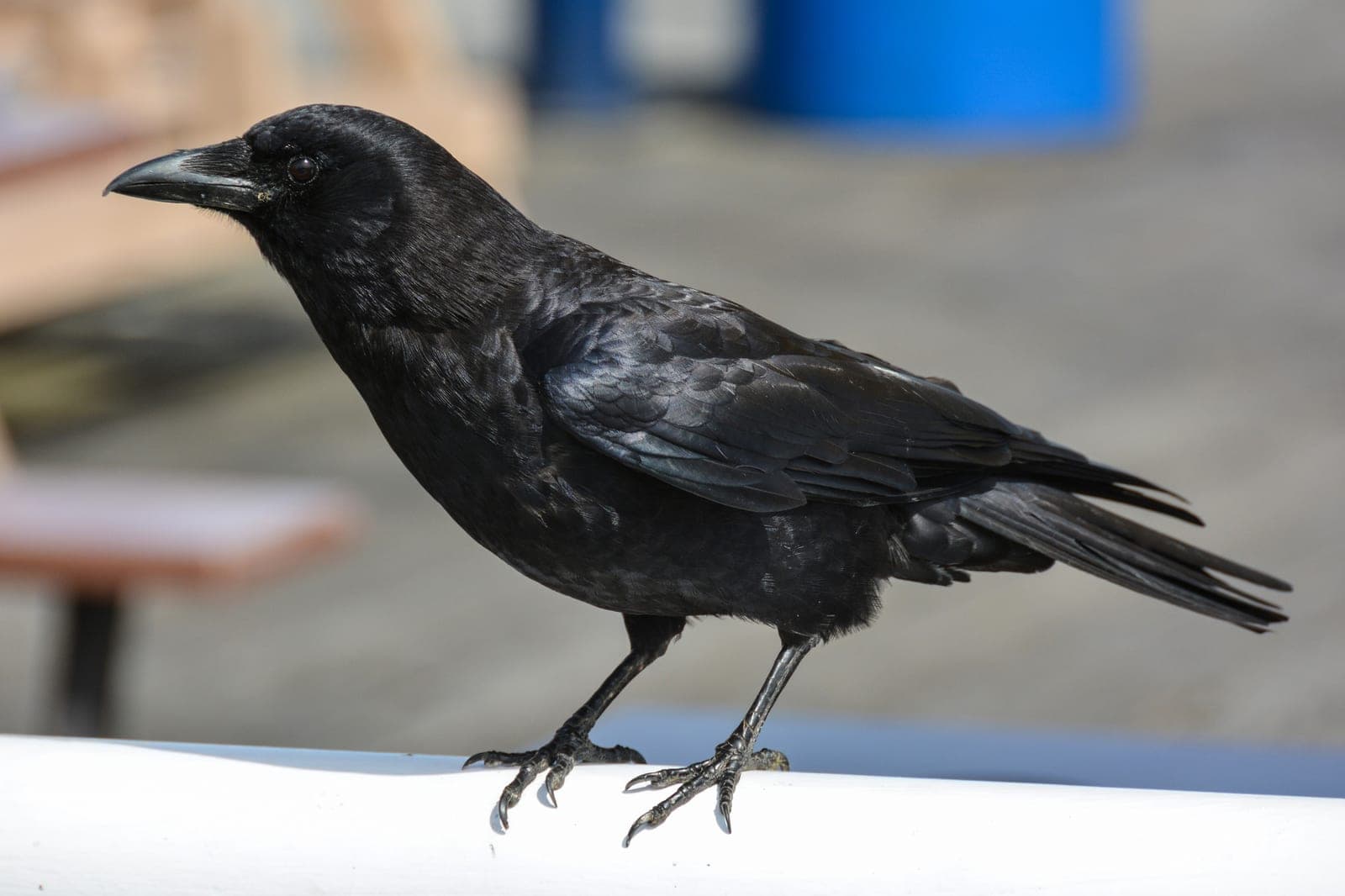
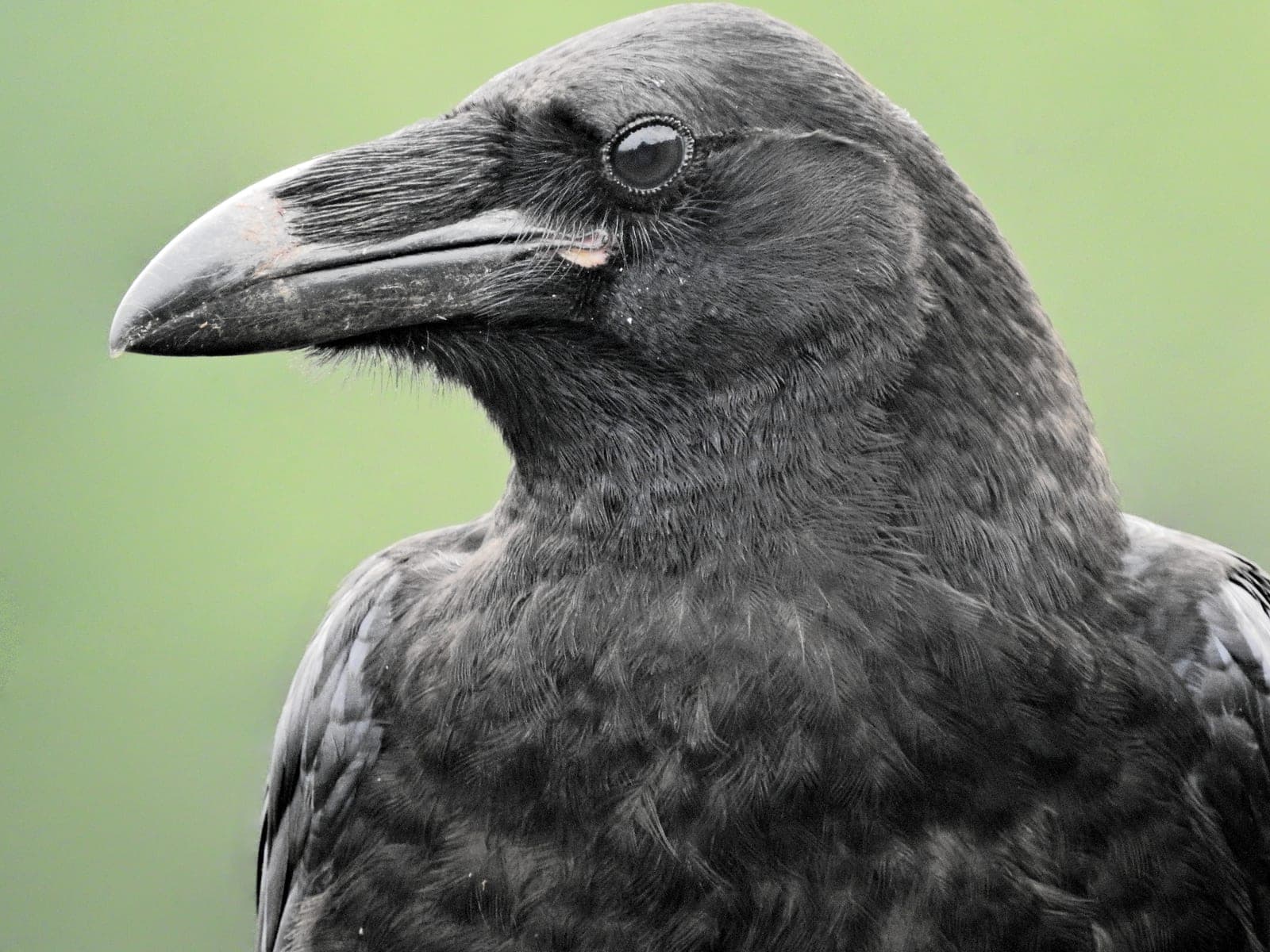
Quick answer
Watch the tail and listen: a raven's tail is wedge-shaped in flight and it croaks a deep 'gronk', while a crow's tail is fan-shaped and it says 'caw'. Ravens are also much bigger, with a heavy bill and shaggy throat.
Big, black and clever, American Crows and Common Ravens share much of the continent and get mixed up constantly. A lone black bird on a fence post can be hard to size, but ravens and crows differ in shape, flight and voice, and once you know what to look and listen for, most sightings take only seconds to sort out.
Key differences
| Trait | American Crow | Common Raven |
|---|---|---|
| Size | About 16–21 in, 11–22 oz | About 22–27 in, roughly 1.5–3.6 lb |
| Wingspan | About 33–39 in | About 46 in |
| Tail in flight | Short, fan-shaped, rounded or square | Long and wedge-shaped, pointed in the middle |
| Bill | Straight and fairly slim | Massive, deep, bristled at the base |
| Throat | Smooth, sleek feathers | Shaggy, pointed feathers |
| Voice | Clear 'caw-caw' | Deep, croaking 'gronk' and knocking calls |
| Flight | Steady rowing wingbeats, rarely soars | Soars and glides on flat wings, rolls and tumbles |
| Social life | Family groups; winter roosts of thousands | Usually pairs or small groups; nonbreeders flock at food |
Where you will find each
American Crows are birds of farms, towns, shorelines and open woods across nearly all of southern Canada and the lower 48 states, and they thrive around people. Common Ravens are birds of wilder, rougher country: the boreal forest, Arctic tundra, western mountains and deserts, sea cliffs and the Appalachians. In much of the West and North you can see both in a day, often with ravens over the cliffs and highways and crows in town. Across most of the Midwest and Southeast, a crow-like bird is almost always a crow.
Reading a black bird in flight
The tail is the best single clue. Spread in flight, a crow's tail looks like a fan with a rounded or square end, while a raven's tail is long and comes to a blunt point in the middle like a wedge. Ravens also show longer, narrower wings with well-spread fingertips, a big head and bill that stick out far in front, and a habit of soaring in circles like a hawk. Crows flap steadily and seldom glide for long. In winter, long evening flight lines of big black birds heading to a town roost are usually crows.
Listen before you look
Voice settles most cases. Crows give the familiar 'caw', plus rattles and clicks. Ravens croak in a low, hollow, gurgling voice and add knocking sounds, bell-like notes and even mimicry; their wing feathers make an audible creaking sound when they fly close. Ravens have dozens of different calls and crows rattle and click too, so pair the voice with size and tail shape when you can.
By the numbers
The traits the daily bird game compares for each.
| Clue | American Crow | Common Raven |
|---|---|---|
| Group | Jays & crows | Jays & crows |
| Colors | Black | Black |
| Habitat | Backyards | Forest |
| Region | Nationwide | Western |
| Length | 18 in | 25 in |
| Wingspan | 36 in | 46 in |
| Diet | Omnivore | Omnivore |
FAQ
Is a raven just a big crow?
No. Both are in the genus Corvus, but they are separate species. Ravens are much larger, with a wedge-shaped tail, heavier bill, shaggy throat and croaking voice.
Which is smarter, a crow or a raven?
Both rank among the most intelligent birds. Crows recognize individual human faces, and ravens solve puzzles and track where other ravens hide food. Research has not shown either to be clearly smarter.
Do crows and ravens get along?
Not especially. Crows frequently chase and dive at ravens, especially in nesting season, since ravens take the eggs and chicks of other birds.
Are crows and ravens protected?
Both are protected under the U.S. Migratory Bird Treaty Act. Federal rules let states hold regulated crow seasons, but there is no comparable season for ravens.
Could you tell them apart from a few clues? Test yourself in today's puzzle.
Play the daily bird game