Birds · Side by side
Barn Swallow vs Tree Swallow
How to tell them apart
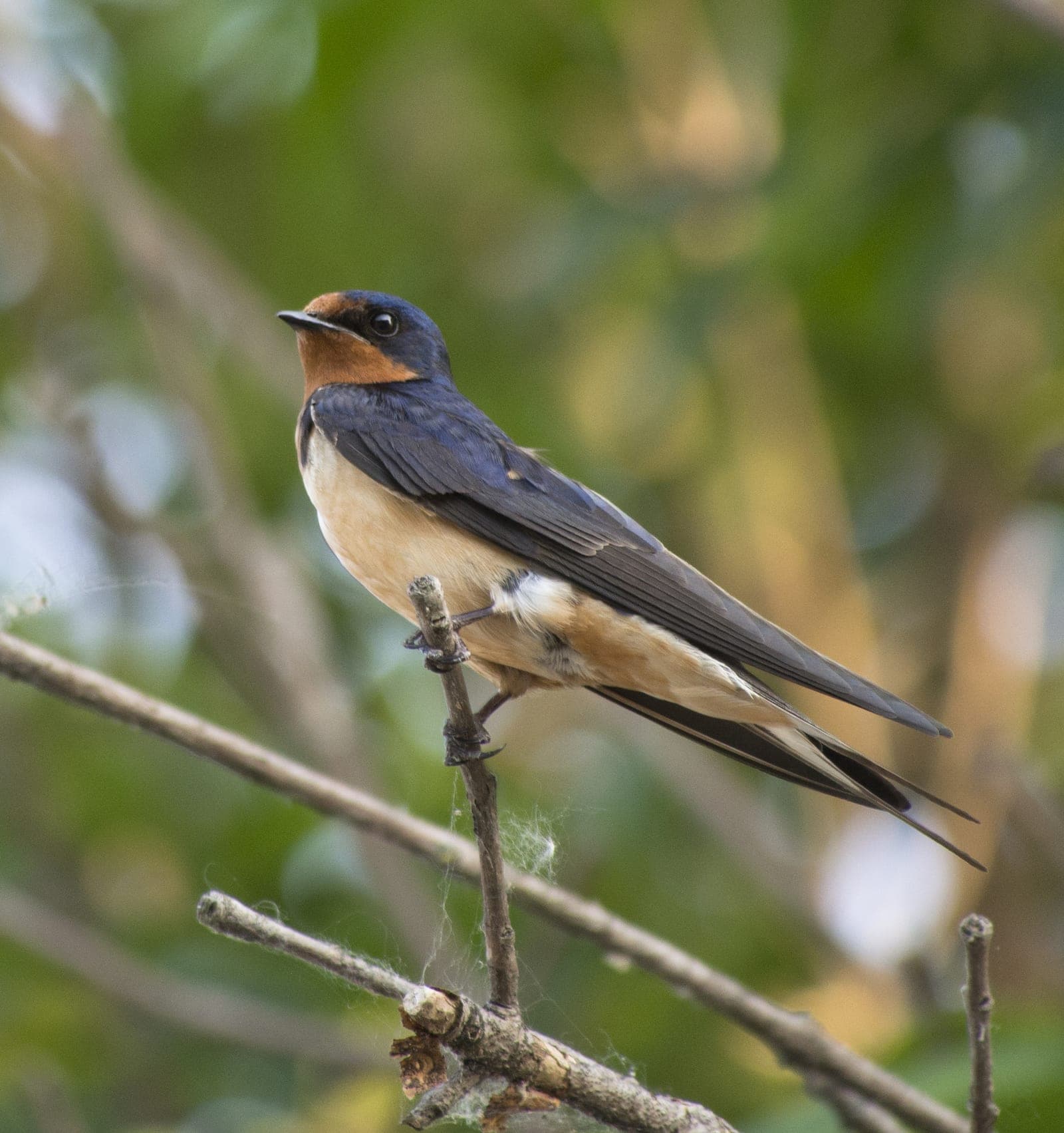
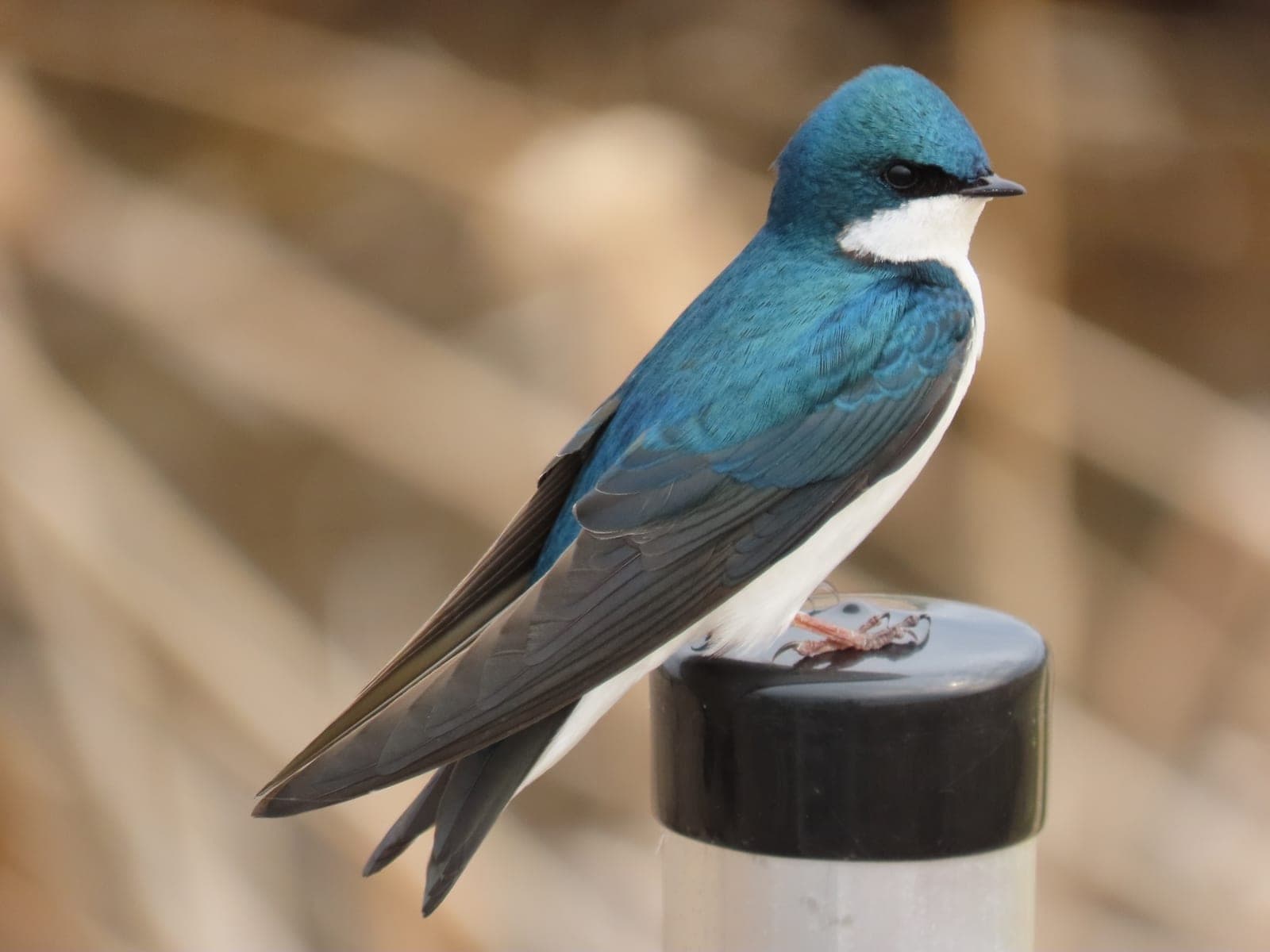
Quick answer
Check the tail and the belly: a Barn Swallow has a long, deeply forked tail with streamers and a rusty throat over buff to cinnamon underparts, while a Tree Swallow has a short, slightly notched tail and is pure white from chin to undertail.
Barn Swallows and Tree Swallows are the two swallows most people see, often hunting over the same pond or pasture on the same afternoon. Both are glossy blue on top and catch insects on the wing, so at a glance they blur together. The tail, the color underneath and where each one nests settle the question almost every time.
Key differences
| Trait | Barn Swallow | Tree Swallow |
|---|---|---|
| Tail | Long and deeply forked, with outer streamers | Short and slightly notched |
| Underparts | Buff to cinnamon, with a rusty throat and forehead | Clean, bright white from chin to tail |
| Upperparts | Steel blue | Glossy blue to blue-green; young females brown |
| Nest | Mud cup on beams and ledges of barns, porches and bridges | Tree cavity or nest box, lined with feathers |
| Diet | Flying insects; almost never fruit | Flying insects, plus bayberries and other fruit in cold weather |
| Winter range | Southern Mexico and Central America to Argentina | Southern U.S. coasts to Central America and the Caribbean |
| Spring arrival | Later; males return before females | Early, before most other swallows |
| Oldest on record | 10 yr 0 mo (banded) | 12 yr 1 mo (banded) |
Where you will find each
Both breed across most of North America and feed over open ground and water, so they often share the same airspace. Barn Swallows stick close to farms, marinas and bridges, because almost every pair now nests on a human-made structure. Tree Swallows favor marshes, beaver ponds and fields with nest boxes or dead trees full of old woodpecker holes. Tree Swallows also come back earlier in spring and nest north to the tree line in Canada.
Nests settle it
If you can see where a swallow goes, the identification is done. A Barn Swallow flies into a barn, shed, porch or under a bridge to a cup of mud pellets stuck to a beam or wall. A Tree Swallow drops into a hole: a bluebird-style box with a 1 3/8-inch entrance or a cavity in a dead snag. Tree Swallows often compete with Eastern Bluebirds for those boxes, while Barn Swallows build on open ledges and shelves rather than inside boxes.
Winter and cold snaps
The two take very different approaches to cold. Barn Swallows eat almost nothing but flying insects and travel all the way to Central and South America for the winter. Tree Swallows can live on bayberries and other fruit for a fifth of the year's diet, which lets them winter along the southern U.S. coasts and return north early, riding out cold spring days on fruit when insects are scarce.
By the numbers
The traits the daily bird game compares for each.
| Clue | Barn Swallow | Tree Swallow |
|---|---|---|
| Group | Swallows | Swallows |
| Colors | Blue, Orange | Blue, White |
| Habitat | Grassland | Wetlands |
| Region | Nationwide | Nationwide |
| Length | 7 in | 5 in |
| Wingspan | 12 in | 13 in |
| Diet | Insects | Insects |
FAQ
Can a young Barn Swallow look like a Tree Swallow?
Juvenile Barn Swallows have short tail streamers and paler underparts, but they still show a pale rusty face and throat and a more deeply forked tail than any Tree Swallow.
Which swallow uses birdhouses?
The Tree Swallow. It nests in boxes with a 1 3/8-inch hole, mounted on a pole in the open. Barn Swallows use open ledges or a nest shelf under an eave rather than an enclosed box.
Do Barn Swallows and Tree Swallows nest in the same places?
They often feed together, but their nests differ. Barn Swallows build mud cups inside or under structures, while Tree Swallows nest inside cavities and boxes, often a short distance away in the same field.
Which swallow comes back first in spring?
Usually the Tree Swallow. It migrates north early and can switch to berries during cold snaps, while Barn Swallows depend on flying insects and arrive later in most of the North.
Could you tell them apart from a few clues? Test yourself in today's puzzle.
Play the daily bird game