Birds · Side by side
American White Pelican vs Brown Pelican
How to tell them apart
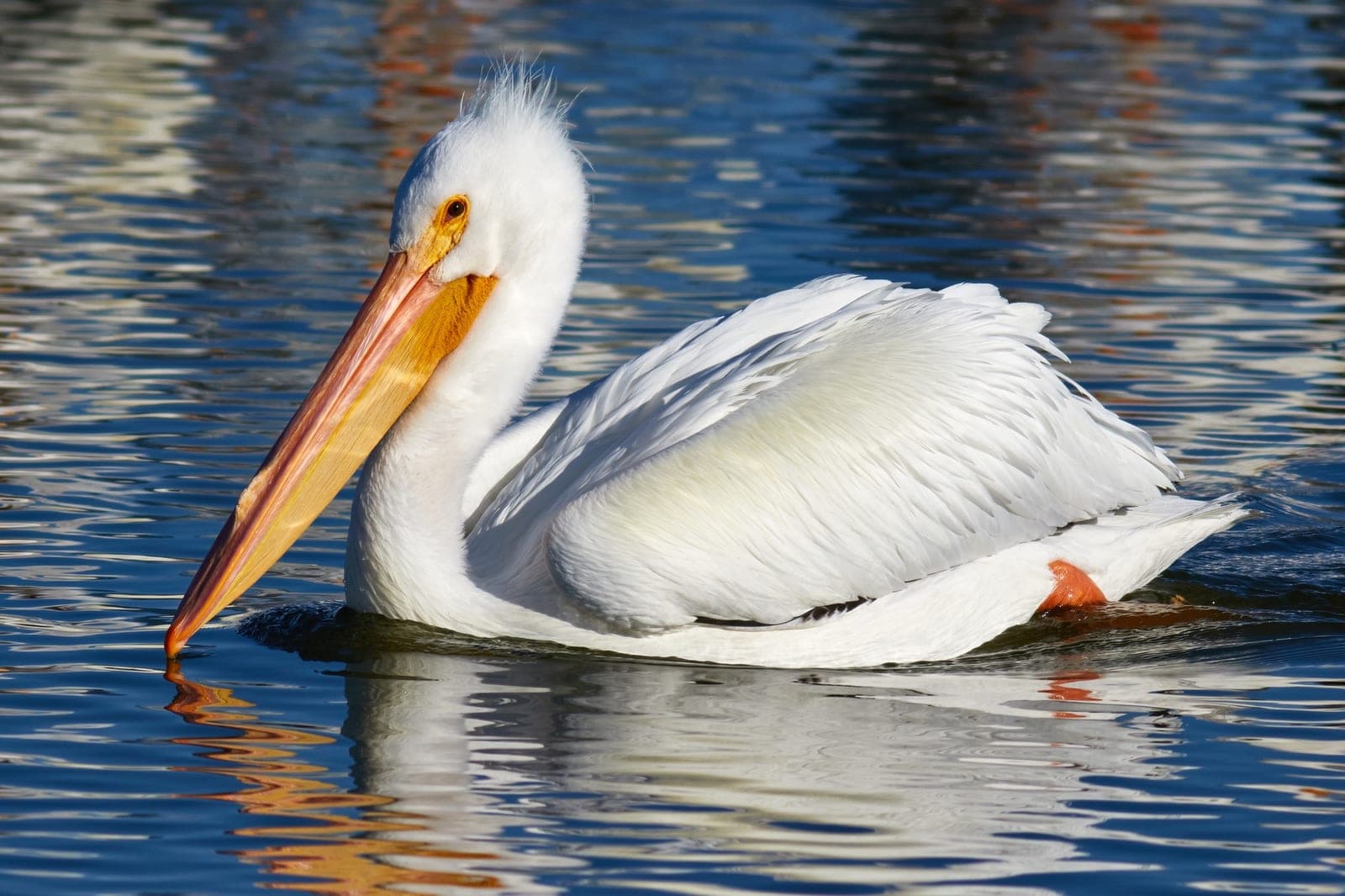
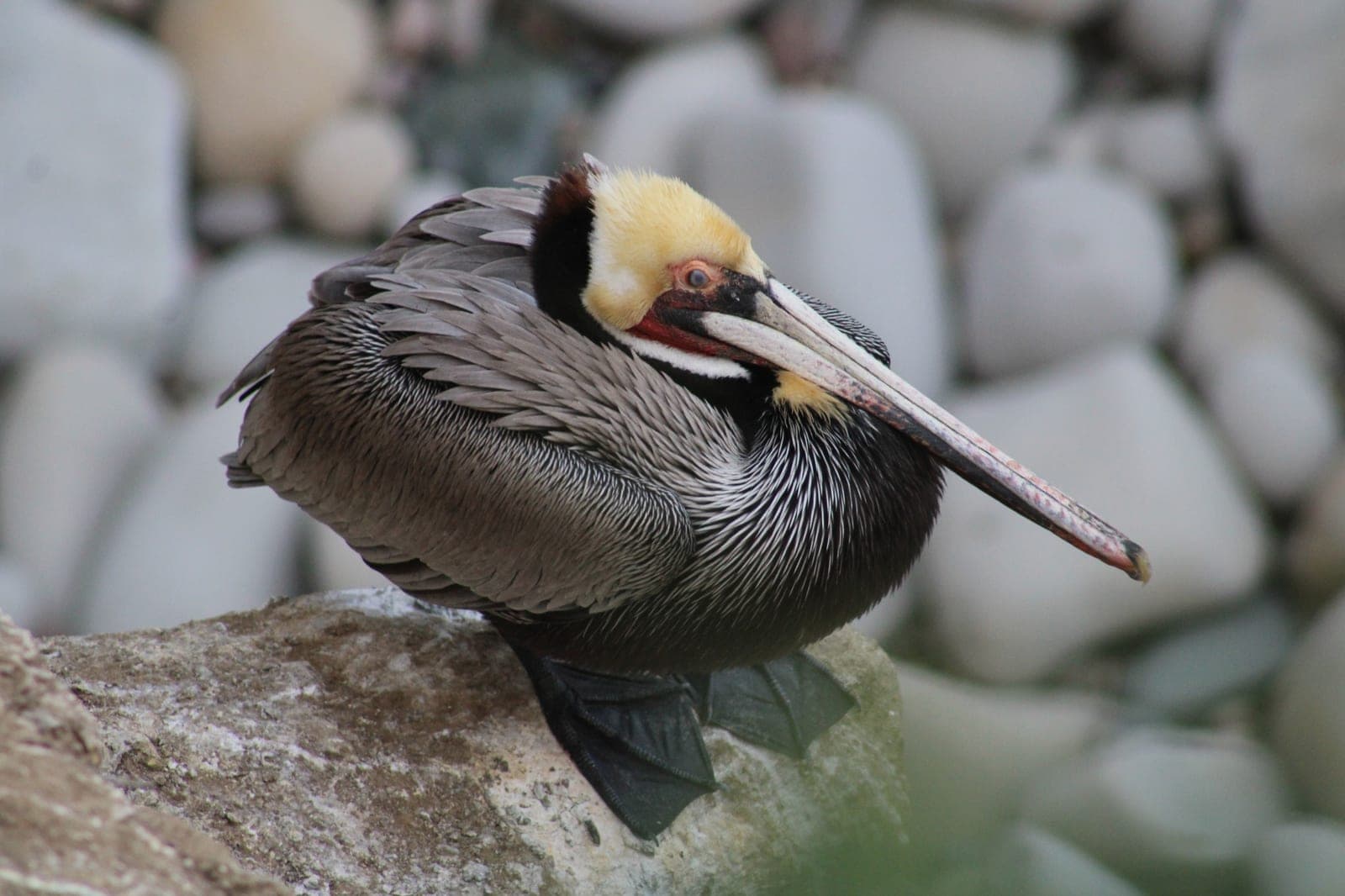
Quick answer
Color settles it: an American white pelican is white with black flight feathers and an orange-yellow bill, while a brown pelican is gray-brown with a dark belly and a white or yellowish head. Behavior confirms it, since brown pelicans plunge headfirst from the air and white pelicans swim and scoop, often in groups.
North America has two pelicans, and they lead very different lives. The brown pelican is a coastal plunge-diver of salt water; the American white pelican is a much bigger inland bird that nests on prairie and Great Basin lakes and catches fish while swimming. In winter they share bays and estuaries along the Gulf Coast, in Florida and in California, and telling them apart takes about a second.
Key differences
| Trait | American White Pelican | Brown Pelican |
|---|---|---|
| Plumage | White with black flight feathers | Gray-brown body, dark belly, white or yellowish head |
| Size | 50–65 in long, about 10–20 lb | 39–54 in long, about 4.5–11 lb |
| Wingspan | About 8–9.5 ft | About 6.5–7.5 ft |
| Feeding | Swims and scoops; groups herd fish | Plunge-dives headfirst from up to about 60 ft |
| Water | Fresh water in summer; coastal bays in winter | Salt water year-round |
| Nesting | Inland islands: Canadian prairies, northern Plains, Great Basin | Coastal islands: Atlantic, Gulf and Pacific |
| Breeding ornament | Upright 'horn' on the upper bill | Chestnut hindneck; red pouch on many Pacific birds |
| Oldest known (USGS) | 27 years 1 month | 27 years 10 months |
Where and when they overlap
For most of the year these pelicans are far apart. White pelicans spend spring and summer on interior lakes from the Canadian prairies to the Great Basin and cross the Plains and the Mississippi Valley in big migrating flocks, while brown pelicans almost never leave the coast. In winter, white pelicans move to the Gulf Coast, Florida, California and Mexico, where both species can share the same bay, sandbar or jetty. Brown pelicans turn up inland only as strays, mostly young birds in the Southwest.
Two ways to fish
The brown pelican is the only North American pelican that dives. It circles over the water, folds its wings and hits the surface bill-first, then drains its pouch and swallows. White pelicans never do this. They swim on the surface, dip their bills to scoop up fish, and often work in groups of a dozen or more that line up or form a horseshoe to push fish into the shallows. During the nesting season white pelicans also fish at night, apparently finding prey by touch.
Two conservation stories
Both species were hurt by pesticides in the mid-1900s. DDT thinned brown pelican eggshells so badly that the bird vanished from Louisiana, was listed as endangered in 1970, and recovered after DDT was banned, coming off the endangered list in 2009. White pelicans were shot for sport and also declined, then increased substantially from the 1970s, but because they rely on a limited number of island colonies, drought and disturbance remain a constant risk. Both are protected under the Migratory Bird Treaty Act.
By the numbers
The traits the daily bird game compares for each.
| Clue | American White Pelican | Brown Pelican |
|---|---|---|
| Group | Pelicans | Pelicans |
| Colors | White, Black | Brown, Gray, White |
| Habitat | Wetlands | Coast |
| Region | Western | Southern |
| Length | 58 in | 47 in |
| Wingspan | 105 in | 79 in |
| Diet | Fish | Fish |
FAQ
Which pelican is bigger?
The American white pelican, by a wide margin. It typically weighs about twice as much as a brown pelican and has a wingspan of 8 to 9.5 feet, among the largest of any North American bird.
Do white pelicans live on the ocean?
Only in winter, and then mostly on sheltered coastal bays, estuaries and lagoons rather than open ocean. They nest and spend the summer on inland lakes.
Can you see brown pelicans inland?
Rarely. Brown pelicans stay close to salt water, and the few found on inland lakes are usually young wanderers, most often in the Southwest.
Are both pelicans protected?
Yes. Both are protected under the Migratory Bird Treaty Act. The brown pelican was listed as endangered from 1970 until its recovery led to delisting in 2009.
Could you tell them apart from a few clues? Test yourself in today's puzzle.
Play the daily bird game