Fish · Side by side
Red Drum vs Spotted Seatrout
How to tell them apart
Quick answer
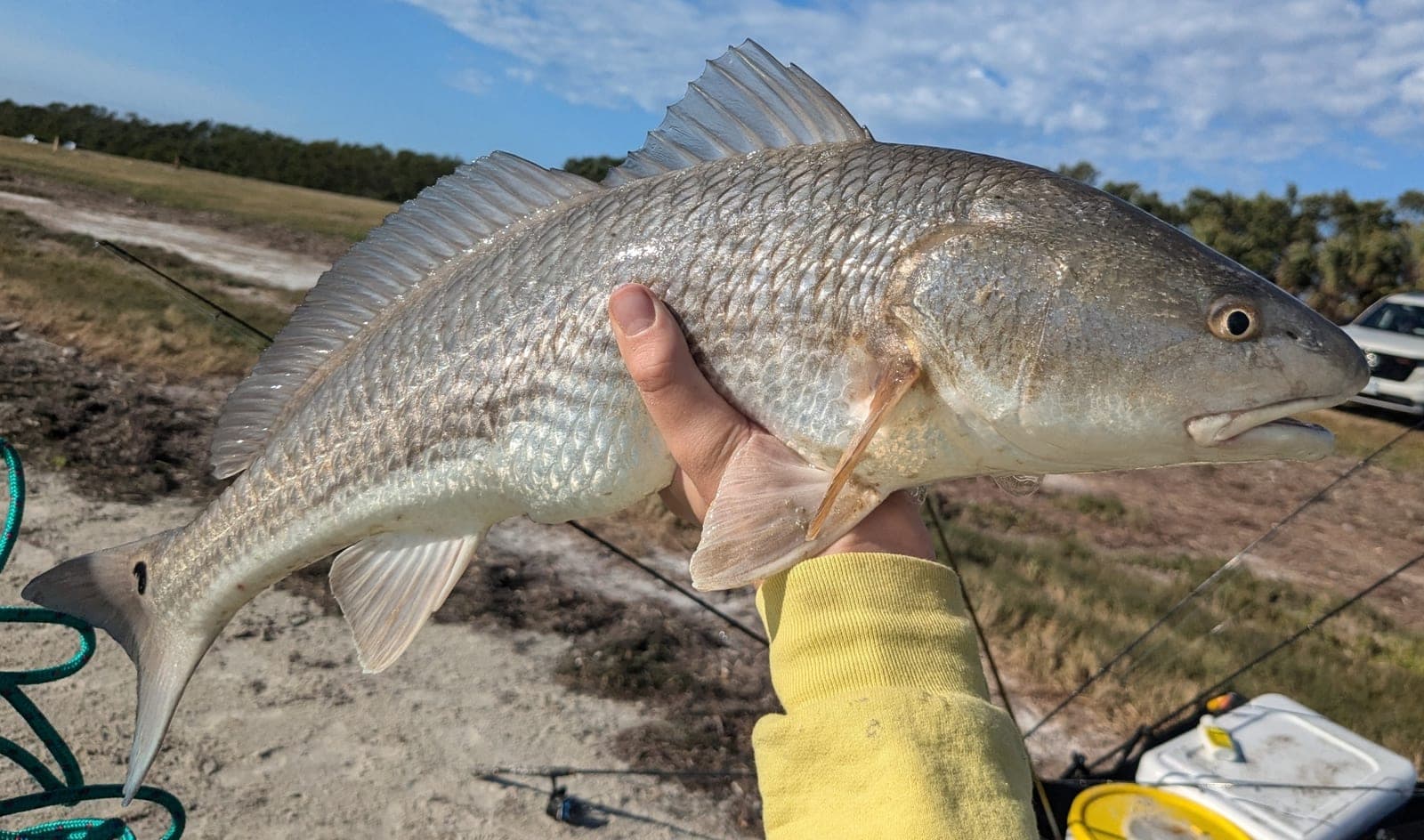
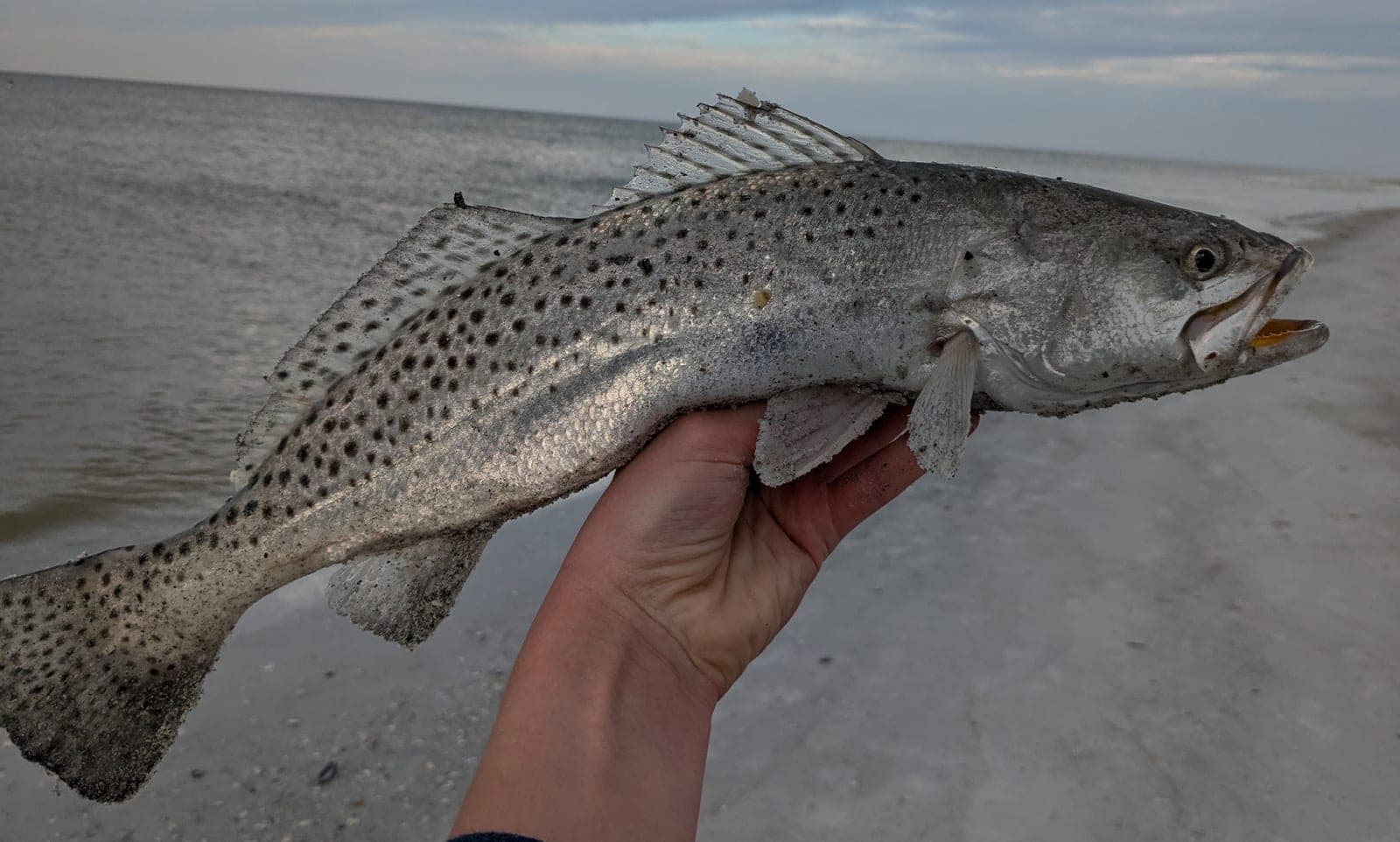
Look at the spots and the mouth: a red drum is copper-bronze with one or a few big black spots at the base of the tail and no fangs, while a spotted seatrout is silver-gray with many small black spots over its back, dorsal fin and tail and one or two sharp canine teeth at the tip of the upper jaw.
Redfish and speckled trout are the two pillars of inshore fishing from the Carolinas to Texas. They belong to the same drum family, share the same grass flats and oyster bars, and often hit the same popping cork on back-to-back casts. They are easy to tell apart once you know where to look, and the difference matters, because each has its own size and slot rules.
Key differences
| Trait | Red Drum | Spotted Seatrout |
|---|---|---|
| Spots | One or a few large black spots at the tail base | Many small round spots on the back, dorsal fin and tail |
| Color | Copper to bronze back, white belly | Gray to blue-green back over silver sides |
| Mouth and teeth | Low, slightly underslung mouth; no canine teeth | Large mouth with one or two fangs at the tip of the upper jaw |
| Typical size | 3–10 lb inshore; bulls of 20–40 lb or more | 1–3 lb; five pounds is a trophy |
| World record | 94 lb 2 oz (IGFA, 1984) | 17 lb 7 oz (IGFA, 1995) |
| Lifespan | Often 40+ years; Atlantic fish to about 60 | Usually 8–10 years; 18 on record |
| Spawning | Late summer and fall, near inlets and passes | Spring and summer, inside bays and estuaries |
| Feeding style | Roots on the bottom, tails in shallow grass | Ambushes baitfish from grass edges and potholes |
Where you will find each
Both fish range from the mid-Atlantic around Florida and the entire Gulf, and both grow up on the same estuary flats. Day to day, they split the water a little differently. Reds push shallower, rooting along marsh edges, oyster bars and grass so thin their tails and backs come out of the water. Trout usually hold a bit deeper, over grass flats three to six feet deep, in sandy potholes and along drop-offs, and they spend their whole lives near the estuary. Adult red drum, by contrast, move out to the surf, passes and nearshore waters, which is why the biggest reds are caught on beaches and the biggest trout on grass flats.
Same family, very different lives
Both are drums, family Sciaenidae, and both make croaking or drumming sounds with muscles on the swim bladder. Their life strategies are opposite, though. Spotted seatrout grow fast, spawn by their second or third year, release eggs many times each summer and rarely live past ten. Red drum mature later, spawn near inlets in the fall, and can live for decades, so big breeding 'bull reds' are worth protecting for years. That is why many states use slot limits for reds that send every bull back, and rules for trout that limit how many big females can be kept.
Catching both on one trip
A popping cork over a live or artificial shrimp is the classic way to catch both, and a paddle-tail soft plastic on a light jig head works almost as well. To target reds, cast gold spoons and weedless plastics to tailing or wakeing fish in very shallow water. To target trout, fish topwater plugs at dawn along grass edges and work soft plastics through potholes and drop-offs. In Florida, a red, a trout and a snook in one day is known as an inshore slam.
Which is better to eat?
Both are excellent, and the choice comes down to texture. Seatrout fillets are soft, delicate and mild and are best eaten fresh, because the meat breaks down quickly unless the fish goes straight on ice. Slot-sized redfish are firmer and hold up to grilling and blackening, and cooking fillets skin-and-scales-on is a Gulf favorite. Large bull reds, on the other hand, are coarse and stringy, and they are the breeders the fishery depends on.
By the numbers
The traits the daily fish game compares for each.
| Clue | Red Drum | Spotted Seatrout |
|---|---|---|
| Family | Drum family | Drum family |
| Water | Both | Both |
| Region | Gulf Coast | Gulf Coast |
| Body shape | Streamlined | Streamlined |
| Max length | 61 in | 39 in |
| Max weight | 99 lb | 17 lb |
| Diet | Carnivore | Carnivore |
FAQ
Are redfish and speckled trout related?
Yes. Both belong to the drum and croaker family, Sciaenidae, along with black drum, Atlantic croaker and weakfish. Despite its name, the speckled trout is not related to freshwater trout.
Can you catch redfish and speckled trout in the same spot?
Often. Both use the same grass flats, oyster bars and marsh edges, and a popping cork with shrimp regularly catches both on the same drift.
Which fights harder, a redfish or a speckled trout?
Redfish are heavier and pull with long, powerful runs. Trout fight with head shakes and short runs, and their thin mouths tear easily, so they need a lighter drag.
Do speckled trout have teeth?
Yes. Seatrout have one or two prominent fang-like teeth at the tip of the upper jaw, which a red drum never has. Grip a trout carefully and use pliers to remove hooks.
Could you tell them apart from a few clues? Test yourself in today's puzzle.
Play the daily fish game