Fish · Side by side
Rainbow Trout vs Cutthroat Trout
How to tell them apart
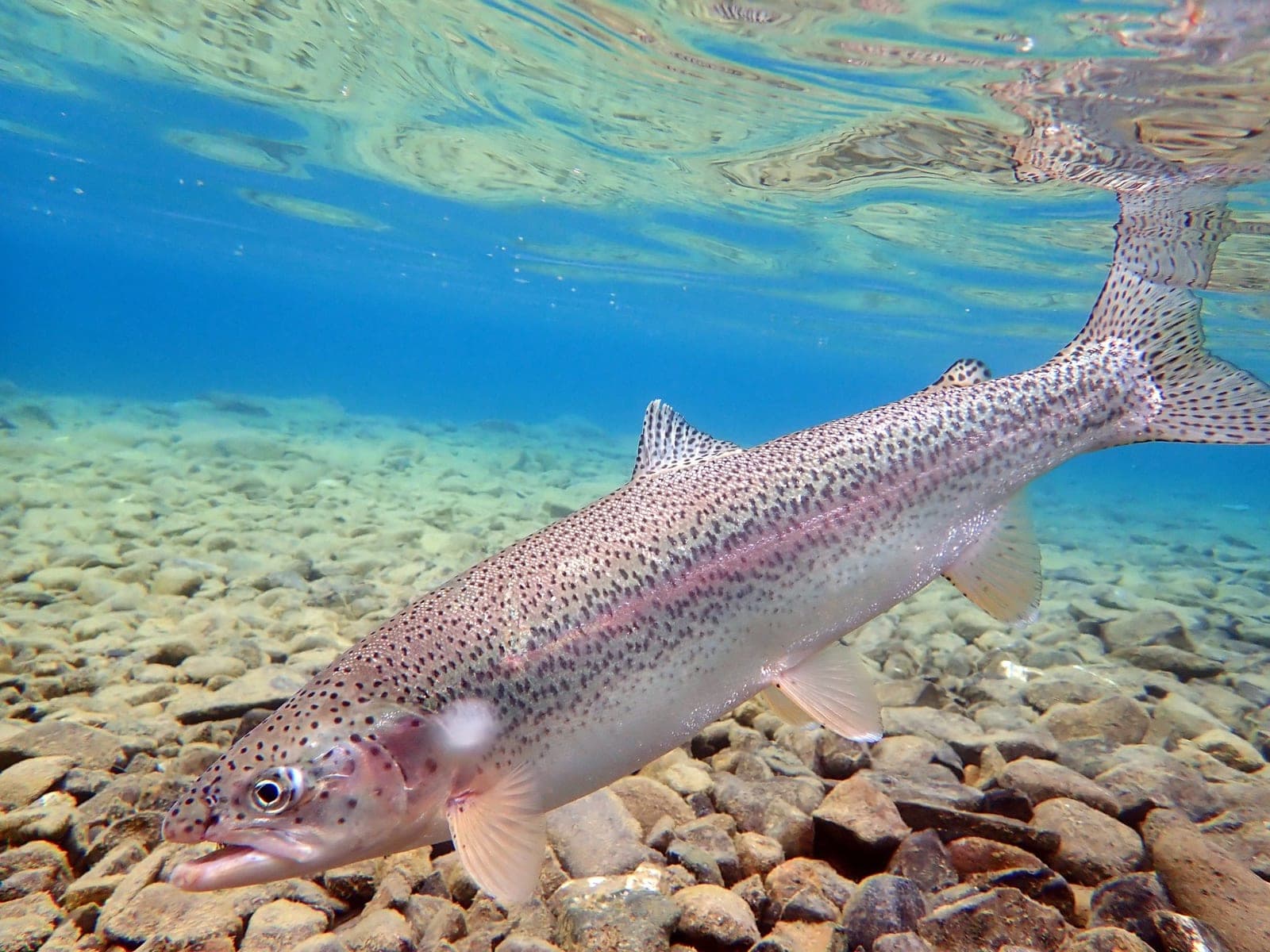
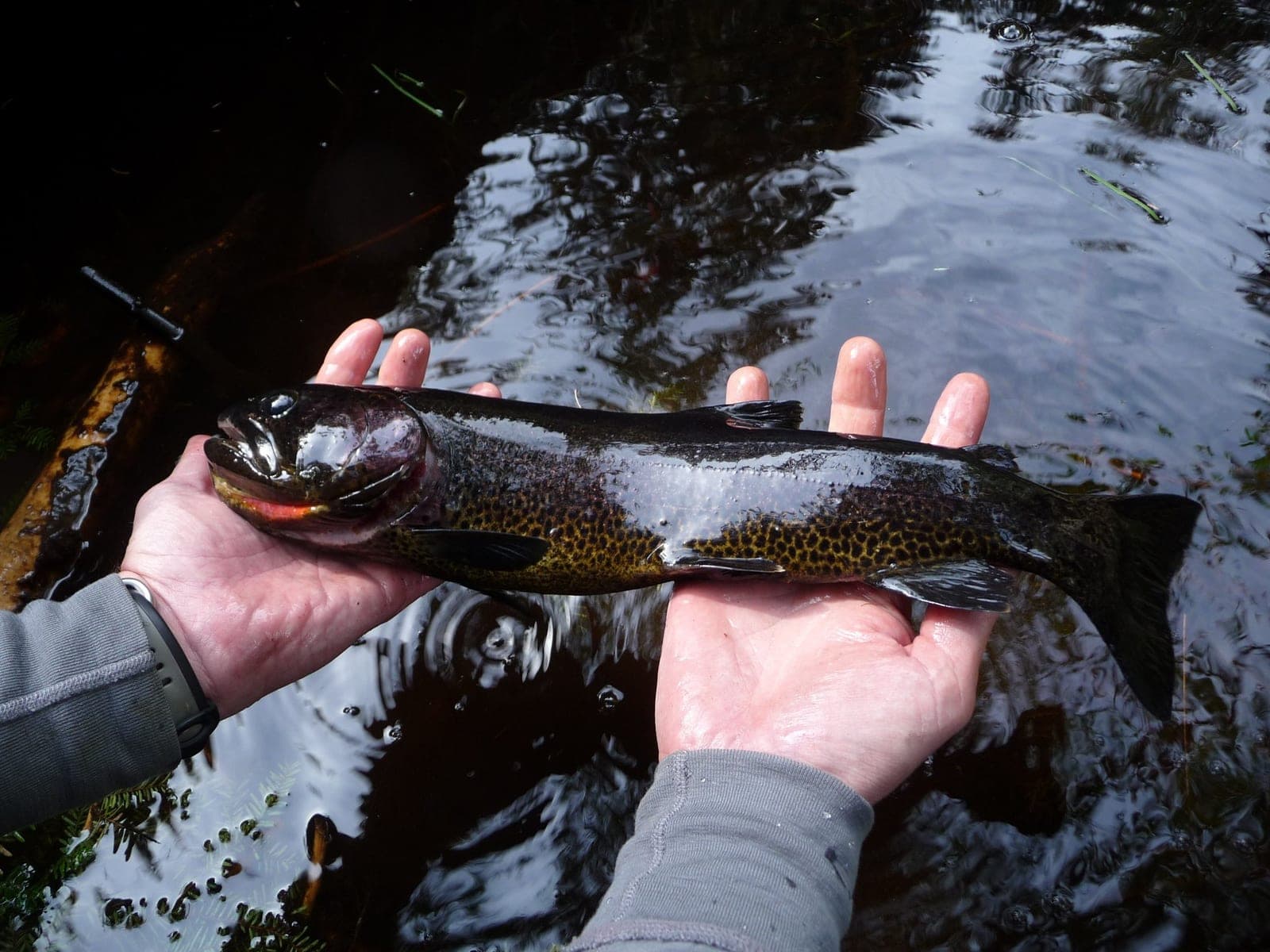
Quick answer
Look under the jaw: a cutthroat has a red, orange or pink slash in the skin folds under each side of the lower jaw, while a rainbow does not. Rainbows also show a pink stripe along the side, and a cutthroat's jaw reaches well past the back of its eye.
Rainbow and cutthroat trout are close relatives in the same genus, both native to the West, and they often share the same rivers. That closeness is the problem: they interbreed freely, and stocked rainbows have diluted many native cutthroat populations. Telling them apart matters, because many waters protect cutthroats while allowing anglers to keep rainbows.
Key differences
| Trait | Rainbow Trout | Cutthroat Trout |
|---|---|---|
| Under the jaw | No colored slash | Red, orange or pink slash on each side |
| Side stripe | Pink to red band along the lateral line | Usually no distinct pink band |
| Jaw length | Ends near the back of the eye | Extends well past the back of the eye |
| Teeth on the tongue | No basibranchial teeth | Tiny basibranchial teeth at the base of the tongue |
| Native range | Pacific slope from Alaska to Mexico | Pacific Coast plus the Rockies and Great Basin |
| World record | 48 lb (IGFA, 2009) | 41 lb (IGFA, 1925) |
| Sea-run form | Steelhead, which roam far out to sea | Sea-run cutthroat, which stay near shore |
Cutbows: when it looks like both
Rainbows and cutthroats spawn at similar times in spring and produce fertile hybrids known as cutbows. A cutbow often shows a faint slash under the jaw along with a pink side stripe, and its spots and colors can fall anywhere between the parents. Because hybrids can breed with each other and with pure fish, hatchery rainbows have mixed their genes into many cutthroat populations, and westslope cutthroat in particular are at risk of being swamped this way. A fish that looks like both is probably a hybrid, and local rules may treat it differently from a pure cutthroat.
Where you will find each
Coastal cutthroat and rainbows overlap along Pacific streams from Alaska to northern California. Inland, cutthroats are the native trout of the Rocky Mountains and the Great Basin, from Alberta and Montana to New Mexico and Nevada, while rainbows are native mostly west of the Rockies, with redband rainbows in the Columbia basin. Stocked rainbows now live throughout cutthroat country, which is why agencies across the West now work to protect and restore genetically pure cutthroat populations.
Which is easier to catch?
Cutthroats are generally the more trusting fish. They rise readily to dry flies, especially hoppers and attractors, and often live in remote, lightly fished headwaters. Rainbows are more likely to sit in fast water, fight with repeated jumps and handle fishing pressure. Both eat insects, small fish and eggs, and both are mild, pink-fleshed trout on the table, though most anglers release wild native cutthroat.
By the numbers
The traits the daily fish game compares for each.
| Clue | Rainbow Trout | Cutthroat Trout |
|---|---|---|
| Family | Salmon & trout | Salmon & trout |
| Water | Both | Both |
| Region | Nationwide | Pacific Coast |
| Body shape | Streamlined | Streamlined |
| Max length | 48 in | 39 in |
| Max weight | 56 lb | 41 lb |
| Diet | Carnivore | Carnivore |
FAQ
Can cutthroat and rainbow trout breed?
Yes. They hybridize readily and their offspring, called cutbows, are fertile. That is why stocked rainbows are one of the biggest threats to pure native cutthroat.
Do rainbow trout ever have a red slash under the jaw?
Pure rainbows normally do not, though some coastal and redband rainbows show reddish or pink throat markings. A strong, distinct slash usually means a cutthroat or a cutbow.
Which is the state fish of more states?
The cutthroat. It or one of its forms is the state fish of Idaho, Montana, Wyoming, Colorado, Nevada, New Mexico and Utah, while Washington's state fish is the steelhead, the sea-run rainbow.
Is a cutthroat a type of rainbow trout?
No. They are separate species in the genus Oncorhynchus, which also includes the Pacific salmon. Close kinship is why they can interbreed.
Could you tell them apart from a few clues? Test yourself in today's puzzle.
Play the daily fish game