Fish · Side by side
Rainbow Trout vs Brown Trout
How to tell them apart
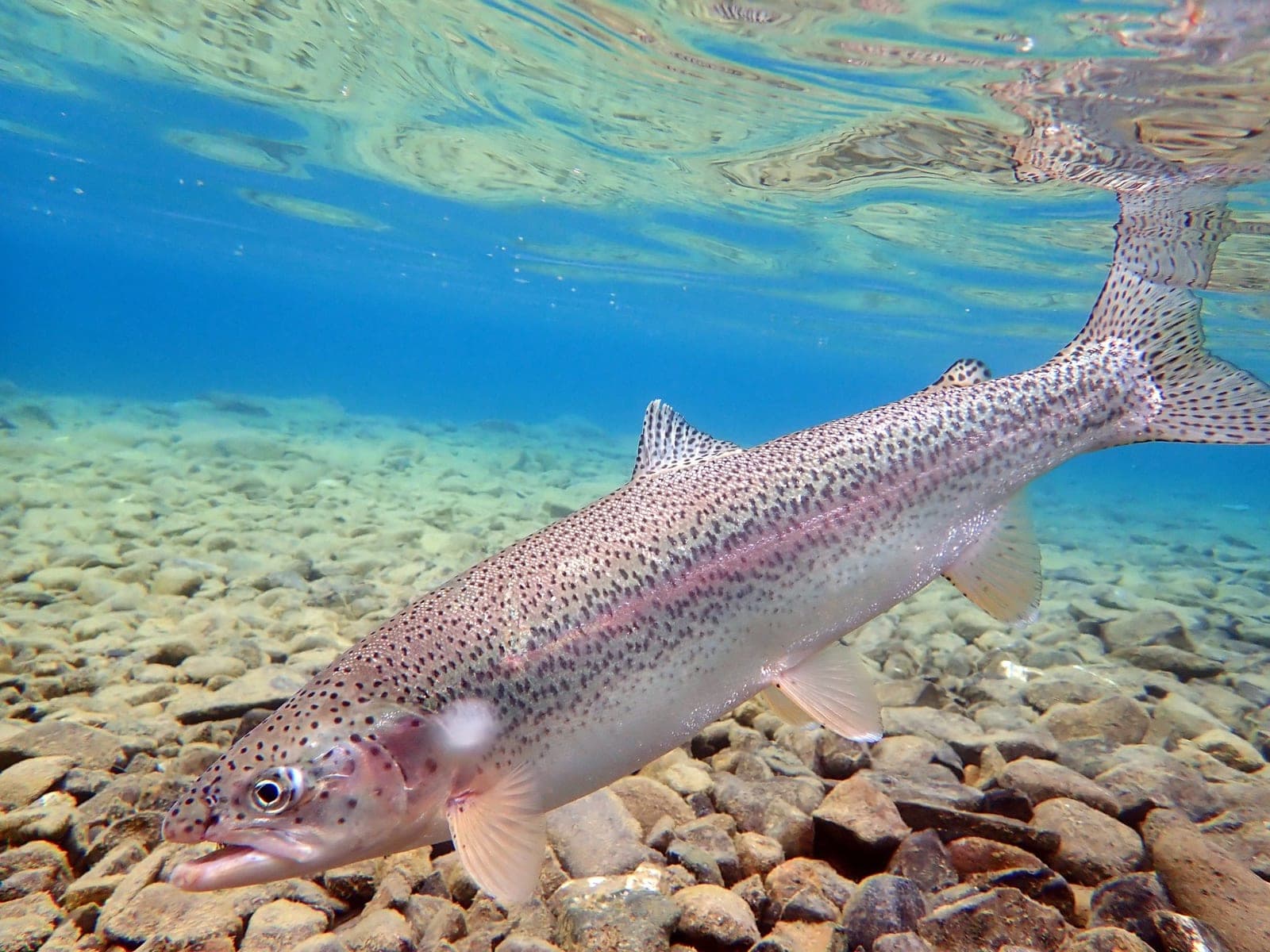
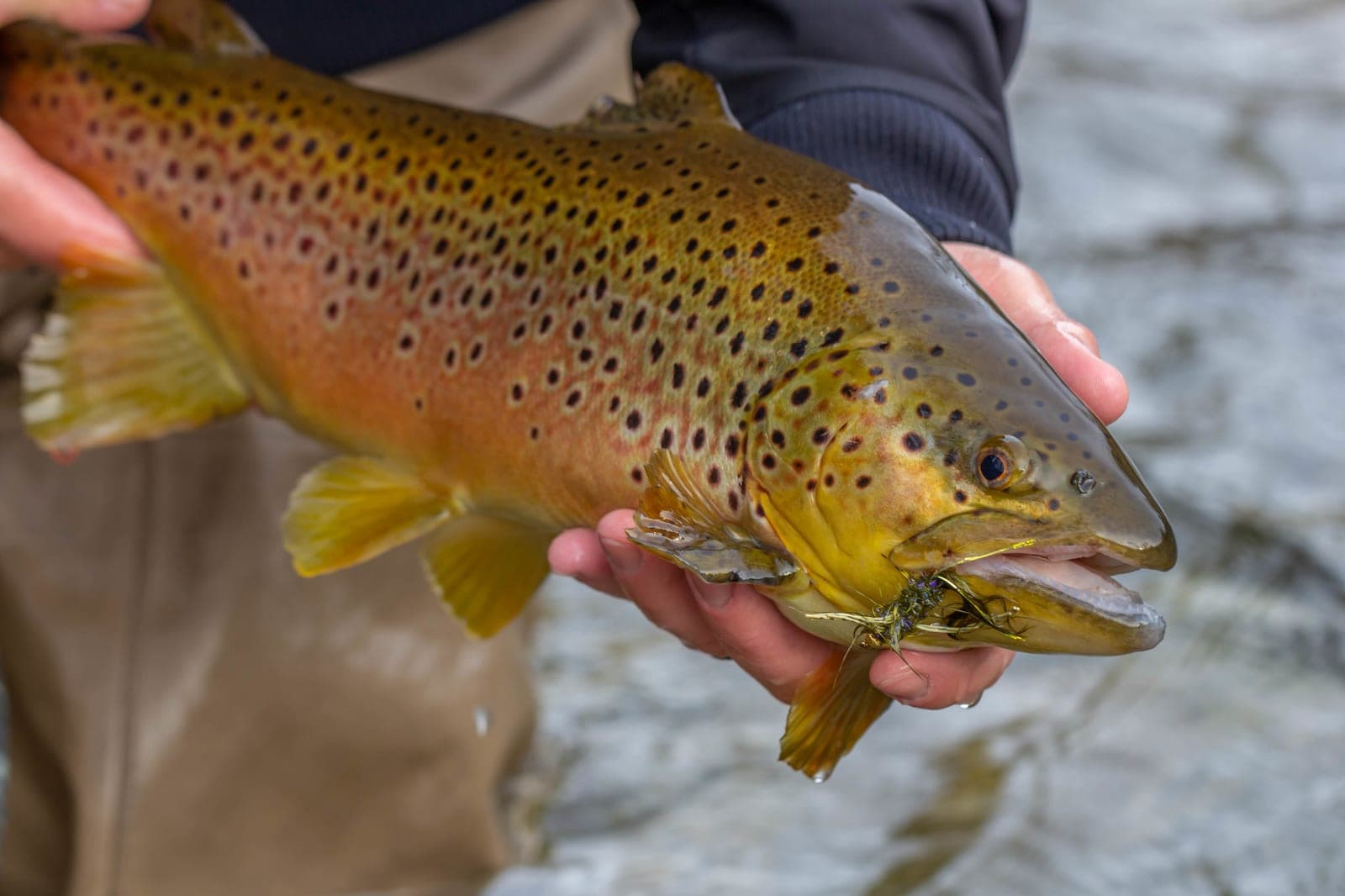
Quick answer
Check the tail and the spots: a rainbow has black spots all over its tail and a pink stripe down its side, while a brown trout has a mostly unspotted tail and red or orange spots, often ringed in pale halos, mixed with its black ones.
Rainbow and brown trout share rivers and lakes across North America, and in many tailwaters and stocked streams you can catch both on the same fly in the same afternoon. One is a Pacific native, the other a European import, and they differ in color, spawning season and attitude. Here is how to tell them apart at a glance.
Key differences
| Trait | Rainbow Trout | Brown Trout |
|---|---|---|
| Tail fin | Covered in small black spots | Few or no spots |
| Side color | Silvery with a pink to red stripe | Golden-brown to buttery yellow |
| Red spots | None at all | Red or orange spots, often with pale halos |
| Spawning season | Late winter to spring | Fall into early winter |
| Native range | Pacific slope of North America and Asia | Europe, western Asia and North Africa |
| World record | 48 lb (IGFA) | 44 lb 5 oz (IGFA) |
| Feeding style | Bold, often in open, faster water | Wary, tied to cover, most active at low light |
Where you will find each
Rainbows are native to cold Pacific drainages from Alaska to Mexico, while browns came from Europe and were first stocked in the United States in 1884, in Michigan. Both have since been planted across the continent, so most anglers meet them in the same waters. Rainbows tend to hold in faster riffles and runs and cruise open water in lakes. Browns tuck under cut banks, logjams and deep, slow pools, and they put up with slightly warmer, murkier water, which is why browns often hang on in lower river sections where rainbows thin out.
Behavior and fishing
Rainbows are the more willing biters: they rise freely to dry flies, chase spinners and take stocked-trout baits, and they jump repeatedly when hooked. Browns are harder to fool and feed most at dawn, dusk and night, especially big fish, which turn into predators that eat sculpins, other trout and even mice. Anglers after numbers usually target rainbows, while those hunting the biggest fish in the river throw streamers or mouse flies for browns in low light.
Opposite spawning seasons
Because rainbows spawn in late winter and spring and browns spawn in fall, the two rarely compete for the same gravel at the same time, and they are not known to produce hybrids in the wild. Their spawning seasons also shape fishing calendars: many rivers protect spawning browns in fall and spawning rainbows in spring. Careful anglers stay off redds, the patches of clean gravel where eggs are buried, and local rules often close spawning water, so check them before each season.
By the numbers
The traits the daily fish game compares for each.
| Clue | Rainbow Trout | Brown Trout |
|---|---|---|
| Family | Salmon & trout | Salmon & trout |
| Water | Both | Both |
| Region | Nationwide | Nationwide |
| Body shape | Streamlined | Streamlined |
| Max length | 48 in | 42 in |
| Max weight | 56 lb | 44 lb |
| Diet | Carnivore | Carnivore |
FAQ
Which is bigger, a rainbow trout or a brown trout?
Both can top 40 pounds. The IGFA records are 48 pounds for rainbow trout and 44 pounds, 5 ounces for brown trout, but where both live in the same river, the biggest fish is often a brown because large browns turn to eating other fish.
Can rainbow and brown trout breed together?
Not in the wild. They belong to different genera and spawn in different seasons, and they are not known to produce viable hybrids. The common trout hybrids are cutbows (rainbow × cutthroat) and tiger trout (brown × brook).
Which tastes better?
They are very similar. Both have mild flesh that ranges from white to orange depending on diet, and most people cannot tell them apart once they are cooked the same way.
Is a steelhead a rainbow or a brown trout?
A steelhead is a sea-run rainbow trout. The sea-run form of the brown trout, common in Europe, is called a sea trout.
Could you tell them apart from a few clues? Test yourself in today's puzzle.
Play the daily fish game