Fish · Side by side
Northern Pike vs Muskellunge
How to tell them apart
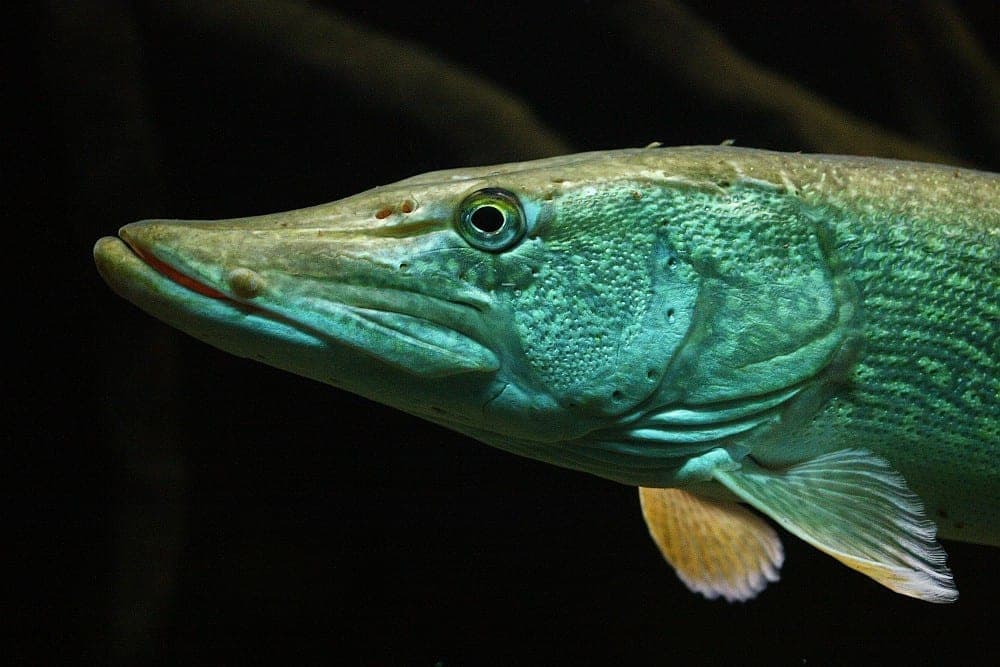
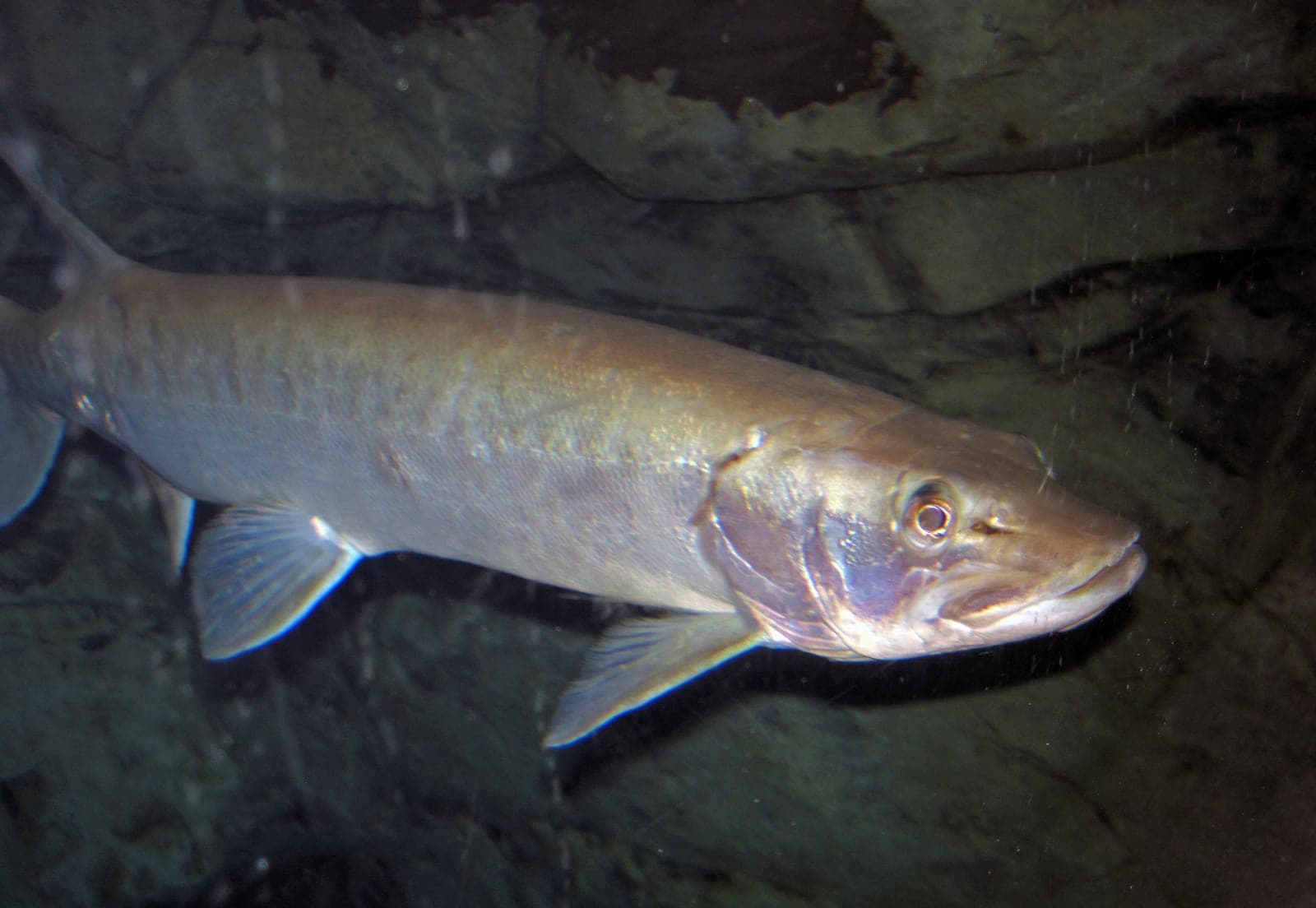
Quick answer
Look at the color pattern first: pike have light, bean-shaped spots on a dark body, while muskies have dark spots or bars on a light body, or no markings. To be sure, count the pores under the jaw: five or fewer per side means pike, six or more means muskie.
Northern pike and muskellunge are the two big predators of the pike family, with the same long body, duck-bill snout and toothy jaws, and they often share northern lakes and rivers. Telling them apart matters: muskies are usually managed under much stricter size limits than pike, and a misidentified fish can mean a fine. Three checks settle it.
Key differences
| Trait | Northern Pike | Muskellunge |
|---|---|---|
| Body markings | Light spots on a dark green body | Dark spots or bars on a light body, or none |
| Pores under the jaw | Five or fewer per side | Six to nine per side |
| Tail lobes | Rounded tips | Pointed tips |
| Cheek and gill cover scales | Cheek fully scaled; upper half of gill cover only | Upper half of both cheek and gill cover only |
| Typical size | 16–24 in, 1–4 lb | 28–48 in, 15–36 lb |
| Spawning | Right after ice-out in very cold water | Weeks later, at about 49–60°F |
| Range | Across North America and Eurasia | Only in eastern and central North America |
| World record | 55 lb 1 oz (IGFA, 1986) | 67 lb 8 oz (IGFA, 1949) |
Tiger muskie: when it looks like both
Pike and muskies cross naturally where they spawn near each other, and several states also stock the hybrid, called a tiger muskie. It wears bold, wavy dark bars on a light body like a muskie but has rounded tail lobes like a pike, and its jaw-pore count often lands in between. Tiger muskies grow fast and are generally sterile. Some states, such as Iowa, count them as muskies under fishing rules, so check before keeping one.
Where you will find each
Pike are far more widespread: they live across Canada, Alaska and the northern United States, and around the Northern Hemisphere in Europe and Asia. Muskies are native only to the Great Lakes and St. Lawrence basins, the upper Mississippi, the Ohio and Tennessee river systems and parts of the Hudson Bay drainage, and they are scarce even there. Where both live, pike are usually far more numerous. Pike also spawn weeks earlier, and young pike are among the predators of young muskies.
Which to keep, which to release
Pike are a common table fish across the North, with firm white meat once the Y-bones are removed. Muskies are a different story: they grow slowly, reproduce in low numbers and are scarce, so many jurisdictions set very high minimum lengths and most anglers release every one. Rules vary widely, so check local regulations before keeping either.
By the numbers
The traits the daily fish game compares for each.
| Clue | Northern Pike | Muskellunge |
|---|---|---|
| Family | Pike family | Pike family |
| Water | Freshwater | Freshwater |
| Region | Northern lakes & rivers | Northern lakes & rivers |
| Body shape | Long & slender | Long & slender |
| Max length | 54 in | 72 in |
| Max weight | 63 lb | 70 lb |
| Diet | Carnivore | Carnivore |
FAQ
What is the easiest way to tell a pike from a muskie?
Count the sensory pores on the underside of the lower jaw. Pike have five or fewer on each side, while muskies have six or more. The color pattern is a good first clue but can mislead.
Which gets bigger, pike or muskie?
In North America, muskies. Adults commonly measure 28 to 48 inches, and the IGFA record is 67 pounds, 8 ounces. The pike record, 55 pounds, 1 ounce, came from Germany.
Can a pike and a muskie breed?
Yes. The cross is called a tiger muskie. It occurs naturally in waters where both spawn and is also raised in hatcheries and stocked in several states.
Do pike and muskies live in the same lakes?
Often, especially in the upper Midwest, Ontario and the St. Lawrence region. Where both live, pike are usually much more common.
Could you tell them apart from a few clues? Test yourself in today's puzzle.
Play the daily fish game