Fish · Side by side
Northern Pike vs Chain Pickerel
How to tell them apart
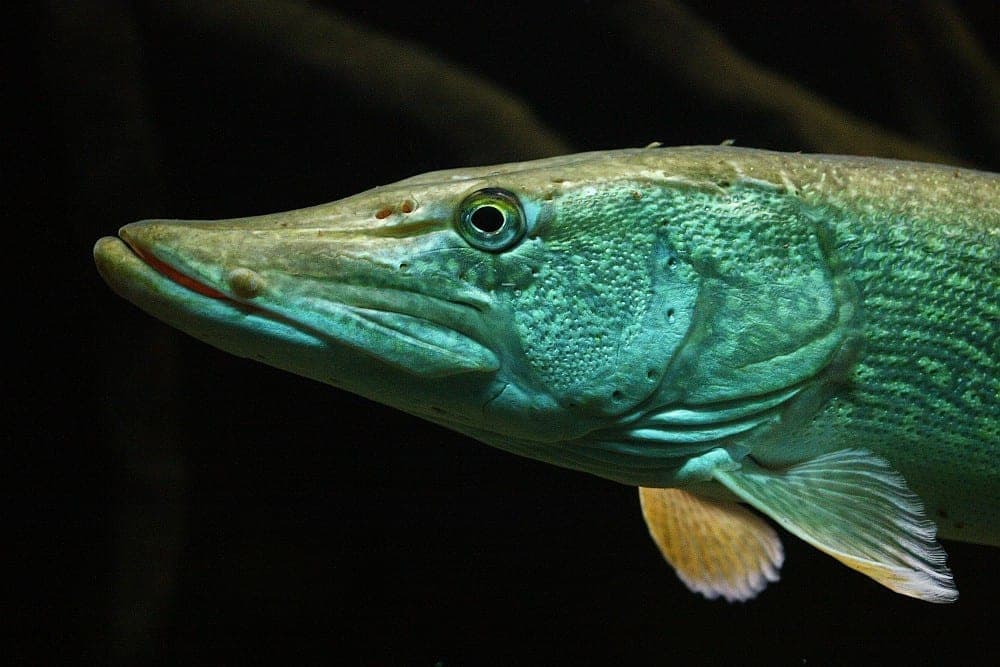
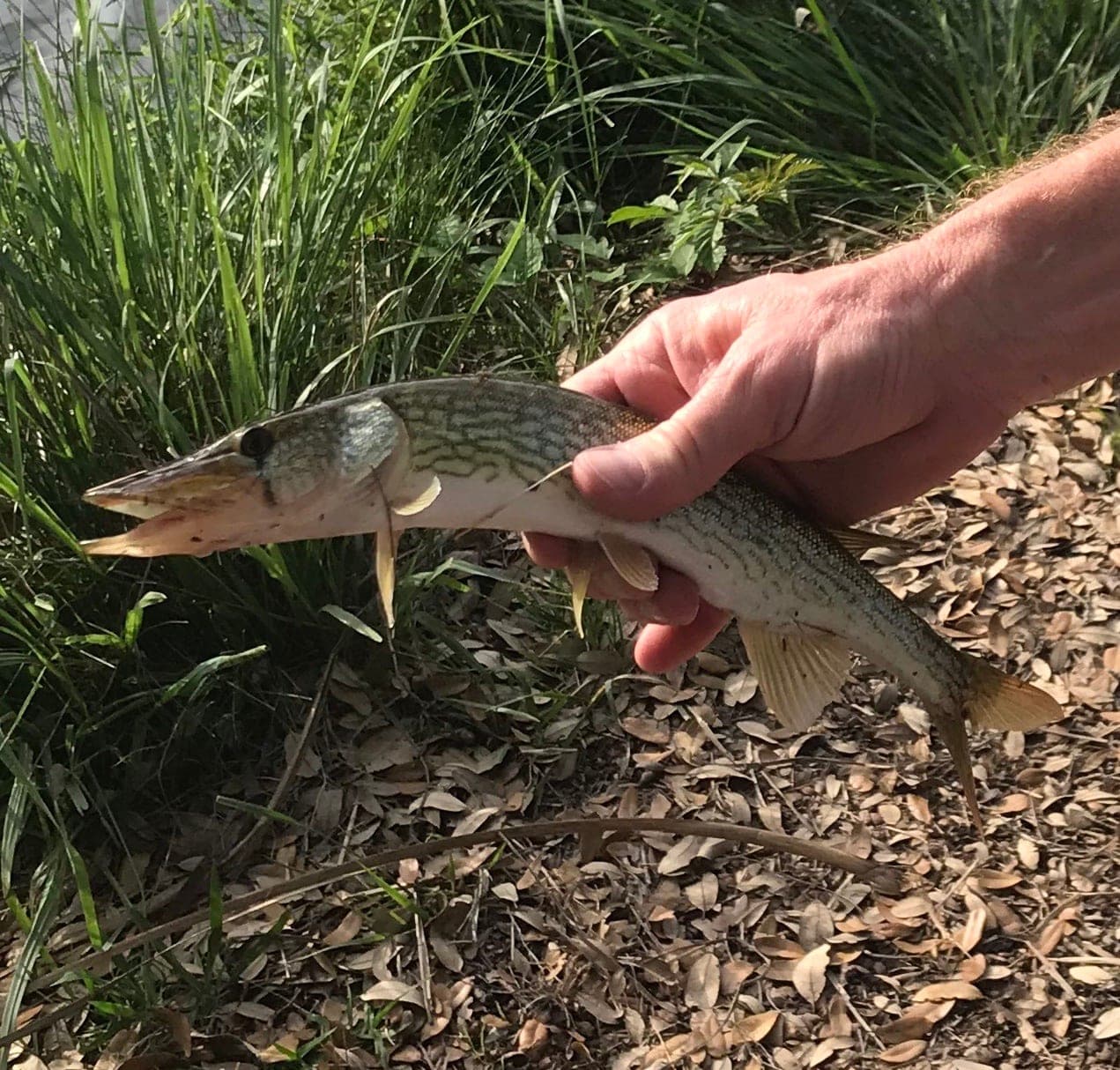
Quick answer
Look at the sides: a chain pickerel has a dark, chain-link network of lines on lighter green or golden sides plus a dark bar straight down from the eye, while a pike has rows of pale, bean-shaped spots on a dark body and no eye bar.
Northern pike and chain pickerel are both members of the pike family, with the same long body, duck-bill snout, sharp teeth and dorsal fin set far back near the tail. Where their ranges meet in the Northeast, anglers regularly mix up small pike and big pickerel. The color pattern and the scales on the gill cover tell them apart at a glance.
Key differences
| Trait | Northern Pike | Chain Pickerel |
|---|---|---|
| Body markings | Pale bean-shaped spots on a dark body | Dark chain-link lines on lighter sides |
| Bar under the eye | No eye bar | Dark vertical bar straight down |
| Gill cover scales | Upper half only | Fully scaled |
| Pores under the jaw | Usually five per side | Usually four per side |
| Typical size | 16–24 in, 1–4 lb | 16–24 in, 1–3 lb, slimmer |
| Top size | Can top 40 in and 20 lb | Rarely over 30 in |
| Native range | Northern North America and Eurasia | Atlantic and Gulf slopes, Maine to Texas |
| World record | 55 lb 1 oz (IGFA, 1986) | 9 lb 6 oz (IGFA, 1961) |
Where you will find each
Pike are northern fish, native from Labrador to Alaska and south to Pennsylvania, Missouri and Nebraska. Chain pickerel are eastern and southern: native along the Atlantic slope from Maine to Florida, along the Gulf Coast to Texas and up the lower Mississippi valley. The two meet mainly in the Northeast, where native and stocked populations overlap from New England through New York and Pennsylvania, and stocking has added each to other waters outside its native range. Pickerel are the ones in acidic swamps, millponds and tidal creeks; pike favor larger, cooler lakes and rivers.
Hybrids
Pike and chain pickerel hybridize naturally where they spawn in the same flooded shallows, and both spawn very early, right around ice-out. Hybrids can show a pattern that falls somewhere between spots and chain links, which is the main clue. If a fish has a pike's build but a hint of the chain pattern, or the reverse, it may be a cross.
Which is better to catch and eat?
Both strike spoons, spinners and live bait with the same reckless aggression, and both stay active under the ice. Pike offer the chance at a truly big fish, while pickerel are a light-tackle target that rarely tops a few pounds. On the table they are much alike: white, firm and sweet, with Y-bones that need careful filleting, scoring or grinding.
By the numbers
The traits the daily fish game compares for each.
| Clue | Northern Pike | Chain Pickerel |
|---|---|---|
| Family | Pike family | Pike family |
| Water | Freshwater | Freshwater |
| Region | Northern lakes & rivers | Atlantic Coast |
| Body shape | Long & slender | Long & slender |
| Max length | 54 in | 39 in |
| Max weight | 63 lb | 9 lb |
| Diet | Carnivore | Carnivore |
FAQ
Is a chain pickerel a baby pike?
No. It is a separate, smaller species in the same family. Even a small pike has light spots on a dark body, while a pickerel of any size has the dark chain pattern and eye bar.
Which is bigger, a pike or a pickerel?
Pike, by far. Chain pickerel rarely pass 30 inches and the world record is under 10 pounds, while pike can top 40 inches and the world record is over 55 pounds.
Can pike and chain pickerel interbreed?
Yes. Natural hybrids occur where the two species share spawning areas, often with a body pattern somewhere in between the two parents.
Why do people call walleye pickerel?
In parts of Canada, 'pickerel' is an old local name for walleye, which is a member of the perch family. True pickerel, like the chain pickerel, belong to the pike family.
Could you tell them apart from a few clues? Test yourself in today's puzzle.
Play the daily fish game