Birds · Side by side
Northern Mockingbird vs Gray Catbird
How to tell them apart
Quick answer
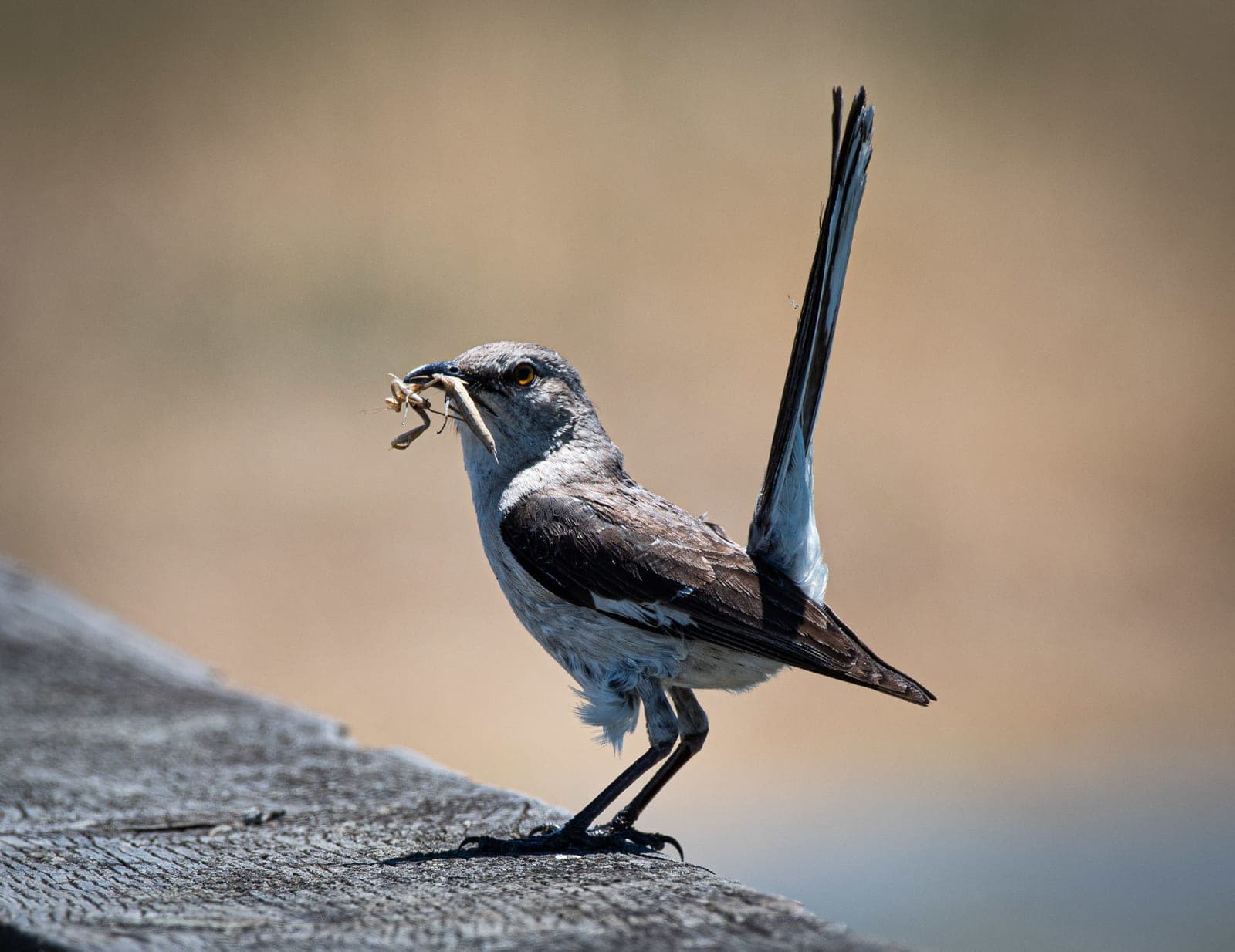
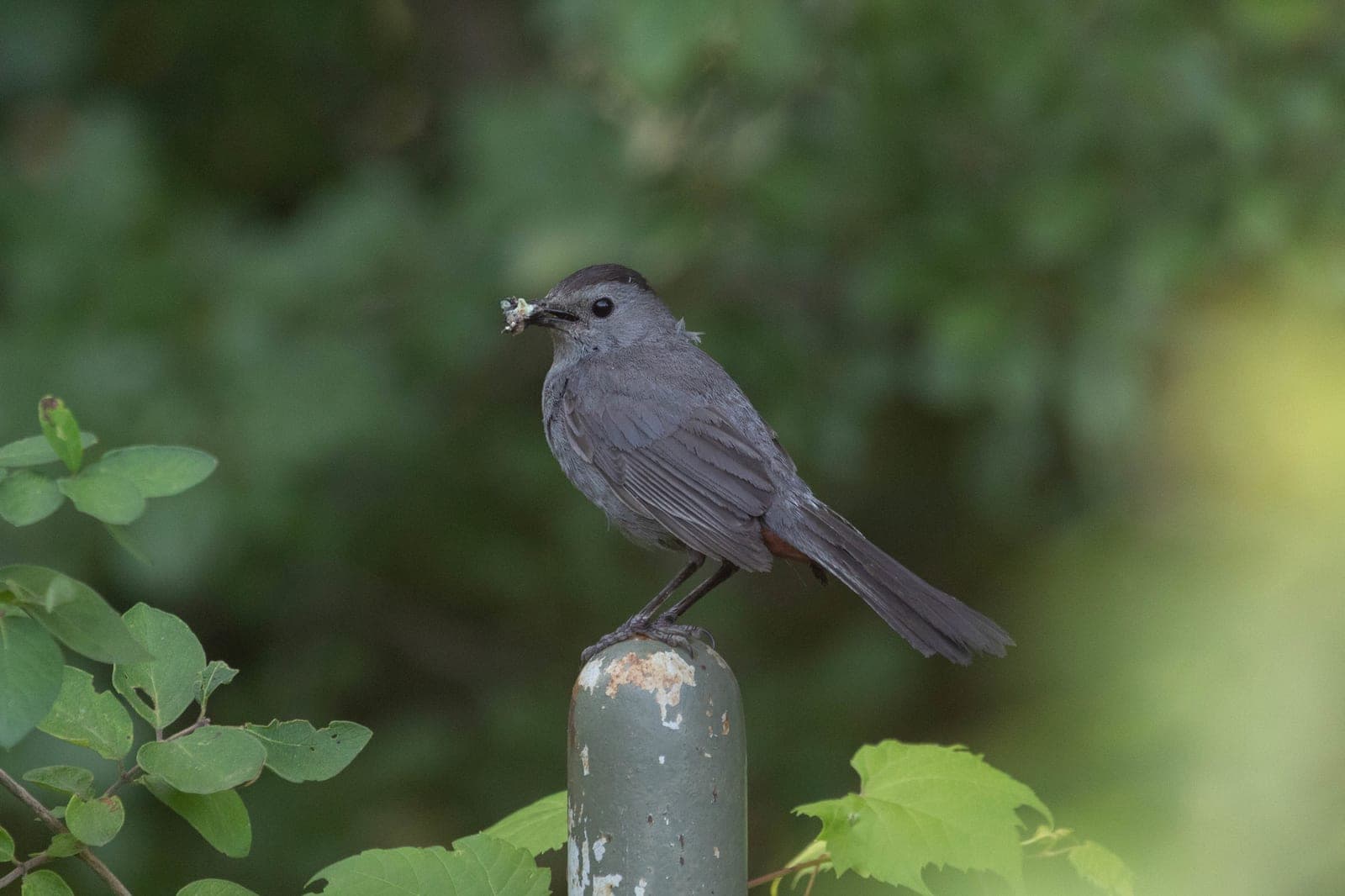
Mockingbirds are pale gray with big white wing patches, white outer tail feathers and a yellow eye; catbirds are dark slate gray with a black cap, a rusty patch under the tail and no white. By ear, a mockingbird repeats each phrase three or more times, while a catbird rarely repeats and mixes in cat-like mews.
The northern mockingbird and the gray catbird are both long-tailed gray songbirds of the mimic family, Mimidae, and both borrow sounds from other birds. They share backyards across much of the eastern United States in summer, so their names and songs get mixed up constantly. In practice they look and act quite differently once you know what to check.
Key differences
| Trait | Northern Mockingbird | Gray Catbird |
|---|---|---|
| Overall color | Pale gray above, whitish below | Even dark slate gray |
| Head and eye | Plain gray head; pale yellow eye | Black cap; dark eye |
| Wings and tail | White wing patches and white outer tail feathers | No white; blackish tail |
| Under the tail | Plain white | Rusty chestnut patch |
| Song | Each phrase repeated three or more times | Phrases mostly given once, with mews mixed in |
| Where it sings | High, open perches, often at night in spring | Usually hidden inside shrubs |
| Migration | Mostly resident year-round | Migratory; winters from the Southeast to Central America and the Caribbean |
| Oldest banded bird | 14 yr 10 mo | 17 yr 11 mo |
Where and when to look
Mockingbirds are most common in the South and live on their territories year-round, singing from rooftops, wires and treetops in towns, farmyards and roadsides from southeastern Canada to Mexico. Gray catbirds breed across eastern and central North America and into the interior Northwest, arriving by May and leaving in September and October for the southeastern United States, Mexico, Central America and the Caribbean. In summer the two overlap across much of the East; in winter, a gray mimic in the northern states is far more likely to be a mockingbird, though a few catbirds linger at berry bushes and feeders.
Telling them apart by ear
Both birds string together long songs of borrowed and original sounds, so count the repeats. A mockingbird sings each phrase three or more times before switching. The brown thrasher, a third member of the family, usually gives each phrase twice. The catbird mostly sings each phrase once in a rambling, scratchy stream, often from deep inside a shrub, and slips in its namesake mew. Calls help too: the mockingbird's is a harsh 'chack', the catbird's a nasal, cat-like 'mew'.
Behavior in the yard
Mockingbirds are bold and out in the open. They run across lawns, flash their white wing patches and dive at cats, dogs and people near the nest. Catbirds are skulkers that flip leaves on the ground under shrubs, jerk their long tails, and show off the rusty undertail in courtship. They are also unusual among songbirds for spotting brown-headed cowbird eggs and pecking or ejecting them from their nests.
By the numbers
The traits the daily bird game compares for each.
| Clue | Northern Mockingbird | Gray Catbird |
|---|---|---|
| Group | Mockingbirds & thrashers | Mockingbirds & thrashers |
| Colors | Gray, White | Gray, Black |
| Habitat | Backyards | Backyards |
| Region | Southern | Eastern |
| Length | 9 in | 9 in |
| Wingspan | 13 in | 10 in |
| Diet | Omnivore | Omnivore |
FAQ
Is a catbird a kind of mockingbird?
They are relatives in the same family, Mimidae, along with thrashers, but the gray catbird is the only member of its own genus, Dumetella, and is not a mockingbird.
Do catbirds mimic other birds like mockingbirds do?
Yes, but less precisely. Catbirds work bits of other birds, tree frogs and mechanical sounds into their songs, while mockingbirds copy sounds closely and repeat each one several times.
Why is it called a catbird?
For its call, a nasal, downslurred 'mew' that sounds remarkably like a cat. Many people hear the catbird long before they ever see one in the shrubbery.
Which one stays in my yard in winter?
Usually the mockingbird, which holds its territory year-round. Most catbirds migrate south, though a few linger in the North where fruit or feeders are available.
Could you tell them apart from a few clues? Test yourself in today's puzzle.
Play the daily bird game