How to identify a gray catbird
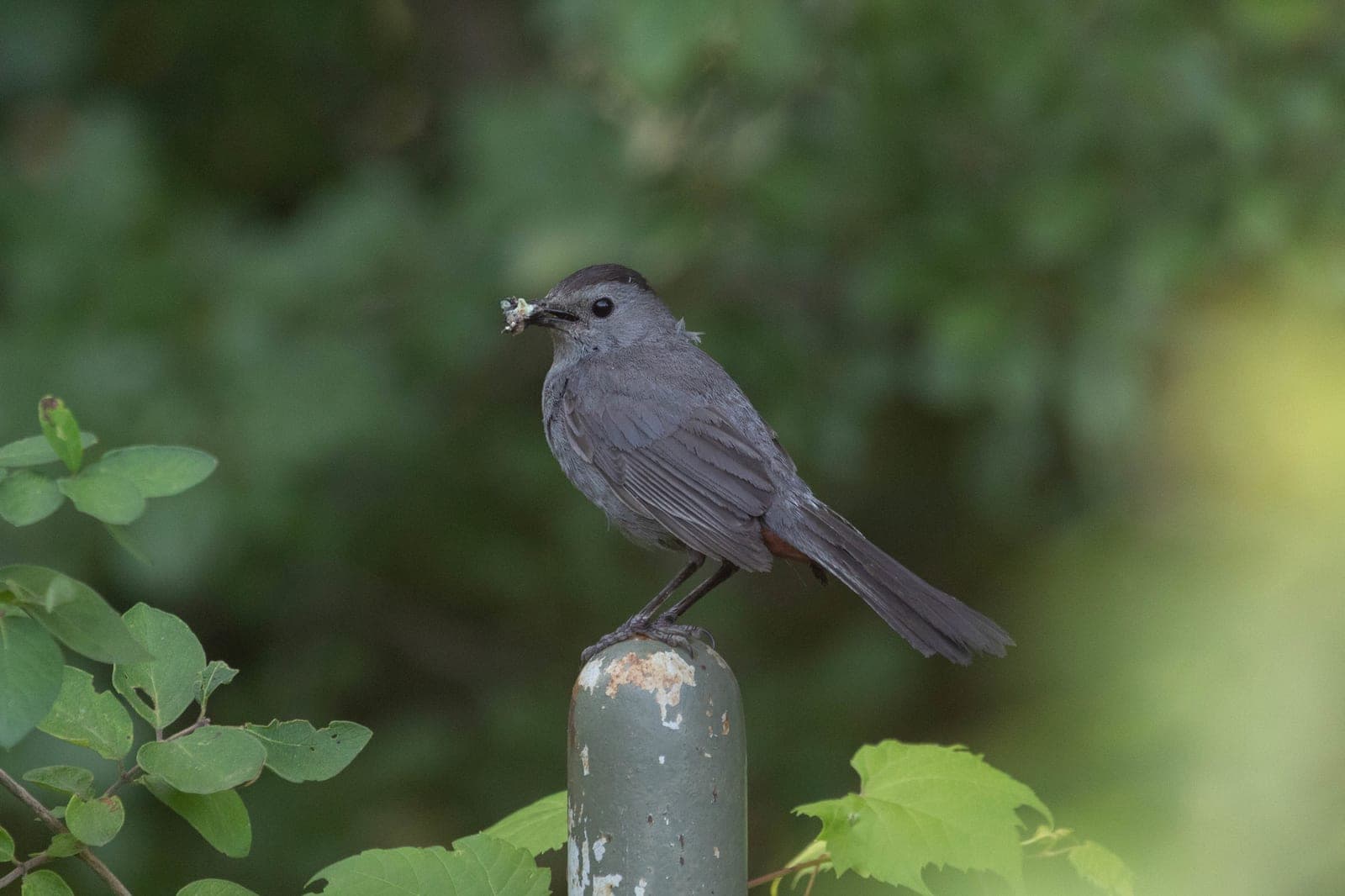
Catbirds are about as long as a robin but much slimmer, dark slate-gray all over with a neat black cap, a long black tail and a patch of rich chestnut under the base of the tail that is easy to miss. The bill is black and slender, and the eyes are dark. Males and females look alike. Catbirds often flip or cock the tail and stay low in dense cover, so a typical view is a gray shape slipping through a shrub, or a bird perched at the top of a hedge, singing.
- Uniform slate-gray body with a black cap
- Chestnut patch under the base of the tail
- Long black tail, often flipped or cocked
- Cat-like 'mew' call from dense cover
- Rambling song of mixed notes, with phrases rarely repeated
Look-alikes
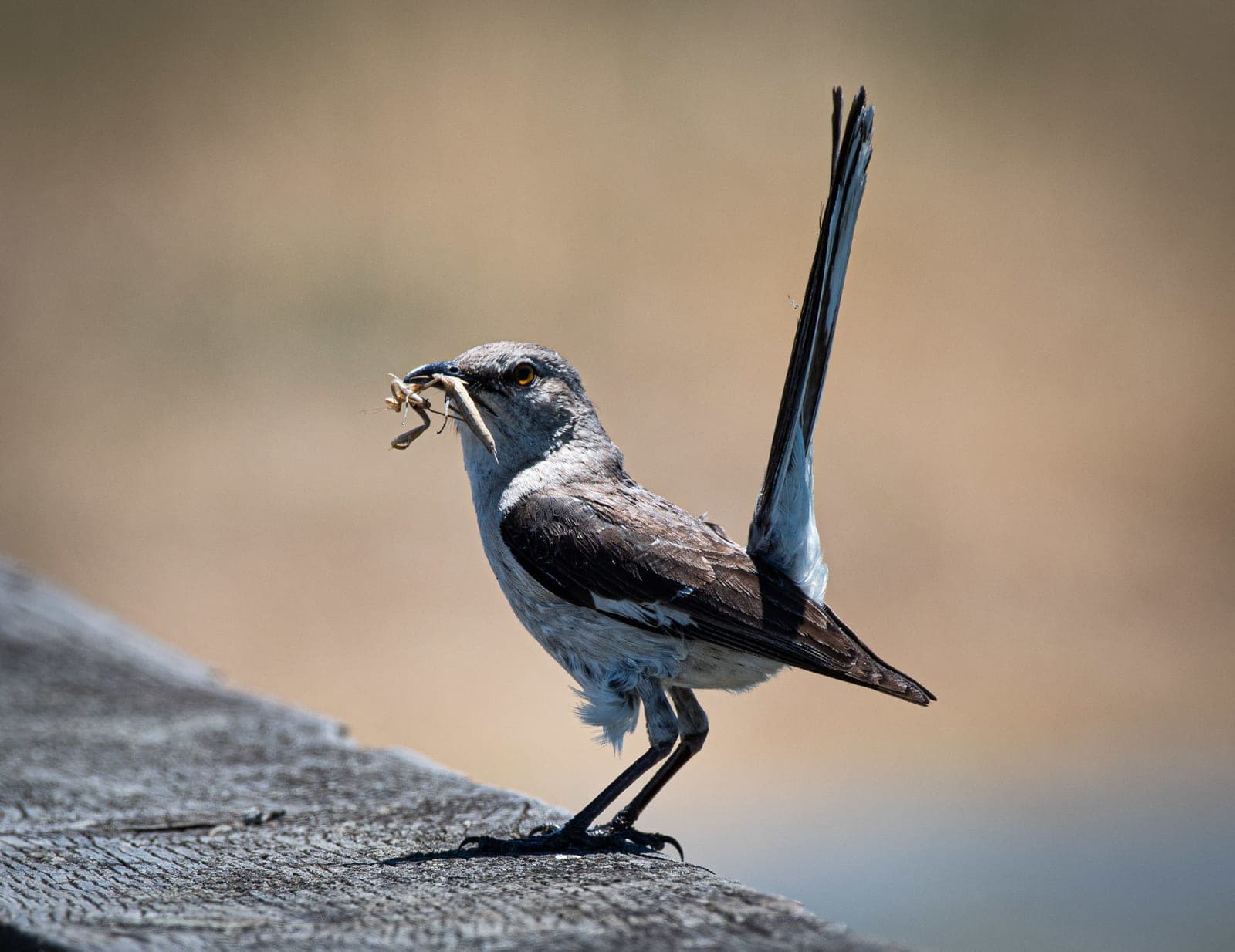
Northern Mockingbird
Mockingbirds are paler gray above and whitish below, with big white patches in the wings and white outer tail feathers, and no black cap or chestnut undertail. They repeat each song phrase three or more times; catbirds usually sing a phrase once.
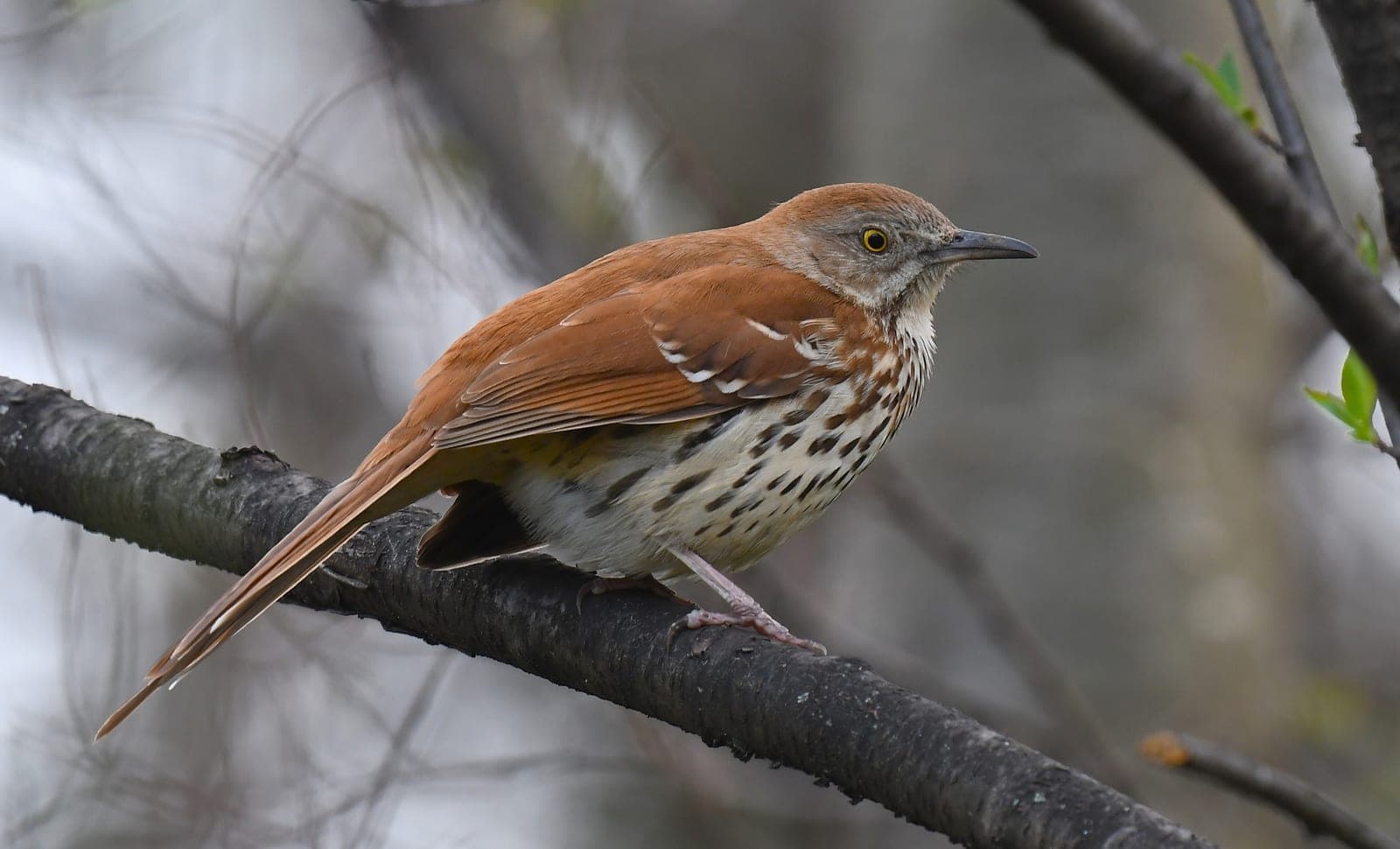
Full comparison →Brown Thrasher
Thrashers are rufous above with a heavily streaked breast and yellow eyes, so a good look settles it. By ear, thrashers sing each phrase about twice, while catbirds rarely repeat themselves.
Townsend's Solitaire
In the West, this gray thrush has a white eye ring, buffy wing patches and white outer tail feathers, and lacks the catbird's black cap and chestnut undertail. It favors mountain forests and juniper woodland rather than shrubby thickets.
Range & habitat
Gray catbirds breed across southern Canada and much of the United States, from the Atlantic west to the northern Rockies and the interior Northwest, but not in California or the desert Southwest. In fall they leave most of that range, wintering along the Atlantic and Gulf coasts of the Southeast and south through Mexico, Central America and the Caribbean. Fall migrants from the Northwest travel east before turning south, and a few birds linger farther north in winter where berries or a feeder keep them going.
Catbirds want dense, low, leafy cover: thickets along woodland edges and streams, shrubby swamps, overgrown fields, fencerows, vine tangles, garden hedges and well-planted suburban yards. They avoid the interior of mature forest and conifer woods. In winter they use similar brushy habitat in the South and the tropics, especially where fruit is plentiful.
Through the seasons
Spring
Catbirds return to the northern states in late April and May, migrating mostly at night. Males sing long, rambling songs from before dawn until after dusk to claim territories, and the mewing call starts coming from every hedge.
Summer
Pairs usually raise two broods in bulky nests hidden in thickets. Catbirds recognize Brown-headed Cowbird eggs and get rid of them, something few songbirds do. By late summer they shift heavily to berries.
Fall
Migration runs from late August into November. Catbirds fatten on dogwood, elderberry and other wild fruit before heading south, and they are common in coastal thickets during fall migration.
Winter
Most catbirds winter in the Southeast, Mexico, Central America and the Caribbean. Scattered birds stay farther north into midwinter, usually around berry-laden shrubs or feeders offering fruit and suet.
How to find and attract gray catbirds
Listen before you look: the mewing call and the long, scratchy, ever-changing song give a catbird away from inside a hedge. Then wait quietly near the edge of the thicket; curious catbirds often hop out to look at you, especially if you make soft squeaking sounds.
- Plant dense native shrubs and vines such as dogwoods, viburnums, elderberry, serviceberry and native grape for nesting cover and fruit.
- Offer fruit on a platform or oriole feeder: orange halves, chopped apples, soaked raisins or a small dish of grape jelly.
- Catbirds also take mealworms and suet, especially during cool spring and late-fall weather.
- Leave a tangled, unpruned corner; catbirds usually nest 3 to 10 feet up in thick shrubs and briars.
- Keep a shallow birdbath filled near cover; catbirds bathe often.
- Walk woodland edges and streamside thickets in May, when singing males are easiest to find.
Diet & life cycle
What it eats
Catbirds are part insect-eater, part fruit-eater. In early summer they take mostly ants, beetles, caterpillars and other insects, plus spiders and millipedes, often flipping dead leaves aside with the bill to find them, and their nestlings are raised almost entirely on insects. In late summer, fall and winter, wild berries and small fruits can make up more than half of what they eat, and they will also take cultivated fruit.
Life cycle
The female does most of the building: a bulky cup of twigs, weeds, grass and leaves, sometimes with bits of trash, lined with rootlets and set 3 to 10 feet up in a dense shrub, briar tangle or small tree. She usually lays three to five greenish-blue eggs and incubates them for about 12 to 15 days, often fed by her mate. Both parents feed the young, which leave the nest after about 10 to 11 days and depend on their parents for roughly two more weeks. Two broods a season are typical.
Oldest on record
The oldest gray catbird in the USGS Bird Banding Laboratory longevity table was at least 17 years and 11 months old. It was banded in Maryland in May 1984, in its second year, and recaptured and released in New Jersey in May 2001.
SourceAttracting & watching
Catbirds seldom eat seed, so a standard sunflower feeder will not draw them. Fruit does: orange halves, a little grape jelly, soaked raisins and chopped apples, plus mealworms and suet. The best attraction of all is a yard full of dense native shrubs and fruiting plants with a birdbath nearby. Catbirds do not use nest boxes.
Conservation
Least Concern (IUCN). Gray catbirds are common, with a population Audubon puts around 29 million, and the Breeding Bird Survey shows a roughly stable continental trend from 1966 to 2019. Some states report local declines as fencerows are cleared and old fields grow into forest. Catbirds are protected under the Migratory Bird Treaty Act.