How to identify a northern mockingbird
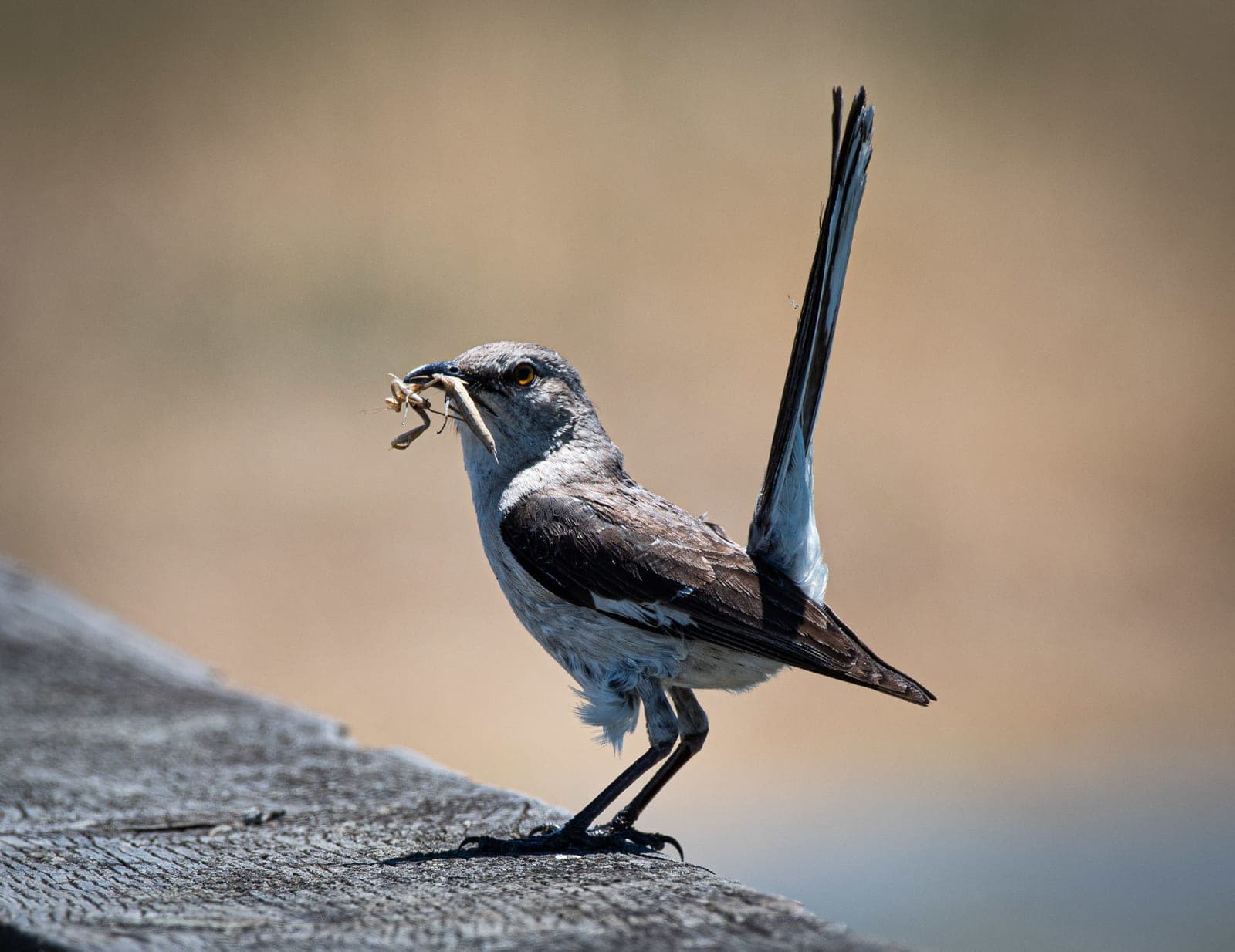
Mockingbirds are robin-length but much slimmer, with long legs, a long tail and a thin, slightly curved dark bill. Adults are plain gray above and pale gray-white below, with two thin white wing bars and a pale yellow eye. In flight the bird changes completely: large white patches flash in the dark wings, and the dark tail shows bright white outer feathers. Males and females look alike. Juveniles have spotted breasts and grayish eyes. Mockingbirds often stand tall on lawns and lift their wings in jerky flashes that show off the white patches, a move that may startle insects into the open.
- Plain gray above, pale below, with a long, dark tail
- Big white wing patches and white outer tail feathers in flight
- Pale yellow eye and thin, dark bill
- Flashes its wings open while foraging on the ground
- Song phrases repeated three or more times before changing
Look-alikes
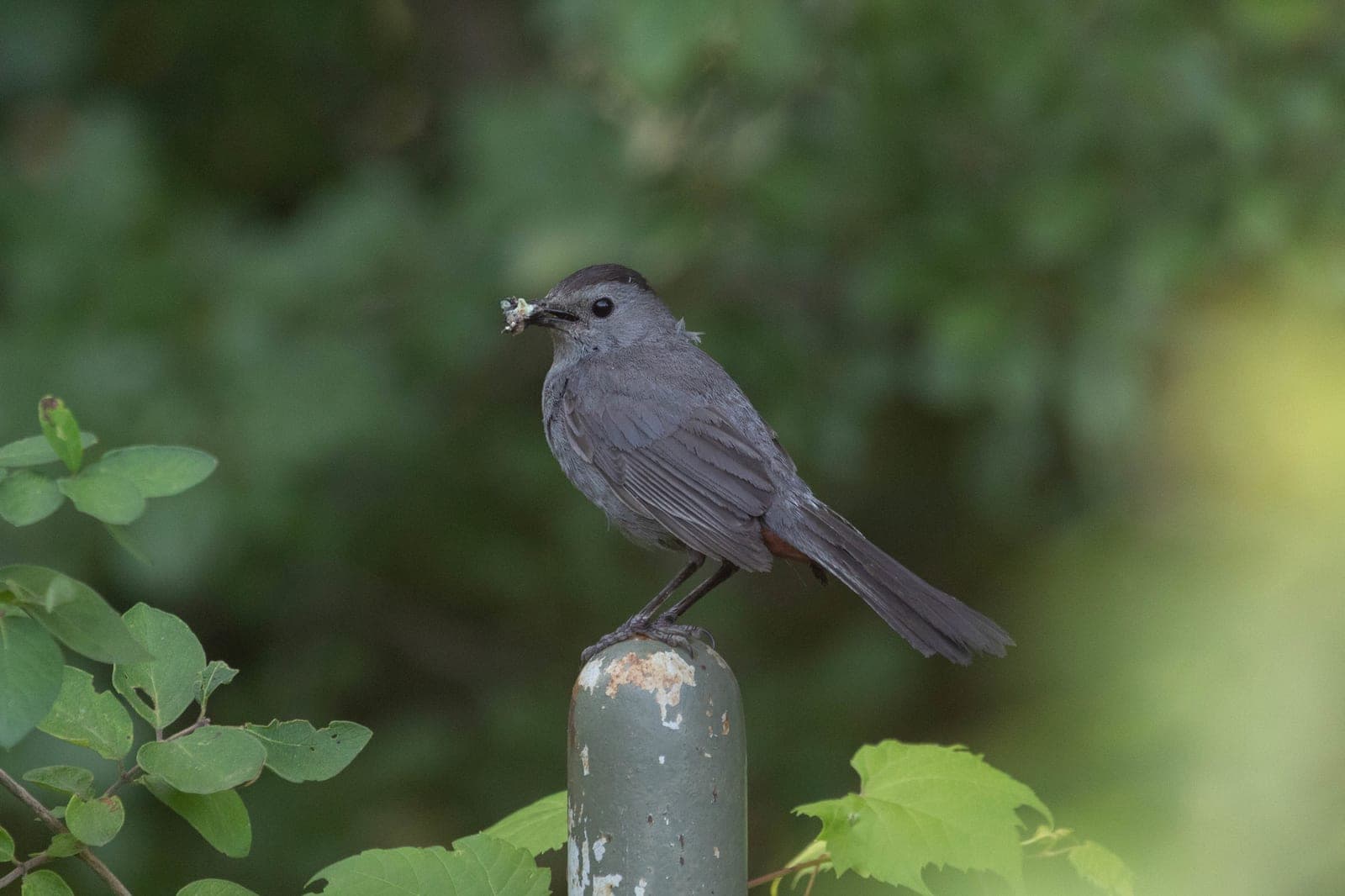
Gray Catbird
Catbirds are darker slate gray with a black cap, a rusty patch under the tail, a dark eye and no white in the wings or tail. They skulk in thickets and give a mewing call.
Full comparison →Loggerhead Shrike
Shrikes are stockier and bigger-headed, with a bold black mask through the eye and a hooked bill. Their black wings show smaller white patches, and they fly low and fast before swooping up to a perch.
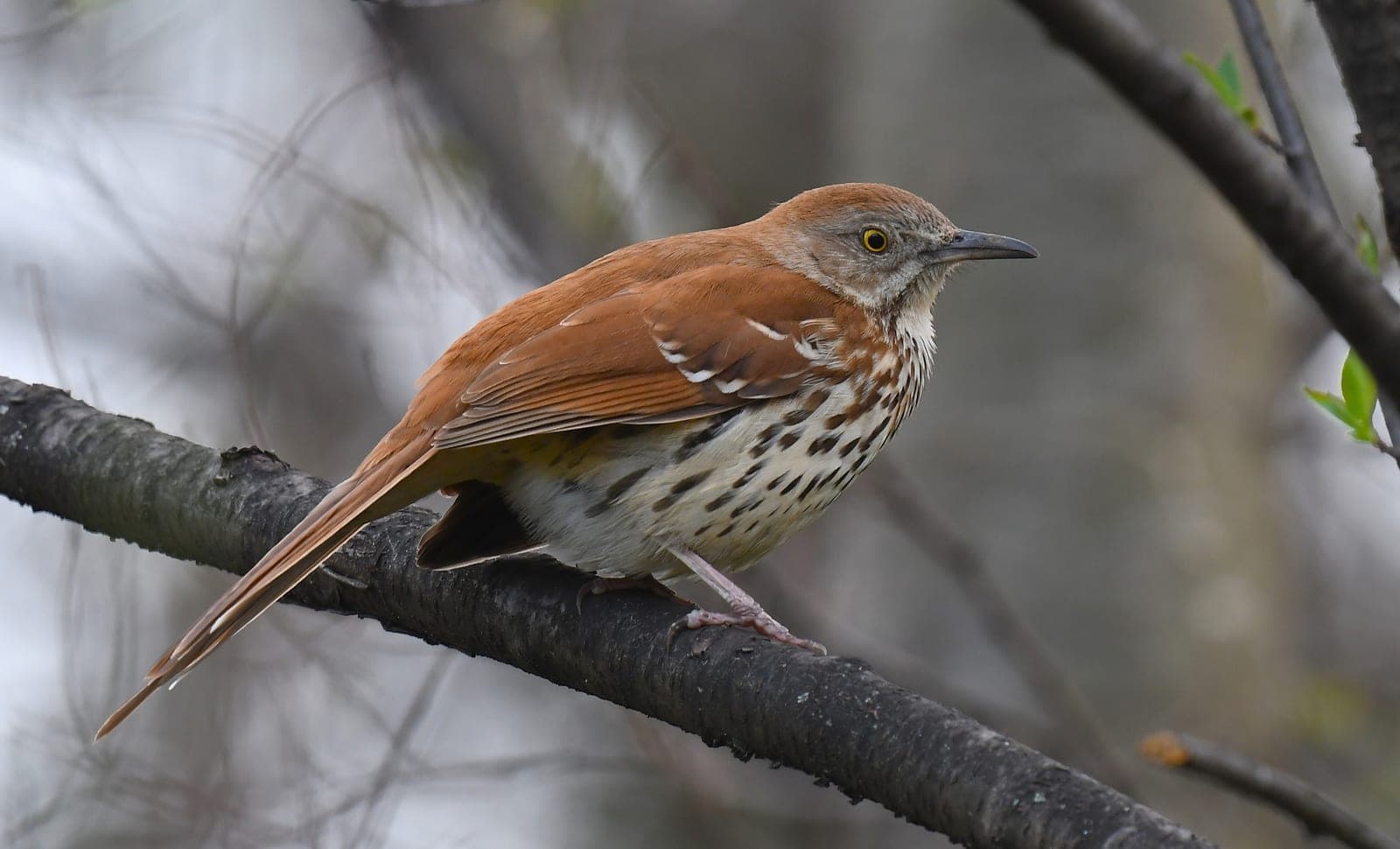
Brown Thrasher
Thrashers look nothing alike, rusty brown and heavily streaked, but they sound similar. A thrasher usually sings each phrase twice, while a mockingbird repeats each three or more times.
Townsend's Solitaire
This western thrush is gray with white outer tail feathers too, but it has a white eye ring, buffy patches in the wings and a short, stubby bill, and it lives in mountain woodlands.
Range & habitat
Mockingbirds breed from the Maritime provinces of southeastern Canada west across most of the lower 48 states to southern Oregon, and south through much of Mexico and the Greater Antilles; they are scarce or absent on the northern Great Plains and in the Pacific Northwest. They were introduced to Hawaii. The species is most abundant in the South. Over the past 150 years it has pushed north into New England, the Great Lakes states and southern Ontario, and in California it spread from the low deserts into most counties by the 1970s.
Mockingbirds want dense, low shrubs for nesting and short grass or bare ground for hunting, a combination that suburbs supply perfectly. They live in towns, parks, farmyards, roadsides, hedgerows, overgrown fields and woodland edges, and in the West in desert thickets and canyon streamsides. More mockingbirds now live in urban areas than in rural ones, and urban birds appear to survive better.
Through the seasons
Spring
Males begin singing in late winter and nest early, by late winter in the South. Unmated males sing through the night, and rival neighbors perform 'boundary dances', hopping side to side face to face along the territory line.
Summer
Pairs raise two or three broods, and parents attack cats, dogs, crows, hawks and people that come near the nest. Stubby-tailed, spotted fledglings hop through hedges while the adults scold with harsh 'chack' notes.
Fall
Mockingbirds switch to a mostly fruit diet and many set up separate fall and winter territories around good berry bushes, which they defend with harsh calls. Males sing again briefly in fall.
Winter
Most mockingbirds stay on or near their territory year-round, though some at the northern edge of the range drift south. A single bird may guard a holly or fruiting shrub against robins, waxwings and other mockingbirds all winter.
How to find and attract northern mockingbirds
In most of the South, a mockingbird is already in the neighborhood: look for the singer on the highest perch around. Farther north, check hedges, rose tangles and berry bushes in suburbs and on farms.
- Scan rooftops, chimneys, antennas, utility wires and treetops, where males sing in the open.
- Listen for a long medley in which each phrase is repeated three or more times, mixing imitations of other birds with harsh and mechanical sounds.
- Plant dense native shrubs for nest sites, and berry producers such as American holly, hackberry, serviceberry, elderberry and sumac for fall and winter food.
- Offer suet, mealworms and chopped fruit; mockingbirds rarely eat seed.
- Keep some lawn short and pesticide-free, since mockingbirds hunt insects on open ground.
- Give nesting birds space: they dive at intruders and can remember individual people who bother the nest.
Diet & life cycle
What it eats
Over a year, mockingbirds eat about half animal food and half fruit. In late spring and summer they take beetles, grasshoppers, caterpillars, ants, wasps, bees and other insects, along with spiders, snails, earthworms and the occasional small lizard. In fall and winter they feed mostly on berries and wild fruit, and the spread of fruiting shrubs, including invasive multiflora rose, likely helped them expand north. They hunt by running and stopping on the ground, by dropping from low perches and by chasing flying insects.
Life cycle
The male builds most of the bulky twig foundation and the female adds a lining of rootlets, grass and soft fibers, usually 3 to 10 feet up in a dense shrub or small tree. She lays three or four blue-green eggs blotched with brown and incubates them for 12 to 13 days. Both parents feed the young, which leave the nest about 12 days after hatching and cannot fly well for about another week. Pairs are socially monogamous and raise two or three broods a season. Both sexes can breed at one year old.
Oldest on record
The oldest northern mockingbird in the USGS Bird Banding Laboratory longevity table was at least 14 years and 10 months old. It was banded as an adult in Texas in May 1986 and found dead in Texas in April 2000.
SourceAttracting & watching
Dense shrubs, fruiting native plants, a birdbath and a feeder with suet or chopped fruit will keep a mockingbird nearby year-round. The best viewing is simply listening: on a spring night in the South, sit outside and count how many different birds one male imitates. Mockingbirds are protected under the Migratory Bird Treaty Act, which ended the trade that once sold them as cage birds.
Conservation
Least Concern (IUCN). Partners in Flight estimates about 43 million mockingbirds, but the Breeding Bird Survey shows a decline of about 30 percent between 1966 and 2019. From the 1700s to the early 1900s, so many were trapped for the cage-bird trade that the species became scarce along the northern edge of its range; protection under the Migratory Bird Treaty Act let it recover and expand north. Today the main threats are outdoor cats, window collisions and pesticides, and urban birds can carry high levels of lead.