Fish · Side by side
Largemouth Bass vs Spotted Bass
How to tell them apart
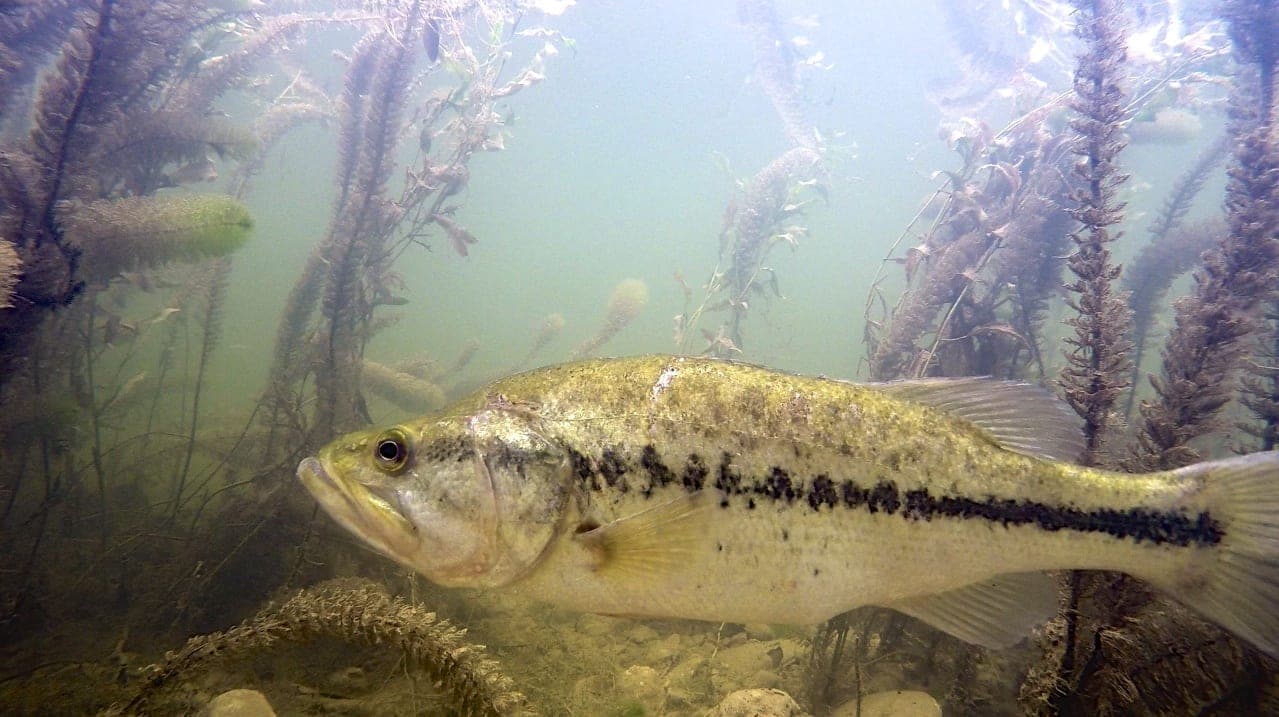
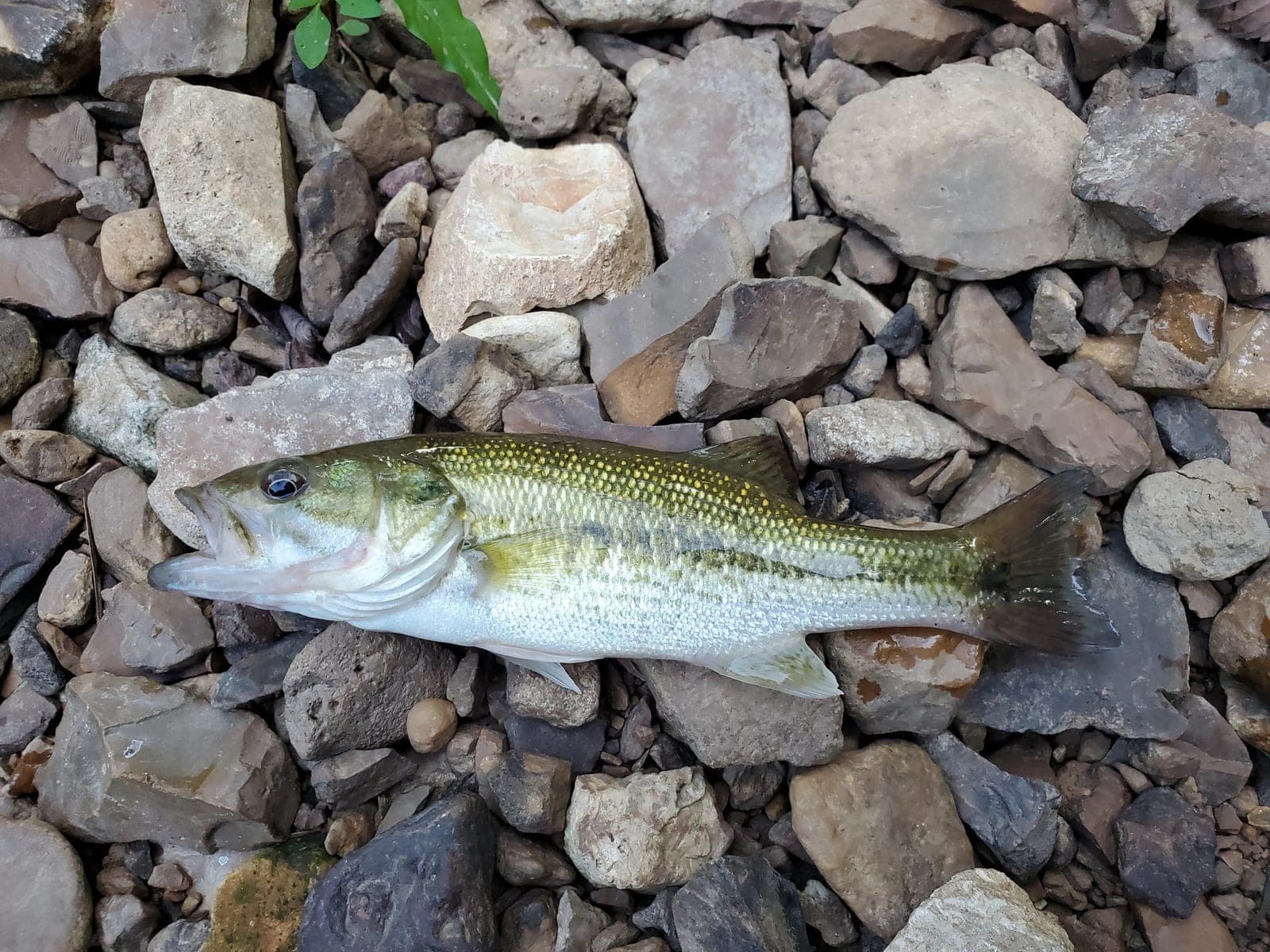
Quick answer
Check the jaw and the tongue: a largemouth's upper jaw extends well past the back of the eye and its tongue is smooth, while a spotted bass's jaw stops at the back of the eye and its tongue has a rough patch of teeth. Spotted bass also have rows of small dots on the lower sides.
Across the South, largemouth and spotted bass share rivers and reservoirs, and they look strikingly alike: both are green with a dark stripe down the side. Anglers mix them up constantly, but a few hard field marks settle it every time. Getting it right matters where states set separate limits for the two.
Key differences
| Trait | Largemouth Bass | Spotted Bass |
|---|---|---|
| Upper jaw | Extends well past the rear of the eye | Reaches the rear of the eye, not beyond |
| Tongue | Smooth, no tooth patch | Rough patch of teeth |
| Dorsal fins | Deep notch, nearly separate | Clearly connected |
| Soft dorsal base | No scales | Scales present |
| Lower sides | Plain and pale below the stripe | Rows of small dark spots forming lines |
| Typical size | 1–4 lb; trophies over 10 lb | ½–3½ lb; 4–5 lb is a giant |
| Favorite water | Shallow weeds, wood and still backwaters | Rock, current and deeper, open water |
Where each one lives
The two overlap across the Mississippi basin and the Gulf states, but they split the habitat. Largemouth own the weedy coves, lily pads, flooded timber and backwaters. Spotted bass want rock and moving water: river channels, bluff walls, rocky points and deep main-lake structure. In reservoirs spotted bass often suspend in open water over deep points, chasing shad, and they go deeper than other black bass; in one Tennessee Valley Authority lake they were caught as deep as 100 feet.
The Alabama bass problem
The Alabama bass, native to the Mobile River basin, was long lumped in with the spotted bass and looks nearly identical to it, but it grows much larger and is now recognized as its own species. Many of the giant 'spotted bass' from California reservoirs were Alabama bass, and the IGFA has reorganized its records to match. Biologists separate the two by counting pored lateral-line scales or with genetics, so a huge spot from outside the native range is worth a second look.
Fishing for each, and the rules
Largemouth respond to power fishing in cover: frogs, flipping jigs, spinnerbaits and weedless soft plastics. Spotted bass reward finesse and mobility: drop shots, shaky heads and small swimbaits on rock, and fast casts to schools busting shad. Because spotted bass are smaller and often abundant, some states set different length or bag limits for them than for largemouth. When a fish is close to a limit, run through the jaw, tongue and spot checks before you decide to keep it.
By the numbers
The traits the daily fish game compares for each.
| Clue | Largemouth Bass | Spotted Bass |
|---|---|---|
| Family | Sunfish family | Sunfish family |
| Water | Freshwater | Freshwater |
| Region | Nationwide | Southern waters |
| Body shape | Streamlined | Streamlined |
| Max length | 38 in | 20 in |
| Max weight | 22 lb | 5 lb |
| Diet | Carnivore | Carnivore |
FAQ
Is a Kentucky bass the same as a largemouth?
No. Kentucky bass is another name for the spotted bass, a separate species. It is Kentucky's state fish and stays smaller than the largemouth.
Why does the tongue test work?
Spotted bass have a small patch of teeth on the tongue that feels like fine sandpaper, while largemouth tongues are smooth. Run a wet finger over the tongue and the answer is usually obvious.
Which is better to eat, largemouth or spotted bass?
They taste much the same, with white, mild, flaky meat. Smaller fish from clean, cool water eat best, and local consumption advisories apply to both.
Which grows bigger?
Largemouth, by far. The largemouth world record is 22 pounds, 4 ounces, while a 4- to 5-pound spotted bass is a giant in its native range.
Could you tell them apart from a few clues? Test yourself in today's puzzle.
Play the daily fish game