Fish · Side by side
Largemouth Bass vs Smallmouth Bass
How to tell them apart
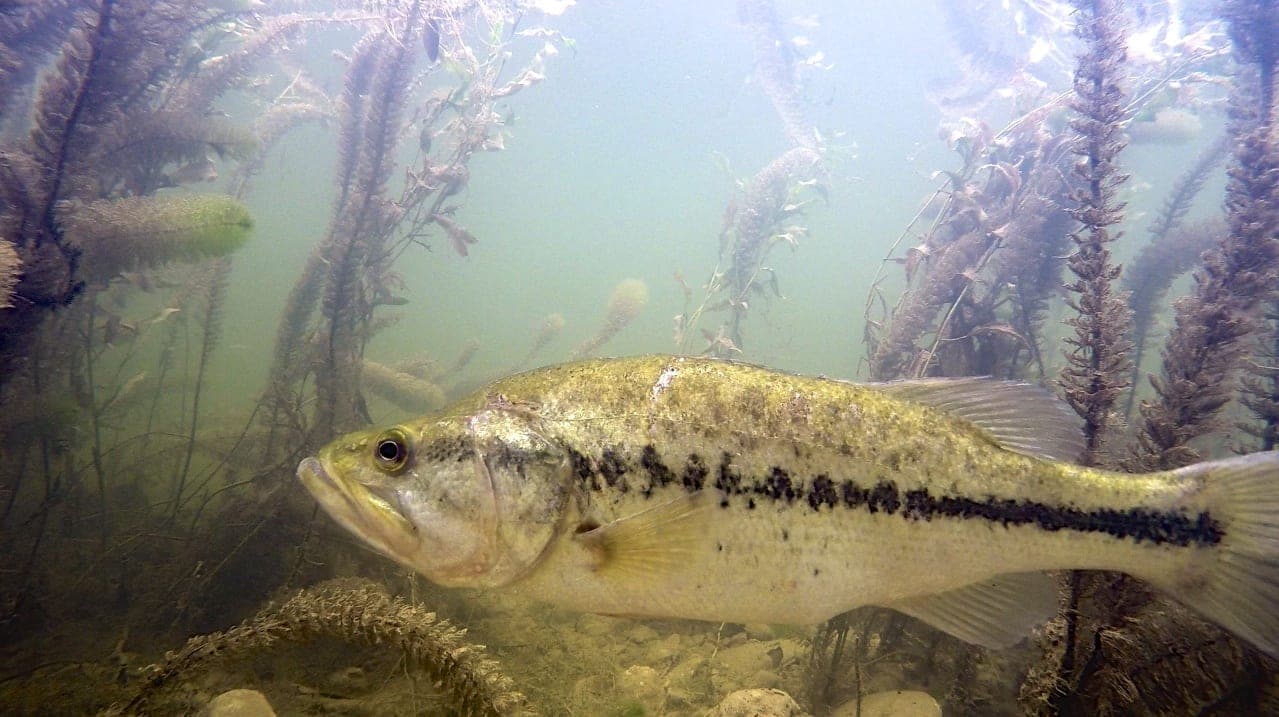
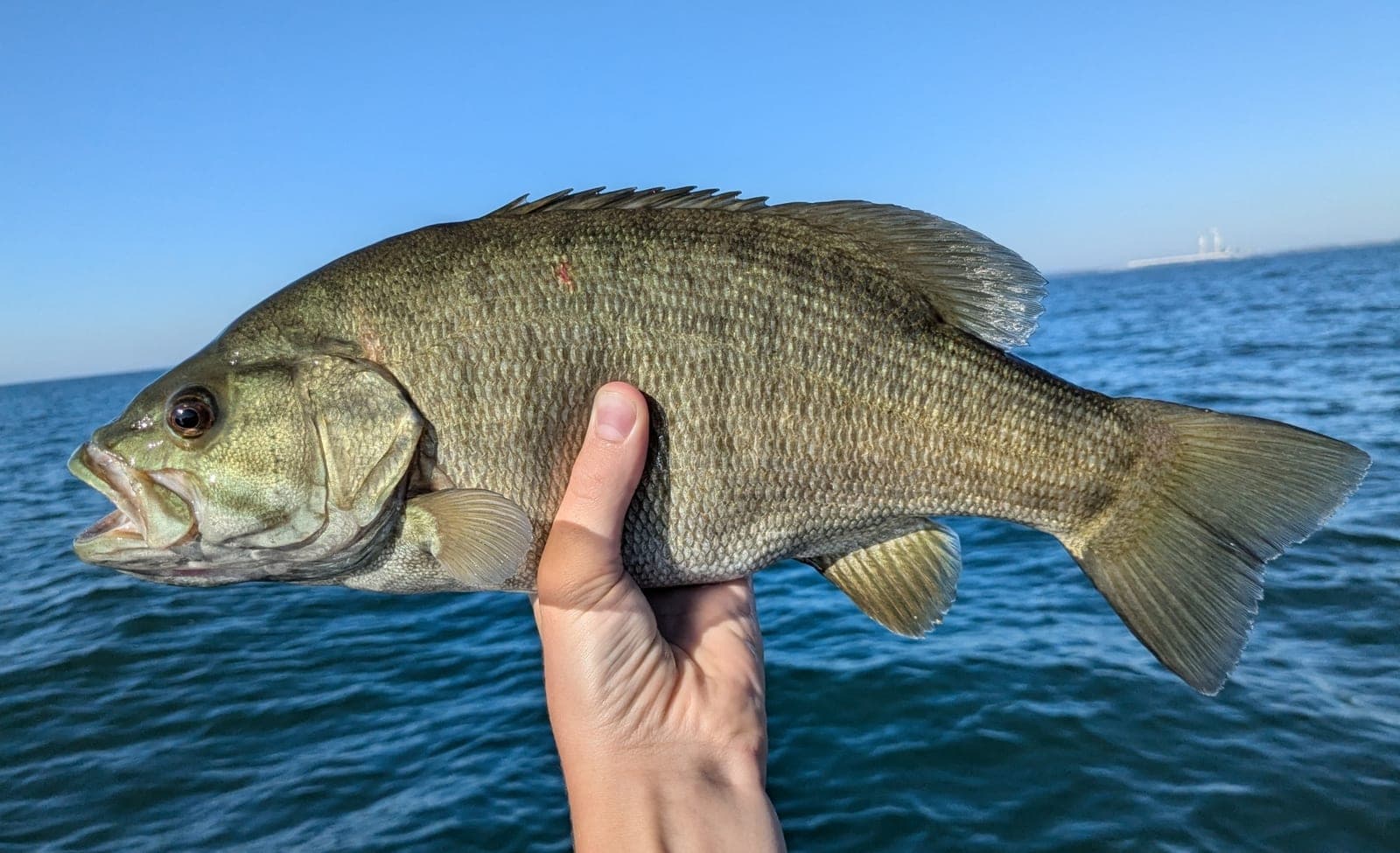
Quick answer
Close the fish's mouth and look at the jaw: a largemouth's upper jaw reaches past the back of the eye, while a smallmouth's ends below the eye. Then check the sides: largemouth wear a dark horizontal stripe, smallmouth wear vertical bars on bronze.
Largemouth and smallmouth are the two most popular black basses in North America, and across the northern states they often live in the same lake. They are close relatives in the sunfish family and can look alike at a glance, especially in stained water or in a hurry at the boat. The jaw, the markings and the water each one prefers settle the question in seconds.
Key differences
| Trait | Largemouth Bass | Smallmouth Bass |
|---|---|---|
| Upper jaw | Extends past the rear edge of the eye | Ends below the eye |
| Side markings | Dark, jagged horizontal stripe | Vertical bars or blotches |
| Color | Green to olive | Bronze, brown or olive-gold, often with a red eye |
| Dorsal fins | Deep notch nearly splits them | Joined by a shallow notch |
| Soft dorsal base | No scales | Scales present |
| Favorite water | Warm, weedy lakes, ponds and slow rivers | Clear, cool, rocky lakes and rivers with current |
| World record | 22 lb 4 oz (tie, 1932 and 2009) | 11 lb 15 oz (1955) |
Where you will find each
Largemouth are native to eastern and central North America and have been stocked nearly everywhere; they rule warm, shallow, weedy water, from farm ponds to big southern reservoirs. Smallmouth are native to the Great Lakes, the St. Lawrence and the upper and middle Mississippi basin, and they favor clearer, cooler water with rock and current. In a northern lake that holds both, largemouth usually hold in weeds, lily pads and wood in the shallow bays, while smallmouth hold on rocky points, gravel flats, reefs and deeper breaks. In rivers, smallmouth take the faster, rockier stretches and largemouth the slack backwaters.
Hybrids and other look-alikes
Largemouth and smallmouth occasionally cross, and the hybrids can show a confusing mix of both parents' features; the IGFA even keeps a separate record category for smallmouth × largemouth hybrids. The spotted bass is the other common source of confusion. It wears a horizontal stripe like a largemouth, but its jaw stops at the back of the eye, its dorsal fins are connected, and it has rows of small spots on the lower sides and a rough tooth patch on the tongue.
How they fight and how to fish them
Ask a room of anglers which fights harder and most will say smallmouth: cool-water fish that live in current tend to jump repeatedly and run, while largemouth are bulldogs that bury themselves in cover. Tackle follows habitat. Largemouth anglers lean on weedless soft plastics, frogs, spinnerbaits and heavy line to winch fish out of weeds and wood. Smallmouth anglers fish tubes, drop shots, jerkbaits and lighter fluorocarbon around rock, where crayfish are the main menu. Both make fine table fare, but most bass anglers release their catch.
By the numbers
The traits the daily fish game compares for each.
| Clue | Largemouth Bass | Smallmouth Bass |
|---|---|---|
| Family | Sunfish family | Sunfish family |
| Water | Freshwater | Freshwater |
| Region | Nationwide | Northern lakes & rivers |
| Body shape | Streamlined | Streamlined |
| Max length | 38 in | 27 in |
| Max weight | 22 lb | 12 lb |
| Diet | Carnivore | Carnivore |
FAQ
Can largemouth and smallmouth bass breed?
Yes, though it is uncommon. Hybrids are documented in waters where both species live, and the IGFA keeps a separate world record category for smallmouth × largemouth crosses.
Which grows bigger, a largemouth or a smallmouth?
Largemouth. The largemouth world record is 22 pounds, 4 ounces, roughly twice the 11-pound, 15-ounce smallmouth record, and a 10-pound largemouth is far more common than a 10-pound smallmouth.
Can largemouth and smallmouth live in the same lake?
Often. In many northern lakes and reservoirs they share the water but split it up, with largemouth in the weedy shallows and smallmouth on the rock and deeper structure.
Is the eye color a reliable way to tell them apart?
It helps, since smallmouth eyes are often red or orange-brown, but it varies. The jaw length and the stripe-versus-bars pattern are the field marks to trust.
Could you tell them apart from a few clues? Test yourself in today's puzzle.
Play the daily fish game