Fish · Side by side
Lake Trout vs Brook Trout
How to tell them apart
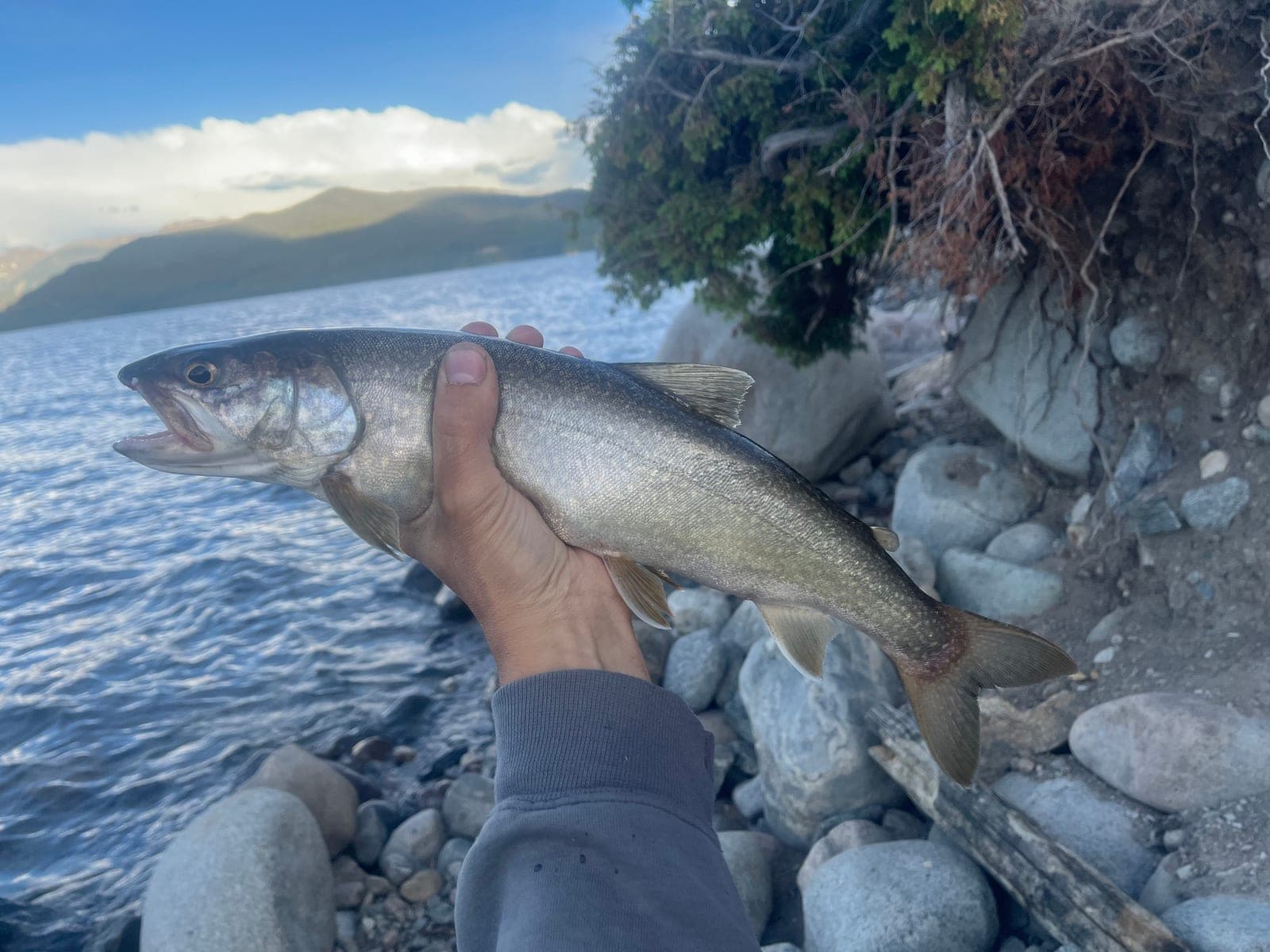
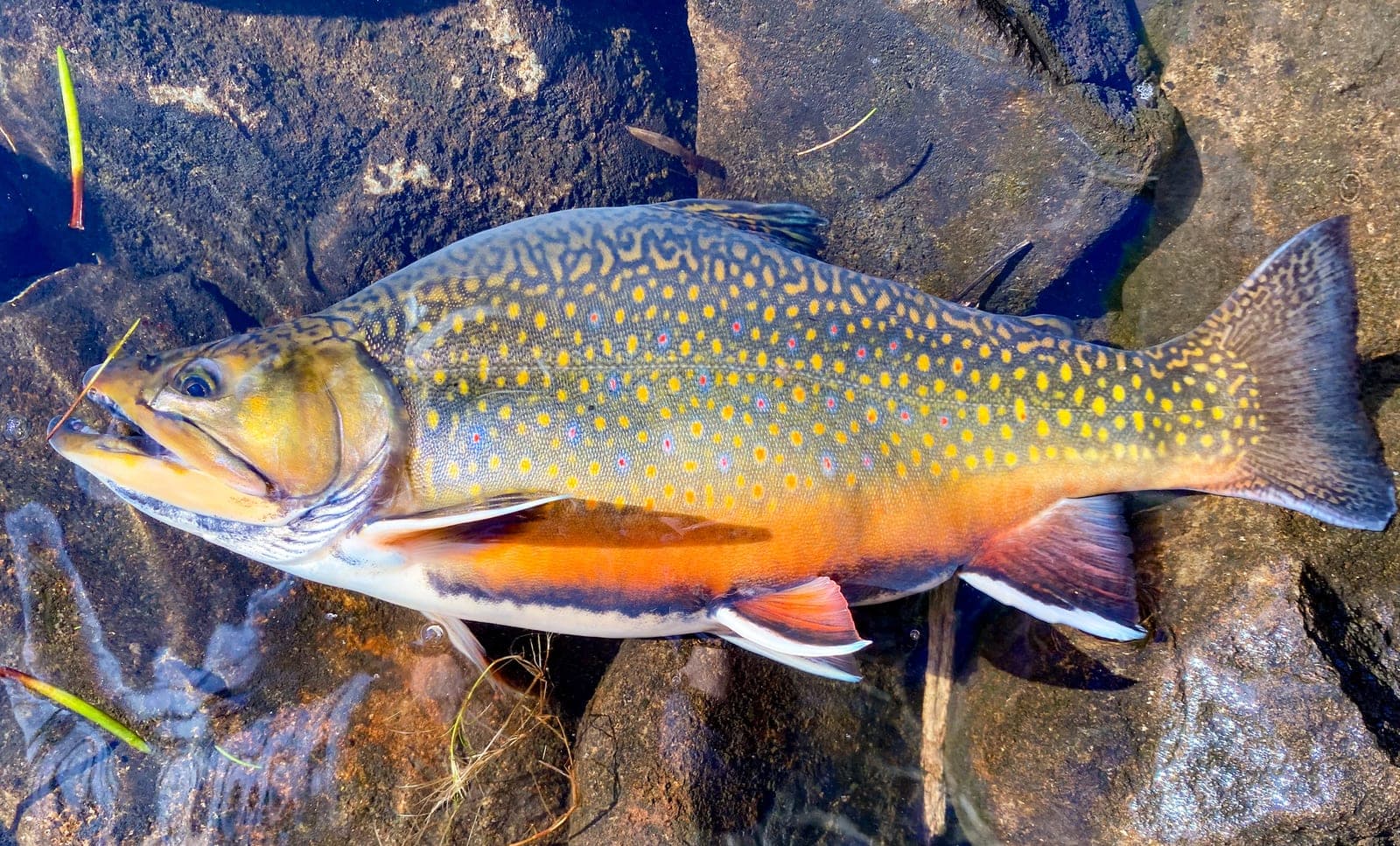
Quick answer
Check the tail and look for color: a lake trout has a deeply forked tail and only cream or yellowish spots, while a brook trout has a nearly square tail, red spots with blue halos and worm-like markings on its back.
Lake trout and brook trout are both chars, not true trout, and both wear pale spots on a dark body with white-edged fins, so they can look surprisingly alike, especially as small fish in the same northern lake. They live very different lives, though: one is a deepwater giant that can live for decades, the other a stream fish that usually lives only three or four years. Here is how to tell them apart.
Key differences
| Trait | Lake Trout | Brook Trout |
|---|---|---|
| Tail | Deeply forked | Nearly square |
| Spots | Cream to yellow only | Yellowish spots plus red dots with blue halos |
| Back markings | Irregular pale spots | Wormy, light vermiculations |
| Lower fins | Thin white edge; fins otherwise grayish or yellowish | Orange-red with a white edge and a black stripe |
| Typical size | Often 5–10 lb; trophies over 20 lb | Mostly 6–15 in in streams; 5 lb is a giant |
| World record | 72 lb (IGFA, 1995) | 14 lb 8 oz (IGFA, 1915) |
| Lifespan | Often 20+ years; 60+ documented | Usually 3–4 years |
| Habitat | Large, deep, cold lakes | Cold streams, ponds and small lakes |
Where you will find each
Both are native to northern North America, and their ranges overlap across eastern Canada, the Great Lakes and northern New England. Lake trout need big, deep, cold lakes and in summer often sit 60 feet down or more in southern parts of their range. Brook trout prefer cold streams, spring-fed ponds and the shallower parts of lakes, and they reach farther south, down the Appalachians to Georgia. In big northern lakes and rivers, such as Lake Nipigon and the Nipigon River, you can catch both on the same trip.
Splake: the hybrid
Lake trout and brook trout can be crossed in hatcheries, and the hybrid, called splake, is widely stocked because it grows quickly. A splake looks like a blend: a tail that is forked but less deeply than a lake trout's, often faint wormy markings on the back and some orange on the lower fins. Splake rarely reproduce in the wild, though a few lakes hold self-sustaining populations. Many regulations treat splake separately, so correct identification matters before keeping one.
Fishing and the table
Most lake trout are caught trolling spoons and lures deep in summer, jigging over deep structure, or through the ice in winter, while brook trout are a small-stream fish for small flies, spinners and worms. On the table, brook trout are delicate and sweet, and lean lake trout are firm and mild, but big, old lake trout carry more fat and can accumulate contaminants, so check local consumption advisories.
By the numbers
The traits the daily fish game compares for each.
| Clue | Lake Trout | Brook Trout |
|---|---|---|
| Family | Salmon & trout | Salmon & trout |
| Water | Freshwater | Both |
| Region | Northern lakes & rivers | Northern lakes & rivers |
| Body shape | Streamlined | Streamlined |
| Max length | 59 in | 34 in |
| Max weight | 72 lb | 18 lb |
| Diet | Carnivore | Carnivore |
FAQ
Are lake trout and brook trout related?
Yes. Both are chars in the genus Salvelinus, along with Arctic char and bull trout. Neither is a true trout like the rainbow or brown.
What is a splake?
A hatchery cross between a lake trout and a brook trout. It has a moderately forked tail and mixed markings, and it is stocked in many northern lakes.
Can a brook trout have a forked tail?
A brook trout's tail is only slightly forked, almost square. A clearly forked tail on a fish with brook trout markings usually means a splake.
When do lake trout and brook trout spawn?
Both spawn in fall. Brook trout dig nests in gravel, often where groundwater rises, while lake trout scatter their eggs over rocky lake reefs, usually at night.
Could you tell them apart from a few clues? Test yourself in today's puzzle.
Play the daily fish game