Birds · Side by side
Downy Woodpecker vs Hairy Woodpecker
How to tell them apart
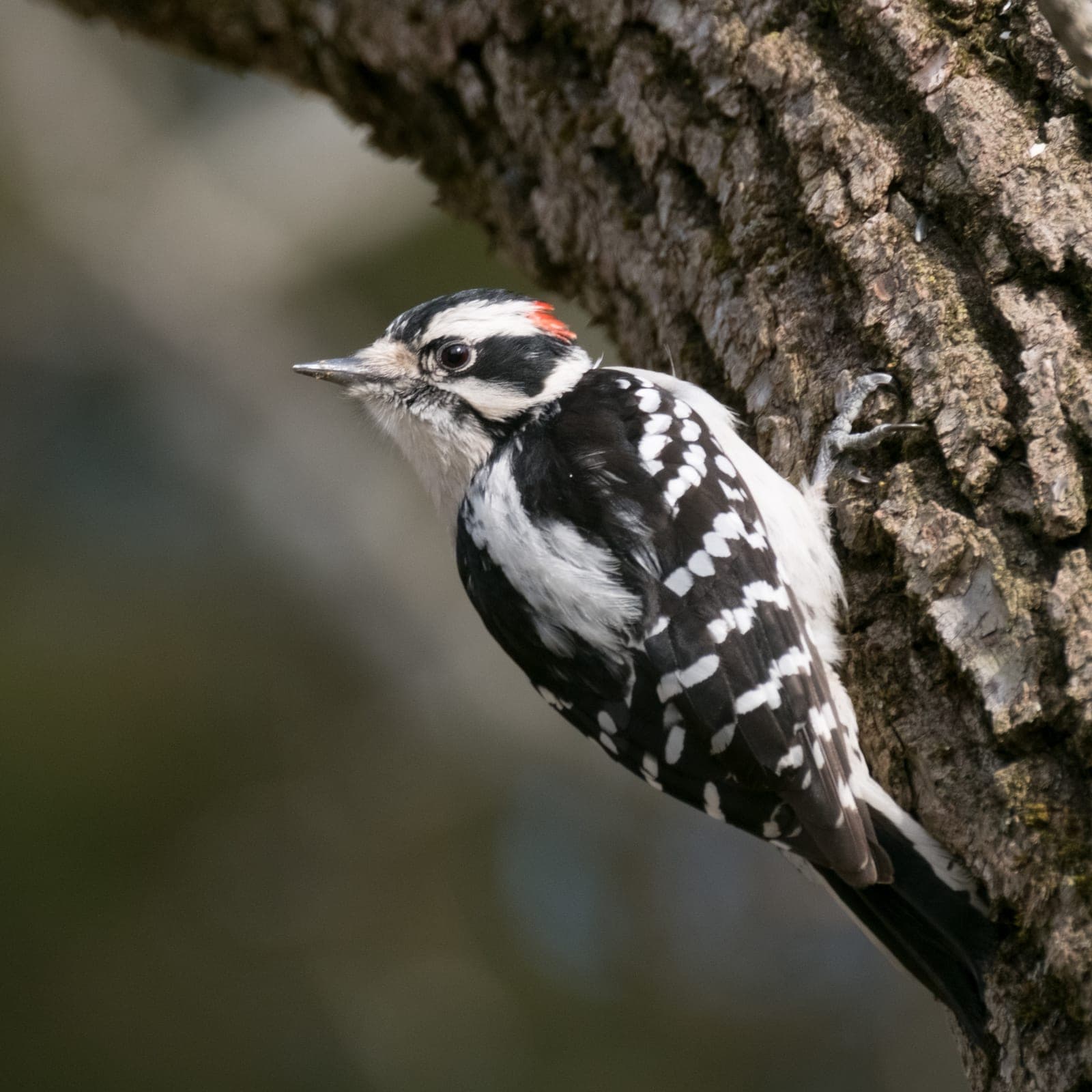
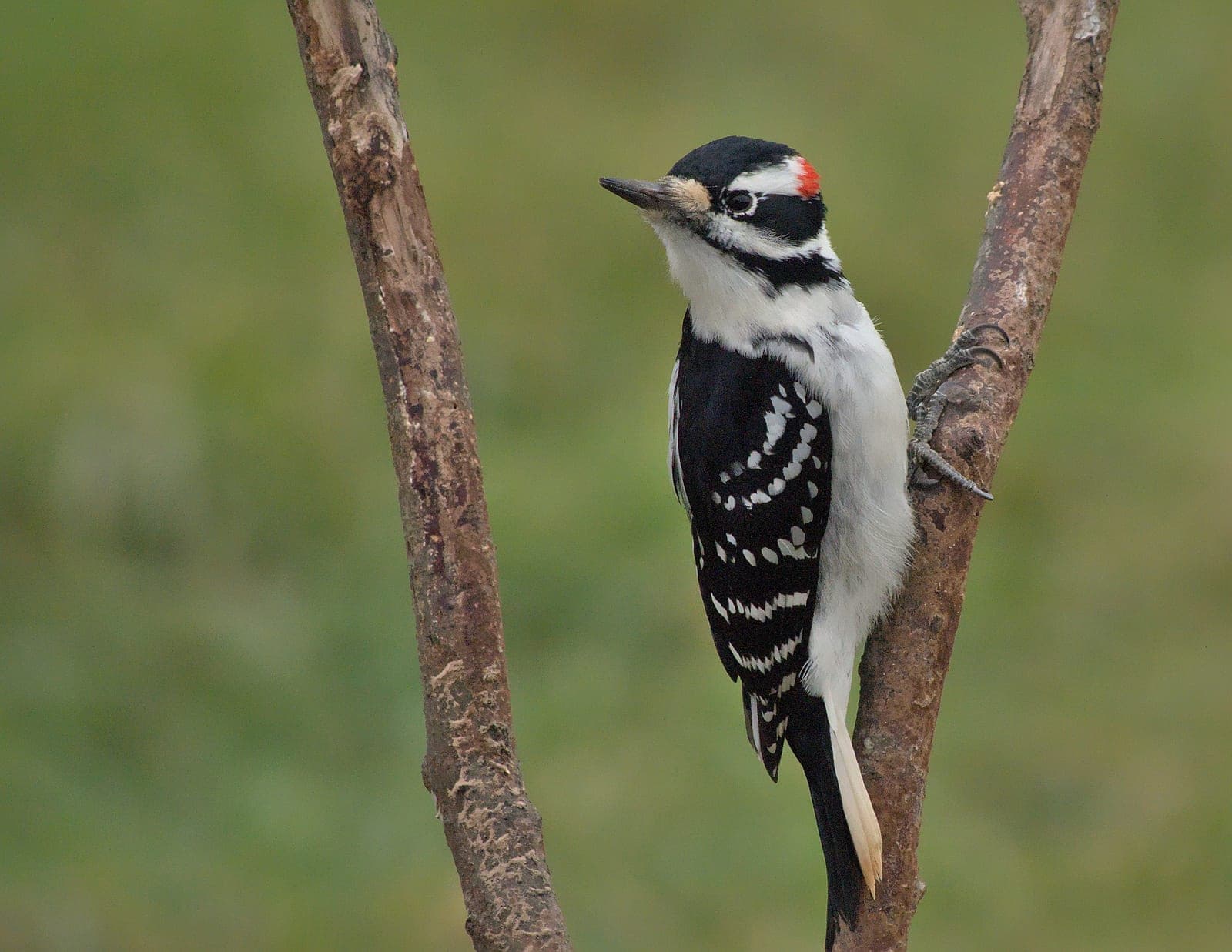
Quick answer
Compare the bill with the head: a downy's bill is tiny and thornlike, much shorter than its head, while a hairy's is a long, strong chisel nearly as long as the head. Downies also have black spots or bars on the white outer tail feathers, which are clean white on a hairy.
Downy and hairy woodpeckers are the classic look-alike pair of North American birding. Both wear the same black-and-white suit, with a white stripe down the back, white-spotted wings and a striped face, and both visit suet feeders across most of the continent. Side by side the size difference is obvious, but a lone bird on a trunk can fool experienced birders. These are the clues that settle it.
Key differences
| Trait | Downy Woodpecker | Hairy Woodpecker |
|---|---|---|
| Bill | Short and thornlike, much shorter than the head | Long and chisel-like, nearly as long as the head |
| Length | 5.5–6.7 in | 7.1–10.2 in, about robin-sized |
| Weight | 0.7–1 oz | 1.4–3.4 oz |
| Outer tail feathers | White with black bars or spots | Clean white |
| Call note | Soft, flat 'pik' | Sharp, loud 'peek' |
| Rattle | Whinny that falls in pitch | Fast rattle held on one pitch |
| Where it feeds | Twigs, weed stems, small branches and trunks | Mostly trunks and large limbs; digs deeper |
| Longevity record | 11 years 11 months | 15 years 11 months |
Where you will find each
Both species live year-round across most of the wooded United States and Canada, so in much of the continent either one could land on the same tree. The downy is the more adaptable bird: it thrives in small woodlots, parks, orchards, willow thickets and suburbs with a few shade trees, and it even forages on weed stalks in old fields, but it avoids the desert Southwest. The hairy needs bigger trees and more forest, and it reaches much farther south, through mountain pine forests in Mexico and Central America to western Panama.
Why they look so alike
Despite their near-identical pattern, the two are not each other's closest relatives. Yale ornithologist Richard Prum proposed that the downy evolved to resemble the larger, more dominant hairy, a kind of mimicry. A 2018 Cornell Lab study of Project FeederWatch reports found that hairies displaced downies in 96 percent of 56 encounters at feeders, while downies often won against other birds of similar or larger size, and the authors suggested the downy's borrowed look helps it intimidate those birds. The idea is still debated.
Tricky birds and how to handle them
Young birds and regional forms cause most mistakes. Juvenile male downies wear a red cap in summer, so where the red sits is not a safe clue in that season. Western hairies show less white spotting on the wings, and some hairies are smudgy brown rather than white below. Size is hard to judge on a lone bird, so work through several features in order: the bill against the head first, then the outer tail feathers, then the voice.
By the numbers
The traits the daily bird game compares for each.
| Clue | Downy Woodpecker | Hairy Woodpecker |
|---|---|---|
| Group | Woodpeckers | Woodpeckers |
| Colors | Black, White, Red | Black, White, Red |
| Habitat | Backyards | Forest |
| Region | Nationwide | Nationwide |
| Length | 6 in | 9 in |
| Wingspan | 11 in | 15 in |
| Diet | Insects | Insects |
FAQ
Are downy and hairy woodpeckers the same species?
No. They are separate species that look alike but are not especially close relatives. The hairy is clearly larger, with a much longer bill relative to its head.
Is a downy woodpecker just a young hairy woodpecker?
No. Downies are a separate species that stays small for life, and young woodpeckers are close to adult size by the time they leave the nest. A small bird with a stubby bill is a downy.
How can you tell them apart by sound?
A downy gives a soft 'pik' and a whinnying rattle that drops in pitch. A hairy's call is a sharper, louder 'peek', and its rattle stays on one pitch.
Do both species come to suet feeders?
Yes. Both take suet, peanuts and sunflower seed, which makes a feeder near trees the best place to compare them side by side.
Could you tell them apart from a few clues? Test yourself in today's puzzle.
Play the daily bird game