Fish · Side by side
Coho Salmon vs Sockeye Salmon
How to tell them apart
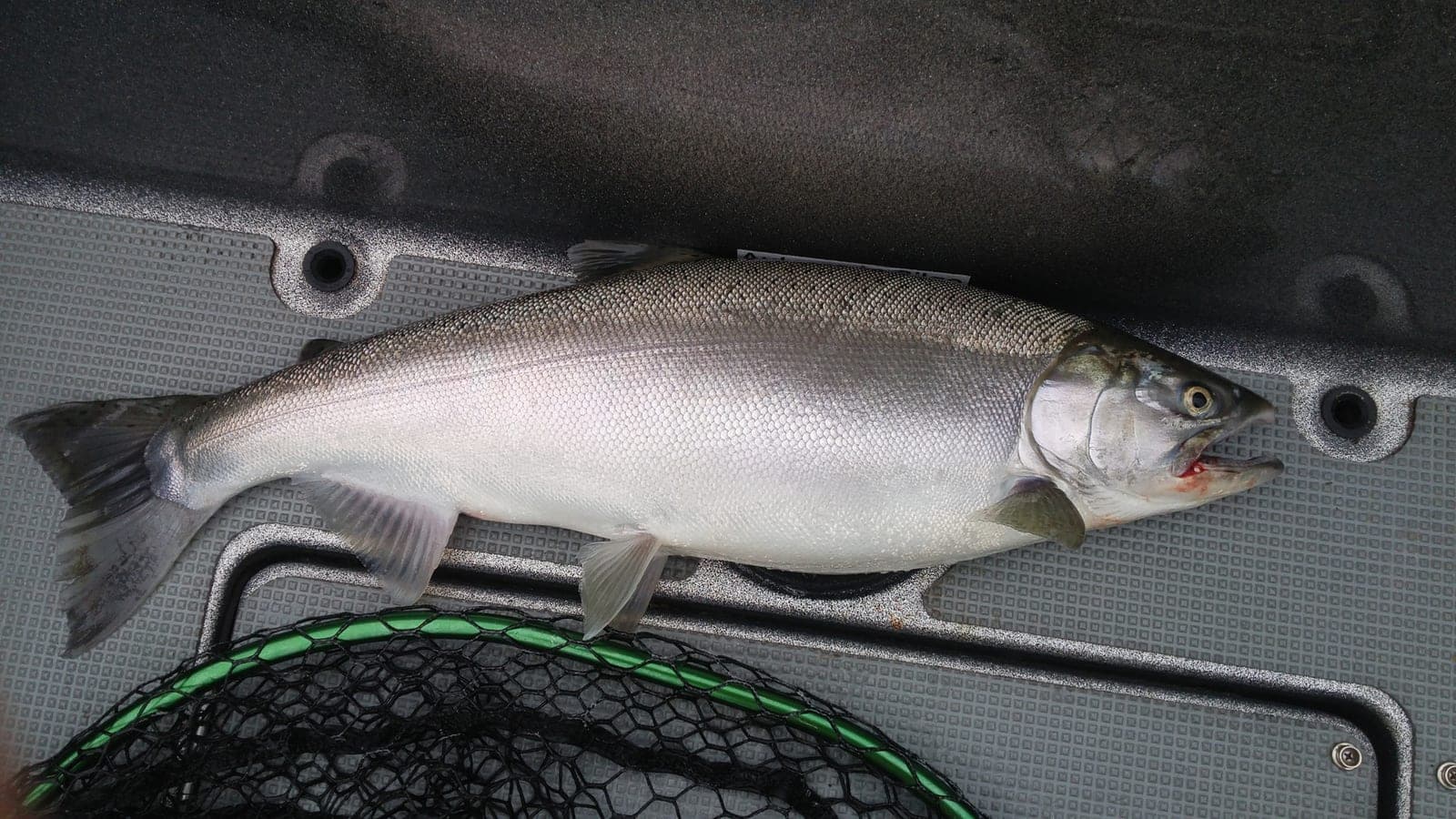
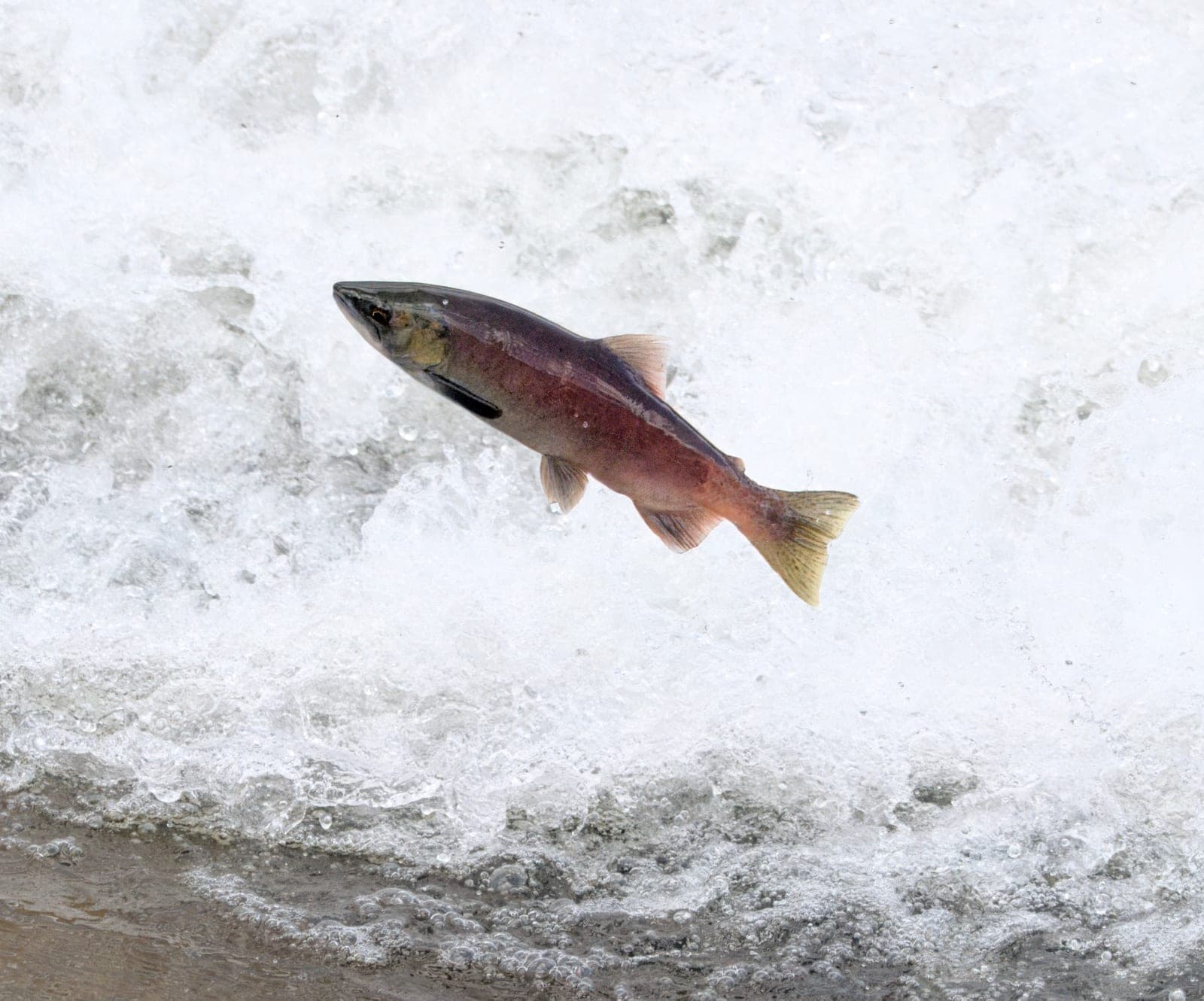
Quick answer
Look for spots: a coho has small black spots on its back and the upper half of its tail, while a bright sockeye has no distinct spots at all. Spawning fish are easier still, as a sockeye turns brilliant scarlet with an olive-green head and a coho turns a darker maroon-red with a dark back.
Coho and sockeye are both mid-sized, chrome-bright Pacific salmon, and in Alaska their runs overlap in late summer on rivers like the Kenai. Fresh from the sea they look much alike, and both turn red as they spawn. But they live very different lives, one a fish-eating stream salmon, the other a plankton-feeding lake salmon, and that shows in how they look, how they bite and how they taste.
Key differences
| Trait | Coho Salmon | Sockeye Salmon |
|---|---|---|
| Spots | Small black spots on back and upper tail lobe | None; at most fine speckling |
| Gill rakers | Fewer and shorter | 30–40 long, fine rakers for straining plankton |
| Food at sea | Mostly fish and squid | Plankton, krill and small crustaceans |
| Typical size | 8–12 lb | 4–15 lb, about 6 lb on average |
| Spawning colors | Maroon to brick-red sides, dark greenish head | Scarlet body, olive-green head |
| Nursery water | Streams, side channels and ponds | Lakes, for one to three years |
| Flesh | Orange-red and mild | Deep red and rich |
Why one bites and the other doesn't
Coho are predators at sea and stay aggressive in fresh water, so they slam spinners, twitched jigs, spoons and bright flies. Sockeye strain plankton through long gill rakers and stop feeding in rivers, so they rarely chase anything. River anglers catch them by drifting a weighted fly or bare hook right through the lanes where fish travel along the bank, and the fish must be hooked in the mouth to be kept in most places. In lakes, slow trolling with small red or pink lures behind a dodger also works.
Where each spawns
Sockeye are lake specialists: almost all spawn in streams connected to a lake or on lake beaches, and their young spend one to three years feeding in the lake. The biggest runs return to Bristol Bay and the Fraser River. Coho spread into nearly every accessible stream, including tiny tributaries, and their young need slow, wood-filled water. Sockeye also have a landlocked form, the kokanee, while coho in the Great Lakes are stocked fish.
Which is better on the table?
Sockeye win on color and richness: deep red, firm and oily, ideal for grilling, smoking and canning. Coho are milder and a little leaner, with orange-red meat that many people prefer for a lighter flavor. Both should be bled and iced fast, and both are best taken bright, before they color up in fresh water.
By the numbers
The traits the daily fish game compares for each.
| Clue | Coho Salmon | Sockeye Salmon |
|---|---|---|
| Family | Salmon & trout | Salmon & trout |
| Water | Both | Both |
| Region | Pacific Coast | Pacific Coast |
| Body shape | Streamlined | Streamlined |
| Max length | 42 in | 33 in |
| Max weight | 33 lb | 17 lb |
| Diet | Carnivore | Carnivore |
FAQ
Is red salmon the same as sockeye?
Yes. Red salmon is the common Alaska name for sockeye, for both its red flesh and its red spawning colors. Coho are known as silver salmon.
Why are sockeye so hard to catch on lures?
They feed on plankton at sea and stop eating once they enter rivers, so they have little interest in chasing a lure. Coho, by contrast, are predators that strike aggressively.
Do coho and sockeye run at the same time?
They can overlap. Most Alaska sockeye arrive in June and July, while coho enter rivers from July into November, so late-summer anglers on some rivers see both.
Which turns redder at spawning?
Sockeye. A spawning sockeye is bright scarlet with a green head, while a spawning coho is a darker maroon or brick-red with a dark back and head.
Could you tell them apart from a few clues? Test yourself in today's puzzle.
Play the daily fish game