Fish · Side by side
Chinook Salmon vs Coho Salmon
How to tell them apart
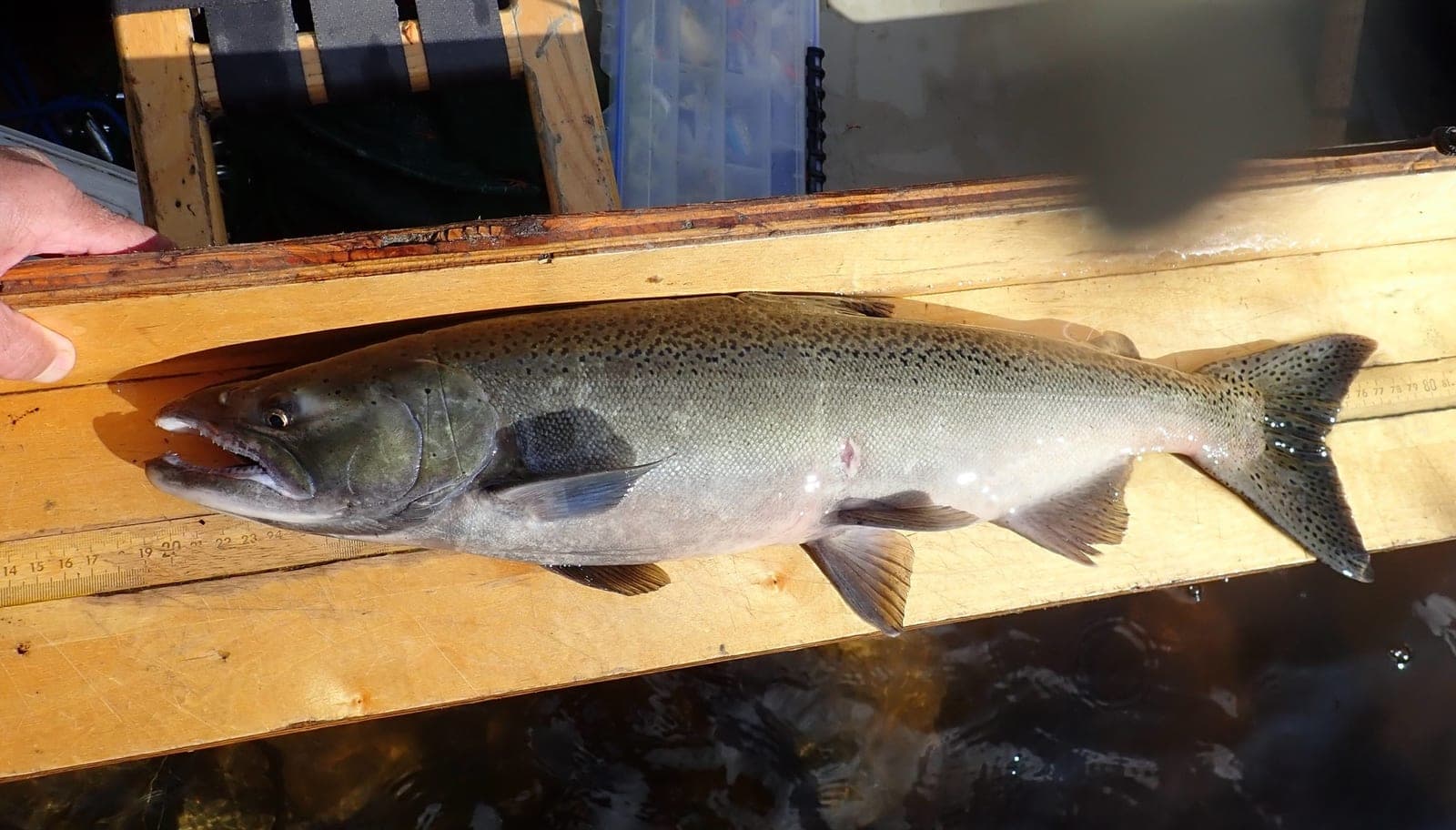
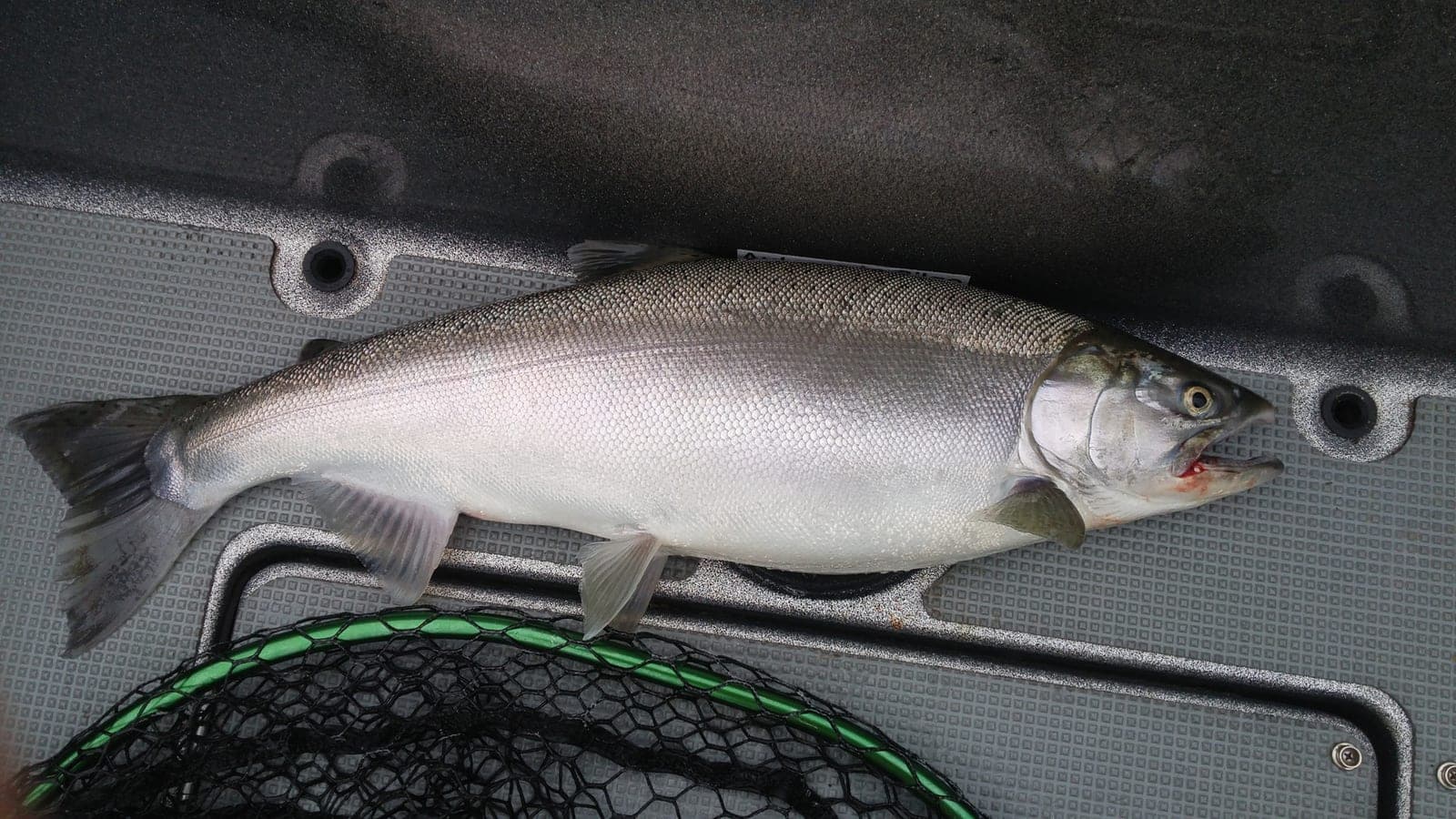
Quick answer
Look in the mouth and at the tail: a Chinook has black gums and black spots across both lobes of its tail, while a coho has white or pale gray gums and spots only on the upper lobe. Kings also have a thicker tail wrist and usually grow much bigger.
Chinook and coho are the two salmon most sport anglers chase, from the Pacific coast to the Great Lakes, and they often run up the same rivers in the same weeks. A bright, mid-sized king and a big coho can look almost identical in the net, and the difference matters because seasons, limits and wild-fish rules are usually set separately for each. Two quick checks settle it.
Key differences
| Trait | Chinook Salmon | Coho Salmon |
|---|---|---|
| Gums | Black, with a dark mouth | White or pale gray, with a dark mouth |
| Tail spots | Across both lobes | Upper lobe only; lower lobe clear |
| Tail wrist | Thick and hard to grip | Noticeably narrower |
| Typical size | Often 10–50 lb | Usually 8–12 lb |
| IGFA record | 97 lb 4 oz (Kenai River, 1985) | 33 lb 4 oz (Salmon River, NY, 1989) |
| Spawning colors | Olive, copper or maroon | Brick-red sides with a dark greenish head and back |
| Run timing | Spring, summer, fall or winter, by river | Mostly late summer and fall |
Where you will find each
Both species are native from central California to Alaska and across the North Pacific to Asia, and both were stocked into the Great Lakes in the 1960s, coho first in 1966 and Chinook a year later. Kings favor big rivers such as the Columbia, Sacramento, Yukon and Kenai, and spawn in large gravel in mainstems. Coho push into almost any coastal stream, down to small tributaries, and their young depend on slow side channels, ponds and wood-filled pools. In salt water, kings often feed deeper, while coho tend to stay higher in the water column.
Jacks, blackmouth and other tricky fish
The hardest fish to sort out are small ones. Chinook jacks, males that return a year or two early, and immature kings called blackmouth can be the same size as an adult coho. Size and color will not settle those, but the gums and the tail always do. Wild hybrids between the two are rare but do occur, and the IGFA even keeps a record for them: a 35-pound, 8-ounce Chinook-coho cross from New York's Salmon River in 2001.
Which fights and eats better?
A king fights like a freight train, with long, heavy runs that can empty a reel, while a coho is the acrobat, jumping and changing direction fast. Kings are the richer fish on the table, with thick, high-oil fillets, while coho meat is milder, a little leaner and bright orange-red. Both are excellent when taken bright from salt water and lose quality as they color up in the river.
By the numbers
The traits the daily fish game compares for each.
| Clue | Chinook Salmon | Coho Salmon |
|---|---|---|
| Family | Salmon & trout | Salmon & trout |
| Water | Both | Both |
| Region | Pacific Coast | Pacific Coast |
| Body shape | Streamlined | Streamlined |
| Max length | 59 in | 42 in |
| Max weight | 135 lb | 33 lb |
| Diet | Carnivore | Carnivore |
FAQ
Is a silver salmon the same as a coho?
Yes. Silver salmon, or silvers, is the common Alaska name for coho. King salmon, likewise, is another name for Chinook.
Which is bigger, Chinook or coho?
Chinook, by far. Kings commonly weigh 10 to 50 pounds and the record tops 97 pounds, while most coho weigh 8 to 12 pounds and the record is just over 33.
Do Chinook and coho run at the same time?
They often overlap in late summer and fall, especially in fall-run rivers and Great Lakes tributaries. Spring and summer kings, though, arrive well before the coho.
Can you tell them apart by color?
Not reliably when they are bright, since both are silver with dark backs. Use the gums and tail spots; spawning colors help only once the fish have been in fresh water for a while.
Could you tell them apart from a few clues? Test yourself in today's puzzle.
Play the daily fish game