Fish · Side by side
Chinook Salmon vs Sockeye Salmon
How to tell them apart
Quick answer
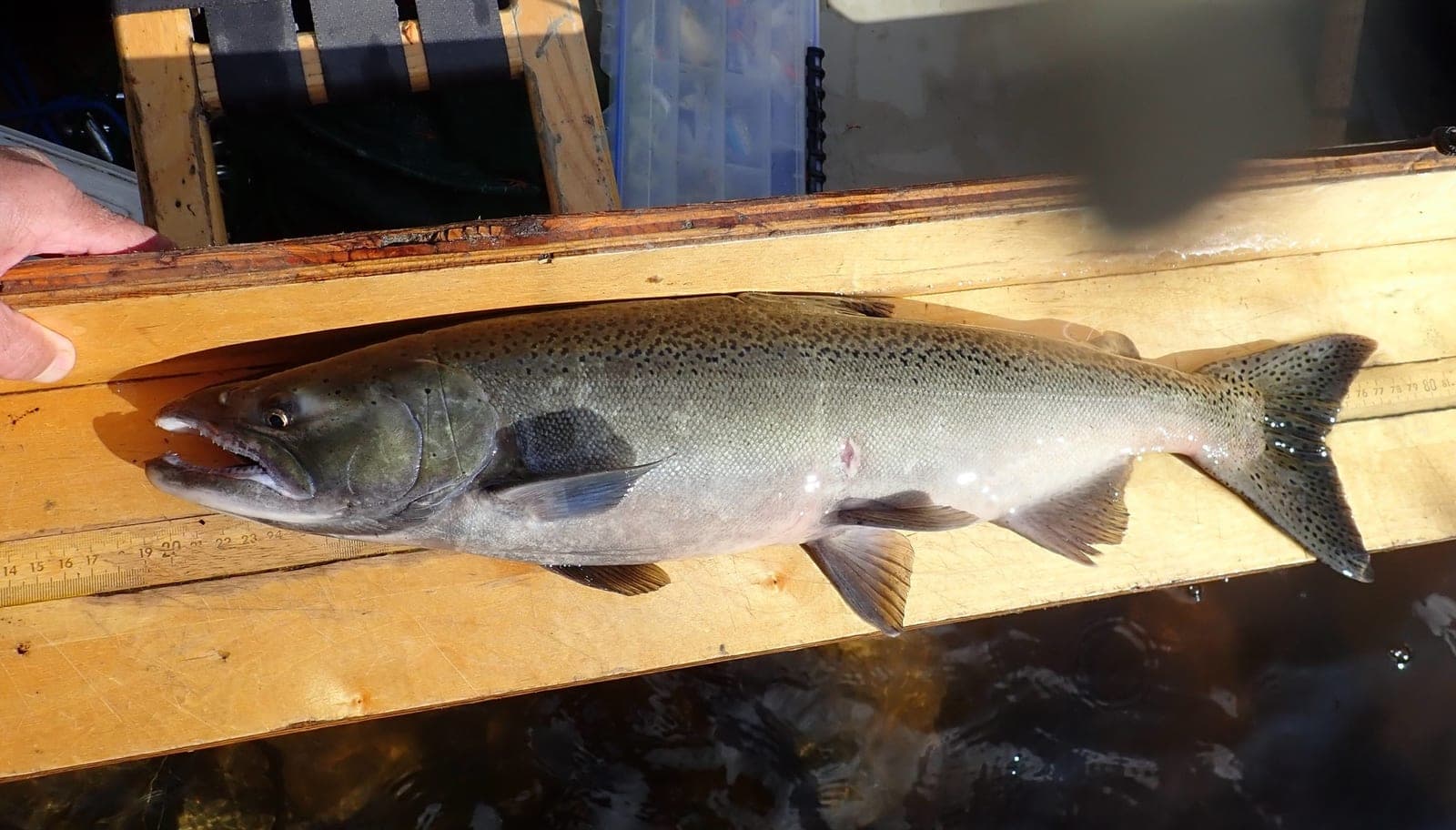
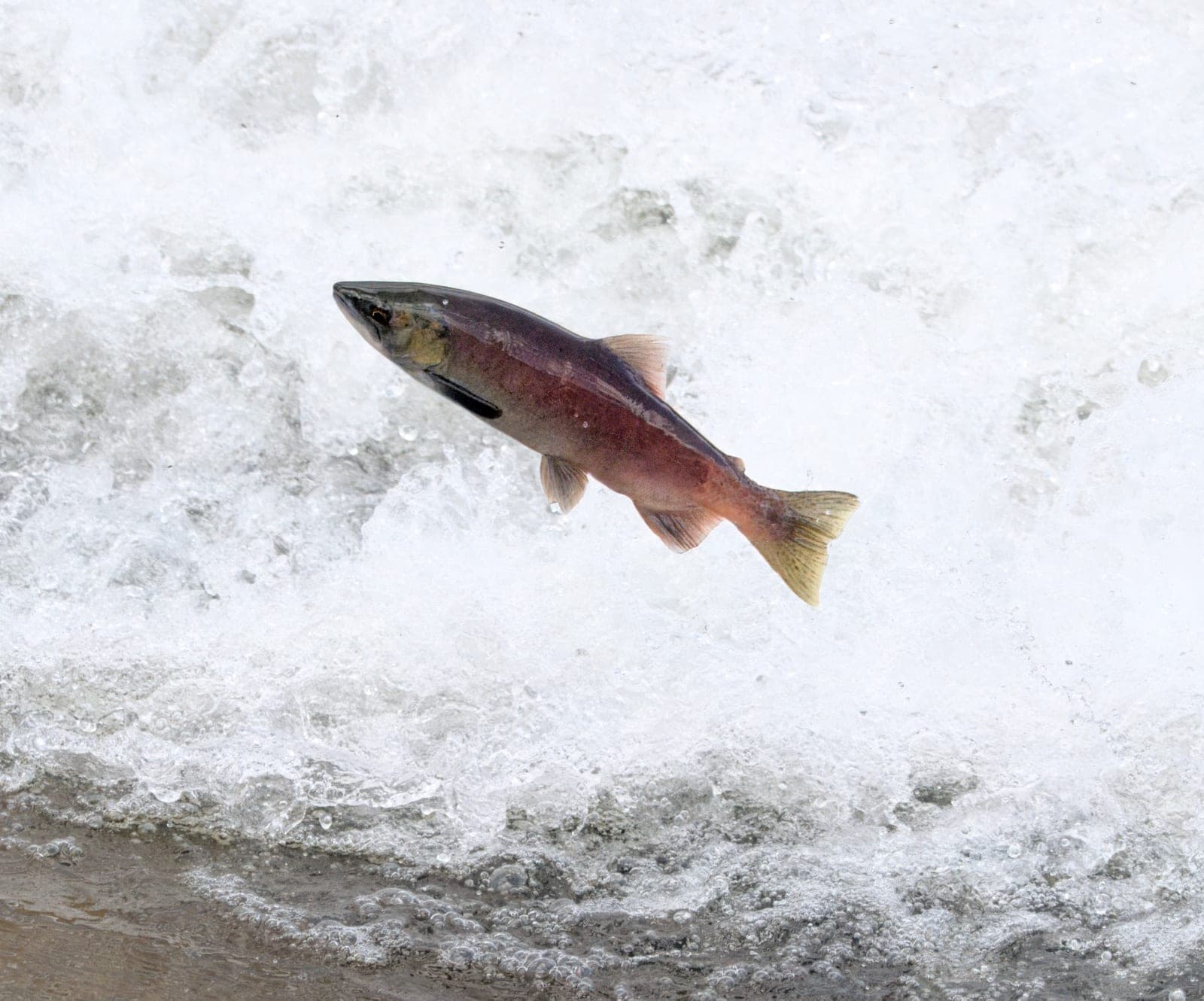
Look at the tail and the gums: a chinook has black spots on its back and on both lobes of its tail, and black gums at the base of its teeth, while a sockeye has no large spots anywhere, only fine speckling at most, and turns bright red with a green head at spawning.
Chinook and sockeye are two of the five Pacific salmon of North America, and they often run up the same rivers, from the Kenai in Alaska to the Columbia. One is the biggest salmon in the Pacific and a prized trolling target; the other is a plankton-eating sprinter famous for its scarlet spawning colors and deep red meat. Here is how to tell them apart, whether the fish is fresh from the ocean or already turning color.
Key differences
| Trait | Chinook Salmon | Sockeye Salmon |
|---|---|---|
| Spots | Black spots on the back and both tail lobes | No large spots; fine speckles at most |
| Mouth and gums | Black gums and dark mouth | No black gum line |
| Spawning colors | Olive-brown to maroon or purplish | Bright red body with an olive-green head |
| Typical size | About 3 ft and 30 lb; often 10–50 lb | 1.5–2.5 ft and 4–15 lb |
| World record | 97 lb 4 oz (IGFA, 1985) | Far smaller; rarely over 15 lb |
| Adult diet | Mostly other fish | Mostly zooplankton, plus small fish and squid |
| Juvenile rearing | Rivers and estuaries | Usually 1–3 years in a lake |
| Other names | King, spring, tyee, blackmouth | Red, blueback; kokanee if landlocked |
Where you will find each
In North America, chinook spawn from California's Central Valley north to the Chukchi Sea in Alaska, and stocked chinook support big fisheries in the Great Lakes. Sockeye range from the Columbia basin in Oregon and Washington north to western Alaska, and most runs depend on a lake where young fish spend their first one to three years. Alaska's Bristol Bay supports the world's largest sockeye harvest, with commercial catches that can reach 30 million fish a year. Landlocked sockeye, called kokanee, live their whole lives in lakes and rarely grow past 14 inches.
How anglers fish for them
Chinook are aggressive predators, so anglers troll flashers with hoochies, spoons or cut herring in salt water, and back-troll plugs, drift roe or swing big spinners in rivers. Sockeye feed on plankton and rarely chase lures, which makes them tricky: in rivers, anglers drift flies or bare hooks low along shoreline travel lanes where schools pass, and on some lakes they troll small hoochies or bare red hooks behind dodgers. Rules on hooks, snagging and how a fish must be hooked vary widely, so check them for every river.
Which is better to eat?
Both are superb. King salmon is rich, buttery and high in fat, with flesh that is usually orange but sometimes white in so-called ivory kings. Sockeye is leaner and firmer, with a stronger salmon flavor and striking deep red flesh, and it is a mainstay of canned and smoked salmon. Sockeye in stores is wild-caught, most of it in Alaska, while king salmon comes both from wild fisheries and from farms, with New Zealand the largest farmed producer.
By the numbers
The traits the daily fish game compares for each.
| Clue | Chinook Salmon | Sockeye Salmon |
|---|---|---|
| Family | Salmon & trout | Salmon & trout |
| Water | Both | Both |
| Region | Pacific Coast | Pacific Coast |
| Body shape | Streamlined | Streamlined |
| Max length | 59 in | 33 in |
| Max weight | 135 lb | 17 lb |
| Diet | Carnivore | Carnivore |
FAQ
Is king salmon the same as chinook?
Yes. King, spring, tyee and blackmouth are all regional names for the chinook salmon. Tyee usually means a chinook over about 30 pounds.
Why do sockeye turn red?
As they head upriver to spawn, sockeye shift pigments from their flesh into their skin, turning bright red with an olive-green head. Males also grow a humped back and a hooked jaw.
Do chinook and sockeye die after spawning?
Yes. Like all Pacific salmon, both spawn once and die within days to weeks, and their carcasses feed streams, wildlife and the next generation.
Are any chinook or sockeye endangered?
Some runs are. Two chinook populations are listed as endangered and seven as threatened under the U.S. Endangered Species Act, and Snake River sockeye are endangered while Lake Ozette sockeye are threatened. Alaska's stocks are not listed.
Could you tell them apart from a few clues? Test yourself in today's puzzle.
Play the daily fish game