Fish · Side by side
Channel Catfish vs Flathead Catfish
How to tell them apart
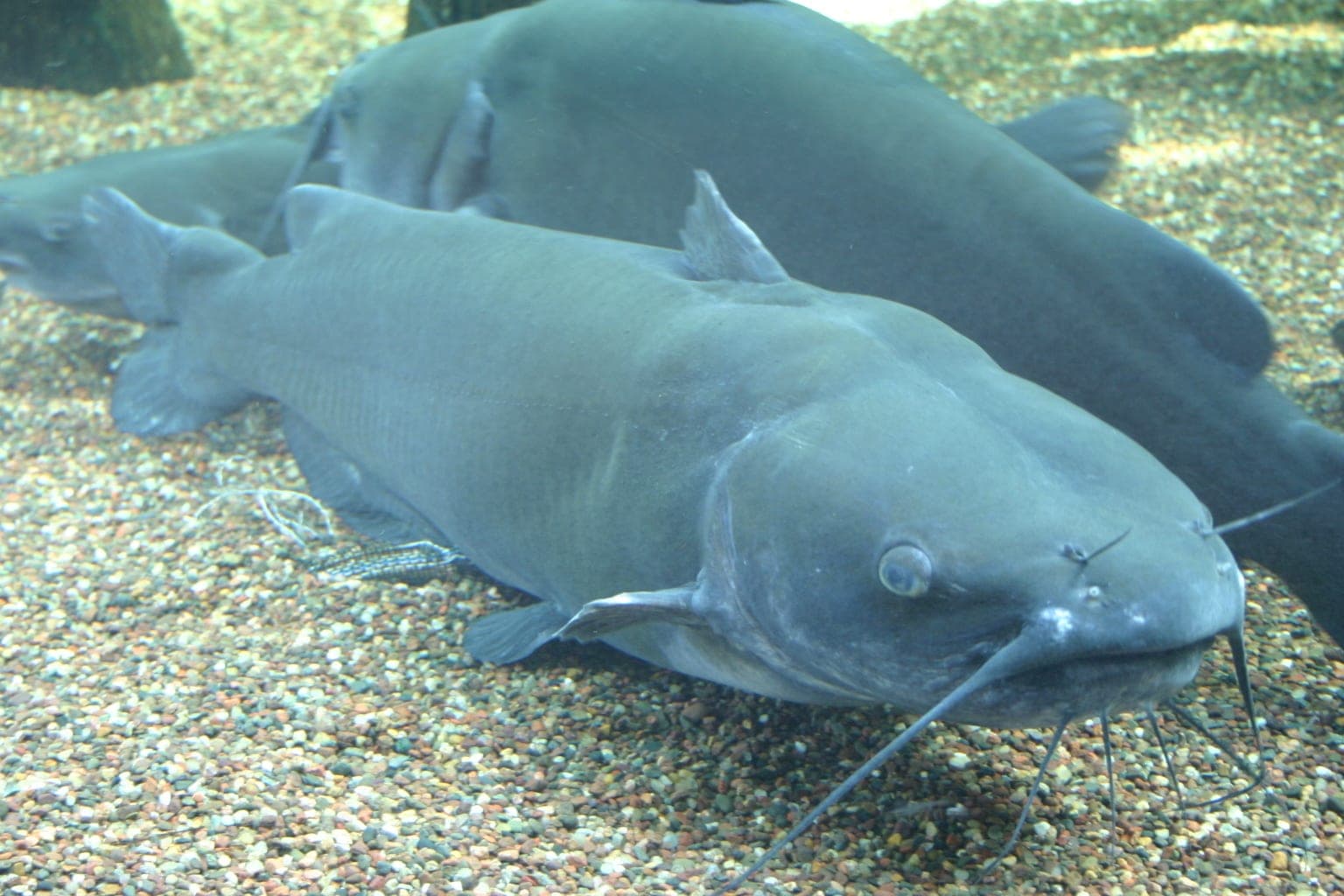
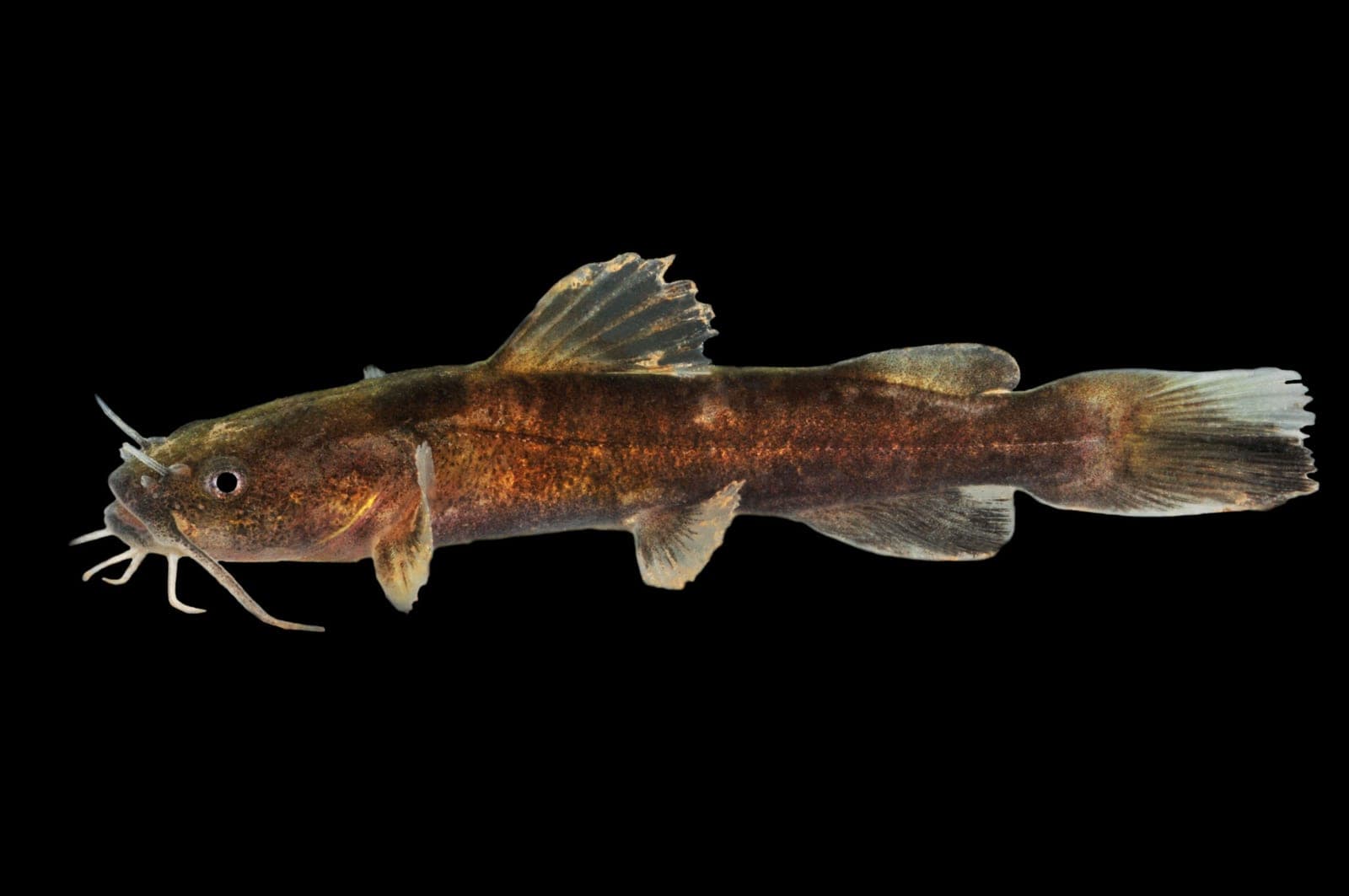
Quick answer
Look at the tail: a channel catfish's tail is deeply forked, while a flathead's is square or barely notched. Then check the face, since a flathead has a wide, flat head with the lower jaw sticking out, while a channel cat's upper jaw overhangs and its sides usually carry dark spots.
Channel and flathead catfish share rivers and reservoirs across the middle of the country, and a young flathead or a dark channel cat can confuse a beginner. With a look at the tail and the jaw, though, they are among the easiest catfish to tell apart, and the differences in how they feed explain why one bites stinkbait and the other almost never does.
Key differences
| Trait | Channel Catfish | Flathead Catfish |
|---|---|---|
| Tail | Deeply forked | Square or slightly notched |
| Jaw | Upper jaw longer | Lower jaw juts out |
| Head | Rounded, fairly narrow | Broad and flattened |
| Markings | Olive to slate with dark spots | Mottled yellow-brown, no round spots |
| Anal fin | Rounded, about 24–29 rays | Short, about 14–17 rays |
| Feeding | Omnivore and scavenger | Live-prey predator |
| IGFA record | 58 lb (1964) | 123 lb (1998) |
| Spawning | From late May, near 75°F | Mostly late June and July |
Different feeding styles, different baits
Channel cats are omnivores and scavengers that track food by smell and taste, so they bite nightcrawlers, chicken livers, cut shad, prepared stinkbaits and even spinners. Flatheads are ambush hunters that eat live fish and crayfish and rarely touch dead food. A bottom rig with cut bait in a river hole will catch plenty of channels, while flathead anglers set lively sunfish, bullheads or chubs beside logjams after dark and wait.
Where each lives
Channel catfish are found in nearly every kind of water, from farm ponds to the Missouri River, and have been stocked across most of the United States. Flatheads need bigger water with slow current and heavy cover: large rivers, big streams and reservoirs. A single logjam may hold one flathead and a whole school of channel cats feeding along the current nearby. Both have been introduced to Atlantic Coast rivers, where flatheads in particular are treated as an invasive predator.
Which is better to eat?
Both are excellent. Channel catfish is the classic fried catfish, with mild, white, slightly sweet fillets, and pan-sized to mid-sized fish are ideal. Many catfish anglers rate flathead even higher, since its live-fish diet gives it firm, clean-tasting meat; trimming the yellow fat improves it. Check consumption advisories before keeping big fish of either species.
By the numbers
The traits the daily fish game compares for each.
| Clue | Channel Catfish | Flathead Catfish |
|---|---|---|
| Family | Catfish family | Catfish family |
| Water | Freshwater | Freshwater |
| Region | Nationwide | Southern waters |
| Body shape | Streamlined | Long & slender |
| Max length | 52 in | 61 in |
| Max weight | 58 lb | 123 lb |
| Diet | Omnivore | Carnivore |
FAQ
Is a yellow cat the same as a flathead?
Yes. Yellow cat, mudcat and shovelhead are all common names for the flathead catfish, from its mottled yellow-brown color and broad, flat head.
Which catfish is better to eat, channel or flathead?
Both are very good, and opinions differ. Many anglers give the edge to flathead for its firm meat, while channel cat is the standard for fried catfish.
Do flatheads bite stinkbait like channel catfish?
Rarely. Flatheads prefer live fish and seldom eat dead or prepared baits, which is why stinkbait anglers catch almost only channel cats.
Which grows bigger, channel or flathead catfish?
Flatheads, by a lot. They commonly reach 45 pounds and the record is 123 pounds, while most channel cats weigh under 15 pounds and their record is 58.
Could you tell them apart from a few clues? Test yourself in today's puzzle.
Play the daily fish game