Fish · Side by side
Channel Catfish vs Blue Catfish
How to tell them apart
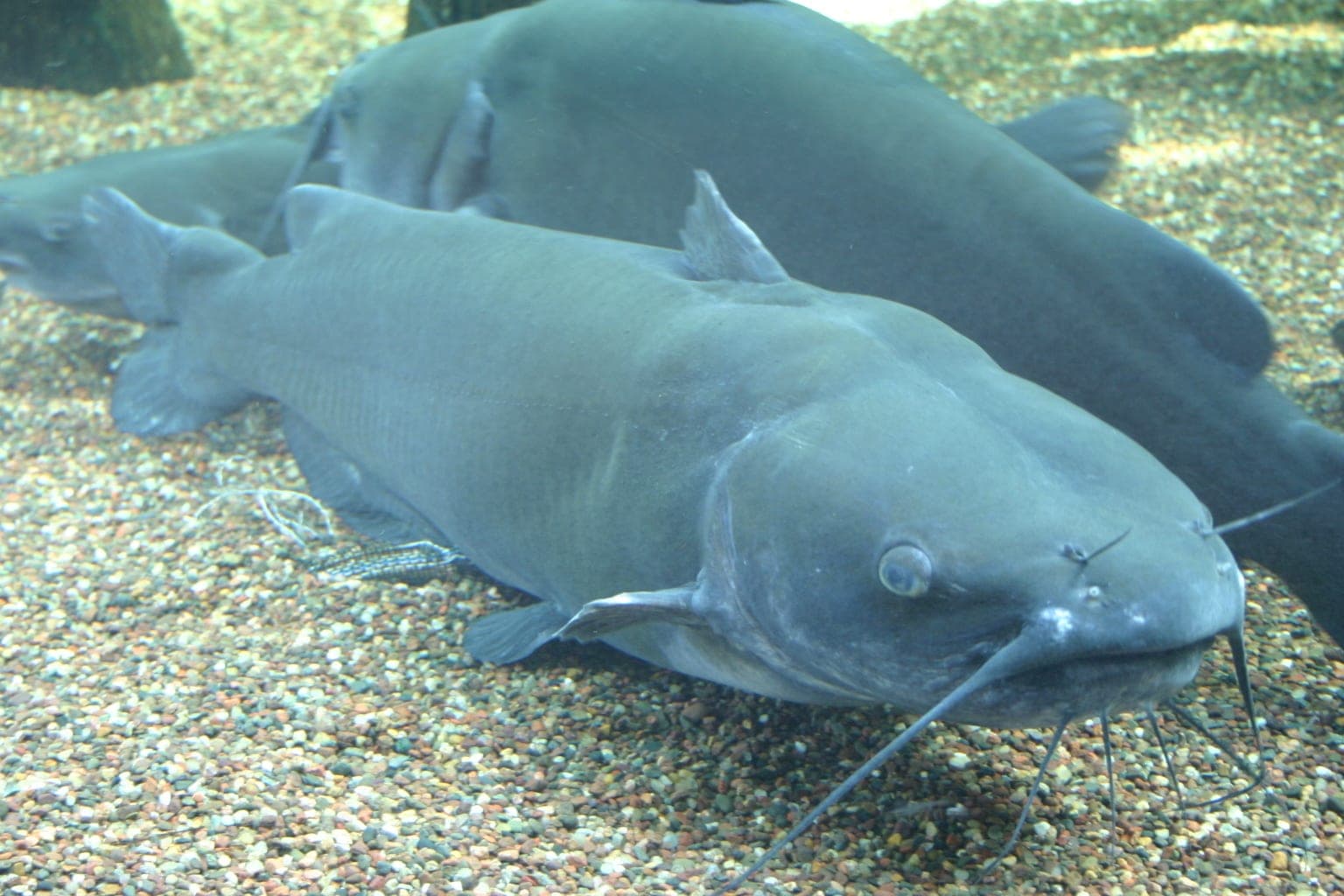
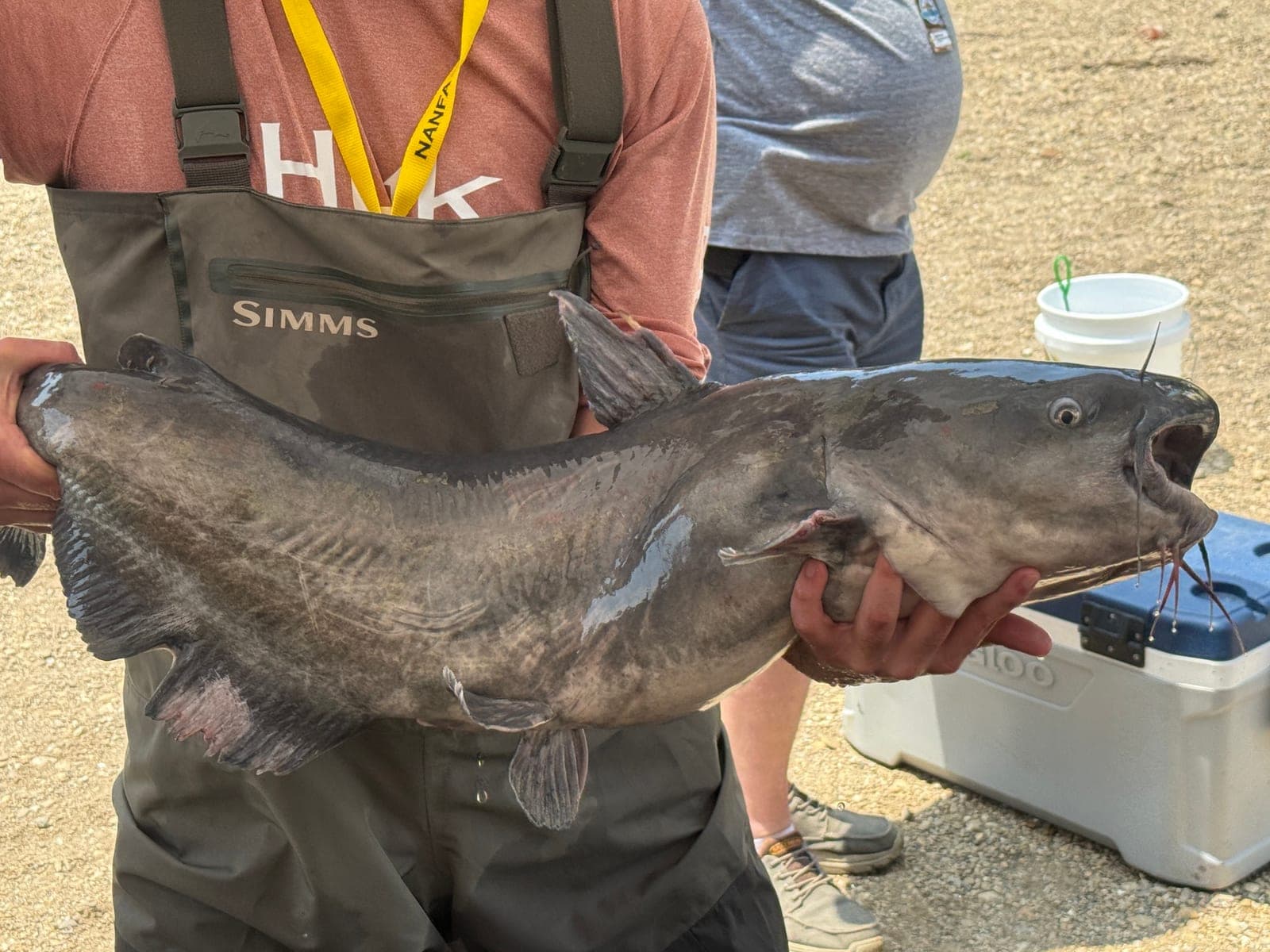
Quick answer
Check the anal fin on the belly in front of the tail: a channel catfish's is rounded along the bottom edge with about 24 to 29 rays, while a blue catfish's is long and straight-edged like a comb, with 30 to 35. Dark spots point to a channel cat, since blues do not have them.
Channel and blue catfish are close relatives in the same genus, both with deeply forked tails, both gray-blue, and both common in the same big rivers and reservoirs across the South and Midwest. They are confused so often that early 'record' channel cats were probably blues. One fin settles it, and it is worth knowing, because many states manage the two separately.
Key differences
| Trait | Channel Catfish | Blue Catfish |
|---|---|---|
| Anal fin edge | Rounded, curving outward | Straight, tapering toward the tail |
| Anal fin rays | About 24–29 | About 30–35 |
| Spots | Scattered dark spots on most mid-sized fish | None, except a Rio Grande population |
| Profile | Evenly sloped back | Steep back with a hump before the dorsal fin |
| Color | Olive-brown to slate, silvery sides | Pale blue-gray to bluish-silver |
| Typical size | 1–15 lb | 3–40 lb |
| IGFA record | 58 lb (1964) | 143 lb (2011) |
| Typical water | Rivers, lakes and ponds of every size | Big rivers and large reservoirs |
Why they get mixed up
Big male channel cats lose their spots and turn dark slate-blue in summer, and blues are often lumped in with them under the name 'channel cat' in local talk. The Missouri Department of Conservation notes that many early channel catfish 'records' were probably blue catfish, and even the 58-pound channel cat world record from South Carolina has been questioned. Color and spots are clues, but the anal fin, rounded and shorter on a channel, long and straight on a blue, is the reliable test.
Where you will find each
Channel cats live almost everywhere, from farm ponds to the biggest rivers, across most of the United States and southern Canada. Blues are big-water fish of the Mississippi basin and Gulf Coast rivers, holding in main channels, current and deep reservoir ledges. Stocking has spread blues to Atlantic Coast systems such as Santee-Cooper and Virginia's Chesapeake tributaries, where they are now considered invasive. Where both live, blues usually hold in heavier current and deeper water.
Baits and table fare
Both bite cut bait, but channel cats take almost anything with scent, including worms, livers and prepared stinkbaits, while big blues are caught mostly on fresh cut shad and skipjack herring. On the table they are nearly interchangeable: firm, mild white fillets that fry beautifully. Smaller fish of either species are generally the best eating, and big fish from some waters carry consumption advisories.
By the numbers
The traits the daily fish game compares for each.
| Clue | Channel Catfish | Blue Catfish |
|---|---|---|
| Family | Catfish family | Catfish family |
| Water | Freshwater | Freshwater |
| Region | Nationwide | Southern waters |
| Body shape | Streamlined | Streamlined |
| Max length | 52 in | 65 in |
| Max weight | 58 lb | 150 lb |
| Diet | Omnivore | Omnivore |
FAQ
Can a channel catfish be blue?
Yes. Large channel cats, especially spawning males, can turn slate-blue and lose their spots, which is a big reason they get mistaken for blues. Count on the anal fin instead.
Which grows bigger, channel or blue catfish?
Blue catfish, by a wide margin. Blues commonly reach 20 to 40 pounds and the record is 143 pounds, while most channel cats weigh under 15 pounds and the record is 58.
Do channel and blue catfish live in the same water?
Often. They share many big rivers and reservoirs, especially in the Mississippi basin, though blues tend to use deeper water and stronger current.
Do blue catfish have spots?
Normally no. Only a population in the Rio Grande carries dark spots; elsewhere, a spotted fish with a forked tail is a channel cat.
Could you tell them apart from a few clues? Test yourself in today's puzzle.
Play the daily fish game