Birds · Side by side
Black-capped Chickadee vs Tufted Titmouse
How to tell them apart
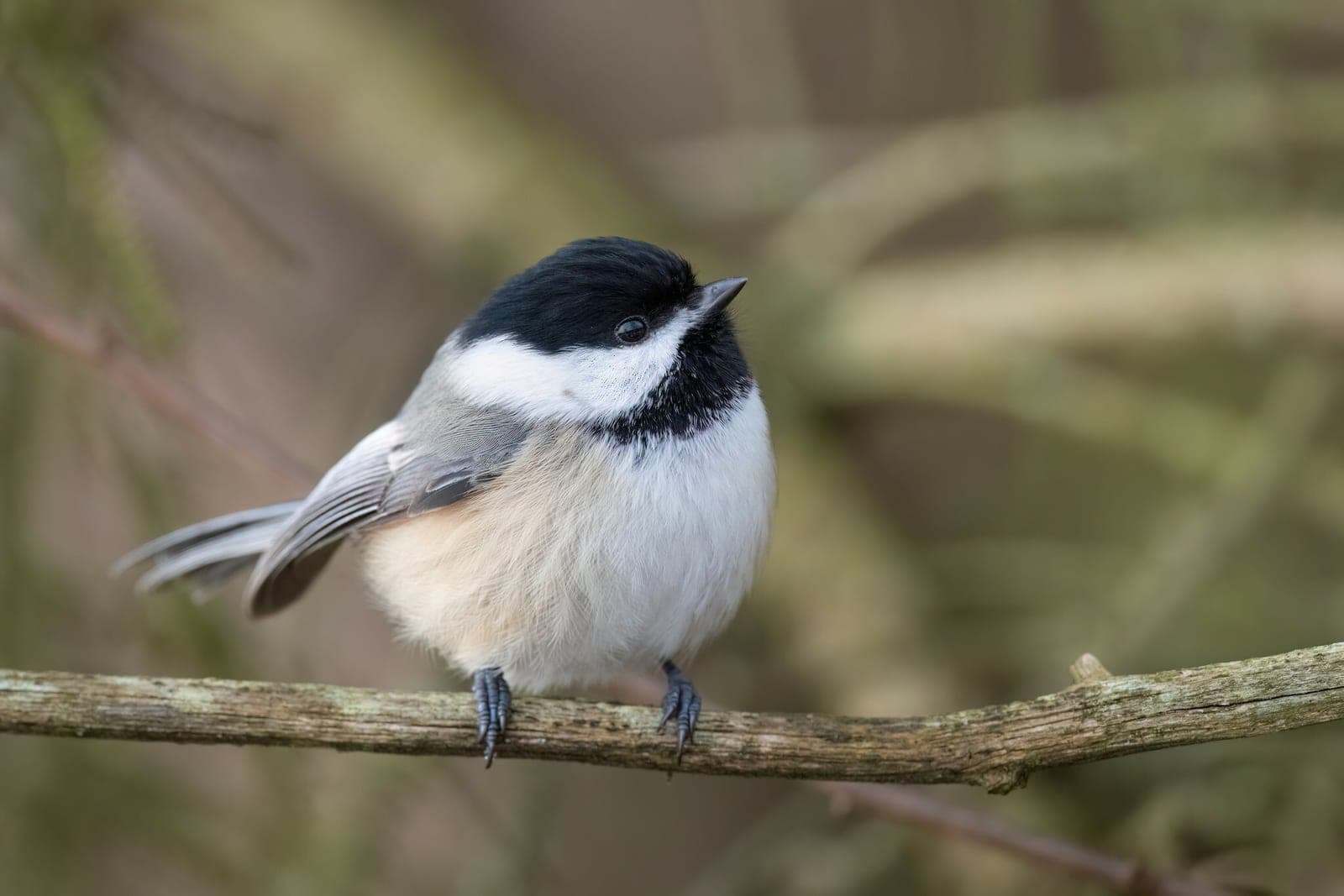
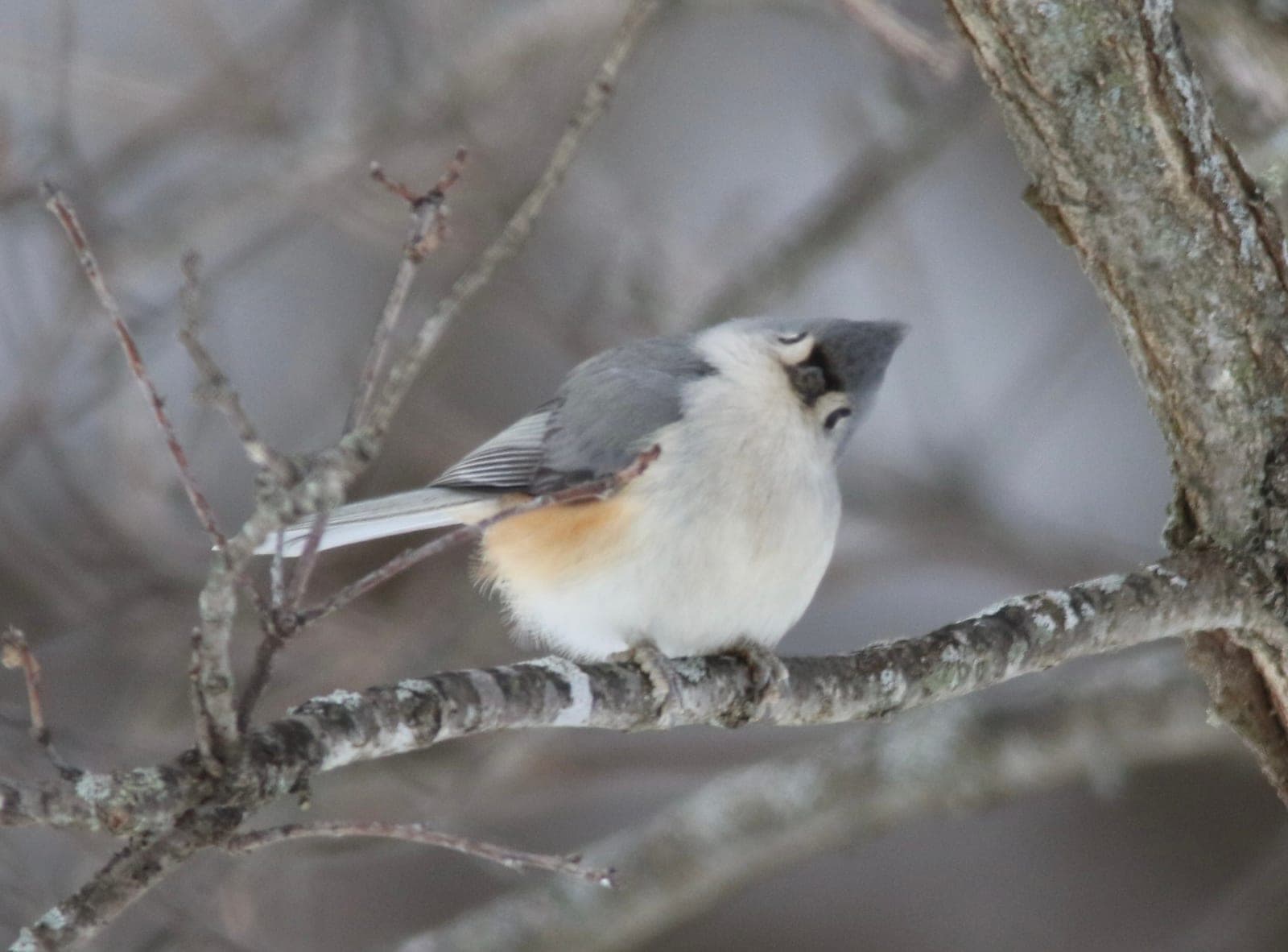
Quick answer
Check the head: a chickadee has a solid black cap and black bib with white cheeks and no crest, while a titmouse has a pointed gray crest, a small black patch above the bill, big black eyes and no bib.
Black-capped Chickadees and Tufted Titmice are cousins in the same family, both small, gray and bold, and both regulars at winter feeders. Across the northeastern and midwestern United States they travel together in the same mixed flocks, so new bird-watchers often see them side by side. The head pattern tells them apart instantly.
Key differences
| Trait | Black-capped Chickadee | Tufted Titmouse |
|---|---|---|
| Crest | None; round head | Pointed gray crest |
| Head pattern | Black cap and bib, white cheeks | Gray head, black forehead, pale face, no bib |
| Size | About 5–6 in, 9–14 g | About 5.5–6.3 in, 18–26 g |
| Flanks | Buffy wash | Rusty-peach wash |
| Song | Two-note whistle, 'fee-bee' | Repeated whistle, 'peter-peter-peter' |
| Range | Alaska, Canada and the northern U.S. | Eastern U.S., Gulf Coast to southern Canada |
| Nest hole | Digs its own in soft, rotting wood | Cannot dig; uses existing cavities |
| Nest box entrance | 1 1/8 in | 1 1/4 in |
Where their ranges overlap
Black-capped Chickadees are northern birds, found from Alaska across Canada and through the northern half of the lower 48 states. Tufted Titmice are eastern birds, found from the Gulf Coast north to the southern Great Lakes and New England. They overlap across a broad band from the central Plains through the Midwest to the Northeast. Titmice have been moving north for decades, so the shared zone keeps growing. Farther south, the chickadee you see is usually a Carolina Chickadee instead.
Same family, same flock
Chickadees and titmice both belong to the family Paridae and share many habits: they hang upside down to glean insects, carry one seed at a time from a feeder, hammer seeds open with the bill, and store food for later. In winter they form the core of mixed flocks that also include nuthatches, kinglets and small woodpeckers. Both species are quick to sound the alarm at owls, hawks and cats, and other birds pay attention to their scolding.
Feeders and nest boxes
Both come readily to black-oil sunflower seed, peanuts and suet, and both like tube, hopper and suet feeders near trees or shrubs where they can dash for cover. For nesting, chickadees can excavate their own hole in rotten wood but also use boxes with a 1 1/8-inch hole, while titmice depend on old woodpecker holes, natural cavities or boxes with a 1 1/4-inch hole, and line their nests with hair.
By the numbers
The traits the daily bird game compares for each.
| Clue | Black-capped Chickadee | Tufted Titmouse |
|---|---|---|
| Group | Chickadees & titmice | Chickadees & titmice |
| Colors | Gray, Black, White | Gray, White |
| Habitat | Backyards | Backyards |
| Region | Northern | Eastern |
| Length | 5 in | 6 in |
| Wingspan | 7 in | 9 in |
| Diet | Insects | Insects |
FAQ
Are titmice and chickadees related?
Yes. Both are in the tit family, Paridae, along with the European tits. They share similar calls, foraging styles and food-storing habits.
Which is bigger, a chickadee or a titmouse?
The titmouse. It is only slightly longer, but at roughly 18 to 26 grams it weighs about twice as much as a 9- to 14-gram Black-capped Chickadee.
Do chickadees and titmice flock together?
Yes. Outside the nesting season they often travel in the same mixed flocks, along with nuthatches, kinglets and woodpeckers, and visit feeders together.
Why don't I see titmice where I live?
Tufted Titmice live mainly in the eastern United States and are only now spreading into northern New England and southern Canada. Across the West and the far North, chickadees are common but titmice are absent.
Could you tell them apart from a few clues? Test yourself in today's puzzle.
Play the daily bird game