How to identify a tufted titmouse
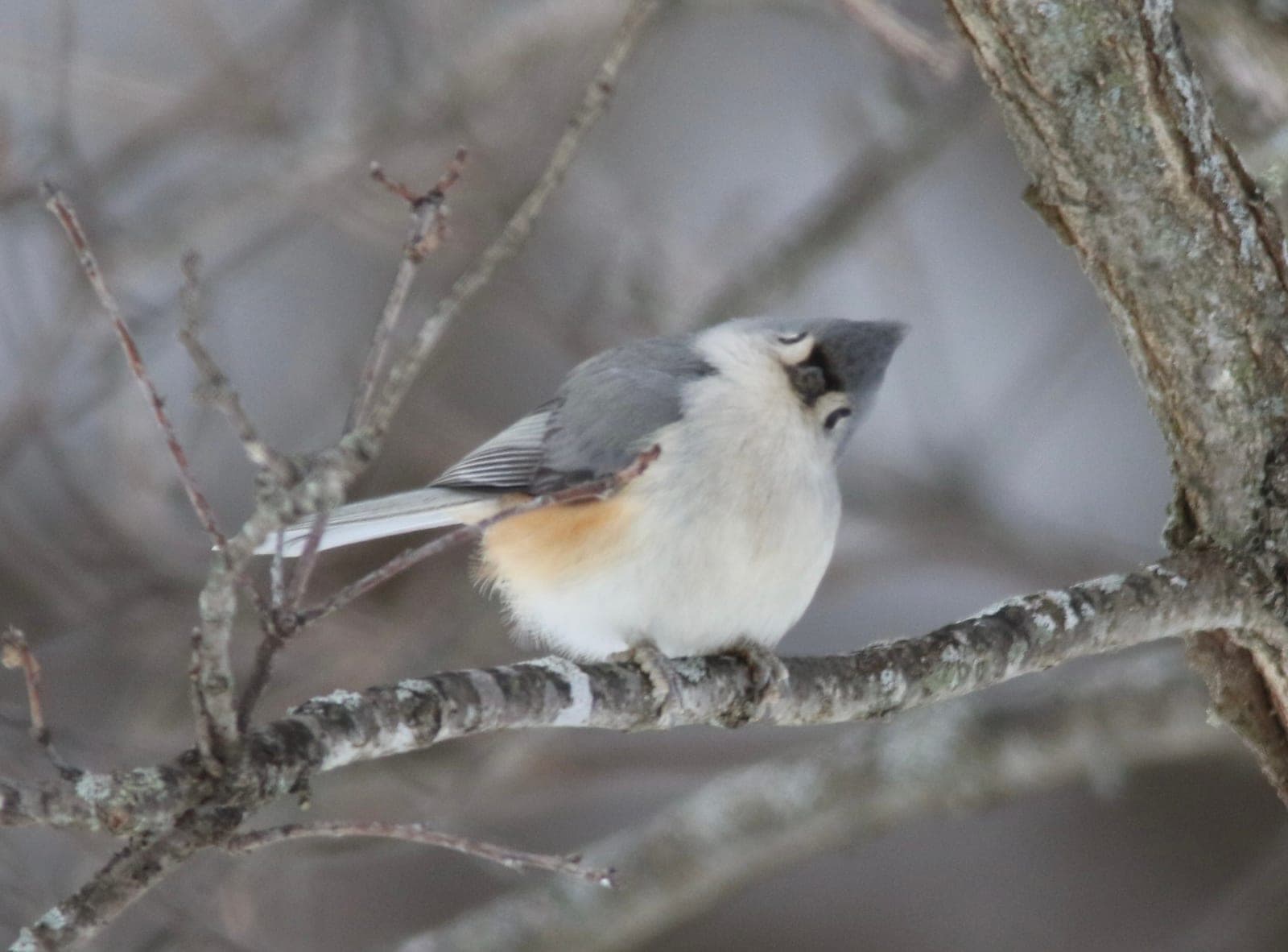
A titmouse is a little bigger than a chickadee, soft gray above and pale whitish below, with a peach or rusty wash along the flanks. The pointed gray crest is the giveaway; it can be raised high or flattened. A small black patch sits on the forehead just above the short, stout bill, and the large black eyes stand out in a plain pale face. Males and females look alike. Titmice move like chickadees, hopping through branches, hanging upside down, and carrying a single seed from a feeder to a branch, where they hold it with their feet and hammer it open.
- Pointed gray crest
- Small black patch on the forehead above the bill
- Large black eye in a plain, pale face
- Gray upperparts with rusty-peach flanks
- Loud whistled 'peter-peter-peter' song
Look-alikes
Black-crested Titmouse
The Black-crested Titmouse of central and southern Texas has a black crest and a pale forehead, the reverse of the Tufted's gray crest and black forehead. It was treated as a subspecies until 2002, and the two hybridize in a narrow band through Texas and Oklahoma.
Black-capped Chickadee
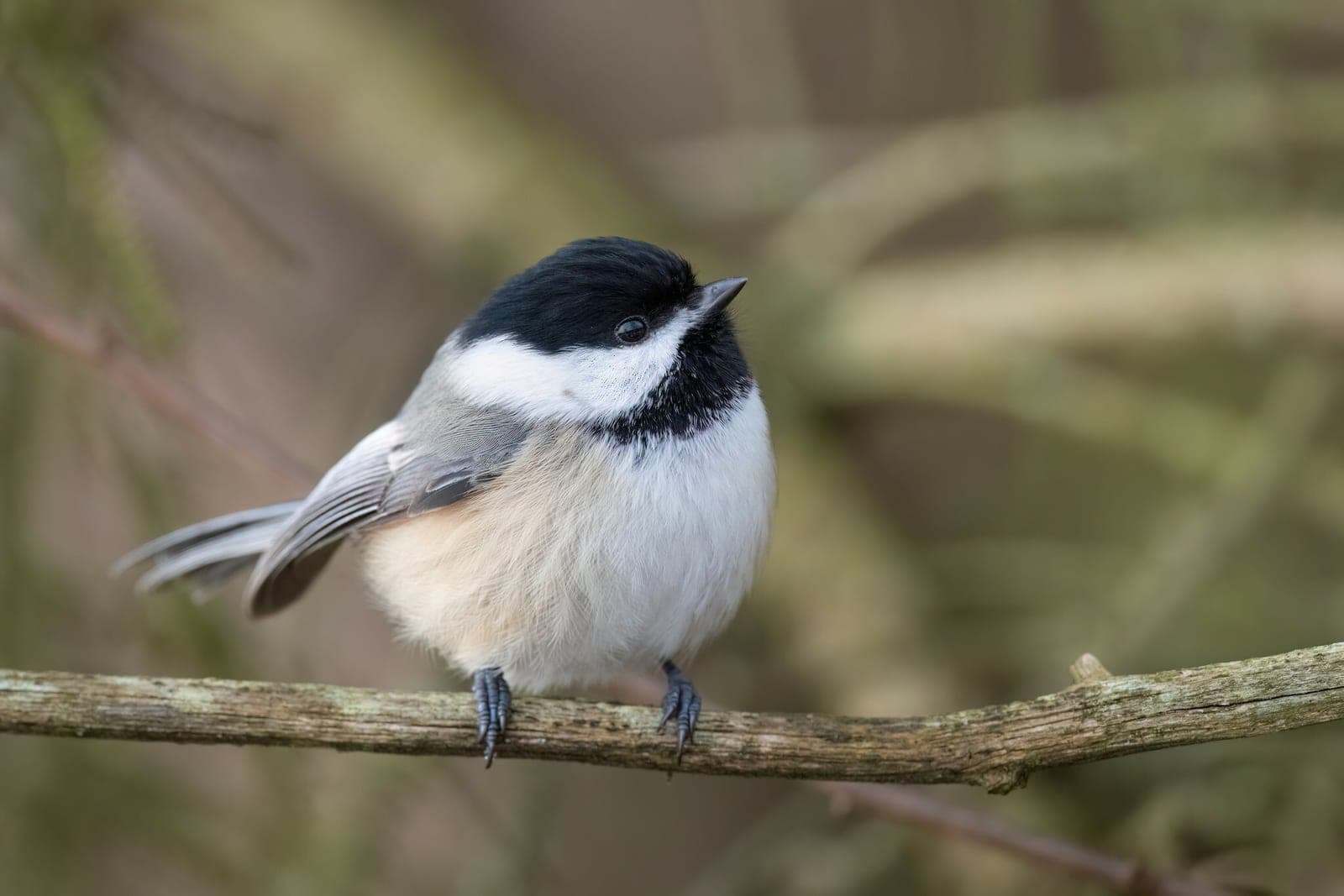
Chickadees have no crest and wear a solid black cap and black bib with white cheeks. The two often travel together in winter flocks, so compare them side by side.
Full comparison →Oak Titmouse
The Oak Titmouse of California oak woodland is plain gray-brown all over with no black forehead and no rusty flanks. Its range never overlaps the Tufted Titmouse.
Range & habitat
Tufted Titmice live year-round across the eastern United States, from the Gulf Coast and Florida north to the southern Great Lakes, southern Ontario and New England, and west to the eastern edge of the Great Plains in Nebraska, Kansas, Oklahoma and central Texas. Originally centered on the Ohio and Mississippi valleys, they have pushed steadily north since the mid-1900s into Maine, southern Quebec and Ontario, helped by maturing forests, milder winters and backyard feeders.
Titmice are birds of deciduous and mixed forest with tall trees, especially oak and beech woods, and of river bottoms and swampy woods in the South. They adapt well to people: shaded suburbs, parks, orchards and rural yards with mature trees often hold a pair, especially where feeders and nest cavities are available.
Through the seasons
Spring
Winter flocks break up in late winter and pairs settle on nesting territories. Males sing 'peter-peter' loudly from treetops, and nesting birds search for hair and fur to line the nest.
Summer
Caterpillars dominate the diet as adults feed young in tree cavities. Fledglings follow their parents for weeks, and some young stay on to help raise the next year's brood.
Fall
Titmice store seeds and nuts in bark crevices, usually close to the source. Young birds disperse, sometimes heading north, which is one way the range keeps expanding.
Winter
Pairs join small mixed flocks with chickadees, nuthatches, kinglets and Downy Woodpeckers. They are among the most regular feeder visitors and the first to scold an owl or a cat.
How to find and attract Tufted Titmice
Listen for the clear 'peter-peter-peter' whistle, which carries far through the woods, and for a harsh, chickadee-like scold. In winter, find a flock of chickadees and there is usually a titmouse with them.
- Offer black-oil sunflower seed, peanuts and suet; titmice grab one item per trip and carry it off.
- Use tube, hopper or platform feeders placed near trees or shrubs for quick cover.
- Put up a nest box with a 1 1/4-inch entrance hole on a tree or post in a wooded yard.
- Leave old trees with woodpecker holes standing; titmice cannot dig their own cavities.
- Plant native oaks, beeches and berry shrubs, which supply both caterpillars and winter food.
Diet & life cycle
What it eats
Insects make up close to two-thirds of a titmouse's yearly diet. In summer it eats mostly caterpillars, along with wasps, bees, beetles, true bugs, scale insects, insect eggs and pupae, spiders and snails. In fall and winter it adds acorns, beechnuts, seeds and berries. At feeders titmice prefer sunflower seeds, taking one per visit and hiding many of them close to the feeder for later.
Life cycle
Pairs may stay together all year. Titmice cannot excavate, so they nest in natural tree cavities, old woodpecker holes or nest boxes. The nest is a cup of grass, moss, leaves and bark strips lined with soft hair, which the birds sometimes pluck straight from living animals such as woodchucks, dogs and even people. The female lays about five or six eggs and incubates them for 12 to 14 days while the male feeds her. The young leave the nest at 15 to 16 days, and a one-year-old offspring sometimes helps its parents raise the next brood.
Oldest on record
The oldest Tufted Titmouse in the USGS Bird Banding Laboratory's longevity table was banded in Virginia in April 1962 and recovered there after an injury in September 1974, at least 12 years 5 months old.
SourceAttracting & watching
Titmice are easy to attract in the East. Black-oil sunflower seed and peanuts are favorites, suet works well in cold weather, and they visit birdbaths year-round. A nest box with a 1 1/4-inch hole, put up by late winter, may draw a nesting pair. Mature trees, especially oaks, matter most: they supply the caterpillars titmice need to raise young.
Conservation
Least Concern (IUCN). Tufted Titmice are common, with about 12 million birds, and Breeding Bird Survey data show increases between 1966 and 2019 as the range expanded north. Feeders, a warming climate and farmland returning to forest are thought to have helped. They are protected under the Migratory Bird Treaty Act.