How to identify a american white pelican
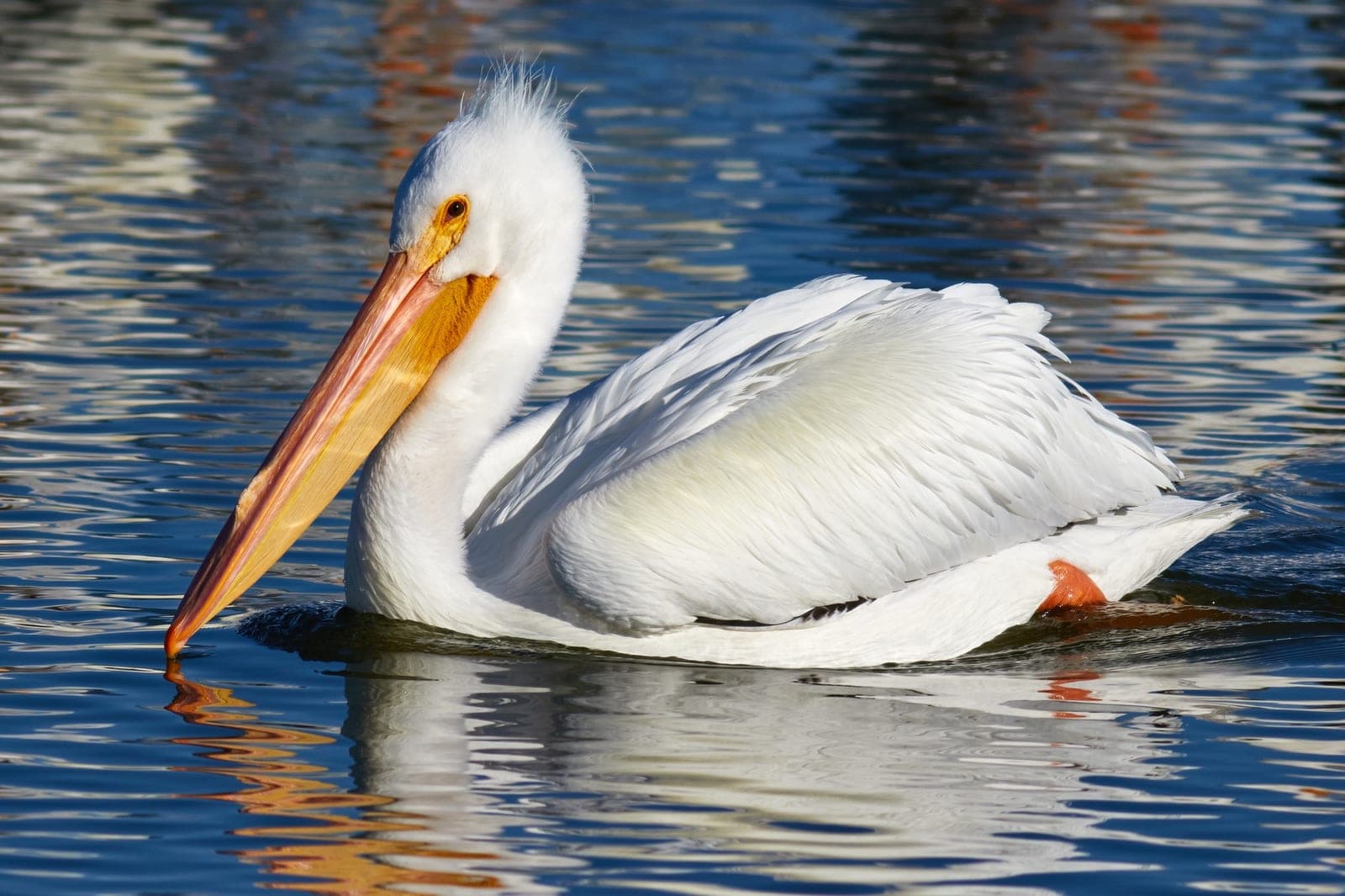
White pelicans are huge, white birds with a massive orange-yellow bill and pouch, short orange legs and black flight feathers that show as a broad black rear edge on the outer wing in flight; at rest the black is mostly hidden. In breeding season adults grow a flat, upright plate, the 'horn', on top of the upper bill, the only pelican in the world to do so, and shed it later in the nesting season. Juveniles have grayish heads and duller bills. White pelicans fly with the head drawn back and the bill resting on the chest, and flocks soar high in tight formations, turning in unison so the black-and-white wings flicker on and off. They are usually silent away from colonies.
- Huge white body with black flight feathers
- Bright orange-yellow bill and pouch
- Upright 'horn' on the bill in breeding season
- Swims and scoops fish; never dives from the air
- Soars in big, synchronized flocks
Look-alikes
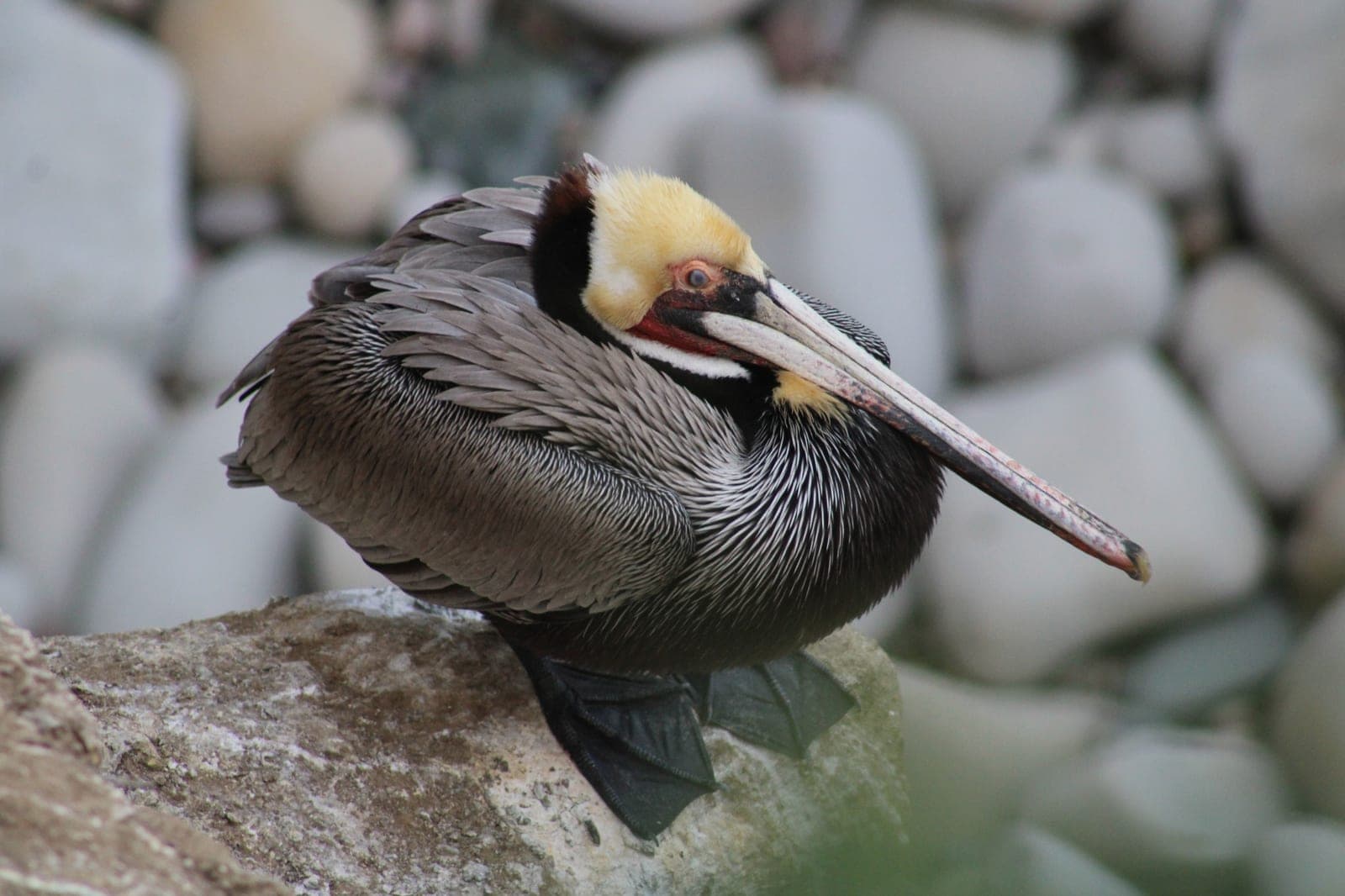
Brown Pelican
Brown pelicans are smaller, gray-brown with a dark belly, live on salt water, and catch fish by plunging headfirst from the air.
Full comparison →Whooping Crane
Endangered, and also white with black wingtips, but slim, with a long neck stretched forward and long legs trailing in flight. A pelican shows a stubby tail, short legs and a massive bill tucked against the chest.
Wood Stork
A southern wading bird, white with black flight feathers, but with a bare, dark gray head, a thick down-curved bill and long legs trailing in flight.
Snow Goose
Far smaller, flying in noisy V's and lines, with black only on the wingtips and a short pink bill. Snow geese feed in fields and marshes, not by scooping fish.
Range & habitat
American white pelicans nest at relatively few colonies scattered across the interior: the Canadian prairies, which hold about 40 percent of the population with Manitoba alone holding half of that, the northern Great Plains, the Great Basin, and a few sites west to northern California, with a resident population on the Texas coast. Major U.S. colonies include Chase Lake National Wildlife Refuge in North Dakota, Gunnison Island in Utah's Great Salt Lake and Anaho Island in Nevada's Pyramid Lake; the northernmost is on the Slave River rapids at the Alberta–Northwest Territories line. They winter from central California, the Gulf Coast and Florida south through Mexico to Central America.
White pelicans need shallow lakes, marshes, rivers and reservoirs rich in fish for feeding, and isolated islands free of ground predators for nesting; the two can be many miles apart, a gap the birds cover by soaring. In migration they stop on large reservoirs, river backwaters and below dams. In winter they use shallow coastal bays, estuaries and lagoons, and large lakes in warm climates.
Through the seasons
Spring
Flocks return north in April and May, often spiraling high on warm afternoon thermals. Adults wear their bill horns and settle into dense colonies on bare islands, where pairs lay eggs by late spring.
Summer
Eggs hatch after about a month, and the older chick usually outcompetes its sibling. At three to four weeks, chicks leave the nest and crowd together while adults commute to feeding lakes, often fishing by night in this season.
Fall
Pelicans leave northern colonies by September or October and migrate by day in big soaring flocks, stopping on reservoirs, rivers and wetlands across the Plains and the Mississippi Valley.
Winter
They winter along the Gulf Coast, in Florida, in central and southern California, and through Mexico to Central America, often feeding cooperatively in shallow bays. Some nonbreeders stay on the wintering grounds all summer, especially in Florida.
How to find and watch American white pelicans
White pelicans are easy to spot and hard to forget. The best shows come in spring and fall migration, when big flocks soar overhead, and on calm mornings when groups feed together in the shallows.
- Scan the sky on warm spring and fall afternoons for spirals of white birds flashing black wing edges as they turn.
- Check reservoir flats, river backwaters and the water below dams in migration, where flocks loaf on sandbars.
- Watch feeding groups line up or form a horseshoe, drive fish toward shore, and then dip their bills in unison.
- Use a spotting scope at refuges with colonies, such as Chase Lake in North Dakota; nesting islands are off-limits, and at Nevada's Anaho Island boats must stay at least 1,000 feet away.
- In winter, look over shallow coastal bays from Texas to Florida and on lakes and wetlands in central California.
- Keep well away from loafing and nesting flocks; pelicans flush easily, and every flight costs them energy.
Diet & life cycle
What it eats
White pelicans eat mostly fish, often rough fish of little interest to anglers such as carp, suckers and minnows, but also larger fish up to a few pounds, plus crayfish and salamanders. Each bird needs more than 4 pounds of food a day. They swim and scoop fish from the surface rather than diving, and groups of a dozen or more often work together, lining up to push fish into shallow water. They also steal from other birds.
Life cycle
White pelicans nest in colonies that can hold thousands of pairs, on flat, bare islands, laying in a shallow scrape or a low mound of earth and debris. The female usually lays 2 eggs, and both parents incubate for about a month. The first chick hatches ahead of the second and usually wins the competition for food, so most nests raise just one young. Chicks leave the nest at three to four weeks and gather in groups, fly at about 9 to 10 weeks, and are fed for several more weeks before migrating south in September or October.
Oldest on record
The oldest American white pelican in the USGS Bird Banding Laboratory's longevity table was at least 27 years 1 month old. It was banded as a chick in Minnesota in June 1994 and recovered, injured, in Iowa in July 2021.
SourceAttracting & watching
White pelicans never visit yards, but they are easy to watch at wildlife refuges, big reservoirs and river dams across the Plains and the Midwest in migration, on prairie lakes in summer, and on southern coastal bays in winter. Refuge auto tours and observation decks give the best views without disturbing the birds. Colonies are very sensitive: a single person or boat landing can flush the adults and leave eggs and small chicks to gulls, heat and cold, which is why nesting islands are closed or buffered.
Conservation
Least Concern (IUCN). White pelicans declined in the late 1800s and early 1900s; in North Dakota, sport shooting had cut the Chase Lake colony to a remnant before the area became a refuge in 1908. Pesticides added to the losses by mid-century, but numbers increased substantially from the 1970s on. Because the species depends on a limited number of colonies, fewer than 50 in North America by one mid-2000s count, drought, flooding and disturbance can wipe out a season's young. At Utah's Great Salt Lake, falling water levels exposed Gunnison Island to predators by land, and the pelicans abandoned it in 2023 before returning in 2024. California lists the American white pelican as a species of special concern.