Fish · Side by side
Walleye vs Sauger
How to tell them apart
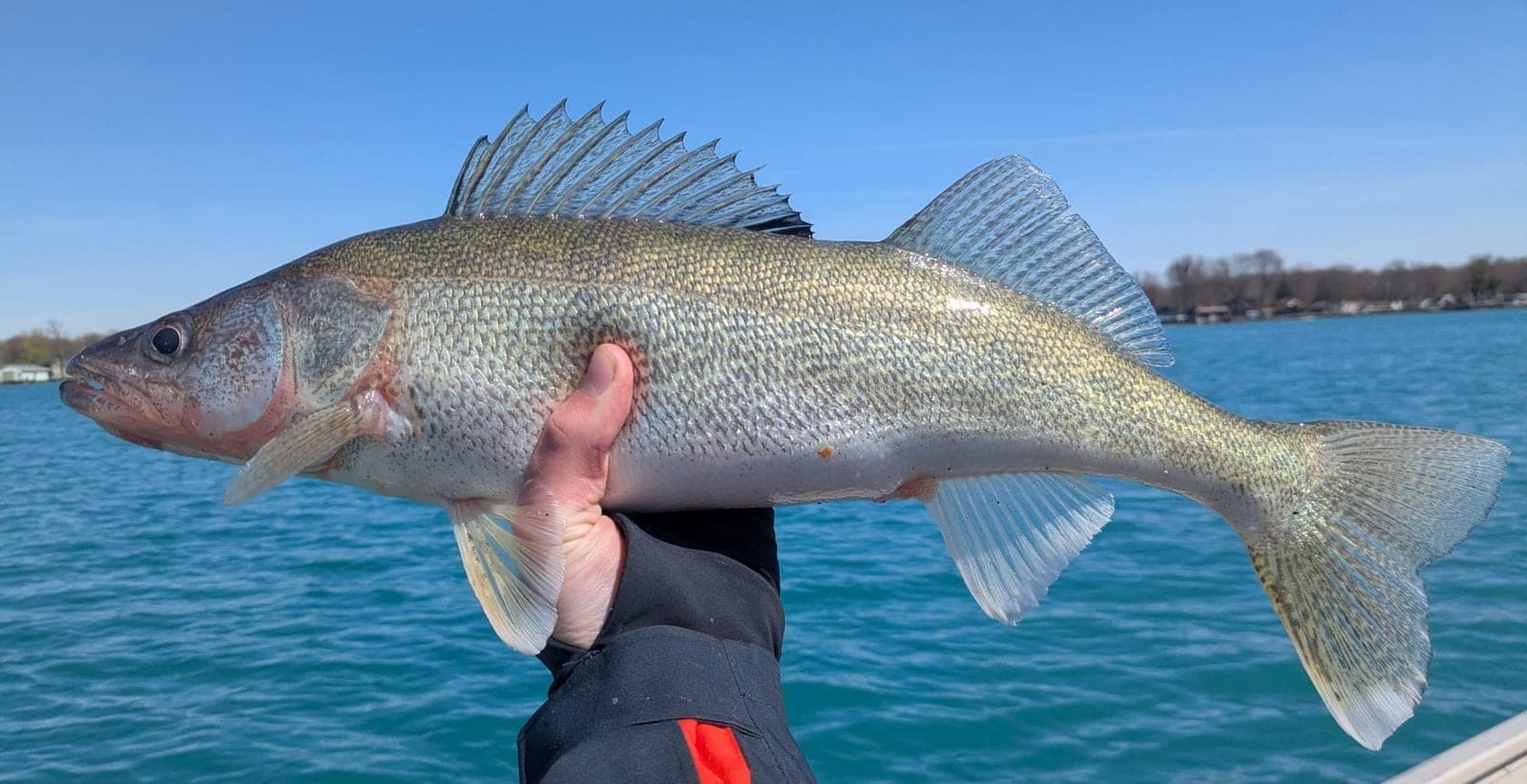
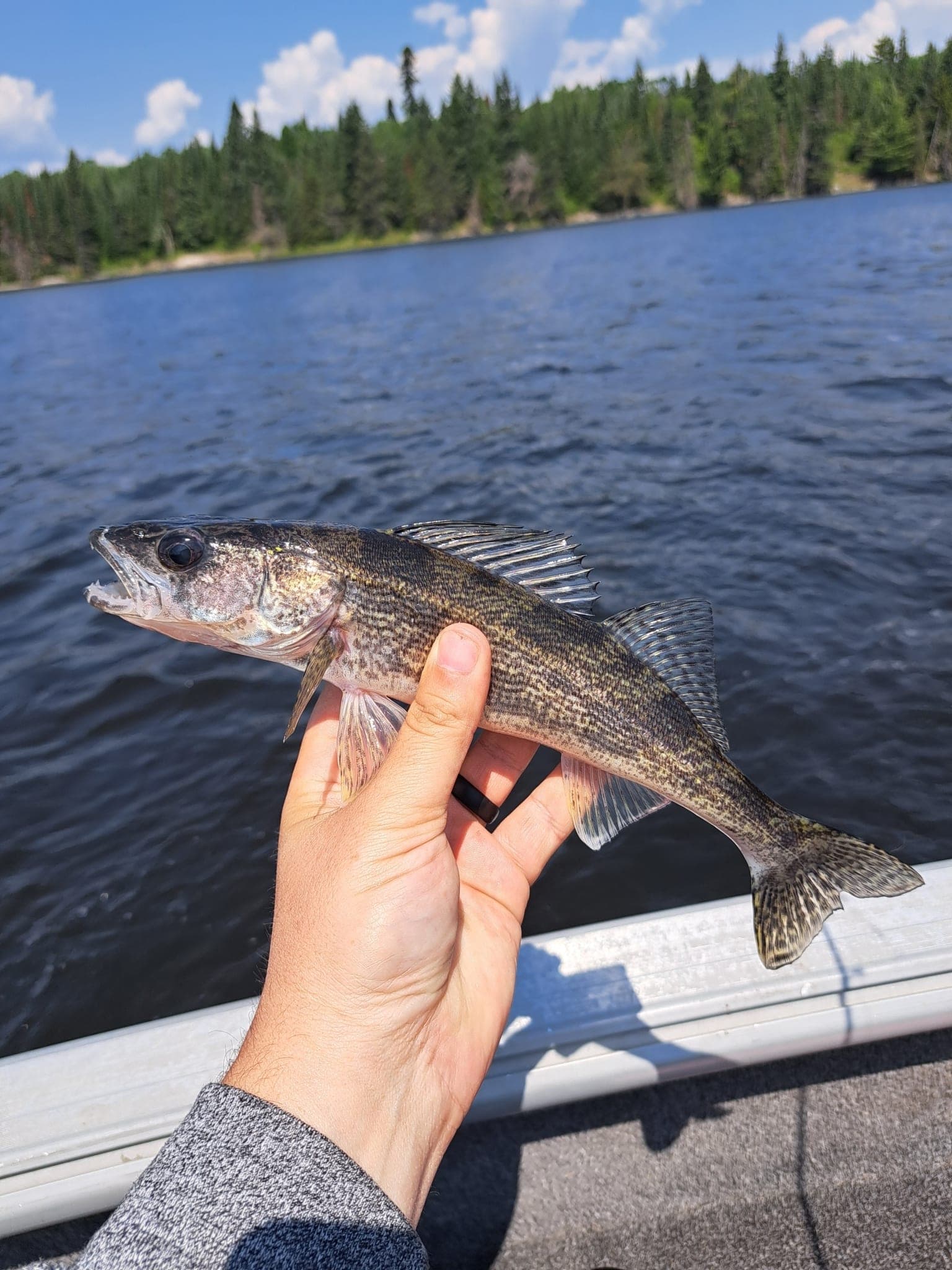
Quick answer
Look at the first dorsal fin and the tail: a sauger has rows of distinct black spots on its spiny dorsal and no white tip on the tail, while a walleye has a dark blotch at the back of that fin and a white tip on the lower tail lobe.
Walleye and sauger are close cousins in the perch family, share the same glassy eyes and toothy mouth, and often swim in the same rivers. Anglers mix them up all the time, and the difference matters: many states and provinces set separate limits for each, and some count them together. Here is how to tell them apart in seconds.
Key differences
| Trait | Walleye | Sauger |
|---|---|---|
| Spiny dorsal fin | No distinct spots; a dark blotch at the rear base | Rows of distinct black spots |
| Tail fin | White tip on the lower lobe | No white tip |
| Body pattern | Olive-gold with faint saddles | Brassy with bold, blotchy dark saddles |
| Cheek | Smooth or nearly scaleless | Rough, covered in scales |
| Typical size | 1–3 lb; trophies over 10 lb | 1–2 lb; rarely over 5 lb |
| Favorite water | Clear to stained lakes and large rivers | Turbid, fast-flowing big rivers |
Where you will find each
Both are native to the northern half of the continent, but they split the water differently. Walleye are the lake specialists, common in large natural lakes and reservoirs across Canada and the northern United States. Sauger are river fish: they tolerate muddier, faster water than walleye and are most common in big systems like the Mississippi, Missouri, Ohio and Tennessee rivers. Where both live, sauger usually hold deeper and in stronger current.
Saugeye: when it looks like both
Walleye and sauger interbreed naturally, and fisheries agencies also raise the hybrid, called saugeye, because it grows fast and handles warm, murky reservoirs. A saugeye usually shows spots on the dorsal fin like a sauger with a faint white tip on the tail like a walleye. If a fish seems to be both, it probably is. Many regulations treat saugeye with walleye and sauger, so check before you keep one.
Which is better to catch and eat?
Walleye get the fame because they grow bigger, but sauger fight hard in current and are often easier to find in big rivers during the cold months. On the table they are nearly impossible to tell apart: both have mild, sweet, flaky white fillets, and many anglers rate sauger every bit as good as walleye.
By the numbers
The traits the daily fish game compares for each.
| Clue | Walleye | Sauger |
|---|---|---|
| Family | Perch family | Perch family |
| Water | Freshwater | Freshwater |
| Region | Northern lakes & rivers | Northern lakes & rivers |
| Body shape | Long & slender | Long & slender |
| Max length | 42 in | 30 in |
| Max weight | 25 lb | 9 lb |
| Diet | Carnivore | Carnivore |
FAQ
Can walleye and sauger breed?
Yes. They hybridize naturally where their ranges overlap, and the cross, called a saugeye, is also raised and stocked by many fisheries agencies.
Is a sauger a baby walleye?
No. Sauger are a separate species that stays smaller than walleye. Even a small walleye has the white-tipped tail and unspotted dorsal fin that a sauger never has.
Do sauger taste like walleye?
Very much so. Both have mild, flaky white meat, and most people cannot tell them apart in a fish fry.
Could you tell them apart from a few clues? Test yourself in today's puzzle.
Play the daily fish game