How to identify a yellow warbler
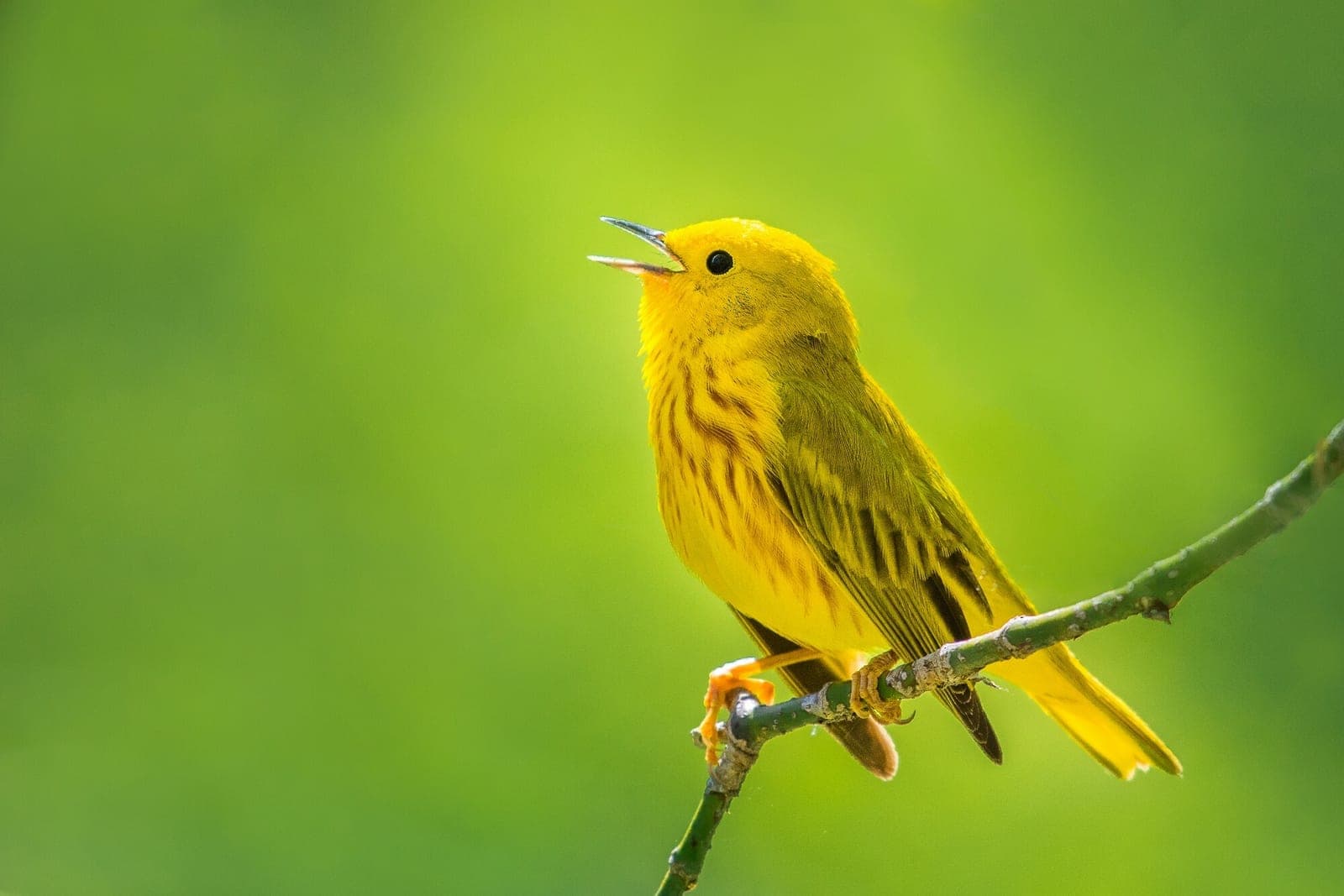
This is the yellowest warbler in most places it lives. Adult males are bright golden-yellow below and greenish-yellow above, with rusty-red streaks on the breast and sides. The face is plain yellow, so the dark eye stands out like a bead, and the dark wing feathers are edged in yellow. Females are a softer yellow with faint streaks or none, and some young females in fall are very dull, almost grayish-olive. One mark settles most doubts: Yellow Warblers have yellow spots in the tail, where nearly every other warbler has white ones. They forage actively through shrubs and small trees, and males sing from exposed twigs through much of the day.
- Yellow from head to tail, with no wing bars or face pattern
- Rusty-red breast streaks on adult males
- Plain yellow face that makes the black eye stand out
- Yellow, not white, spots in the tail
- Bright song: 'sweet-sweet-sweet, I'm so sweet'
Look-alikes
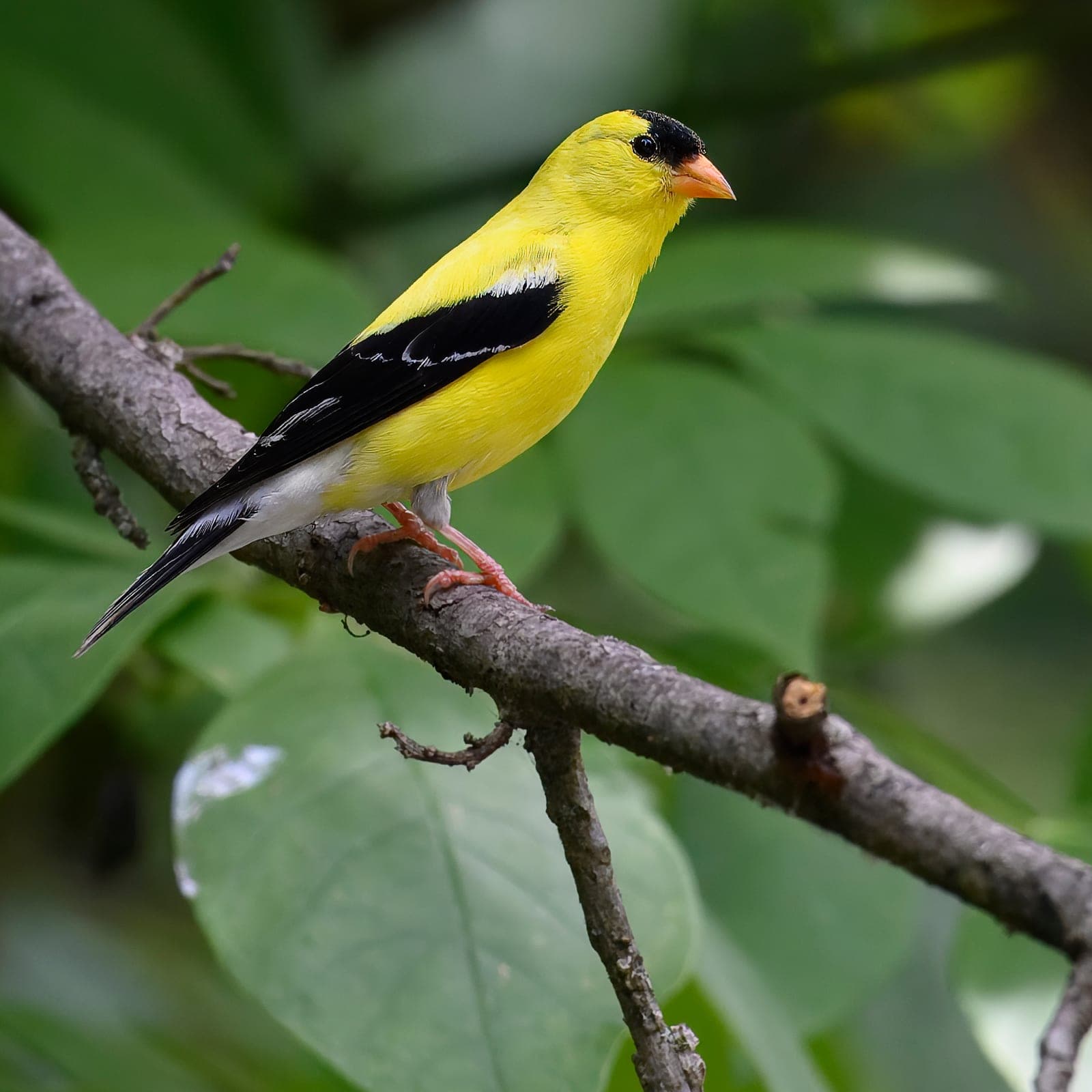
American Goldfinch
Goldfinches have a short, conical, pinkish seed-eating bill, black wings with white bars and, on summer males, a black cap. They fly in deep, bouncing loops and come to seed feeders, which Yellow Warblers do not.
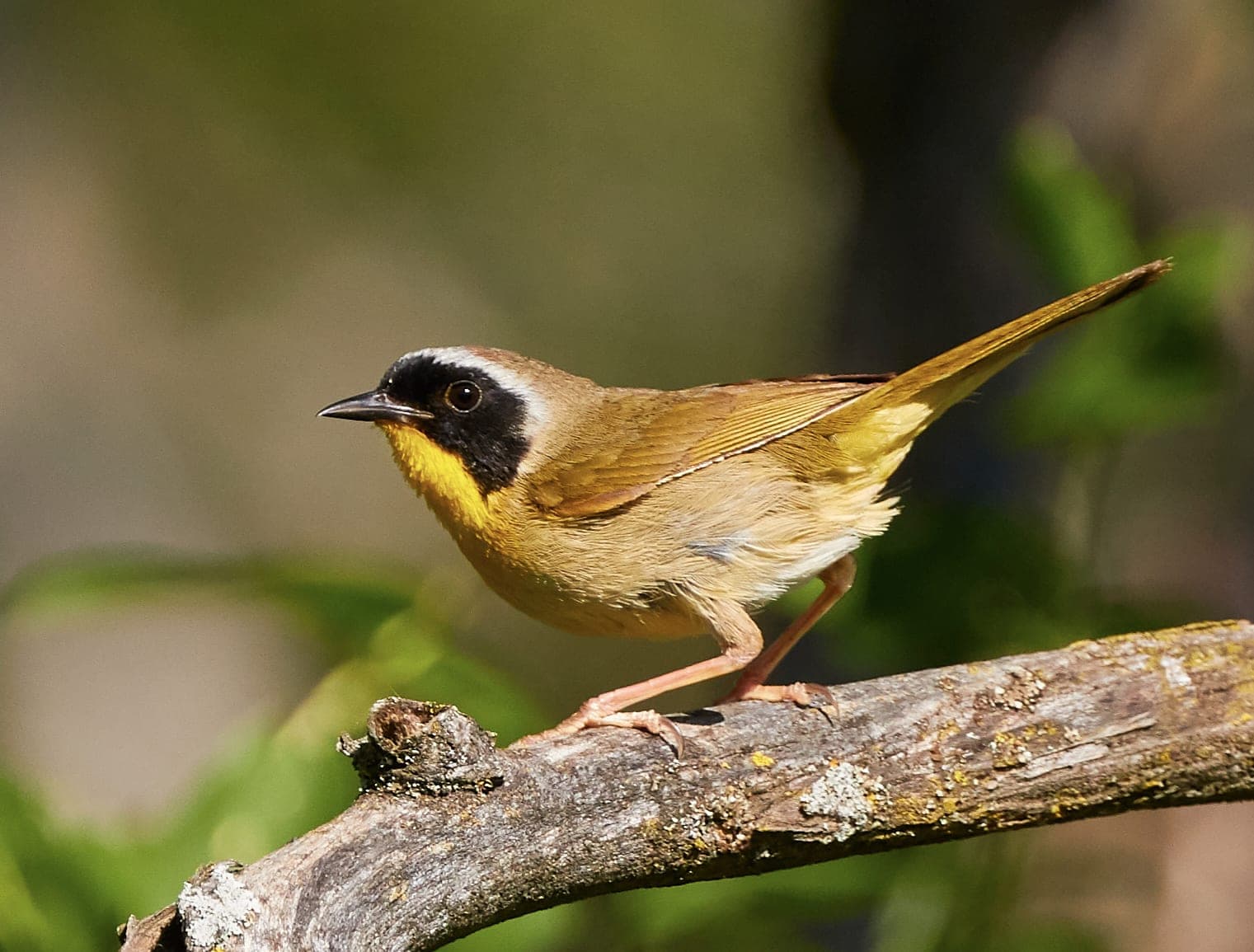
Full comparison →Common Yellowthroat
A female yellowthroat has a yellow throat but brownish-olive sides, a whitish belly and no yellow tail spots, and she skulks low in marsh grass. A Yellow Warbler is yellow all the way down to the undertail.
Wilson's Warbler
Male Wilson's Warblers wear a neat black cap, and both sexes have a plain, dark tail with no spots that they flick about. Yellow Warblers never show a cap and have yellow tail spots.
Mangrove Warbler
The tropical, non-migratory relative found in U.S. mangroves only in the Florida Keys and extreme southern Texas. Males of the Texas birds have dark rufous heads, and Mangroves have shorter, rounder wings; away from mangroves, any Yellow Warbler is a Northern.
Range & habitat
Yellow Warblers breed from Alaska and northern Canada, some close to the Arctic Circle, south through most of the United States into Mexico. They are absent as breeders from much of the Gulf Coast and the hot deserts of the far Southwest. In fall nearly all of them leave, wintering from Mexico and Central America to northern South America as far as the Amazon basin, Peru and Bolivia, with a few in southern California.
Yellow Warblers live in wet, shrubby places: willow and alder thickets along streams, lakeshores, beaver ponds and marsh edges. In the East they also use second-growth woods, overgrown fields, orchards, roadside thickets and suburban yards with shrubs, but in the arid West they stick closely to streamside growth. On their wintering grounds they use semi-open country, woodland edges, gardens and towns.
Through the seasons
Spring
Yellow Warblers arrive in late April and May, migrating mostly at night. Males sing almost nonstop to claim territories, often thousands of songs a day, which makes this the easiest time to find them.
Summer
Pairs nest low in shrubs, and many fight off cowbirds by building a fresh floor over the intruder's eggs. Nesting wraps up quickly, and some birds start south in July.
Fall
Fall migration is very early: many leave in August, and most are gone from the northern states and Canada by September. Dull young birds in shrubs at this season can look surprisingly plain.
Winter
Nearly all Yellow Warblers winter in the tropics, from Mexico to northern South America, where each bird often defends a small feeding territory. A few winter in southern California and south Florida.
How to find and attract Yellow Warblers
Yellow Warblers eat insects and rarely visit feeders, so habitat is everything. Find water with shrubs around it in May or June and listen for the song; to bring them home, grow the wet-ground shrubs they nest in.
- Walk willow and alder thickets along creeks, ponds and marsh edges on May and June mornings.
- Learn the song, a fast, bright 'sweet-sweet-sweet, sweeter-than-sweet,' and follow it to the singer.
- Plant native willows, alders and other moisture-loving shrubs along a pond, ditch or wet corner.
- Skip insecticides: caterpillars can make up two-thirds of their diet.
- Look early in the year; by late August most have already left the North.
- Check the tail on any small yellow bird: yellow tail spots mean Yellow Warbler.
Diet & life cycle
What it eats
Yellow Warblers are insect-eaters. Caterpillars of many kinds can make up two-thirds of what they eat, and they also take mayflies, moths, mosquitoes, beetles, damselflies, treehoppers and spiders. They pick prey from twigs and leaves, hover briefly under foliage and dart out after flying insects, with males feeding higher than females. They eat a few berries, mainly on the wintering grounds.
Life cycle
Males court females by chasing them for one to four days. The female builds a compact cup of weed stalks, shredded bark and grass, lined with plant down or fur, in an upright fork of a shrub or small tree, usually low but sometimes up to 60 feet. She lays four or five greenish-white, speckled eggs and incubates them for 11 to 12 days while the male brings her food. The young leave the nest 9 to 12 days after hatching. Brown-headed Cowbirds lay in many nests, and Yellow Warblers often answer by burying the cowbird egg under a new nest floor; one persistent pair built six layers.
Oldest on record
The oldest Yellow Warbler in the USGS Bird Banding Laboratory longevity table was a male at least 11 years and 11 months old. He was banded in Ontario in May 2013 and recaptured and released there in May 2024. The table still lists the species as Setophaga petechia.
SourceAttracting & watching
Yellow Warblers do not eat seed, so the best way to attract them is a shrubby, insect-rich yard near water: willows, alders and dense native shrubs, with no insecticides. A birdbath or pond edge helps. To watch them, visit streamside thickets and marsh edges in May and June, when males sing from open perches. They are protected under the Migratory Bird Treaty Act.
Conservation
Least Concern (IUCN). With about 97 million birds, the Yellow Warbler is one of North America's most numerous warblers, and its taste for second growth and edges makes it less vulnerable to habitat loss than forest warblers. Still, the Breeding Bird Survey shows a slow decline of about 0.4 percent a year, roughly 20 percent between 1966 and 2019. The IUCN Red List still assesses it under the older, combined species name, Setophaga petechia.