How to identify a american goldfinch
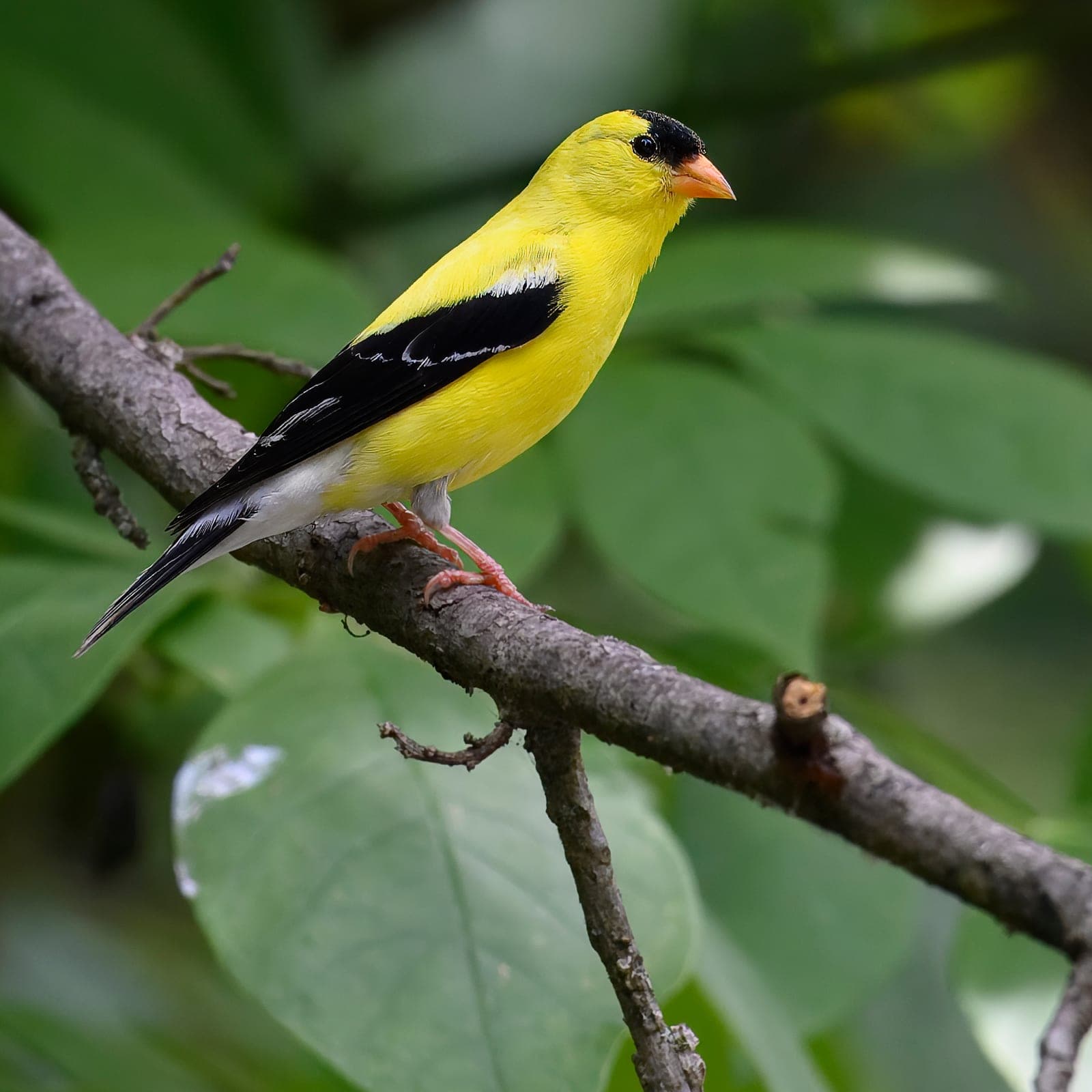
A breeding male is hard to mistake: a brilliant yellow body, a neat black forehead patch, black wings with white bars, a black notched tail and white feathers above and below the base of the tail. Breeding females are olive above and duller yellow below, with no black on the head. After the fall molt both sexes turn a plain olive-brown or buffy gray, with only a wash of yellow on the face and throat, but the black-and-white wings stay the same all year and give them away. The short, cone-shaped bill is pinkish or gray in winter and turns orange in spring. In flight, goldfinches bound along in deep, roller-coaster dips and call on each rise.
- Black wings with crisp white or buff wing bars in every plumage
- Short conical bill that turns orange in the breeding season
- Breeding male: bright yellow body with a black forehead only
- White undertail and no streaks anywhere on the body
- Bouncing flight with a 'po-ta-to-chip' call on each rise
Look-alikes
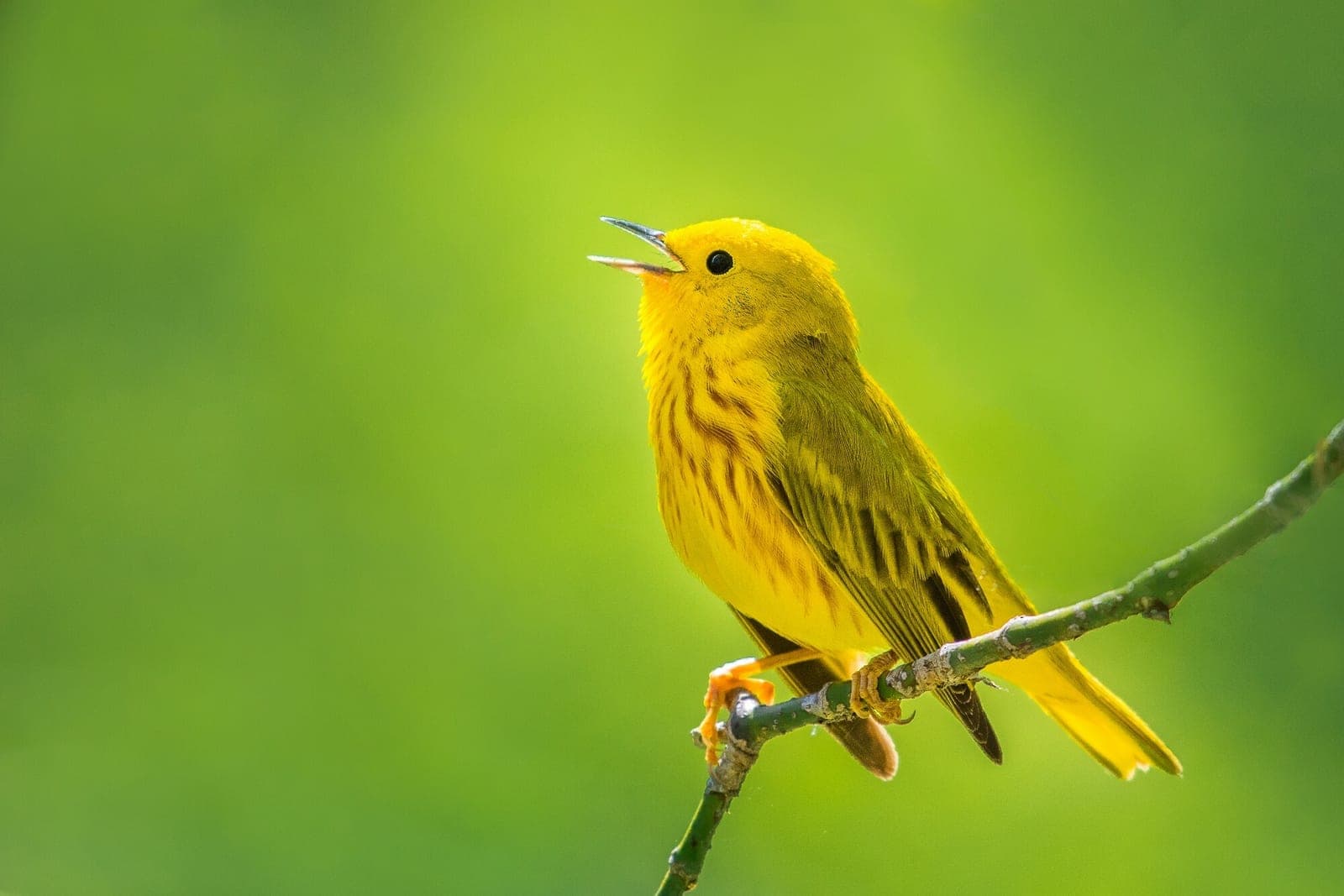
Yellow Warbler
Yellow Warblers are yellow from head to tail, including yellow edges on the wings, with a thin, pointed insect-eating bill and no black cap. Males have reddish streaks on the breast. They never come to seed feeders and leave for the tropics by early fall.
Full comparison →Lesser Goldfinch
In the West and Southwest, the smaller Lesser Goldfinch has a dark green or black back and a yellow undertail, and males have a black cap covering the whole crown. A male American Goldfinch has a yellow back, a black forehead only and a white undertail.
Pine Siskin
Siskins often feed with winter goldfinches, but they are brown and heavily streaked all over, with a thinner, sharper bill and yellow flashes in the wings and tail. Winter goldfinches are plain and unstreaked.
Range & habitat
American goldfinches nest across southern Canada and the northern and central United States, and down the Pacific Coast into California. Across much of the Midwest, the mid-Atlantic and the central states they can be seen all year, although the January birds at a feeder are often migrants from farther north. In winter the population shifts south, and goldfinches become common across the southern states, the Gulf Coast and the Southwest, reaching into northern Mexico. How far north they stay depends on the year's seed crop and weather.
Goldfinches are birds of open, weedy country rather than deep woods: old fields, roadsides, floodplains, orchards, woodland edges, farm hedgerows and suburbs with gardens. What they need is plenty of seed-bearing plants, especially thistles, sunflowers, asters, coneflowers and dandelions, plus scattered shrubs or small trees to nest in. In winter, flocks roam weedy fields, birch and alder stands and backyards with feeders.
Through the seasons
Spring
From March into May goldfinches replace almost all their body feathers, and males turn from drab olive to bright yellow, often looking blotchy and half-finished at the feeder. Bills turn orange, winter flocks start to break up, and males begin their long, twittering songs.
Summer
Goldfinches are among the last songbirds to nest. Pairs wait until thistles and other plants are producing seed and down, so most eggs are laid from mid-July into August. Males sing in a looping display flight, and females weave cups so tight they can hold water.
Fall
Late broods fledge into September, and adults molt into winter plumage in September and October. Flocks gather on sunflower, coneflower and goldenrod seedheads, and northern birds drift south, mostly by day.
Winter
Olive-brown goldfinches travel in flocks, sometimes dozens strong, and many people do not recognize them as the same bird. They are among the most common feeder visitors across the central and southern states, especially at nyjer and sunflower feeders.
How to find and attract American goldfinches
Goldfinches go where the seeds are, so the surest way to see them is to find, or grow, a weedy patch full of seedheads. Listen for the flight call, a bouncy 'po-ta-to-chip', as small flocks pass overhead in their dipping flight.
- Offer nyjer (sold as 'thistle' seed) or hulled sunflower chips in a tube or mesh feeder; goldfinches cling easily to small ports.
- Plant native seed plants such as purple coneflower, black-eyed Susan, sunflowers, asters and native thistles, and leave the seedheads standing into winter.
- Keep nyjer fresh and dry, since goldfinches skip stale or moldy seed and wet seed can rot inside a tube feeder within days.
- In late July and August, watch fields and roadsides for females carrying thistle or cattail down: they are building nests.
- Put out a shallow birdbath; finches living on dry seed drink often.
- Keep feeding through the cold months: in much of the country goldfinches stay all winter, just in their drab olive plumage.
Diet & life cycle
What it eats
Goldfinches are among the strictest vegetarians of any North American songbird. They eat the seeds of plants in the daisy family above all, including thistle, sunflower, dandelion, aster and ragweed, along with grass seeds and the tiny seeds of birch, alder and elm. They also take buds, maple sap and a few insects in summer. Even the nestlings are raised on regurgitated seed, which is one reason Brown-headed Cowbird chicks rarely survive when a cowbird lays its egg in a goldfinch nest.
Life cycle
Courtship starts in early summer. The female spends about a week building a compact cup of plant fibers bound with spider silk and lined with thistle or cattail down, usually in the fork of a shrub or small tree. She lays four to six pale bluish eggs and incubates them alone for about 12 to 14 days while the male brings her food. Both parents feed the chicks, which leave the nest about 11 to 17 days after hatching; the male often does most of the feeding near the end. Most pairs raise one brood, but some females leave the first family to the male and start a second nest with a new mate.
Oldest on record
The oldest American goldfinch in the USGS Bird Banding Laboratory longevity table was a male at least 10 years and 11 months old. He was banded as an adult in Maryland in February 2004 and recaptured and released there in May 2013.
SourceAttracting & watching
Nyjer and hulled sunflower chips are the two foods goldfinches want, served in tube, mesh or sock feeders with small openings that keep larger birds off; black-oil sunflower in a hopper works too. Native seed plants do even more: a bed of coneflowers, sunflowers and asters left uncut through winter can feed a flock for months. Goldfinches do not use nest boxes. Dense shrubs and small trees near a weedy field are where they nest.
Conservation
Least Concern (IUCN). Goldfinches are widespread and common, with a breeding population Partners in Flight puts at about 44 million. The North American Breeding Bird Survey nevertheless shows a slow decline of about 0.6 percent a year from 1966 to 2019, roughly a quarter of the population over that span. Like all native songbirds, they are protected under the Migratory Bird Treaty Act, so trapping or caging them is illegal.