How to identify a common yellowthroat
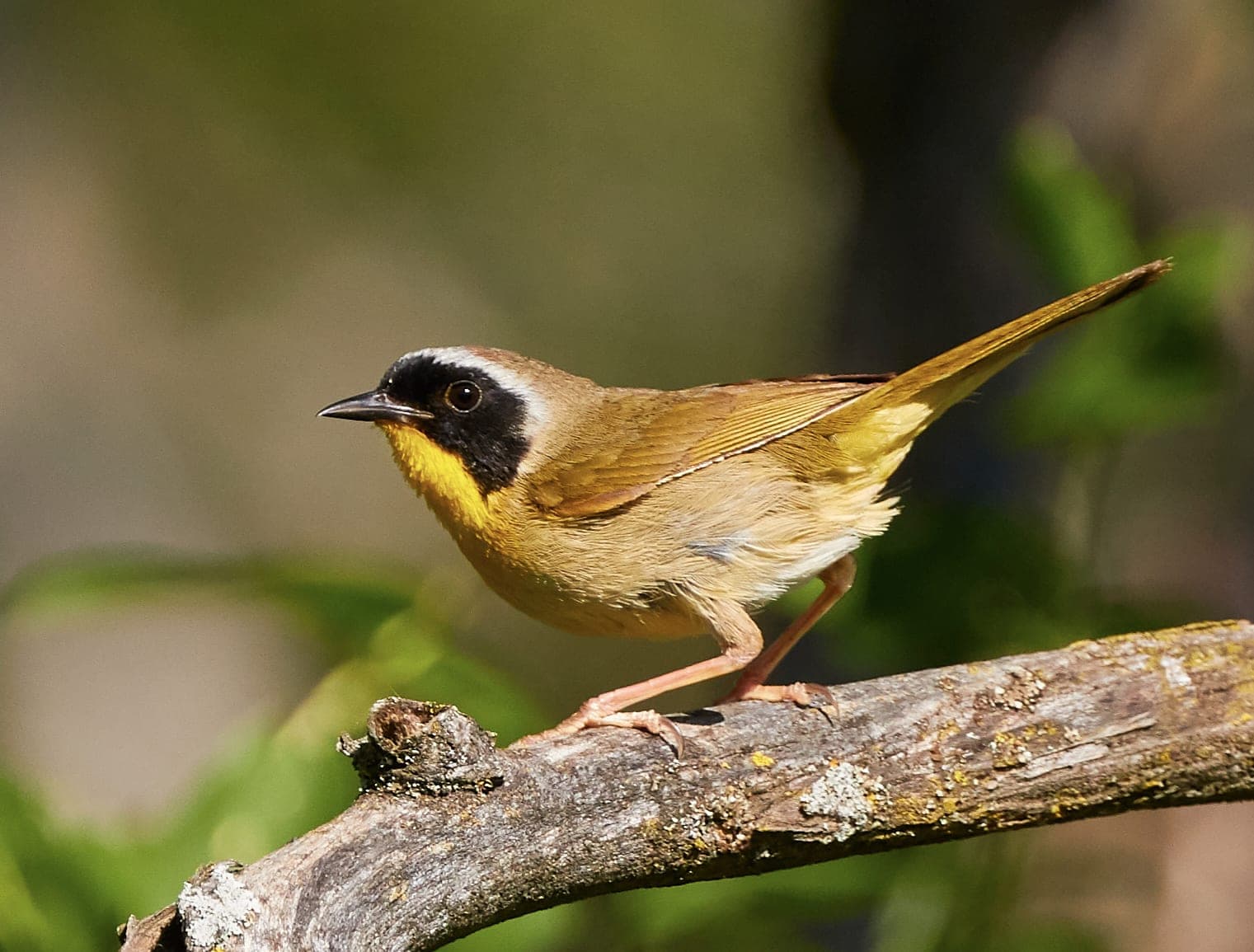
Common Yellowthroats are small, round-bodied warblers with olive-brown upperparts, a bright yellow throat and breast and a paler, whitish belly with brownish flanks. The adult male wears a broad black mask across the forehead, eyes and cheeks, bordered above by a pale gray or whitish band. Females have no mask: they are plainer olive-brown with a yellow throat that contrasts with a darker face, often with a faint pale eyering. First-fall males show a shadowy partial mask that darkens by spring. Yellowthroats skulk in low, dense growth, often cocking the tail, and their call is a low, rough 'tchep' that is easy to learn. Brightness varies by region, and southwestern birds are the yellowest below.
- Male: black bandit mask with a pale band above it
- Bright yellow throat and breast, whitish belly
- Olive-brown back, wings and tail with no wing bars
- Female: no mask, yellow throat set off from a darker face
- Loud 'witchety-witchety' song from marsh or thicket
Look-alikes
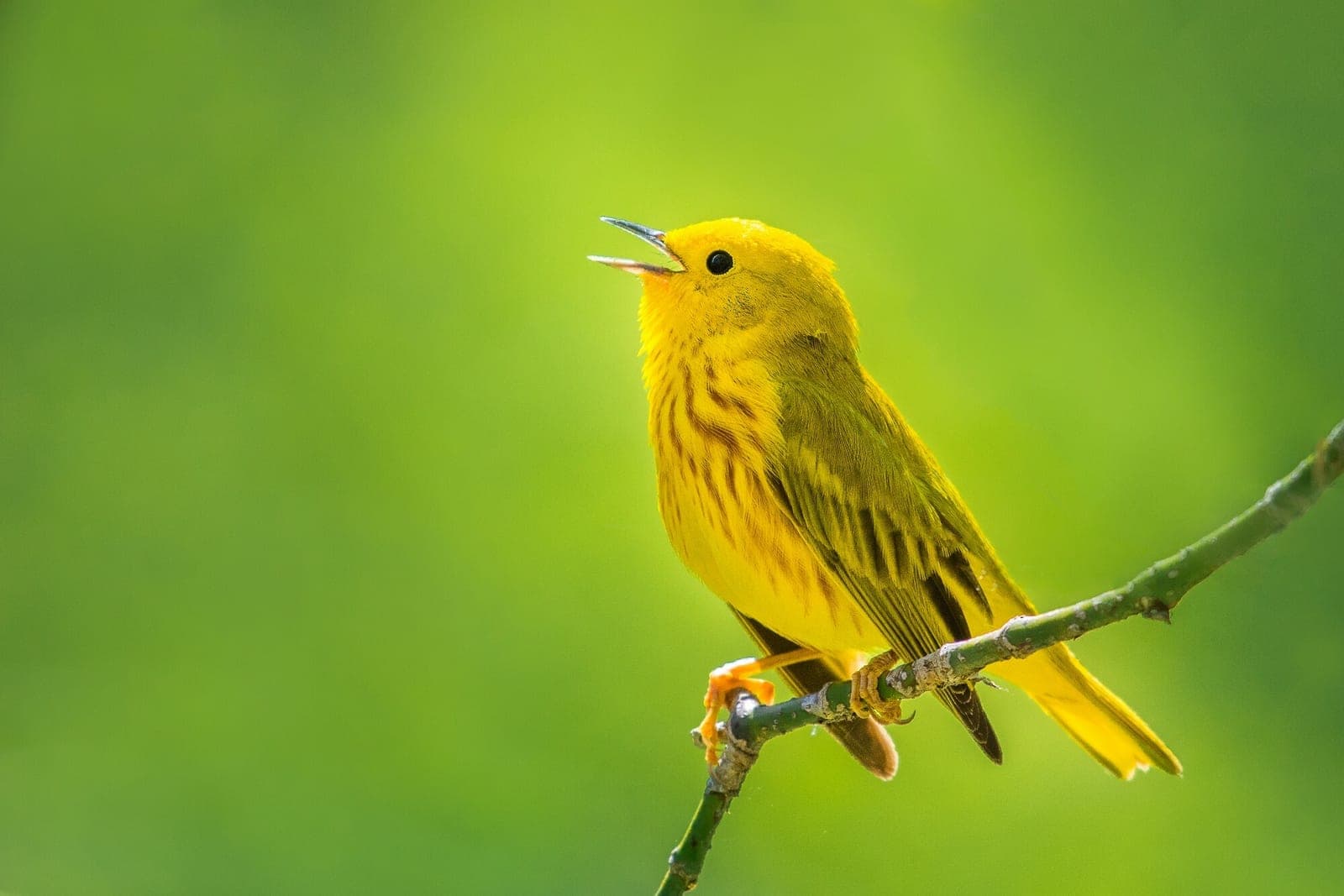
Yellow Warbler
Yellow Warblers are yellow all the way from throat to undertail, have yellow tail spots and a plain yellow face, and usually forage higher in shrubs. A female yellowthroat has a whitish belly, brownish sides and a darker face around the yellow throat.
Kentucky Warbler
Kentuckies have black 'sideburns' below the eye but yellow spectacles around it, and they are yellow from throat to tail. They live on the floor of shady eastern forests, not in marshes.
Nashville Warbler
Nashvilles have a gray head with a bold white eyering and are yellow from the throat to under the tail. Female yellowthroats have an olive-brown head, whitish belly and brownish flanks.
Range & habitat
Common Yellowthroats breed from southern Canada across nearly all of the lower 48 states and south into central Mexico. Northern birds migrate at night and winter in the southern United States, Mexico, Central America and the West Indies, while southern populations stay year-round. Migration in both spring and fall is spread over a long period, and the species turns up in almost any brushy spot along the way.
Yellowthroats breed most abundantly in marshes and other wet places with dense, low growth: cattails, bulrushes, sedges, wet thickets along streams and weedy edges of ponds. They also nest in briar tangles, overgrown fields and moist brushy clearings, but are scarce in dry habitats. They are the only North American warbler that commonly nests in open marshes. In migration and winter they still favor marshes but use any thick, brushy cover.
Through the seasons
Spring
Migrants arrive through April and May, males a few days ahead of females, and the witchety song suddenly fills marshes and wet fields. Migration is drawn out, so new birds keep passing through for weeks.
Summer
Males sing from cattail tops and shrubs and perform short flight displays. Pairs often raise two broods, and cowbirds frequently parasitize their nests. Young stay dependent on their parents longer than most warblers.
Fall
Yellowthroats slip south through late summer and fall, often lingering in weedy fields and marsh edges. Young males with half-formed masks and plain females make fall birds trickier to identify.
Winter
Wintering birds stay low in marshes and thickets of the southern states, Mexico, Central America and the Caribbean, where their rough 'tchep' call is often the only clue.
How to find and attract Common Yellowthroats
You will usually hear a yellowthroat before you see one. Visit the edge of a marsh or a wet, weedy field on a spring or summer morning, stand still near thick cover and listen for the song or the scolding call.
- Walk boardwalks and dike trails through cattail marshes from May through July, early in the morning.
- Learn the 'witchety-witchety-witchety' song and the low, rough 'tchep' call note.
- Wait quietly beside dense cover; the rough call note often reveals a bird hidden in the reeds.
- Watch for a male fluttering up and singing in flight, then dropping back into cover.
- On your own land, leave a wet corner, ditch edge or brushy patch unmowed through summer.
- Protect wetlands and skip insecticides; yellowthroats eat insects and do not visit seed feeders.
Diet & life cycle
What it eats
Common Yellowthroats eat almost nothing but insects and spiders, gleaned from leaves and stems low in dense vegetation. Their prey includes small grasshoppers, dragonflies, damselflies, mayflies, beetles, caterpillars, moths, flies, ants, aphids and leafhoppers. They sometimes hover to pick insects off foliage, make short flights after flying insects or feed on the ground, and they eat a few seeds.
Life cycle
Males court with wing- and tail-flicking and a flight display, rising 25 to 100 feet while calling and singing, then dropping to a new perch. Females appear to prefer males with larger masks. The female builds a bulky cup of grass, sedges, dead leaves and bark, sometimes with a partial roof, usually less than three feet up in a grass tussock, cattails or a low shrub. She lays three to five creamy eggs spotted with brown and black, sometimes six, and incubates them for about 12 days while the male brings her food. Both parents feed the young, which leave the nest after 8 to 10 days. Two broods a year are normal.
Oldest on record
The oldest Common Yellowthroat in the USGS Bird Banding Laboratory longevity table was a male at least 11 years and 10 months old. He was banded in Virginia in May 2007 as a second-year bird and recaptured and released there in April 2018.
SourceAttracting & watching
Yellowthroats never come to seed feeders. The way to bring them close is habitat: a wet, weedy corner, a cattail-edged pond or a brushy fence line left unmowed through the nesting season. To watch them, walk marsh boardwalks and wet meadow edges from May to July, when males sing from exposed stalks. They are protected under the Migratory Bird Treaty Act.
Conservation
Least Concern (IUCN). With about 77 million birds, the Common Yellowthroat is still abundant, but draining of marshes has cut its numbers in many regions. The Breeding Bird Survey shows a decline of about 0.6 percent a year, roughly 26 percent between 1966 and 2019. Protecting wetlands and wet thickets is the key to keeping it common.