How to identify a brown thrasher
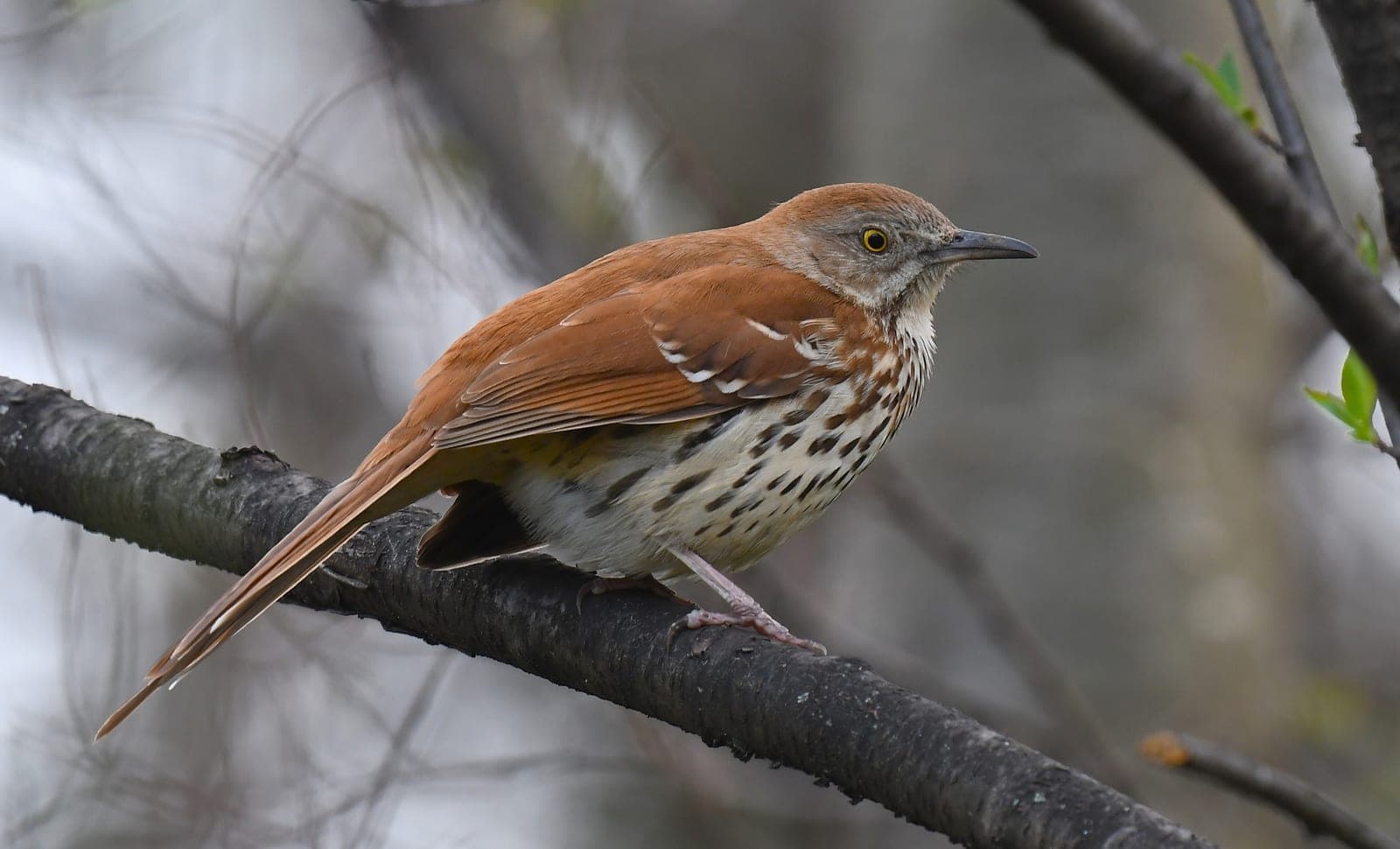
Brown thrashers are bright rufous-brown above, with two whitish wing bars edged in black, and buffy-white below with bold dark streaks running in lines down the breast and flanks. The eyes are a striking yellow, the bill is long, dark and slightly down-curved, and the tail is long, rufous and often swept or flicked. Males and females look alike. A thrasher is longer than a robin but slimmer, and it spends much of its time on the ground under shrubs, tossing dead leaves aside with its bill.
- Rich rufous upperparts with two whitish wing bars
- Heavy dark streaks, not round spots, on a pale breast
- Yellow eyes and a long, slightly curved bill
- Very long rufous tail
- Song phrases usually sung in pairs
Look-alikes
Wood Thrush
Wood Thrushes share the reddish-brown back but are plumper and shorter-tailed, with round black spots instead of streaks on a white breast, dark eyes, a short straight bill and no wing bars.
Long-billed Thrasher
In south Texas, the Long-billed Thrasher has a grayer face, a longer and more curved black bill, orange eyes, black streaks on whiter underparts and a duller brown back.
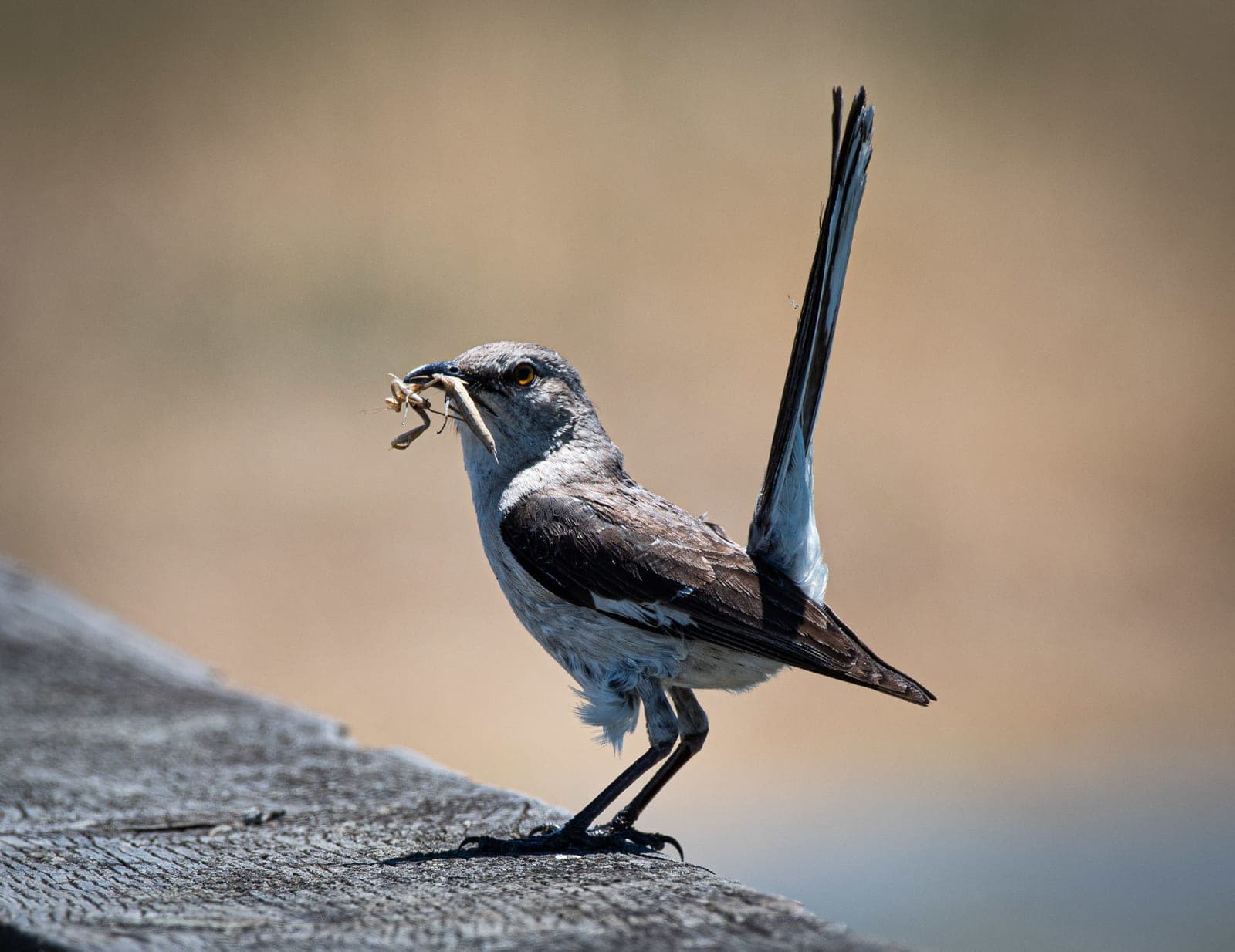
Northern Mockingbird
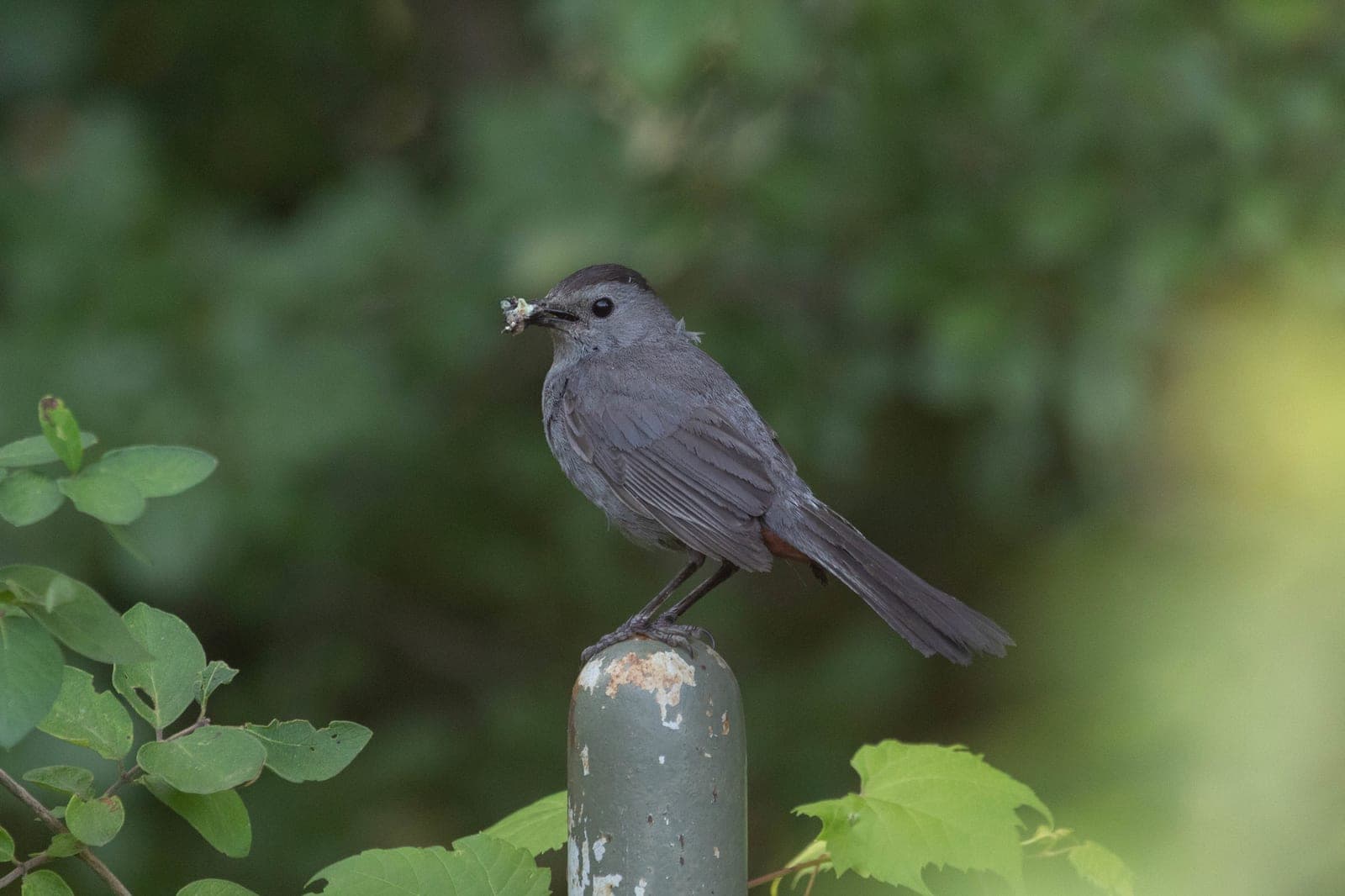
Mockingbirds are gray, not rufous, with flashy white wing patches and an unstreaked breast. By ear, mockingbirds repeat a phrase three or more times, thrashers usually twice and catbirds once.
Range & habitat
Brown thrashers breed across the eastern and central United States and southern Canada, from the Atlantic Coast west across the Great Plains to the edge of the Rockies and the prairie provinces, and south to the Gulf Coast and eastern Texas. Birds in the southern states stay year-round, while most northern breeders move to the Southeast for the winter. Strays turn up well west of the Rockies, mainly in fall and winter.
Thrashers live in dense, low growth: thickets on the edges of deciduous or mixed woods, hedgerows, overgrown fields, shrubby swamp edges, open pine woods with brushy understory, cedar glades and shrub-filled suburban yards. They need thick cover for nesting and leaf litter for feeding, and they avoid both open lawns and deep, unbroken forest.
Through the seasons
Spring
Males start singing from high, exposed perches in March in the South and as soon as they return to the North in April. Song is loud and nearly nonstop early in the season, then tapers off once nesting begins.
Summer
Pairs nest in thorny shrubs and vine tangles and raise two, sometimes three, broods. Adults defend nests fiercely and have struck people and dogs hard enough to draw blood. Males have nearly stopped singing by July.
Fall
Northern thrashers head south in September and October. Diets shift toward berries, other fruit and acorns, which thrashers crack open by hammering them with the bill.
Winter
Most brown thrashers winter in the southeastern states, where they stay low and quiet in thickets and are easy to overlook. A few linger far north around berry-rich hedges or feeders.
How to find and attract brown thrashers
Spring is the time: from March to May, listen for a loud, varied song built of paired phrases coming from the top of a tree or tall shrub beside a thicket. The rest of the year thrashers skulk on the ground in heavy cover, so watch for a long rufous tail vanishing into a hedge and listen for the sharp 'smack' call.
- Use the rule of thumb for the mimic family: phrases twice for a thrasher, once for a catbird, three or more times for a mockingbird.
- Plant dense, thorny native shrubs such as hawthorn, wild rose, blackberry and wild plum for nesting cover.
- Leave leaf litter under shrubs; thrashers feed by sweeping and flipping leaves to uncover insects.
- Offer suet, cracked corn, mealworms or chopped fruit on the ground or a low platform right next to cover.
- Native oaks, dogwoods, hollies and other fruiting plants carry them through fall and winter.
- Give nesting pairs space, since adults may dive at people and pets near the nest.
Diet & life cycle
What it eats
Brown thrashers are omnivores that lean on animal food. In the breeding season they eat mostly beetles, caterpillars, grasshoppers, cicadas and other insects, along with spiders, earthworms, snails and sowbugs, and now and then a small lizard or frog. In fall and winter they turn to berries and other fruit, seeds and nuts, especially acorns. Most food is found on the ground by digging and flipping leaves with the long bill.
Life cycle
Both sexes build the nest, a bulky platform of sticks holding a cup of twigs, leaves, grass and bark, lined with rootlets, usually 2 to 7 feet up in a dense or thorny shrub and occasionally on the ground. The female lays usually four pale bluish eggs finely dotted with reddish brown, and both parents share incubation for 11 to 14 days. The young leave the nest 9 to 13 days after hatching, sometimes fully feathered at just 9 days, which may help them escape predators. Pairs typically raise two broods a season.
Oldest on record
The oldest brown thrasher in the current USGS Bird Banding Laboratory longevity table was at least 10 years and 7 months old. It was banded in Florida in October 1967 and found dead there in May 1978. Some state fact sheets give an older age, but the USGS table lists this record.
SourceAttracting & watching
Brown thrashers visit feeders less often than catbirds, but they will take suet, cracked corn, mealworms and fruit offered on the ground or a low tray right next to dense cover. A thick hedge of native shrubs, a brush pile and a layer of fallen leaves matter more than any feeder. Thrashers do not use nest boxes.
Conservation
Least Concern (IUCN). Brown thrashers are still widespread and fairly common, with a population Audubon puts around 6 million, but the Breeding Bird Survey shows a decline of nearly 0.9 percent a year from 1966 to 2019, about 37 percent overall. Loss of hedgerows, thickets and old fields, as farms are cleaned up and young woods mature, is a likely cause. The species is protected under the Migratory Bird Treaty Act.