Game animals · Side by side
Wild Boar vs Javelina
How to tell them apart
Quick answer
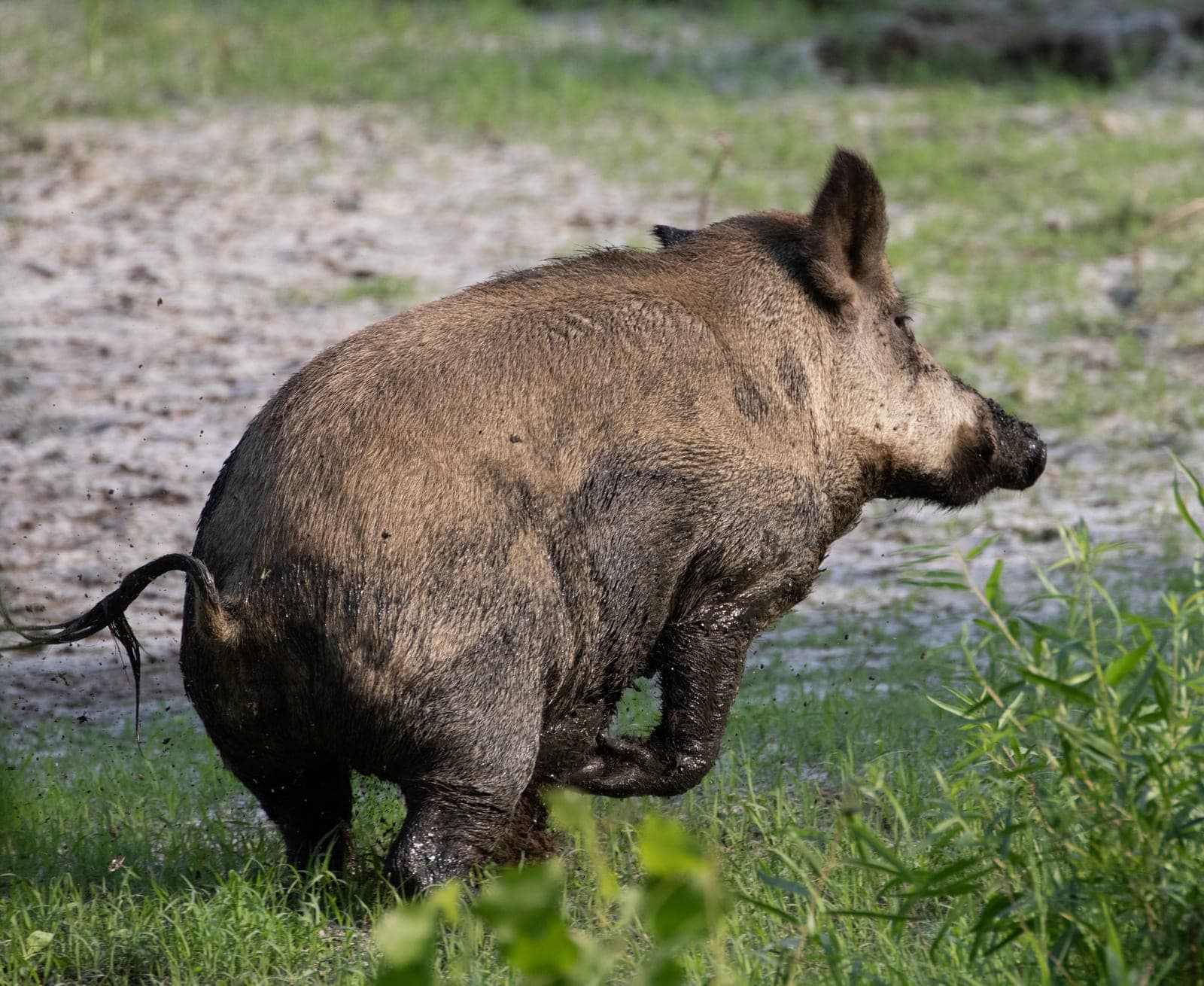
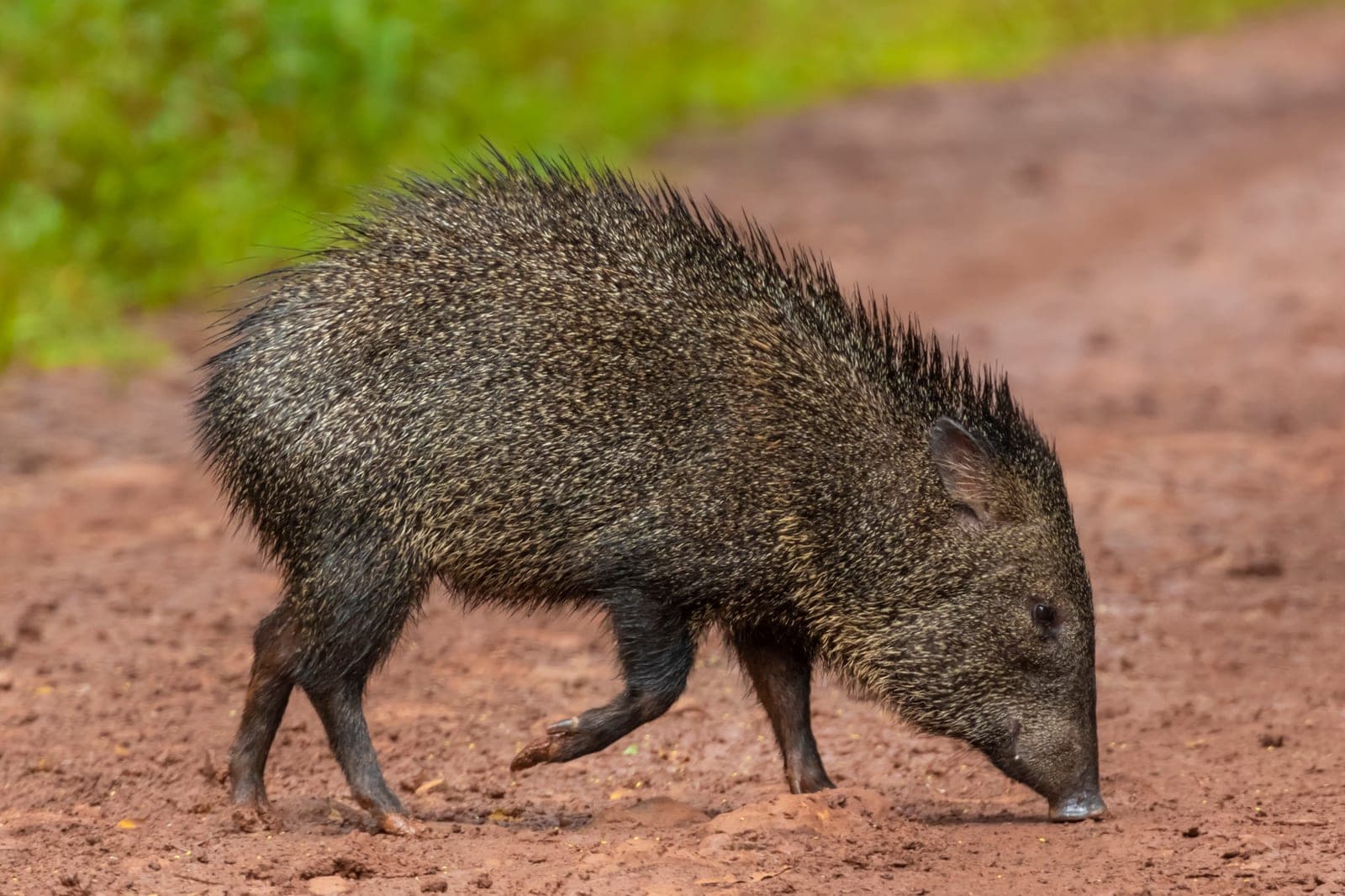
Size, tusks and tail: a javelina is a 35- to 60-pound gray animal with a pale collar, short straight tusks and almost no visible tail, while a feral hog usually weighs 75 to 250 pounds, comes in many colors, and shows tusks that curve up and out and a tufted tail.
Feral hogs and javelina share the brush country of South Texas, and both are bristly, tusked, pig-shaped animals that travel in groups. They are not close relatives: javelina are native peccaries of the Americas, while wild boar and feral hogs are invasive Old World pigs. Telling them apart matters, because the two are managed under very different rules.
Key differences
| Trait | Wild Boar | Javelina |
|---|---|---|
| Family | Old World pigs (Suidae) | New World peccaries (Tayassuidae) |
| Weight | Usually 75–250 lb | About 35–60 lb |
| Coat | Black, red, brown, spotted or grizzled | Salt-and-pepper gray with a pale collar |
| Tusks | Lower tusks curve up and out | Short, straight and interlocking |
| Tail | Visible, with a tuft at the tip | Tiny and hidden in the bristles |
| Hind toes | Four on each foot | Three on each hind foot |
| Young | Up to 13 piglets, one or two litters a year | Usually twins |
| U.S. status | Invasive; often open year-round | Native game animal with seasons |
Where they overlap
Texas is where most hunters meet both. Feral hogs live in every Texas county but one, and javelina range across South Texas, the Trans-Pecos and the Big Bend, so a hunter on a South Texas lease can see a sounder of hogs and a herd of javelina from the same blind. Elsewhere they mostly part ways: javelina belong to the deserts of southern Arizona and New Mexico, while feral hogs are densest in the wetter woods and farm country of the South and in California.
Not as related as they look
Peccaries and pigs look alike because they make a living the same way, rooting and foraging in groups, but they belong to separate families. A javelina's short tusks are straight and lock together, while a boar's lower tusks curve up and are honed against the uppers. Javelina have three toes on each hind foot, a more complex, multi-chambered stomach and a musk gland on the back that pigs lack. Hogs breed much faster, which is a big reason they spread so quickly.
Hunting and the table
Because feral hogs are invasive, many states let hunters take them year-round with few limits, especially on private land, while javelina are a regulated game animal in Arizona, New Mexico and Texas with licenses and seasons. On the table, young hogs make rich pork, and javelina are leaner and drier, best slow-cooked. Handle both with gloves, keep javelina musk off the meat, and cook wild pork thoroughly. Check local regulations for each.
By the numbers
The traits the daily hunt game compares for each.
| Clue | Wild Boar | Javelina |
|---|---|---|
| Type | Big game | Big game |
| Habitat | Forest | Desert |
| Headgear | Tusks | Tusks |
| Region | Southern woods | Southern woods |
| Typical weight | 200 lb | 50 lb |
| Diet | Omnivore | Omnivore |
FAQ
Is a javelina a wild pig?
No. Javelina are collared peccaries, a separate New World family. They look piglike but differ in their tusks, hind toes, tail, stomach and the scent gland on their back.
Can javelina and feral hogs interbreed?
No. Peccaries and pigs belong to different families and cannot produce hybrids, even where they live side by side in Texas brush country.
Which tastes better, wild hog or javelina?
Most hunters prefer young feral hogs, whose meat is richer and more like pork. Javelina is lean and dry, but carefully skinned and slow-cooked it makes good carnitas and stew.
Are javelina or feral hogs more dangerous?
Big feral boars are more dangerous to hunters and dogs because of their size and tusks. Javelina are small and rarely threaten people, but they will defend themselves when cornered.
Could you tell them apart from a few clues? Test yourself in today's puzzle.
Play the daily hunt game