Game animals · Side by side
Canada Goose vs Snow Goose
How to tell them apart
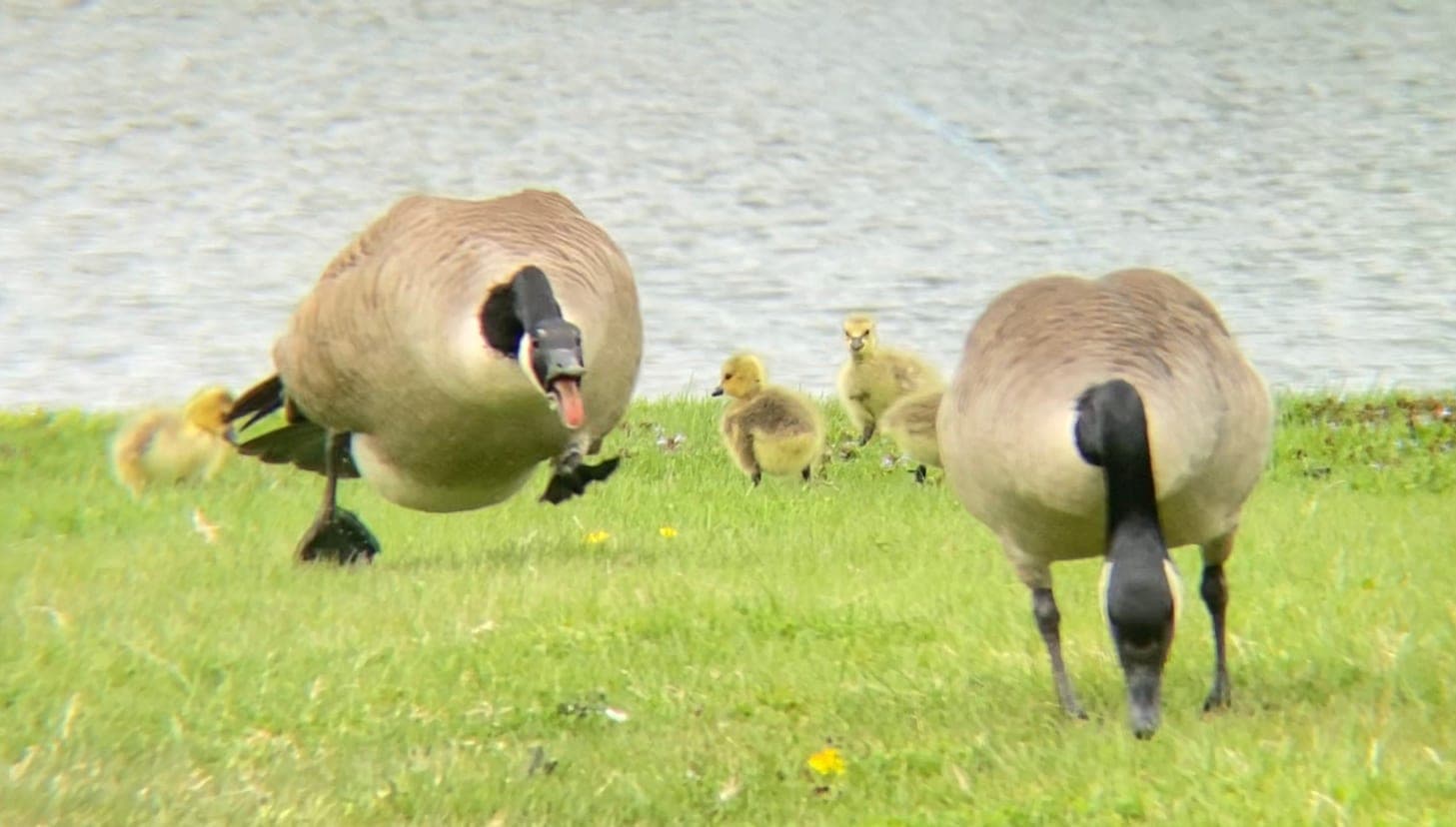
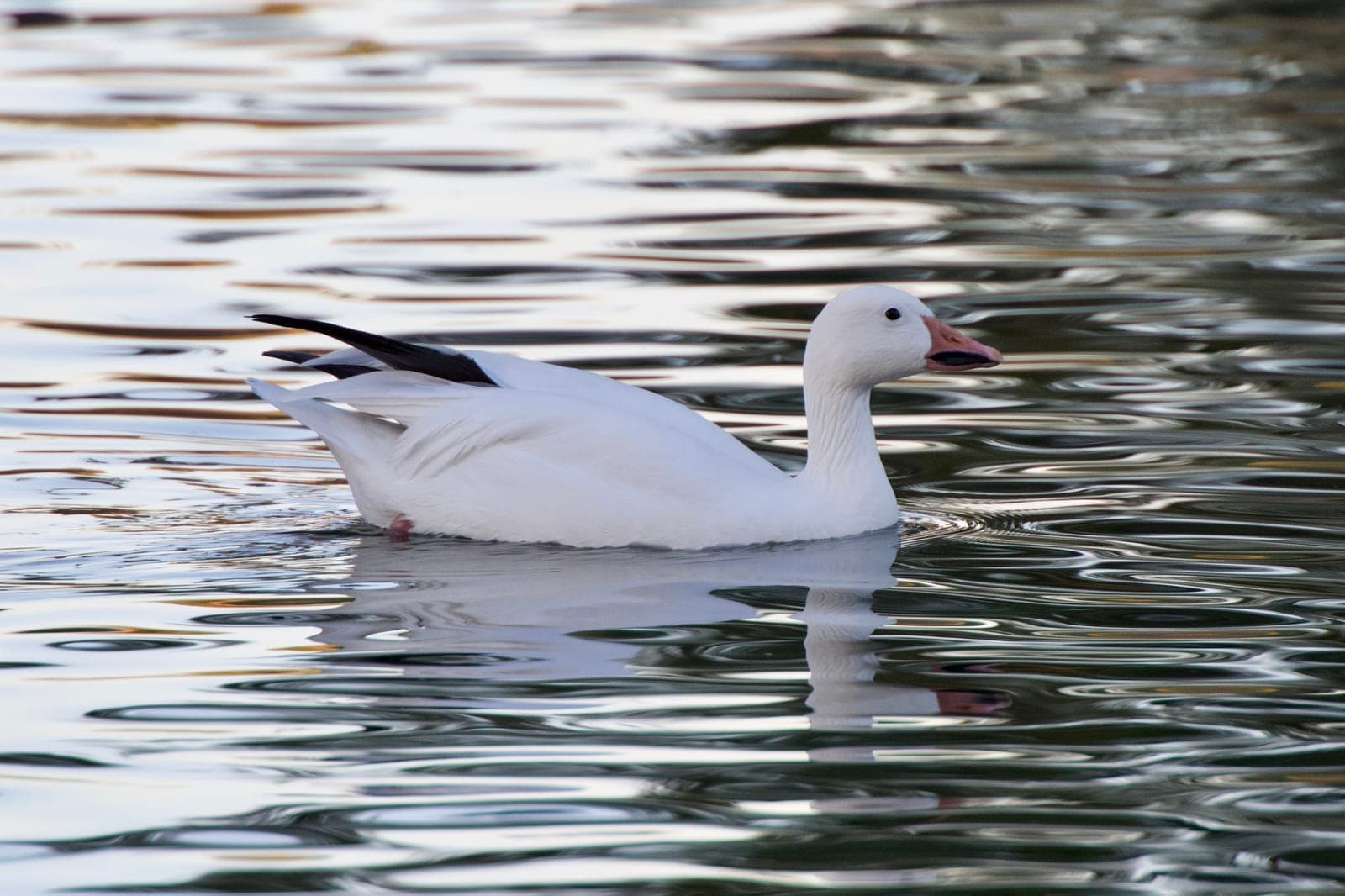
Quick answer
Look at the head and neck: a Canada goose has a black head and neck with a white chinstrap on a brown body, while a snow goose has a white head on either an all-white body with black wingtips or, in the blue morph, a dark body, plus a pink bill and pink legs.
Canada geese and snow geese are the two geese North American hunters see most, and in winter they often feed in the same grain fields. They are easy to tell apart up close, but at a distance, in poor light or when a dark 'blue goose' is in the flock, mistakes happen. The difference matters: regulations treat them as separate groups, dark geese and light geese, with their own seasons and limits.
Key differences
| Trait | Canada Goose | Snow Goose |
|---|---|---|
| Head and neck | Black, with a white chinstrap | White on both color morphs |
| Body | Gray-brown back, tan to brown breast | All white, or dark gray-brown in the blue morph |
| Bill and legs | Black bill, black legs | Pink bill with a black 'grin patch'; pink legs |
| Wings in flight | Uniformly dark | White with black tips, or gray-blue on blue geese |
| Size | About 5–20 lb, 30–43 in long | About 3.5–7.5 lb, 27–33 in long |
| Voice | Deep, resonant honking | High-pitched, barking yelps |
| Flock size | Pairs and family groups to flocks of hundreds | Thousands to hundreds of thousands |
| Nesting | Single pairs, from tundra to city ponds | Dense colonies on Arctic tundra |
Where you will find each
Canada geese nest across most of North America, from Arctic tundra to suburban retention ponds, and restored resident flocks live year-round in much of the lower 48. Snow geese nest only in Arctic colonies from Wrangel Island in Russia across Alaska and Canada to Greenland, so most hunters see them only in migration and winter. Their wintering strongholds are California's Central Valley, the Texas and Louisiana coast, the Mississippi Alluvial Valley and, for greater snow geese, the mid-Atlantic coast. Both feed heavily on waste grain and winter wheat, which is why they so often share fields in winter.
Different rules, different tactics
Canada geese fall under dark-goose regulations, and many states add early September seasons for resident birds. They work well to modest spreads, calling and flagging, and family groups often decoy readily. Snow geese are light geese. They are so overabundant that a spring Light Goose Conservation Order, in place since 1999, allows electronic calls and unplugged shotguns where it is open. They travel in huge, wary flocks, so hunters run spreads of hundreds or thousands of decoys and focus on juveniles. Both require a signed federal duck stamp for U.S. hunters 16 and older, HIP registration and nontoxic shot.
Which is better to eat?
Most hunters give the edge to the Canada goose. Its dark breast meat is milder and more tender, especially from young birds, and it grills well to medium-rare. Snow goose is leaner, often tougher and stronger-flavored, particularly from old adults, so it usually ends up brined, ground into sausage, made into jerky or sliced thin for poppers. Both are red meat that turns livery when overcooked.
By the numbers
The traits the daily hunt game compares for each.
| Clue | Canada Goose | Snow Goose |
|---|---|---|
| Type | Waterfowl | Waterfowl |
| Habitat | Wetlands | Wetlands |
| Headgear | None | None |
| Region | Nationwide | Arctic tundra |
| Typical weight | 9 lb | 6 lb |
| Diet | Herbivore | Herbivore |
FAQ
Is a blue goose a different species?
No. The blue goose is the dark color morph of the snow goose, controlled by a single gene. Blue and white birds mix in the same flocks and can pair with each other.
Which is bigger, a Canada goose or a snow goose?
Most Canada geese are bigger. Large Canadas can weigh close to 20 pounds, while snow geese usually weigh about 3.5 to 7.5 pounds, although small northern Canada geese overlap with big snows.
Why can you hunt snow geese in spring but not Canada geese?
Snow geese have grown so numerous that they are damaging their Arctic breeding habitat, so a federal conservation order allows extra spring harvest. There is no comparable spring hunt for Canada geese; abundant resident Canadas are managed through early fall seasons and local control programs instead.
How do you tell a blue goose from a Canada goose at a distance?
The head settles it. A blue goose has a white head and upper neck on a dark body, while a Canada goose's head and neck are black with only a white chinstrap.
Could you tell them apart from a few clues? Test yourself in today's puzzle.
Play the daily hunt game