Game animals · Side by side
Bobcat vs Mountain Lion
How to tell them apart
Quick answer
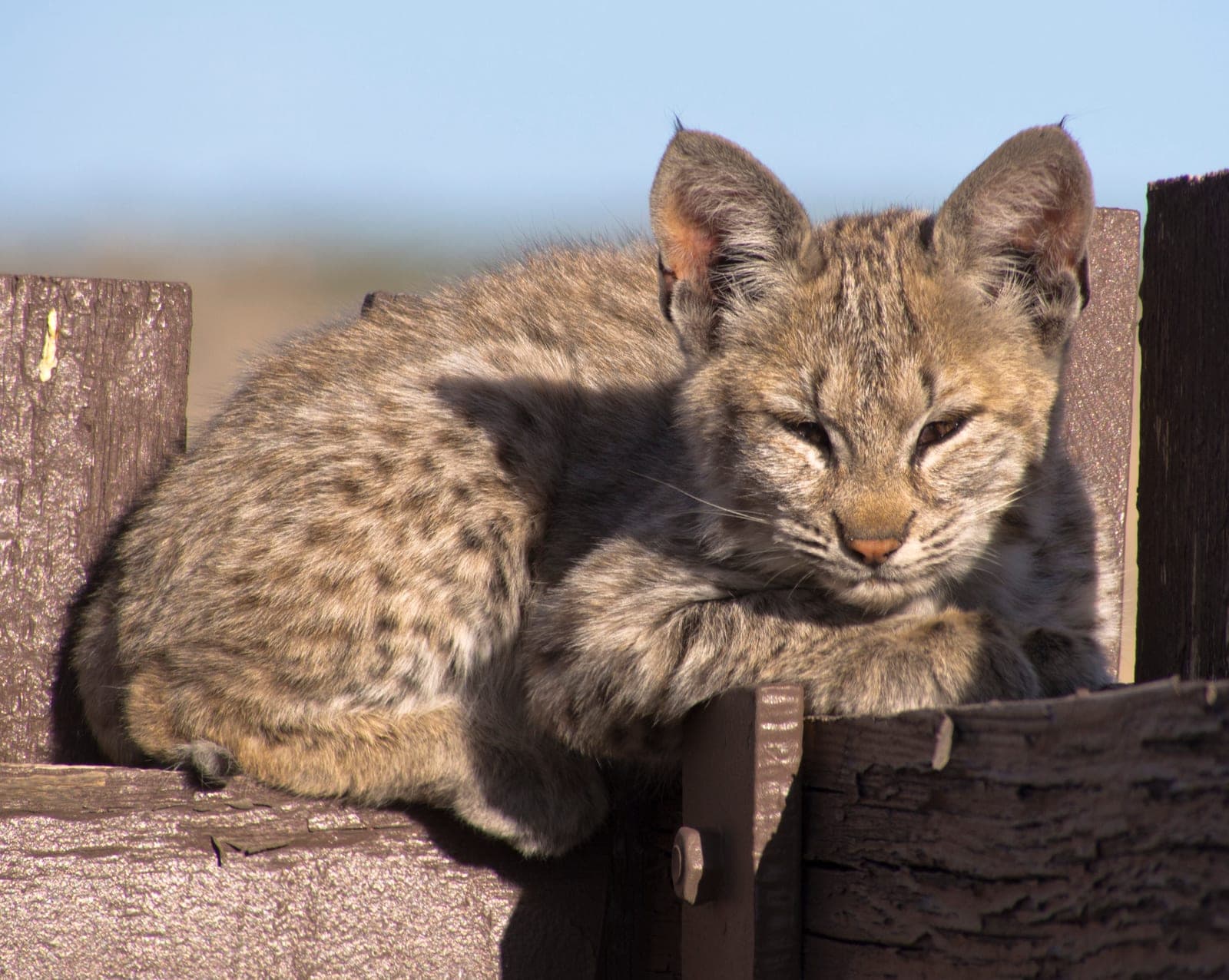
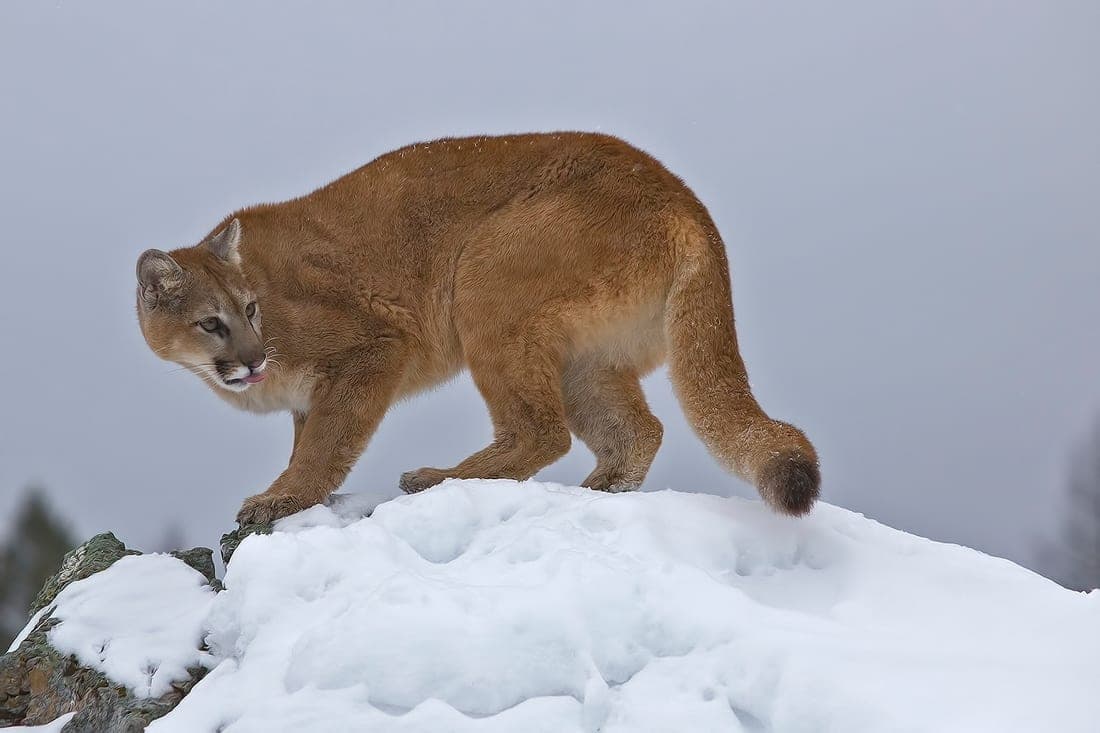
Look at the tail: a mountain lion's is long and heavy, about a third of its total length, while a bobcat's is a stub only a few inches long. Spots and ear tufts point to a bobcat; a plain tawny coat points to an adult lion.
Bobcats and mountain lions share much of the West and Florida, and both turn up on trail cameras, at dusk along back roads and in neighborhood reports. Up close nobody confuses a 20-pound bobcat with a 140-pound lion, but in a grainy photo with nothing for scale, or with a spotted lion kitten, it happens all the time. The tail settles it almost every time.
Key differences
| Trait | Bobcat | Mountain Lion |
|---|---|---|
| Tail | Bobbed, 3–8 in, black on top at the tip | Long and thick, roughly a third of total length, dark tip |
| Weight | Most 15–35 lb | Males average about 140 lb; females seldom over 110 |
| Length | Roughly twice a house cat | Big males 7–8 ft nose to tail tip |
| Coat | Spotted and streaked, spots on a white belly | Plain tawny or gray-brown on adults; only kittens are spotted |
| Ears | Short black tufts; black backs with a pale spot | Rounded, no tufts, dark on the back |
| Face | Ruff of long fur on the cheeks | Small, round head with no ruff |
| Main prey | Rabbits, rodents and birds | Deer, elk and other hoofed animals |
Spotted kittens and trail-camera mix-ups
Mountain lion kittens wear dark spots and ringed tails for their first four to five months, which makes them look like bobcats at first glance. The tail is still the tell: even a young lion's tail is long and thick, while a bobcat's is a short stub. On trail cameras, compare the cat to something of known size, such as a fence post, a feeder or a deer that walked past the same camera, before deciding which one it is.
Where each lives
Bobcats live across most of the lower 48, southern Canada and Mexico, in brushy forest, swamps, deserts and farm country. Mountain lions are mainly western, from British Columbia and Alberta through the Rockies and the Pacific states, with a breeding population in the Black Hills and the endangered Florida panther in southern Florida. In the West the two cats overlap widely, often hunting the same canyons and river bottoms for very different prey.
Hunting rules for each
Both cats are legal game in most western states, but the rules differ sharply. California bans hunting both: mountain lions since a 1972 moratorium and 1990's Proposition 117, and bobcats under a 2019 law. Lions are usually hunted with hounds on snow under quotas that close units once they are filled, while bobcats are hunted with calls and hounds and trapped for fur during late fall and winter seasons. Check current regulations for each species.
By the numbers
The traits the daily hunt game compares for each.
| Clue | Bobcat | Mountain Lion |
|---|---|---|
| Type | Predator | Predator |
| Habitat | Forest | Mountains |
| Headgear | None | None |
| Region | Nationwide | Western mountains |
| Typical weight | 22 lb | 140 lb |
| Diet | Carnivore | Carnivore |
FAQ
Can a bobcat be mistaken for a mountain lion?
Yes, mostly in photos without scale or with spotted lion kittens. A long, heavy tail always means mountain lion; a stubby tail, ear tufts and spots mean bobcat.
Which is more dangerous to people?
Attacks by either are rare, but mountain lions are large enough to kill people and have done so on rare occasions. Healthy bobcats avoid people, and an aggressive one may be sick.
Are bobcats and mountain lions closely related?
Both belong to the small-cat branch of the cat family, but in different genera: the bobcat is a lynx, and the mountain lion is a puma. Neither can roar, and the mountain lion is the largest cat that purrs.
Could you tell them apart from a few clues? Test yourself in today's puzzle.
Play the daily hunt game