Game animals · Side by side
American Beaver vs Muskrat
How to tell them apart
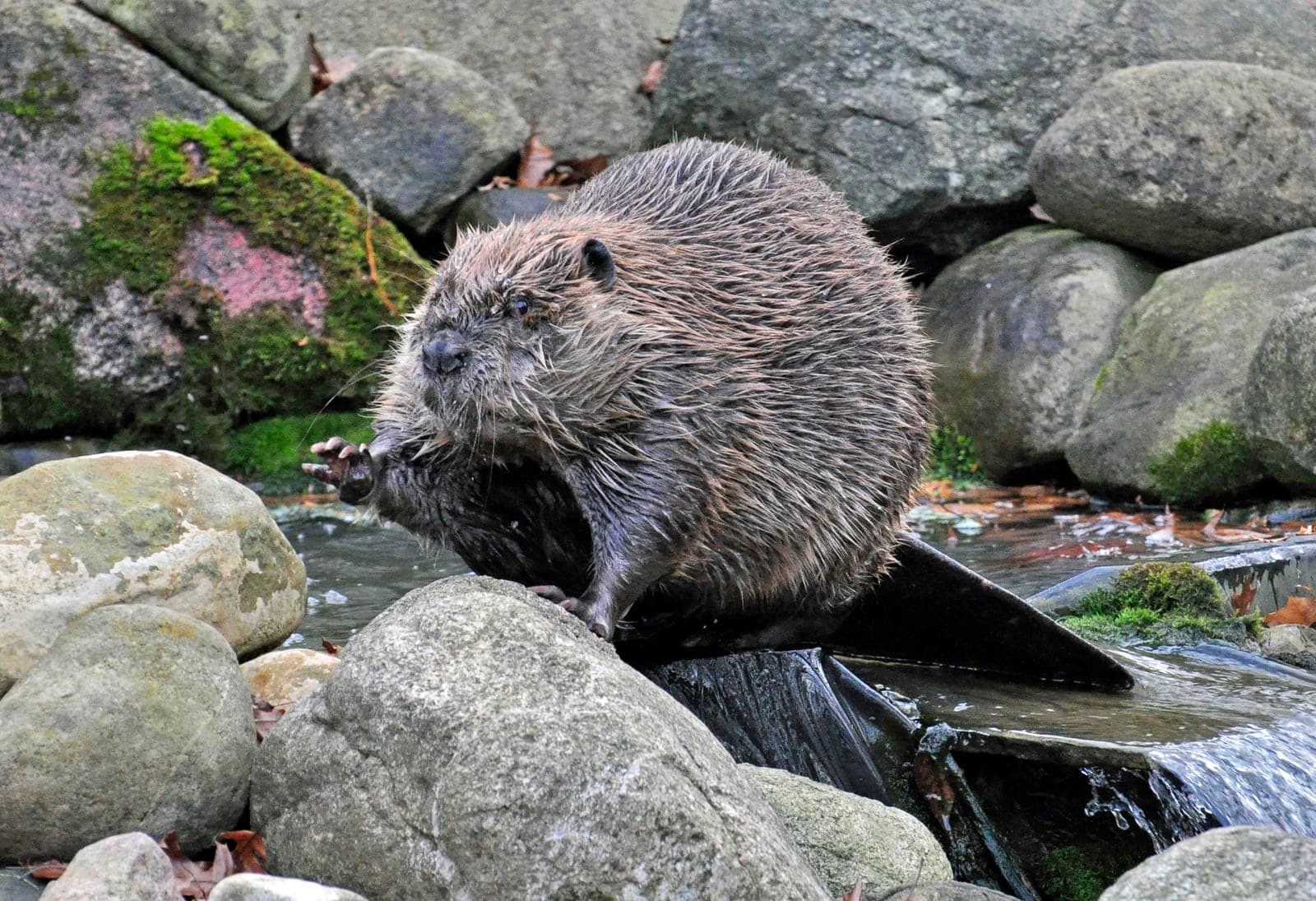
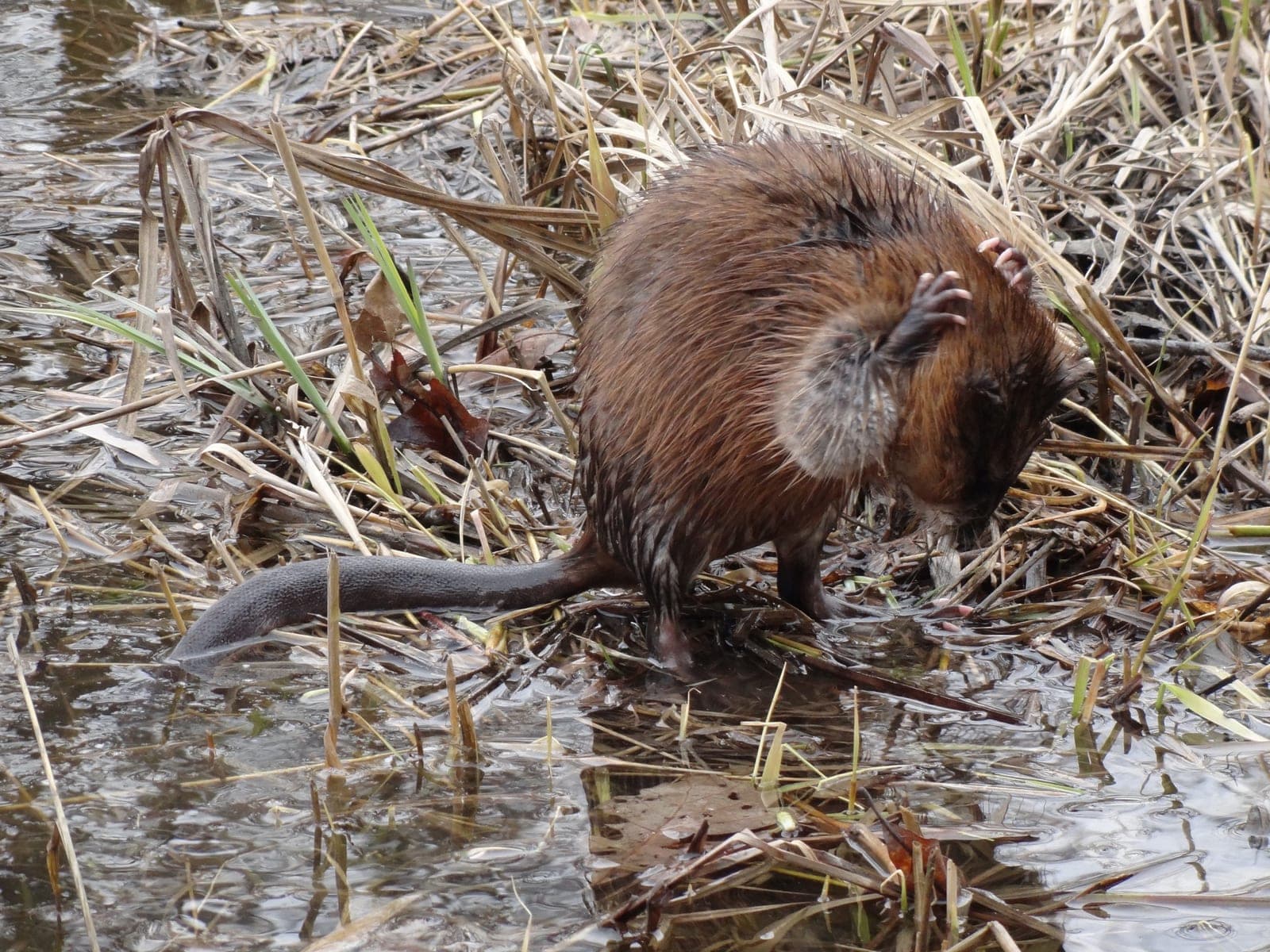
Quick answer
Look at the tail and the size. A beaver weighs 26 to 70 pounds and has a broad, flat paddle tail that stays hidden when it swims; a muskrat weighs only 1½ to 4 pounds and has a thin, scaly tail flattened side to side that often wiggles along the surface behind it.
Beavers and muskrats share the same ponds, marshes and streams, both swim with just a brown head showing, and both build houses in the water. From a canoe at dusk they are easy to mix up. Up close they are very different animals: an average adult beaver outweighs a muskrat more than ten times over, and the two live, eat and build in completely different ways.
Key differences
| Trait | American Beaver | Muskrat |
|---|---|---|
| Weight | Usually 26–70 lb | 1½–4 lb |
| Tail | Broad, flat paddle, flattened top to bottom | Long and thin, flattened side to side |
| Swimming | Head and upper back show; tail hidden | Head shows; tail often visible, sculling side to side |
| House | Lodge of sticks and mud | Dome of cattails, bulrushes and mud |
| Trees and dams | Cuts trees and builds dams | Cuts no trees and builds no dams |
| Main food | Bark and twigs in winter, soft plants in summer | Cattails and other marsh plants, plus some mussels and crayfish |
| Young | One litter a year of about 3–4 kits | 2–3 litters a year of 4–7 young |
Reading the sign
Beaver country is easy to recognize once you know the signs: stumps gnawed to a point, peeled sticks along the shore, dams across streams and big domed lodges of sticks and mud. Muskrats leave subtler marks: smaller houses built of cattails and bulrushes, feeding platforms of cut stems, narrow runs through the marsh, and burrow entrances in the bank just below the waterline. In winter, small mounds of plants over holes in the ice, called push-ups, are a sure sign of muskrats. The two often share the same pond, so finding both kinds of sign together is common.
Trapping and fur
Both are classic furbearers taken mainly by trapping during regulated seasons, usually from late fall through early spring when fur is prime. Muskrats are smaller, more numerous and easier to catch, which makes them the traditional first furbearer for young trappers. Beavers call for heavier traps and snares and much more work in skinning and stretching, and their castor glands are saved for lure. Both can carry tularemia, so wear gloves when handling and skinning either one, and check your state's rules on trap types and sets near houses and lodges.
The third swimmer: nutria
In the Gulf Coast states and the Pacific Northwest, a third brown swimmer complicates things. Nutria, an invasive South American rodent, falls between the two in size at about 15 to 25 pounds, with white whiskers and a long, round, rat-like tail. That makes the tail the one-look answer for all three: wide and flat for a beaver, thin and flattened side to side for a muskrat, round for a nutria.
By the numbers
The traits the daily hunt game compares for each.
| Clue | American Beaver | Muskrat |
|---|---|---|
| Type | Small game | Small game |
| Habitat | Wetlands | Wetlands |
| Headgear | None | None |
| Region | Nationwide | Nationwide |
| Typical weight | 45 lb | 2.5 lb |
| Diet | Herbivore | Herbivore |
FAQ
Is a muskrat a baby beaver?
No. Even a young beaver has the broad, flat tail of its parents, while a muskrat's tail is narrow and flattened side to side. Muskrats are a separate species, more closely related to voles than to beavers.
Do muskrats build dams?
No. Muskrats build houses and feeding platforms of soft plants and dig bank burrows, but they never cut trees or dam streams. A dam is a sure sign of beavers.
Which is better to eat, beaver or muskrat?
Both are eaten. Beaver is dark meat often compared to lean beef or venison, and muskrat is a traditional Lenten dish in southeast Michigan. With either, remove the scent glands carefully and cook the meat thoroughly.
Can beavers and muskrats live in the same pond?
Yes, and they often do. They compete little, since beavers depend on trees and woody food while muskrats live mostly on cattails and other marsh plants.
Could you tell them apart from a few clues? Test yourself in today's puzzle.
Play the daily hunt game