Game animals · Side by side
Ruffed Grouse vs Sharp-tailed Grouse
How to tell them apart
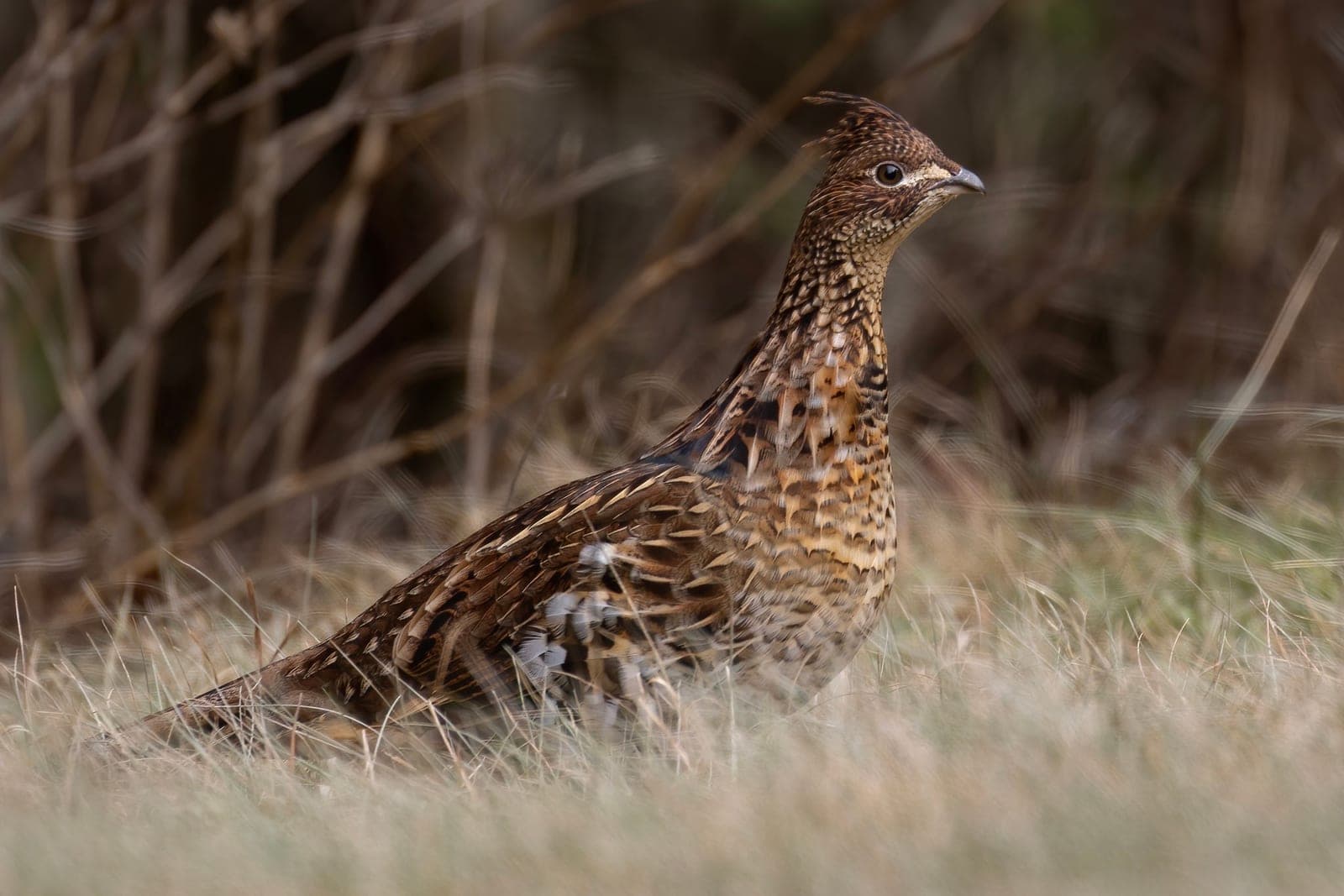
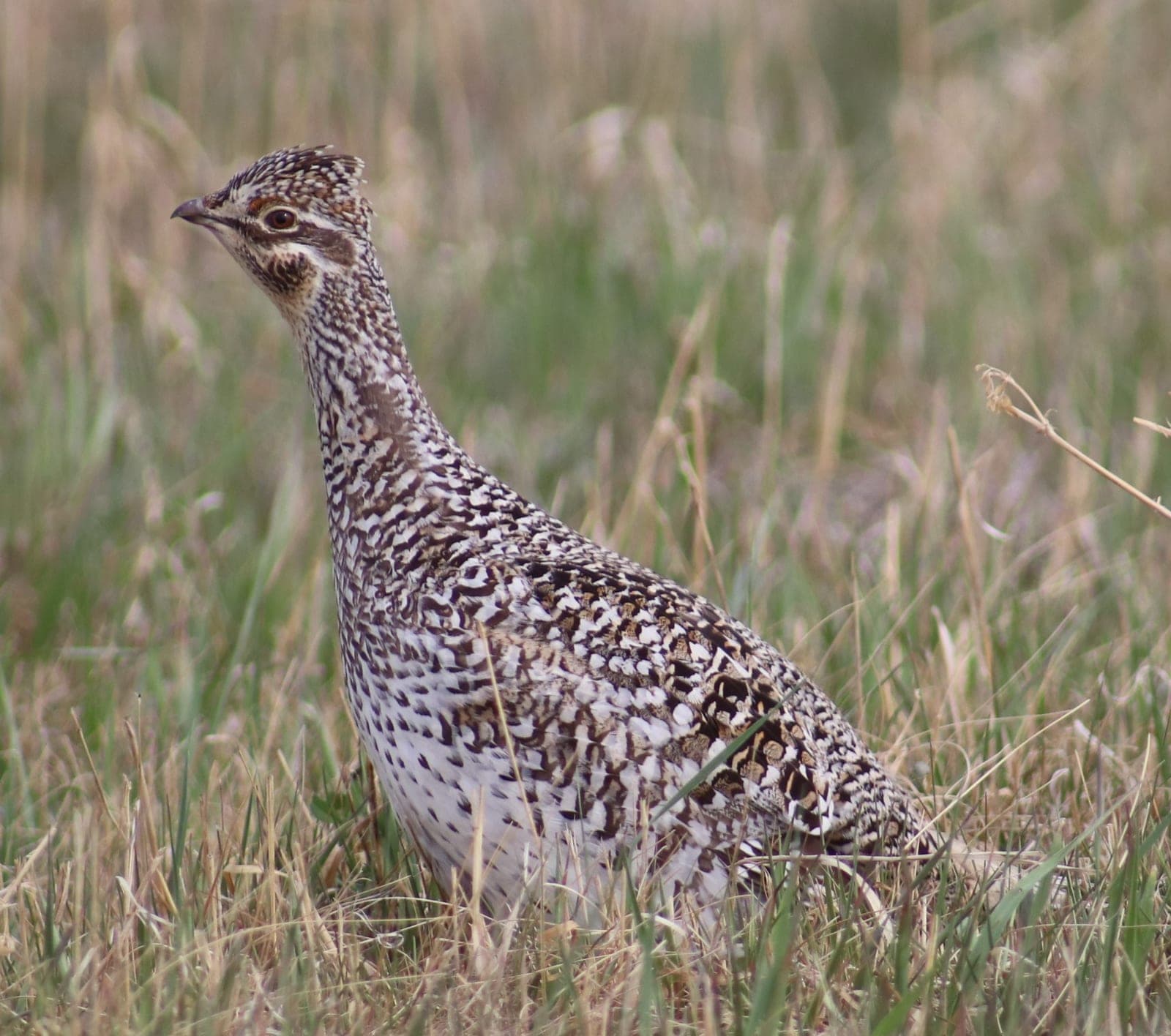
Quick answer
Look at the tail as the bird flies: a ruffed grouse has a broad, rounded fan with a dark band near the tip, while a sharp-tailed grouse has a short, pointed tail with white outer feathers. Ruffed grouse also have black neck ruffs and live in woods; sharptails are paler, V-marked below and live in open country.
Ruffed grouse and sharp-tailed grouse are both mid-sized northern grouse, both mottled brown and both popular with bird hunters, and their ranges overlap where forest gives way to prairie and brush. In places like northern Minnesota, Wisconsin, Michigan's Upper Peninsula and the Canadian aspen parkland, a hunter can flush both in the same morning. The tail settles it almost every time.
Key differences
| Trait | Ruffed Grouse | Sharp-tailed Grouse |
|---|---|---|
| Tail | Broad fan with a wide dark band near the tip | Short and pointed, with white outer feathers |
| Underparts | Barred flanks on a mottled, buff-to-gray body | Pale, with dark V-shaped chevrons |
| Neck | Black ruffs on each side | No ruffs; displaying males show purple air sacs |
| Habitat | Young forest, aspen and alder thickets | Prairie, brushy draws, aspen parkland and burns |
| Courtship | Males drum alone on a log or rock | Males dance together on a lek |
| Typical weight | About 17–26 oz | About 1.3–2.3 lb |
| Flush | Loud wing roar, usually silent otherwise | Often a clucking 'tuk-tuk' call |
| Meat | Pale, mild white meat | Dark, rich red meat |
Where you will find each
Ruffed grouse are forest birds from Alaska across Canada to the Great Lakes, New England, the Appalachians and the Pacific Northwest, and they are most common in dense young aspen and mixed woods. Sharptails are open-country birds of the northern Great Plains, the Canadian prairies, Alaska and brushy openings in the boreal forest. The two meet along that forest edge: around old burns, clearcuts, brushlands and the patchy aspen parkland of the Prairie Provinces and the northern Lake States. In those places, the cover a bird flushes from is a good first clue.
Drumming versus dancing
The two species court in completely different ways. A male ruffed grouse claims a territory alone and drums from a log or rock, beating his wings to produce an accelerating thump that carries through the woods in April and May. Male sharptails gather on a shared lek at dawn, stamping their feet in rapid bursts, rattling their tails, inflating purple neck sacs and cooing as they spin and face off. If you hear drumming, you are in ruffed grouse cover; if you hear cooing and cackling from an open knoll, it is a sharptail lek.
Hunting and eating them
Ruffed grouse hunting is close, quick shooting in thick woods, usually with a light gun and open chokes. Sharptail hunting means covering big, open ground with a wide-ranging dog, and late-season birds often flush at long range. On the table they are very different birds: ruffed grouse breast is pale and mild, while sharptail breast is dark and rich and is best cooked quickly to medium-rare. Seasons and limits are set separately for each species in many places, so check local regulations.
By the numbers
The traits the daily hunt game compares for each.
| Clue | Ruffed Grouse | Sharp-tailed Grouse |
|---|---|---|
| Type | Upland bird | Upland bird |
| Habitat | Forest | Grassland |
| Headgear | None | None |
| Region | Northern forests | Great Plains |
| Typical weight | 1 lb | 2 lb |
| Diet | Herbivore | Herbivore |
FAQ
Can ruffed grouse and sharp-tailed grouse live in the same area?
Yes. Their ranges overlap in northern Minnesota, Wisconsin, Michigan, Alaska and much of Canada, wherever woods break into brush and grassland. Ruffed grouse keep to the forest and sharptails to the openings and edges.
Which is bigger, a ruffed grouse or a sharp-tailed grouse?
Sharptails are usually a little heavier, often around 1.3 to 2 pounds, compared with roughly 1 to 1.6 pounds for a ruffed grouse. The ruffed grouse's long fan tail can make it look larger in flight.
Which tastes better?
It depends on taste. Ruffed grouse has pale, mild meat that many hunters rank among the best of any game bird, while sharptail has dark, richer meat that suits people who like duck or venison.
How can I tell them apart on the flush?
Watch the tail and listen. A ruffed grouse roars up on a fanned, banded tail and usually twists away through trees; a sharptail flashes white tail sides, often clucks and sails off over open ground.
Could you tell them apart from a few clues? Test yourself in today's puzzle.
Play the daily hunt game