Game animals · Side by side
Elk vs White-tailed Deer
How to tell them apart
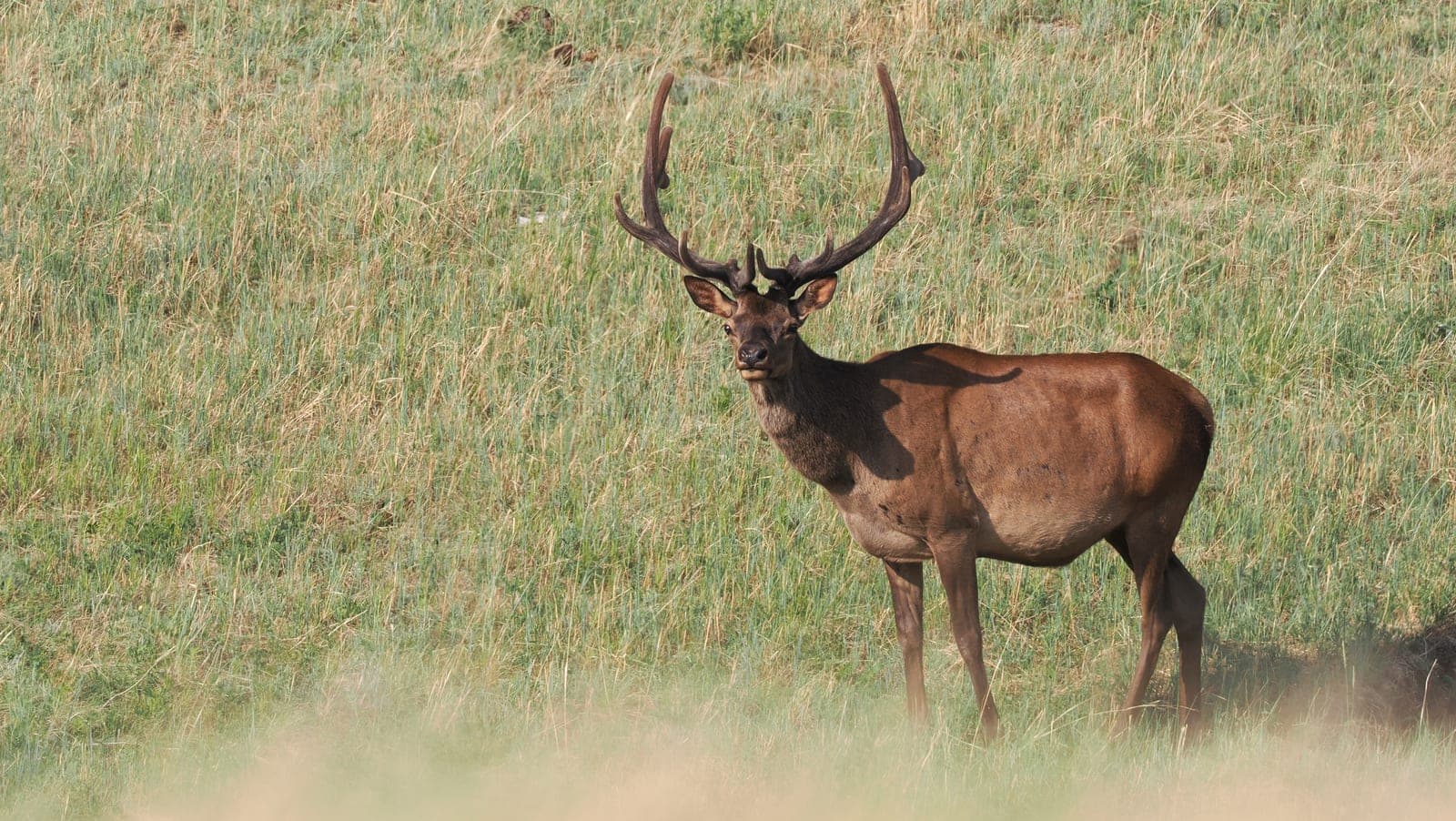
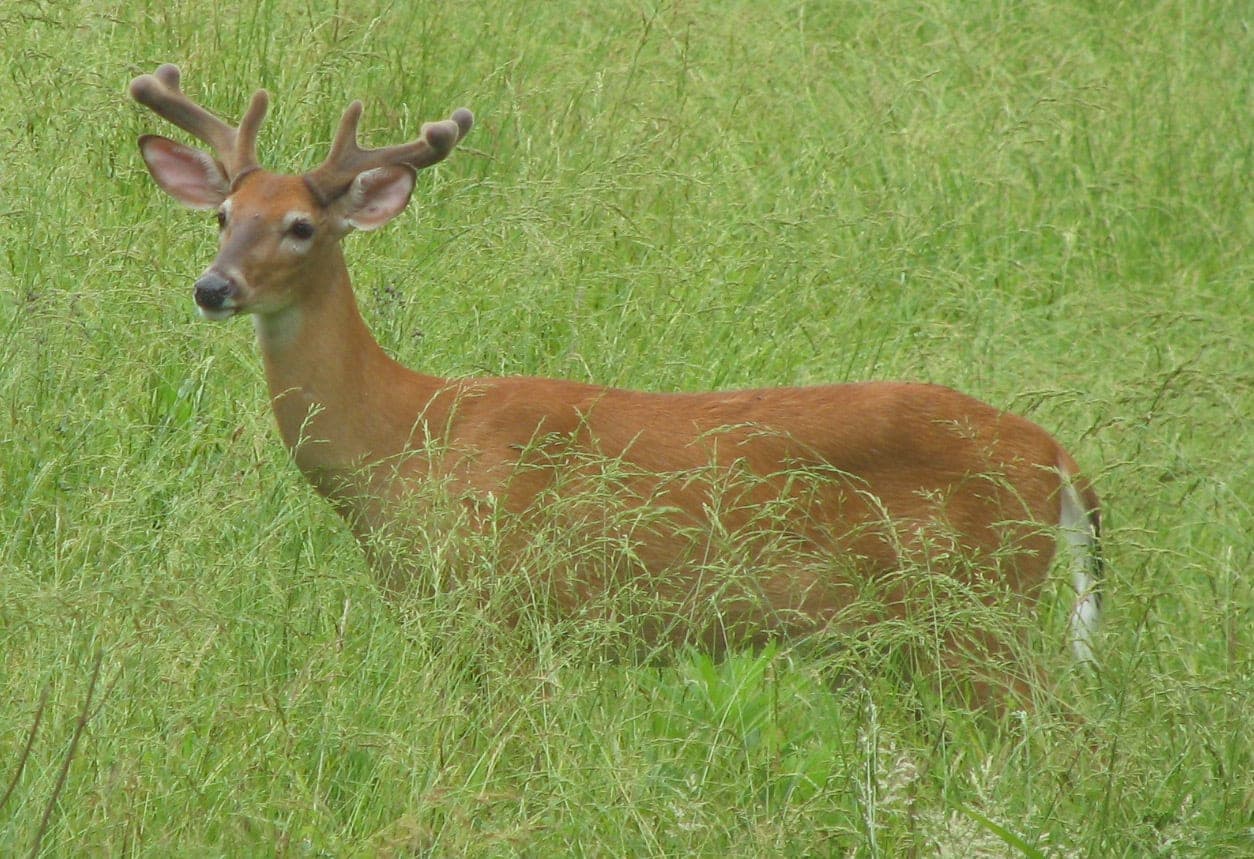
Quick answer
Look at the rump and neck: an elk has a large buff rump patch, a short tail and a dark brown neck mane, while a whitetail is evenly brown with a long tail that flashes white underneath. Size settles any doubt, since even a cow elk typically weighs two to three times as much as a whitetail buck.
Elk and white-tailed deer share more ground than they used to. Whitetails have spread up Western river valleys, and restored elk herds now live in Kentucky, Pennsylvania, Michigan and other eastern states, so hunters in both regions can see both species in a single day. In poor light a calf or young cow elk can look surprisingly deer-like; here is how to sort them out.
Key differences
| Trait | Elk | White-tailed Deer |
|---|---|---|
| Weight | Bulls about 700 lb, cows about 500 lb | Bucks 150–300 lb, does about 90–200 lb |
| Shoulder height | About 4.5–5 ft | About 3–3.5 ft |
| Rump and tail | Buff rump patch, short tail | No rump patch; long tail, white underneath |
| Neck | Dark brown mane against a paler body | Same brown as the body, with a white throat patch |
| Antlers | Long beams sweeping back over the shoulders | Beams curving forward over the face |
| Voice | Bulls bugle; cows mew and chirp | Grunts, bleats and a loud alarm snort |
| Rut peak | September into early October | November across most of the North |
| Groups | Herds of dozens to hundreds | Small family groups |
Where they overlap
In the West, whitetails and elk meet in the river bottoms, foothills and farm country of Montana, Idaho, Washington, Wyoming and Colorado, as well as in the Canadian prairie provinces. In the East, restoration programs have put elk back into whitetail country: Kentucky's herd, the largest east of the Rockies, has passed 15,000 animals, and Pennsylvania holds about 1,400. Michigan, Wisconsin, Tennessee, North Carolina, Virginia, West Virginia, Arkansas and Missouri have smaller herds, often on reclaimed mine land and forest openings.
Sign, tracks and teeth
Elk tracks are much larger and rounder than the narrow, heart-shaped prints of a whitetail, and elk droppings are bigger as well. Bull elk roll in muddy wallows and shred trees well above a buck's reach, while whitetail bucks paw out scrapes under overhanging branches and rub smaller saplings. Elk of both sexes carry two rounded upper canine teeth, called ivories; whitetails normally lack upper canines altogether.
Hunting each one
Whitetails live in small home ranges, so most are taken from treestands or blinds near travel routes, often during the November rut. Elk roam widely, and hunters cover miles of steep country, calling during the September rut and glassing meadows at dawn and dusk. Packing out is a different job too: a whitetail can be dragged, while an elk usually has to be quartered and carried in several loads. Both species are affected by chronic wasting disease, so carcass-transport and testing rules apply in many areas.
By the numbers
The traits the daily hunt game compares for each.
| Clue | Elk | White-tailed Deer |
|---|---|---|
| Type | Big game | Big game |
| Habitat | Mountains | Forest |
| Headgear | Antlers | Antlers |
| Region | Western mountains | Nationwide |
| Typical weight | 710 lb | 150 lb |
| Diet | Herbivore | Herbivore |
FAQ
Is an elk a type of deer?
Yes. Elk belong to the deer family, Cervidae, and are among its largest members; only the moose is bigger in North America.
Do elk and whitetails compete for food?
Not much. Elk are mainly grazers of grasses and sedges, while whitetails browse shrubs, forbs and acorns. Whitetails do carry meningeal worm, or brainworm, a parasite that rarely harms them but can sicken elk, which is a concern for eastern elk herds.
Can you hunt elk in the East?
In a few states. Kentucky, Pennsylvania, Michigan and Arkansas, among others, hold small elk hunts with permits awarded by lottery, and the odds of drawing are low.
How can you tell an elk calf from a whitetail?
Even a young elk calf shows the pale rump patch and short tail of an adult, and it usually stays close to a herd of much larger cows. A whitetail fawn or doe has a long brown tail with a white underside and no rump patch.
Could you tell them apart from a few clues? Test yourself in today's puzzle.
Play the daily hunt game